Ultron Carousel Factory
43 decks
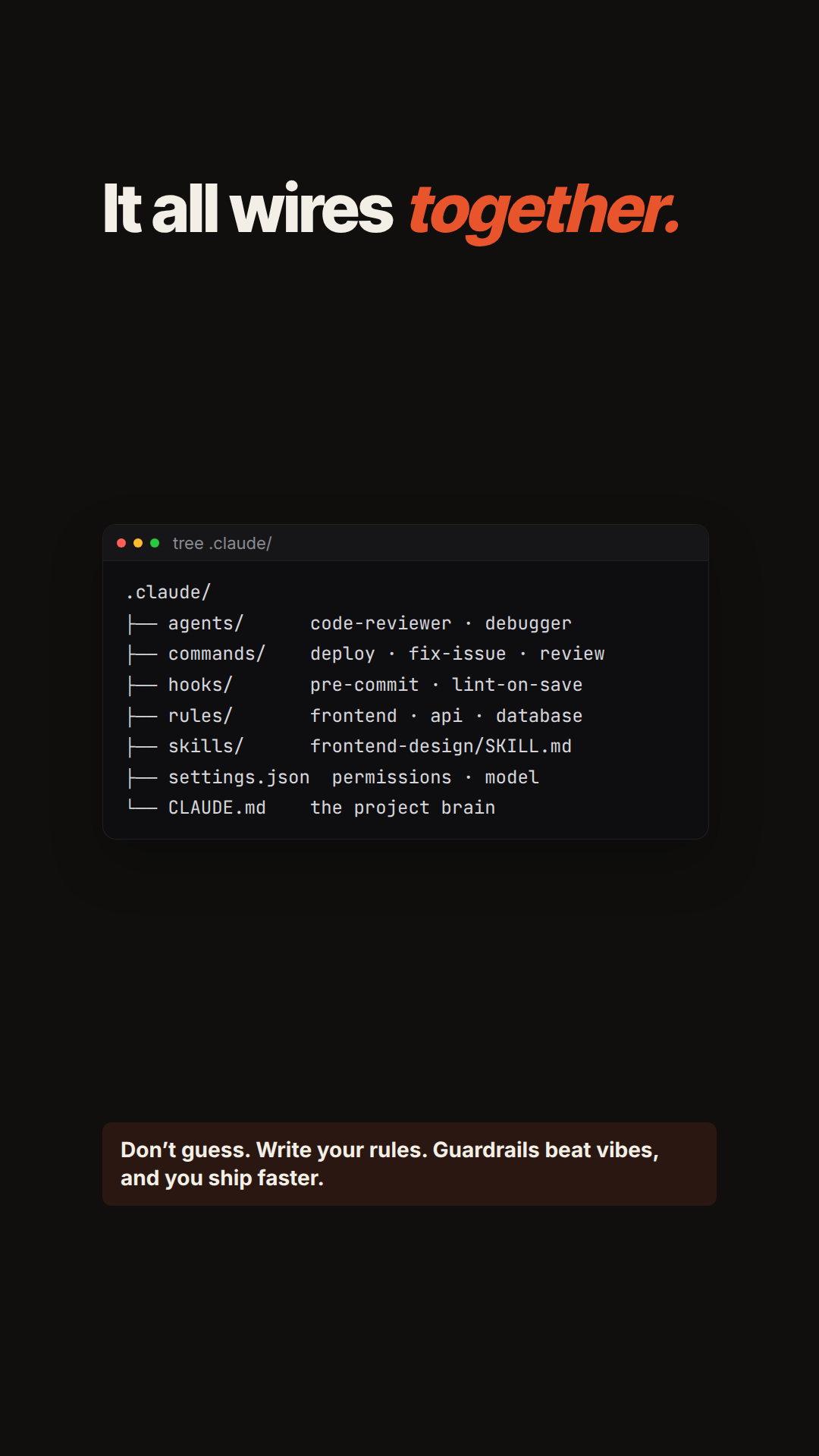
The .claude folder structure

01
02
03
04
05
06
07
08
09

10
Caption
Most people run Claude Code with zero structure, then wonder why it keeps guessing.

The whole difference is one folder.

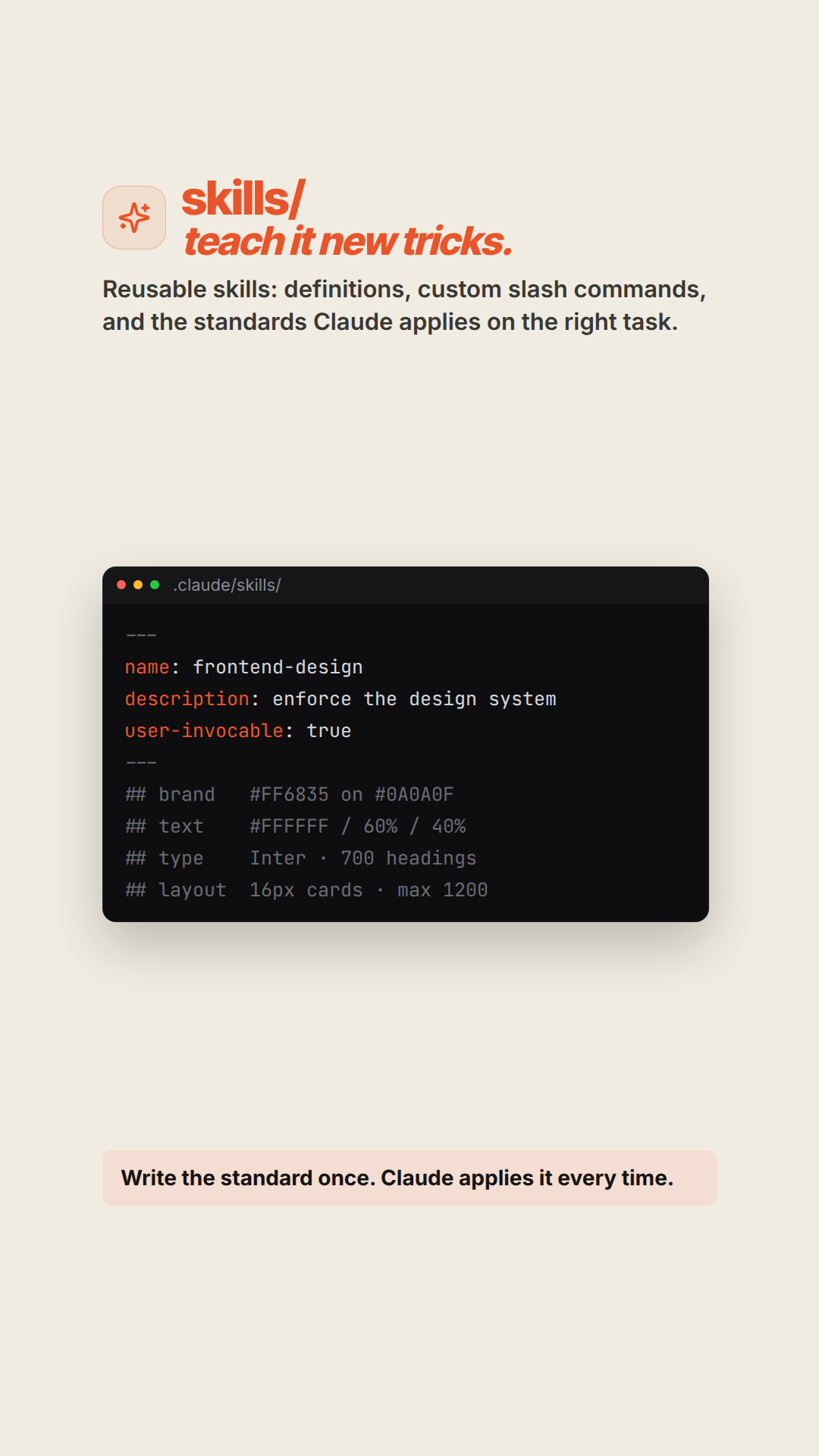
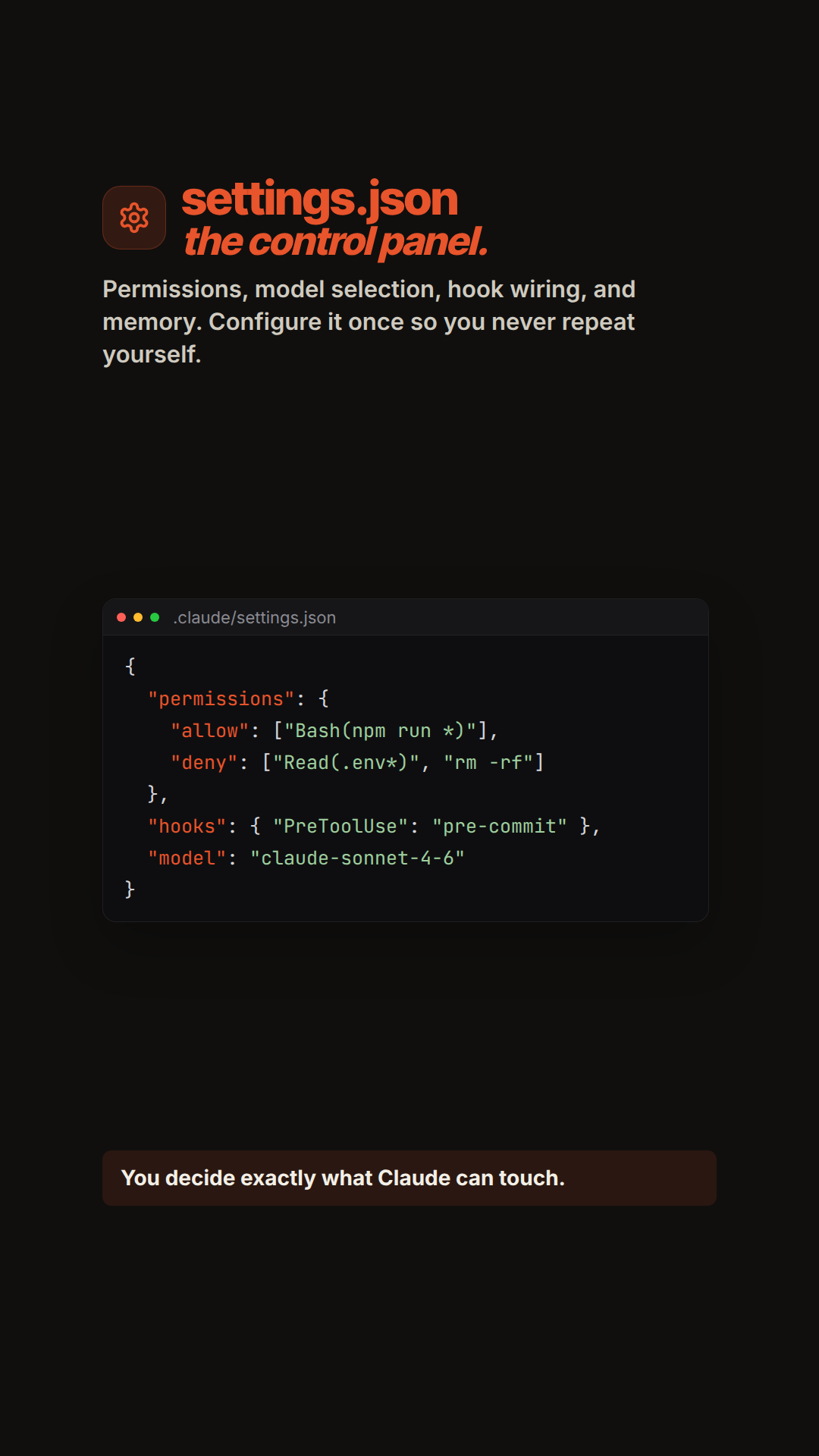
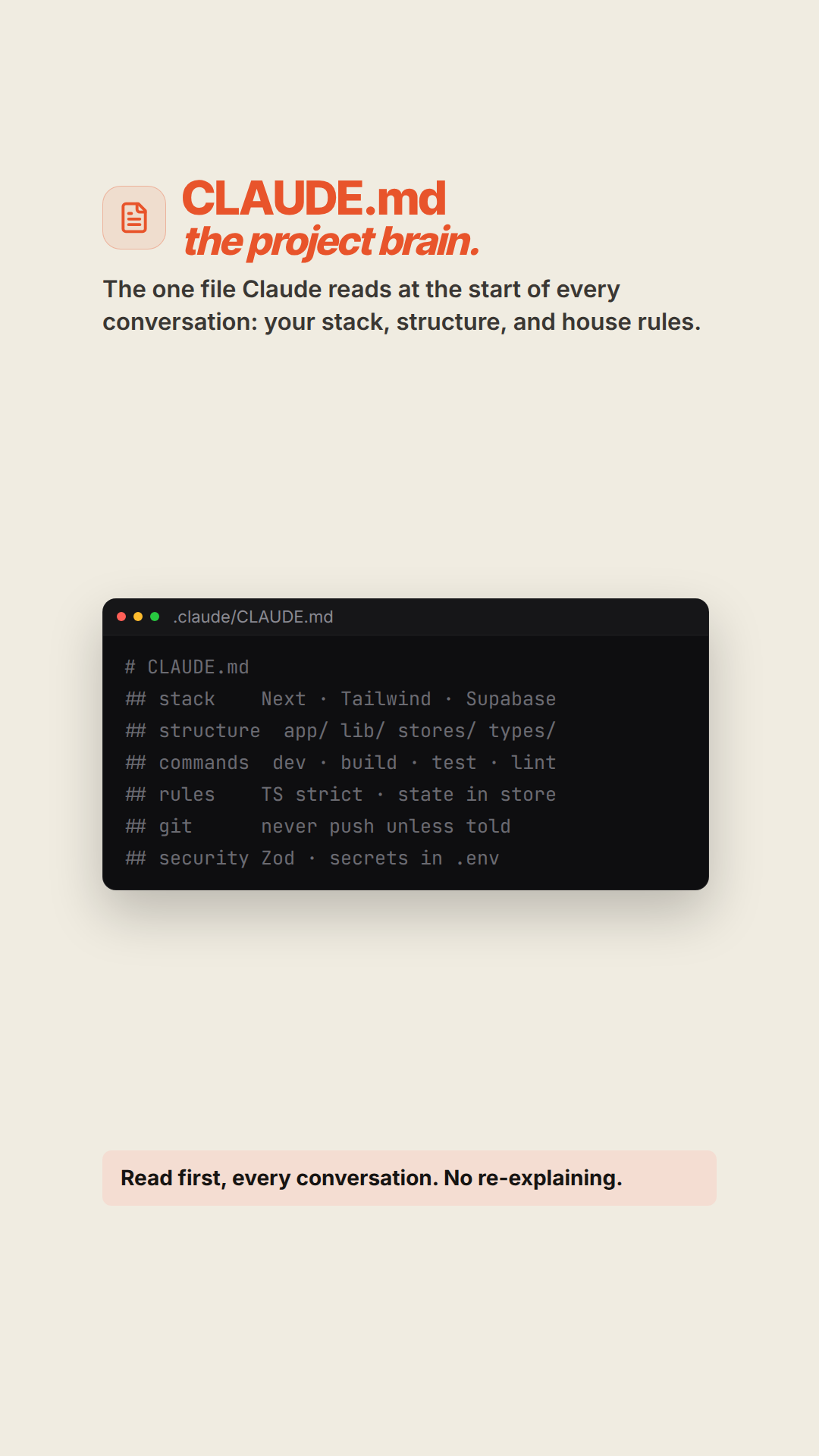
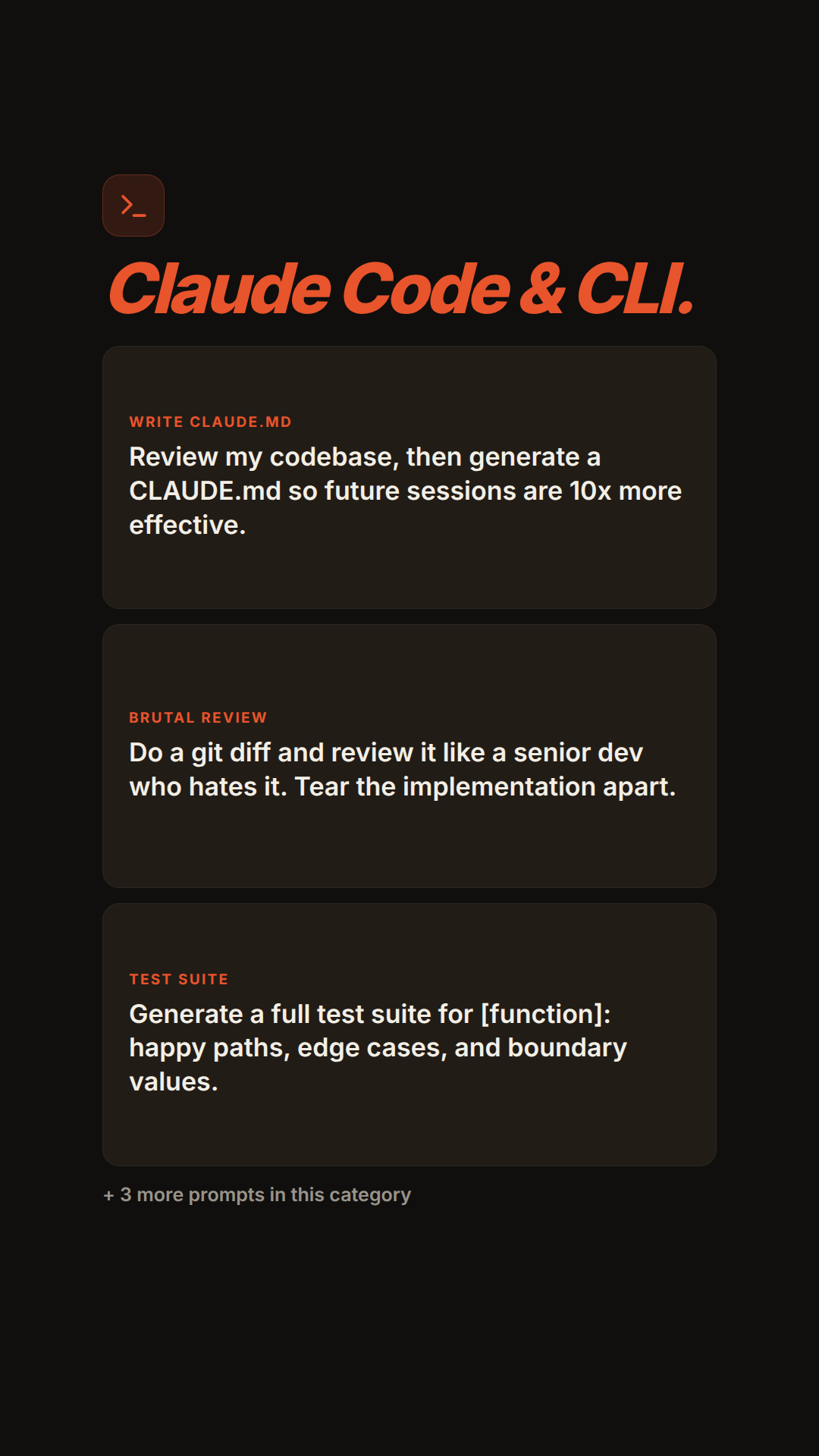
Inside .claude you set the context Claude loads before it touches anything. A CLAUDE.md that holds your stack, your rules, and what to never touch. A skills folder for the jobs it should be good at. A commands folder for the workflows you run on repeat.

Set it up once and every session starts with Claude already knowing your project. No re-explaining. No drift. No where is that file back and forth.

The folder is small. The leverage is not.

Comment STRUCTURE and I will send the exact tree, the starter CLAUDE.md, and the layout that scales as your repo grows.
Stop using ChatGPT, 60 Claude prompts

01
02
03
04
05
06
07
08
09
10
11

12
Caption
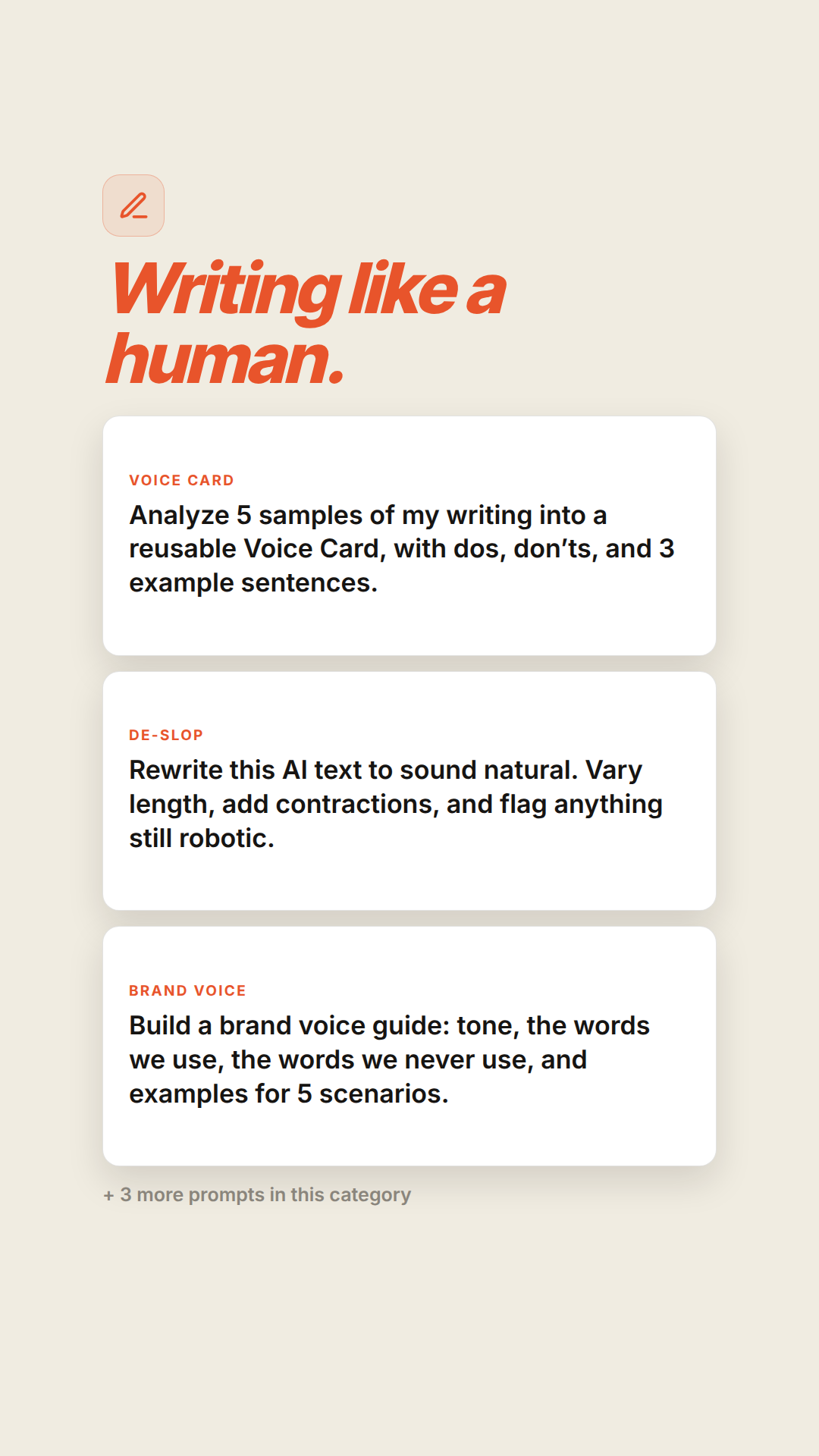
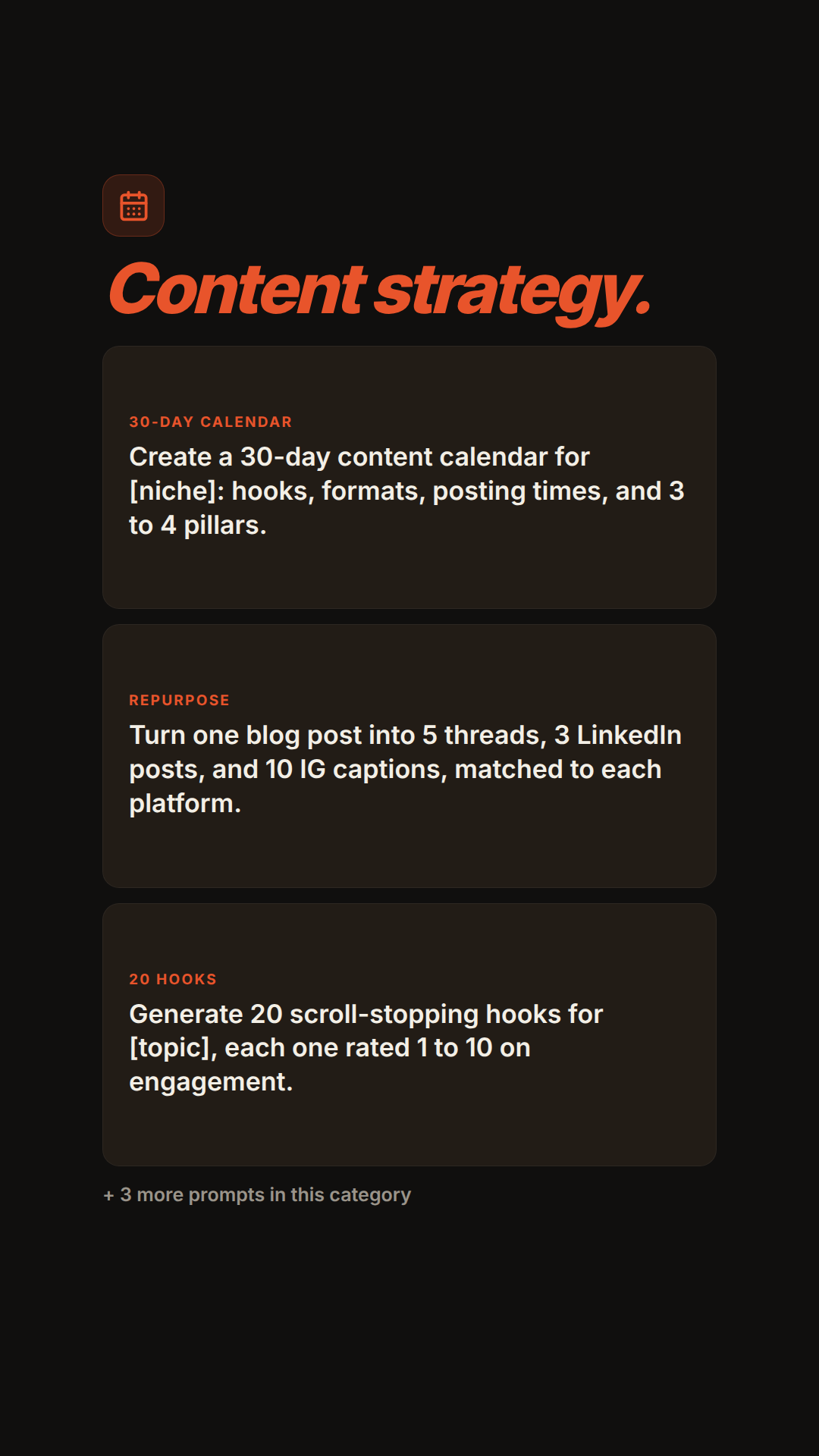
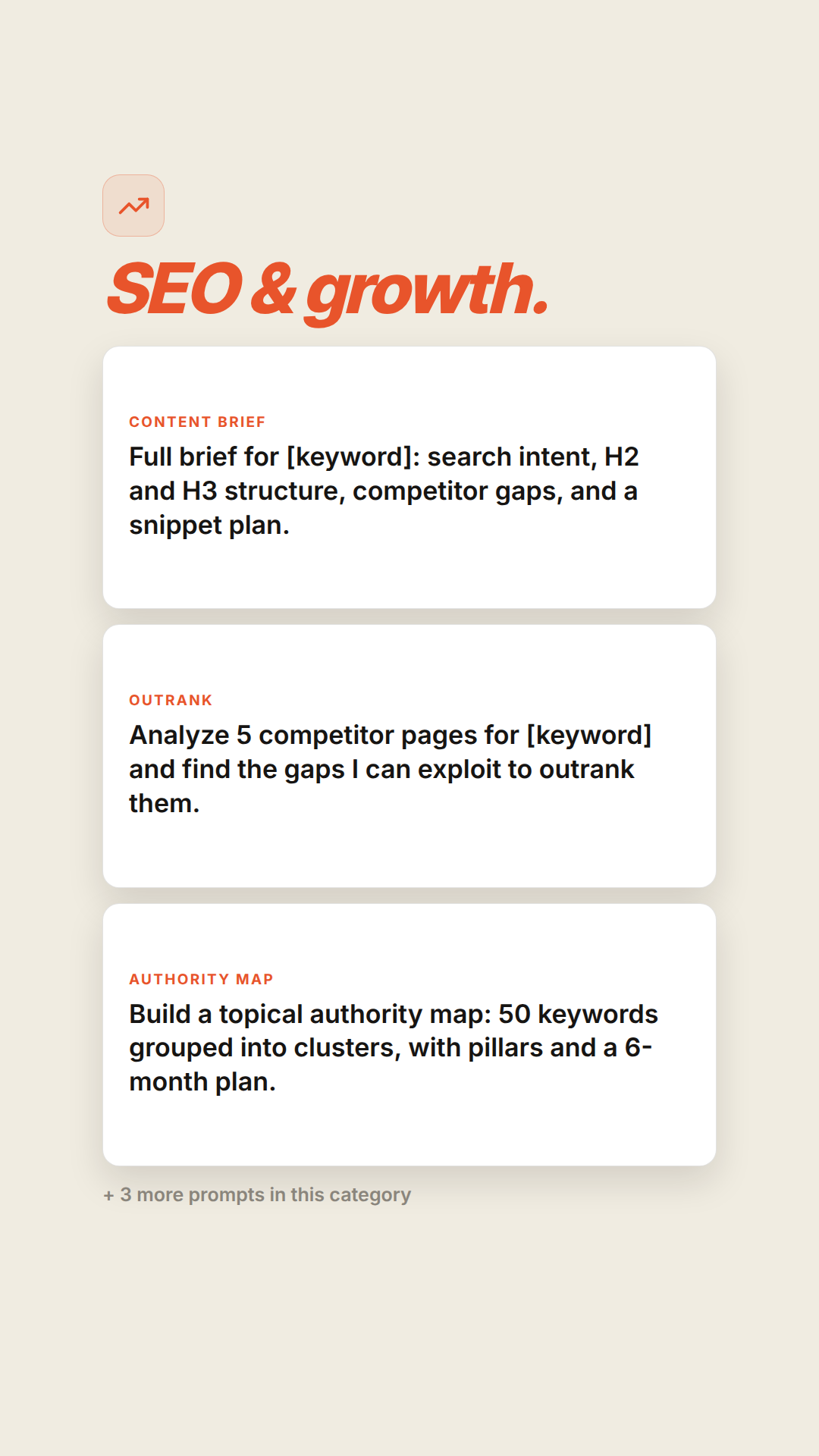
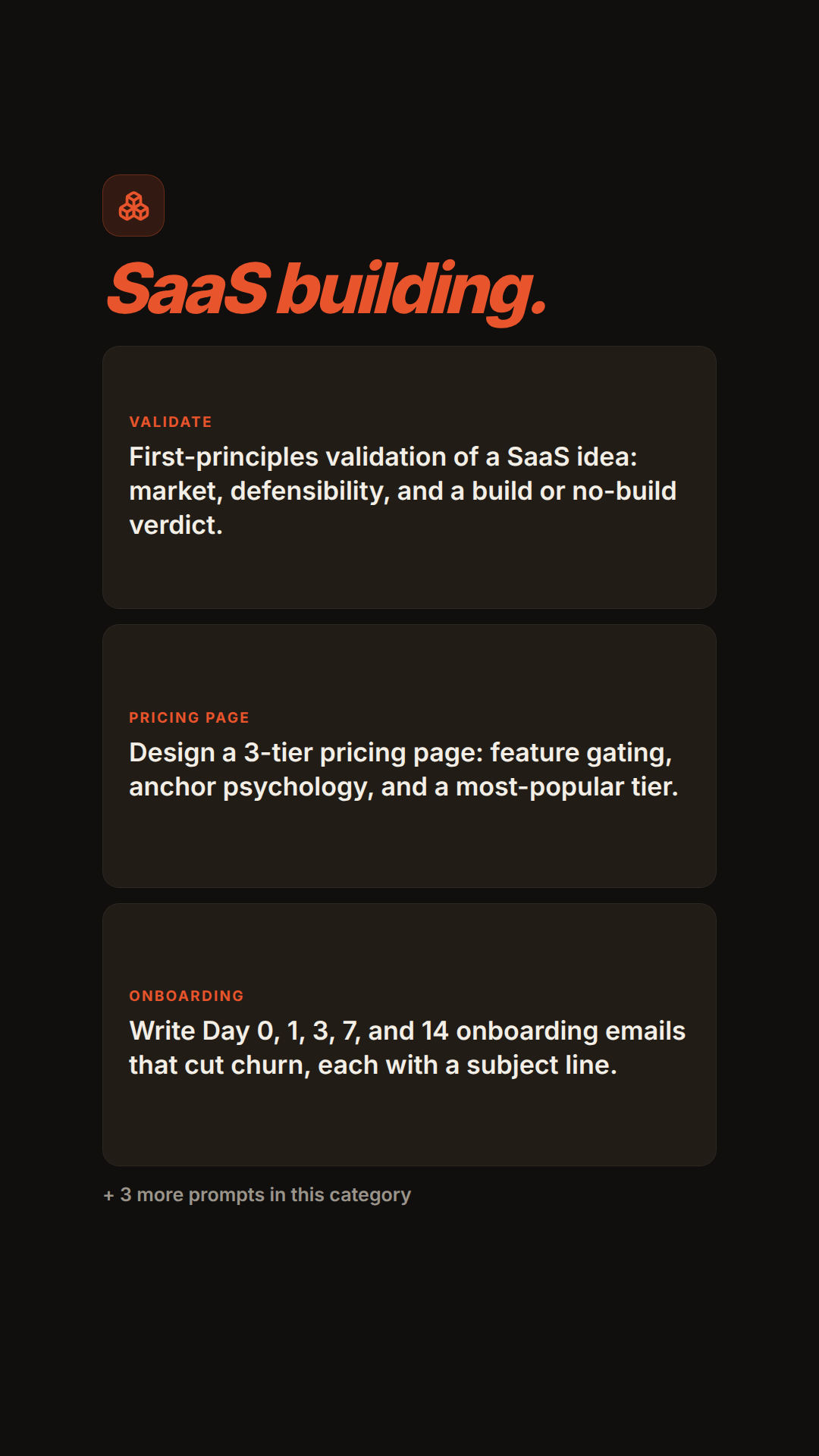
You are still opening ChatGPT for things Claude does better and actually remembers.

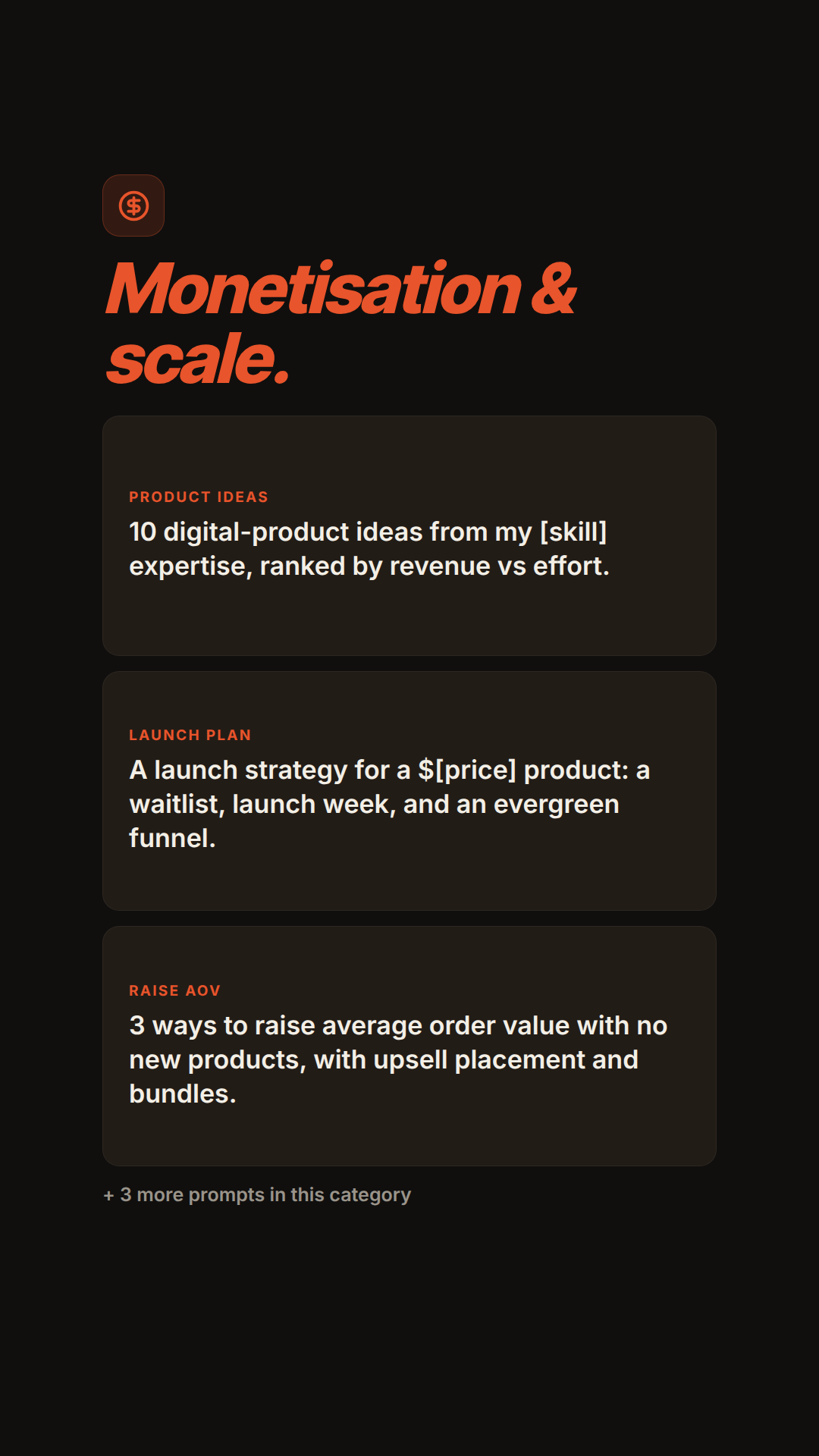
So I pulled the 60 prompts that run a business and moved them over.

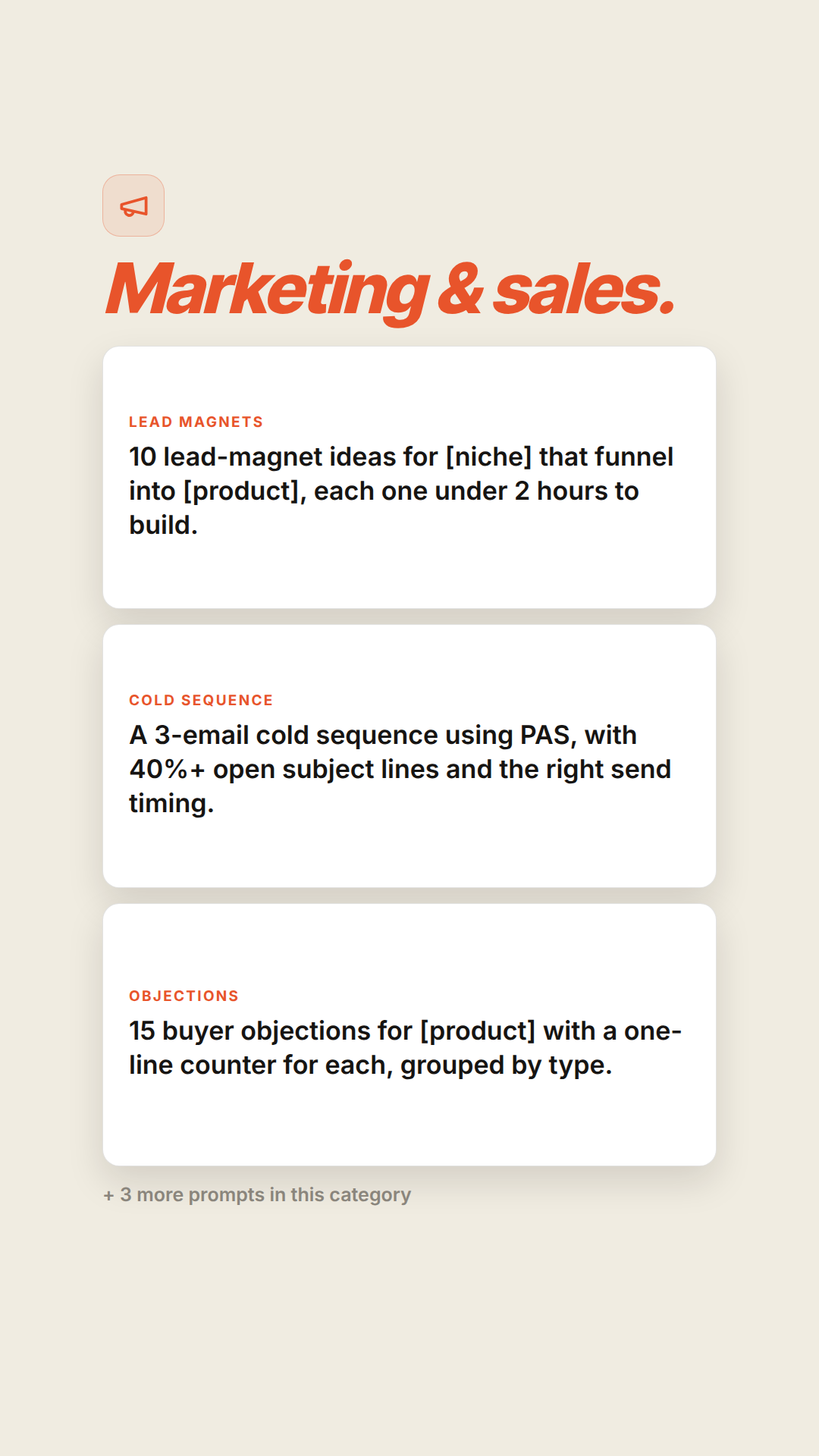
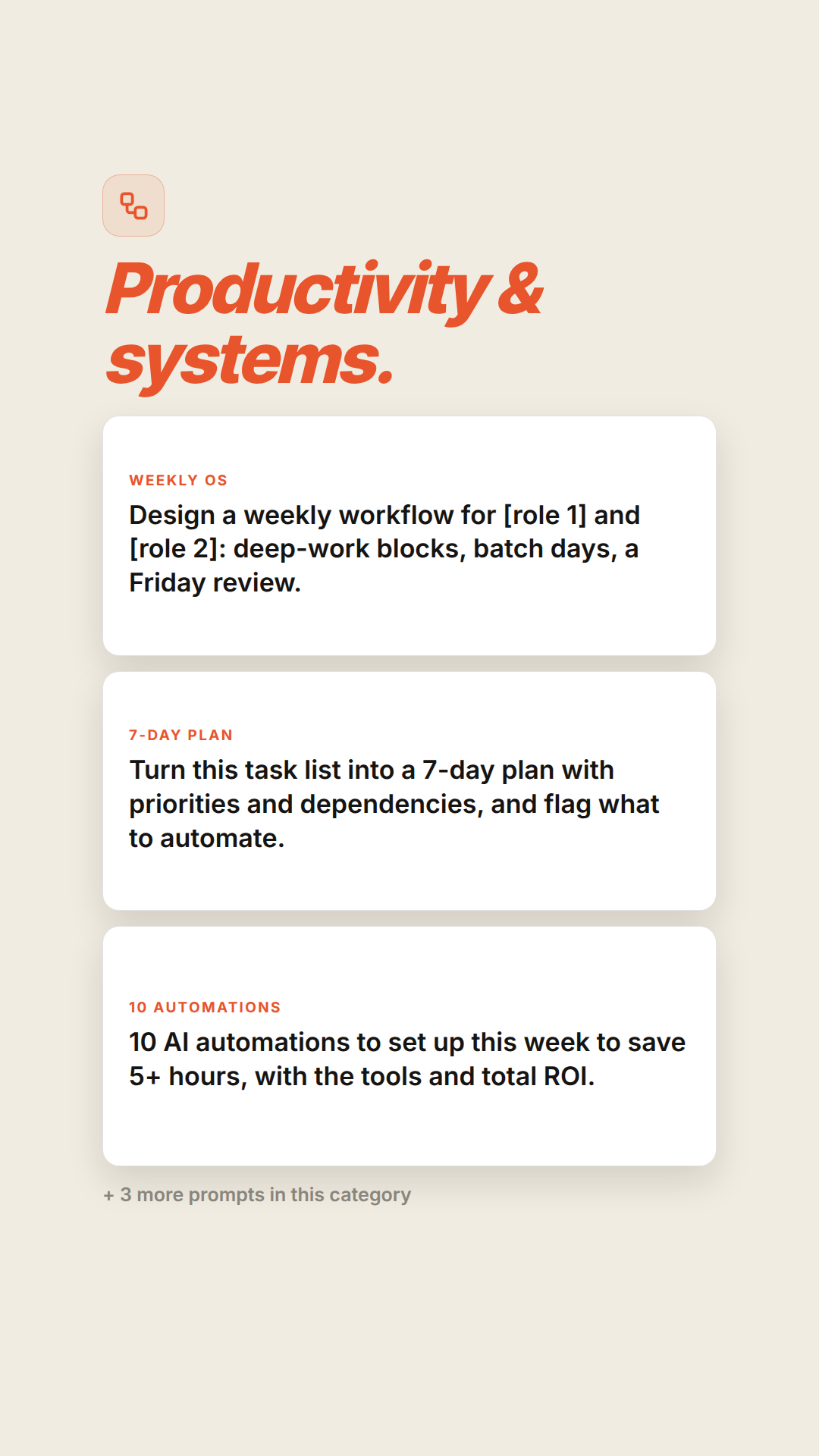
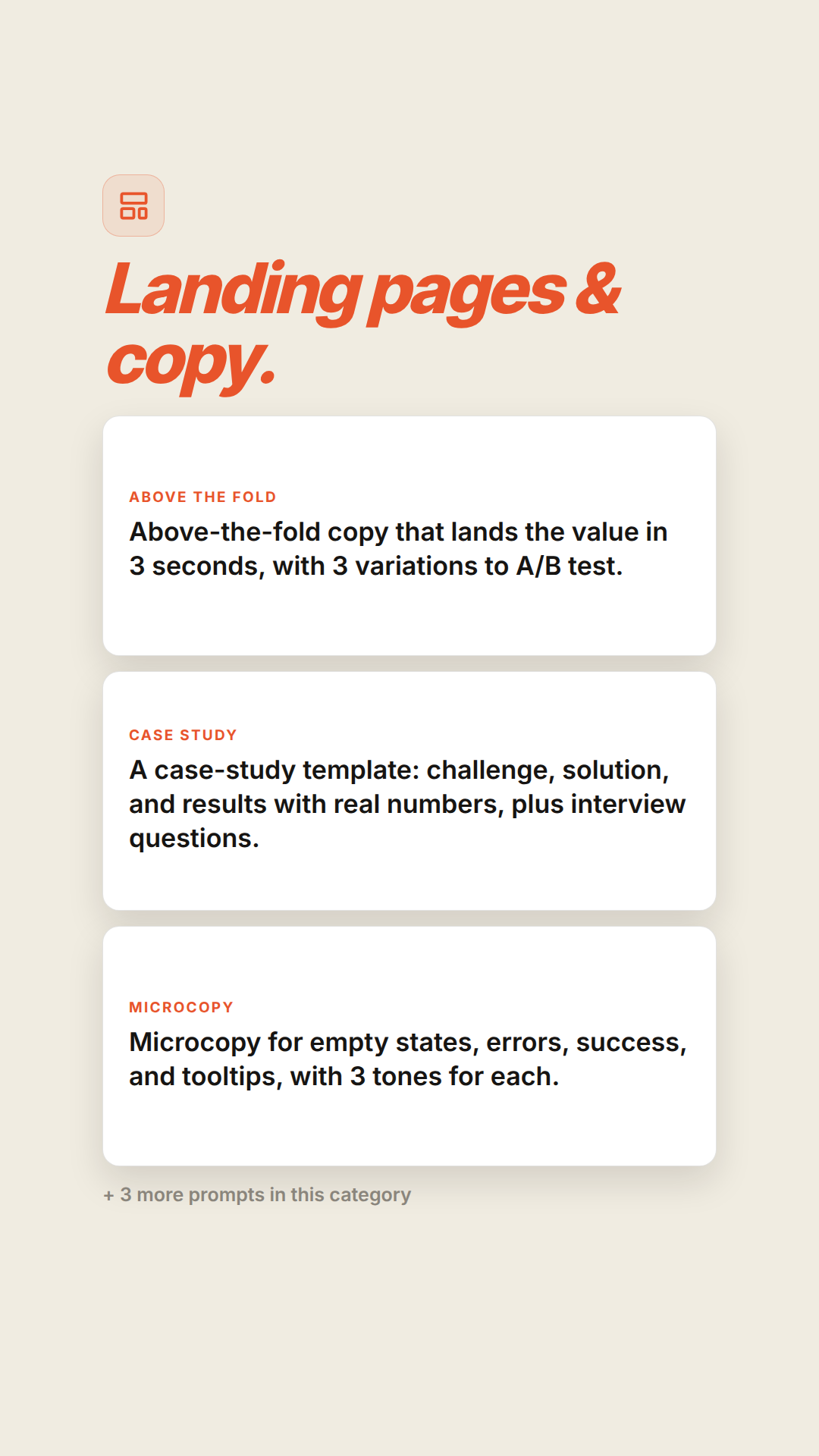
They cover the real jobs. Turn a call into a proposal. Write the follow up that lands. Pull a P and L out of a mess. Build the SOP nobody wants to write. Draft the launch. Audit the process for what to automate.

Each one is built to give you a usable answer on the first try, with a slot to drop in your own context.

This is not a clever-prompt thread you scroll past and forget. It is the saved set you run your week on.

Comment 60 and I will send the full list.
Claude prompts: Bad vs Good vs Great
01
02
03
04
05
06

07
Caption
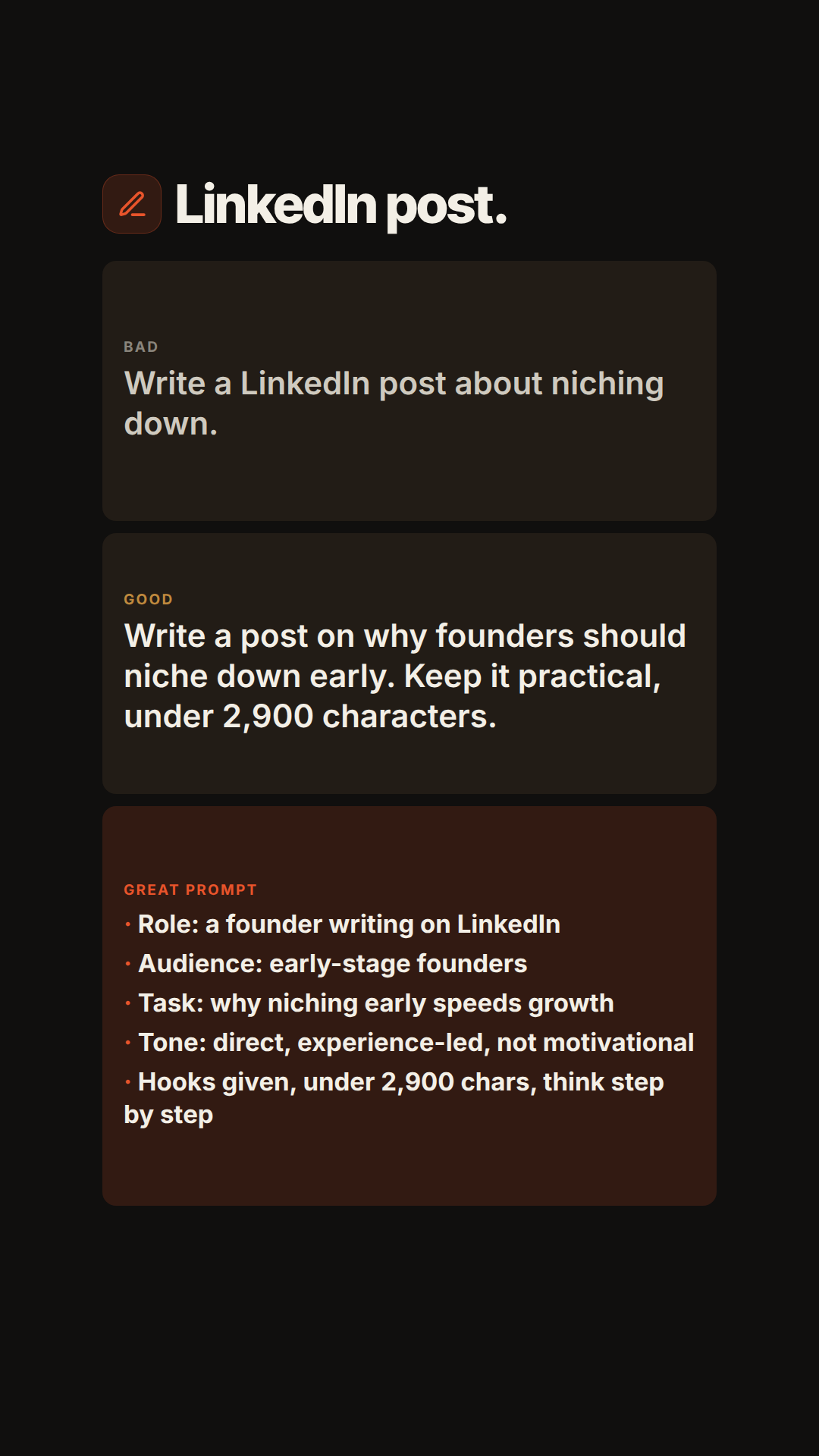
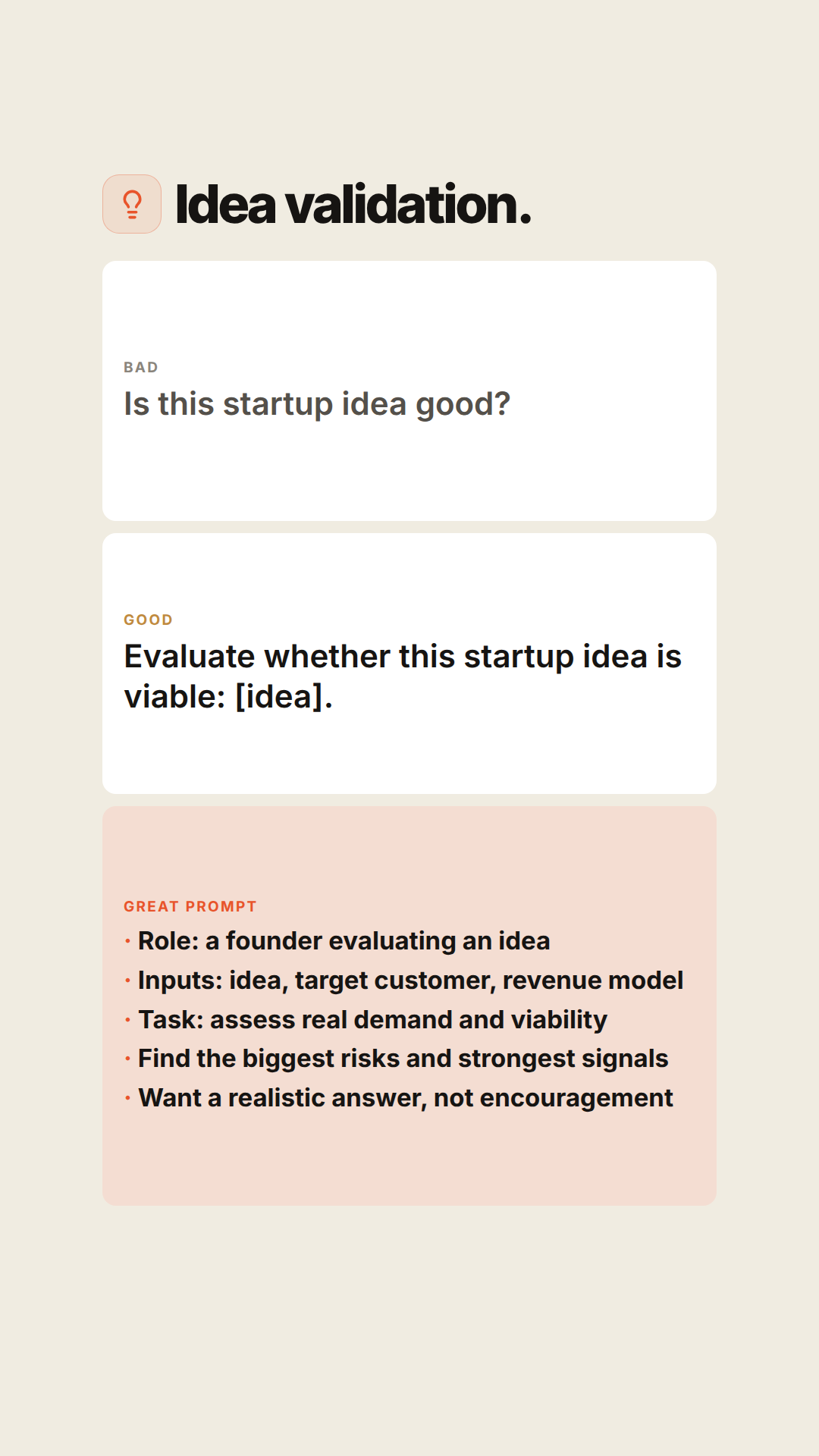
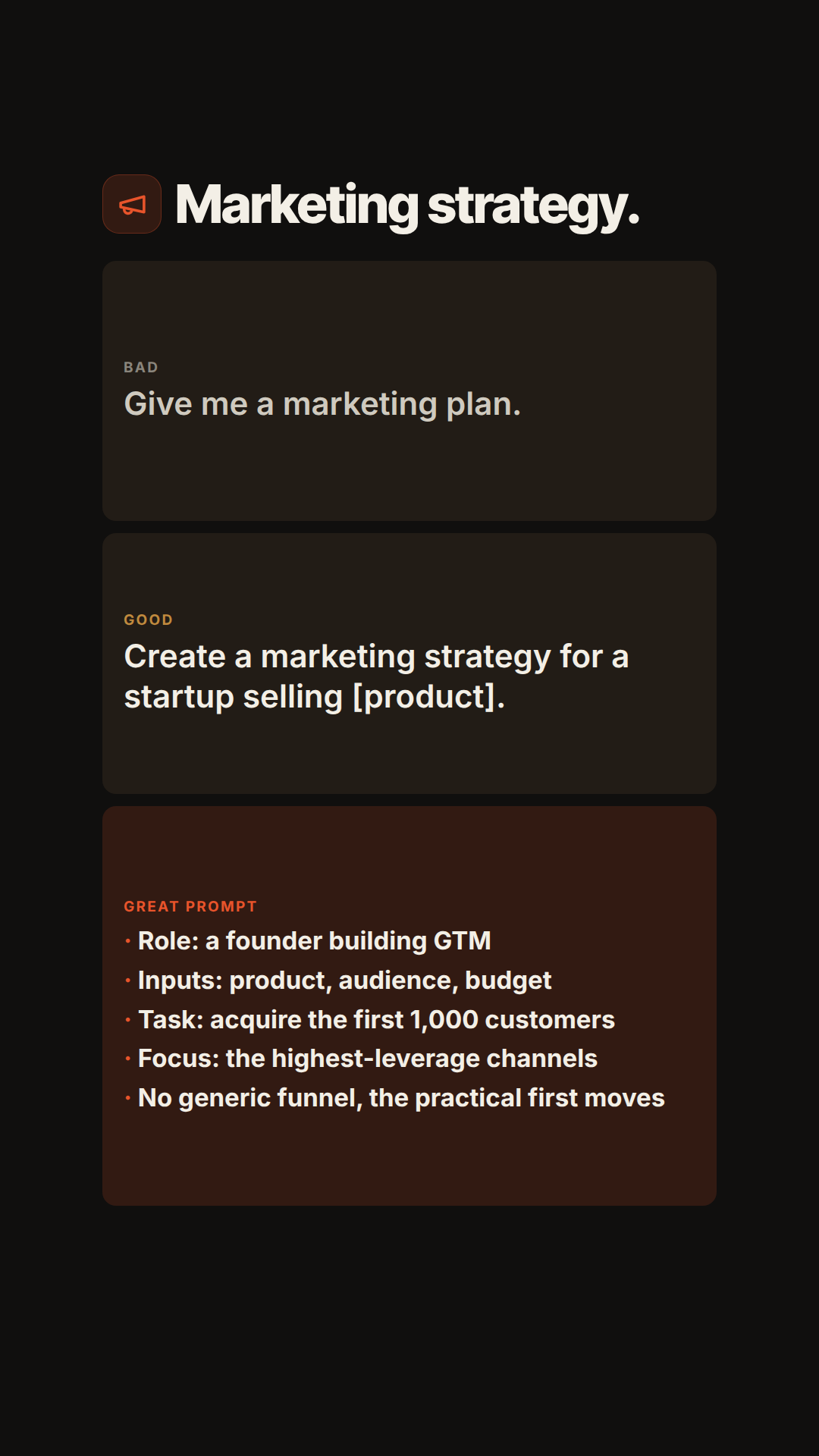
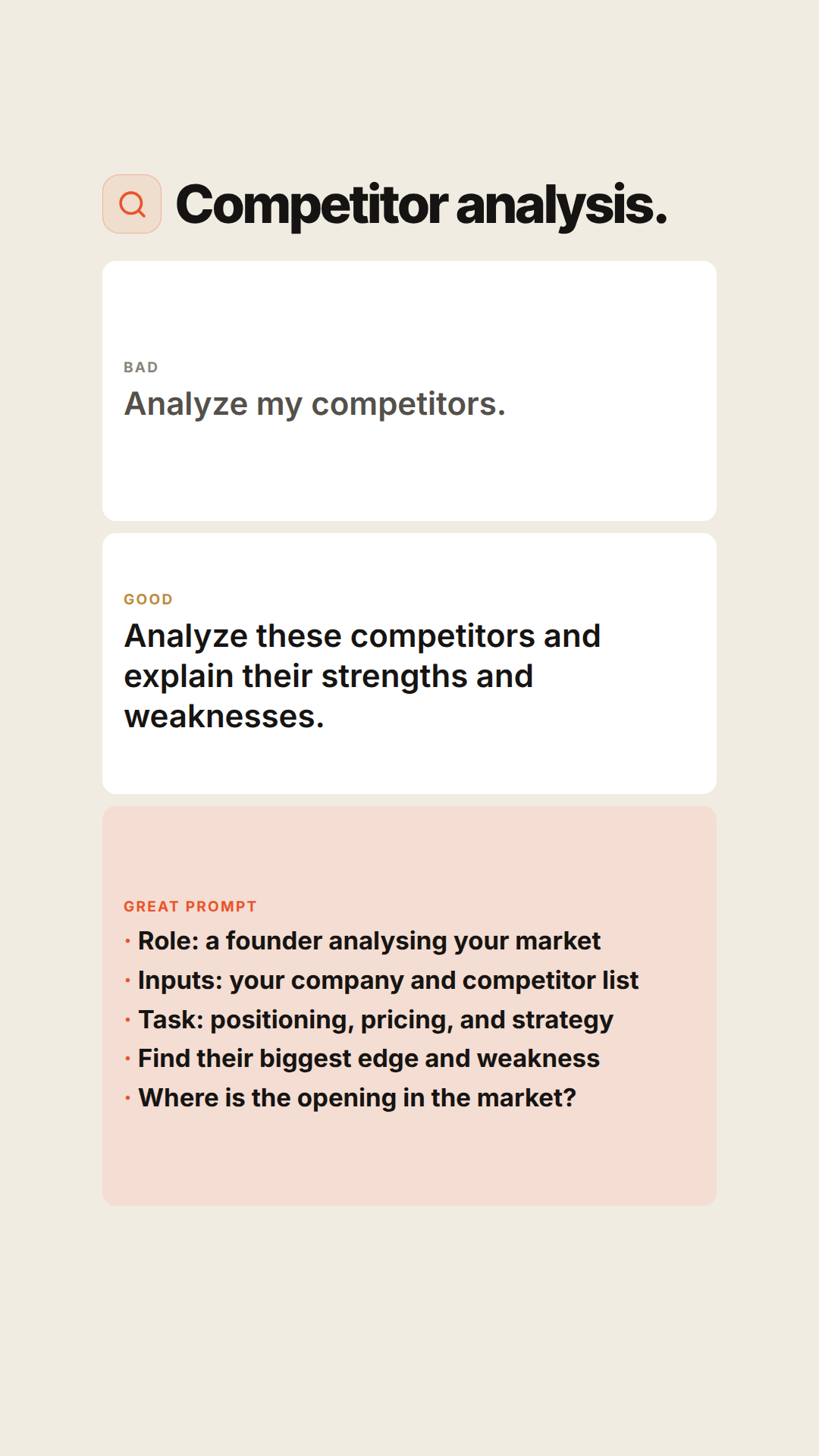
The same request, written three ways.

Bad: fix the bug.

Good: fix the login bug where users get logged out on refresh.

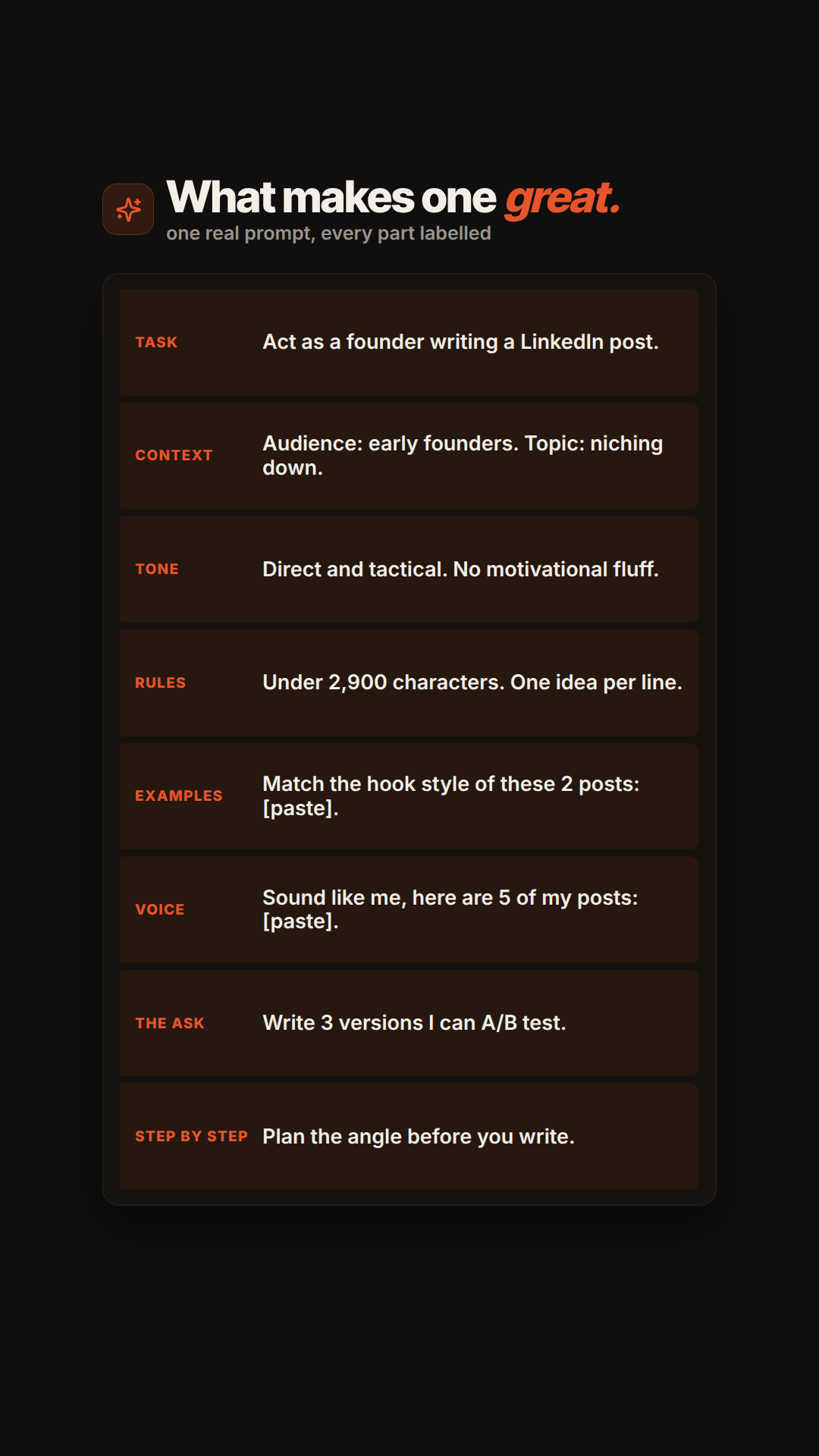
Great: users get logged out on refresh, probably the token is not persisting. Check the auth middleware and the cookie config, propose a fix, do not touch the database layer, show me the diff.

The bad one gets a guess. The great one gets the actual fix on the first try.

It is never magic words. It is context, constraints, and a clear definition of done. Once you see it side by side you cannot unsee it.

Comment PROMPT and I will send the full bad to great breakdown plus a skeleton you can reuse on anything.
Client emails into decks with Claude + Gamma
01
02
03
04
05
06
07

08
Caption
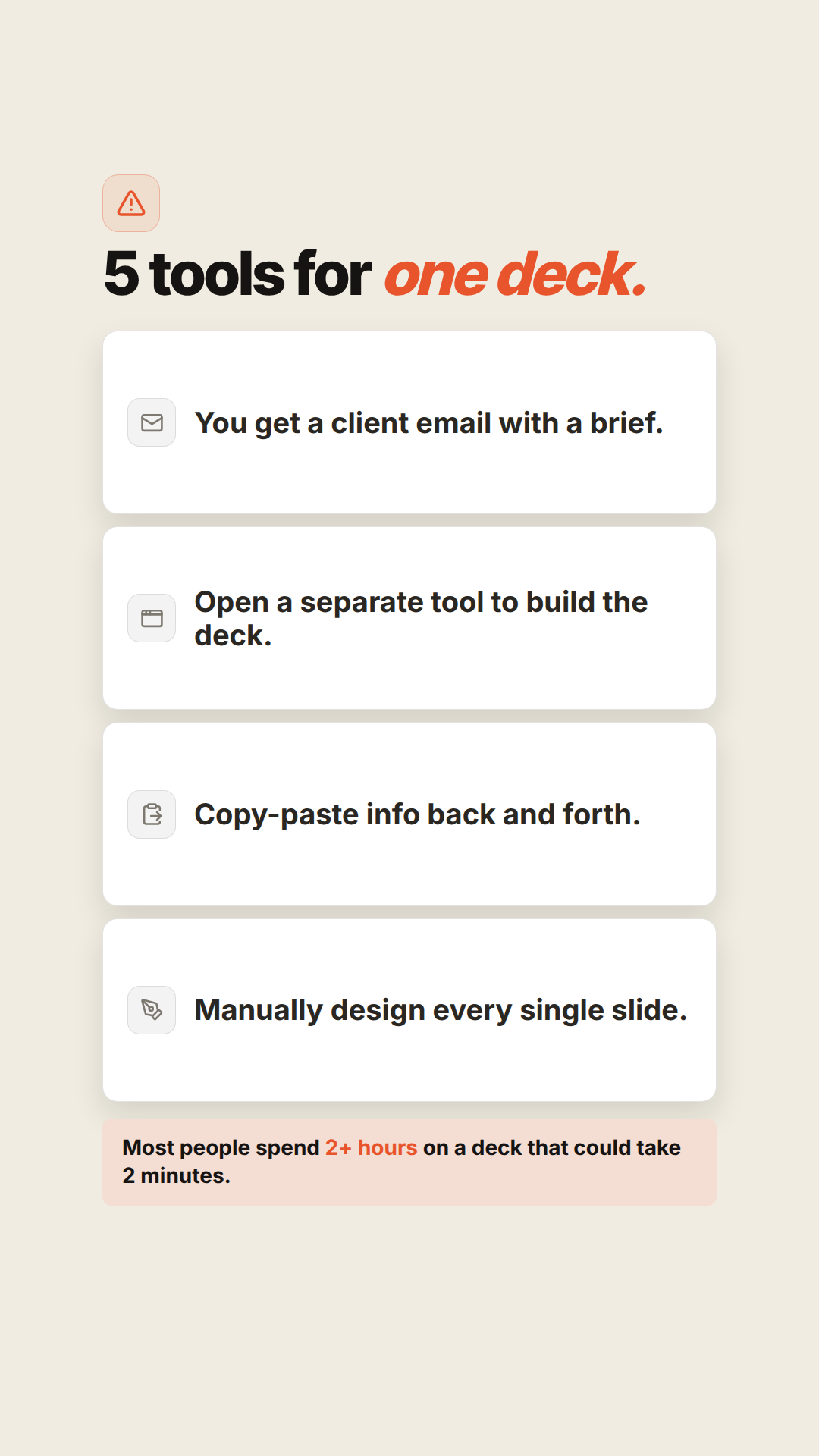
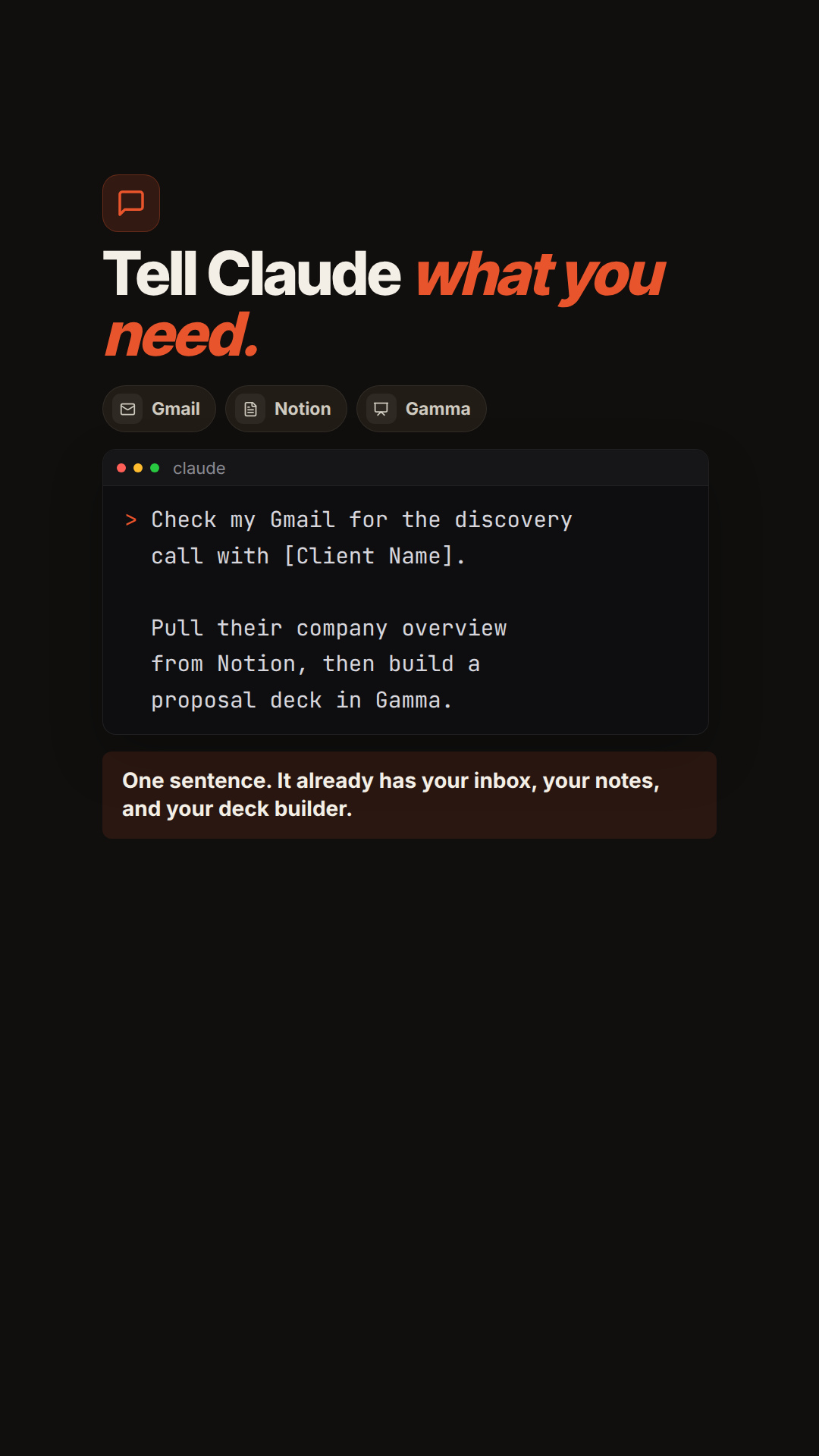
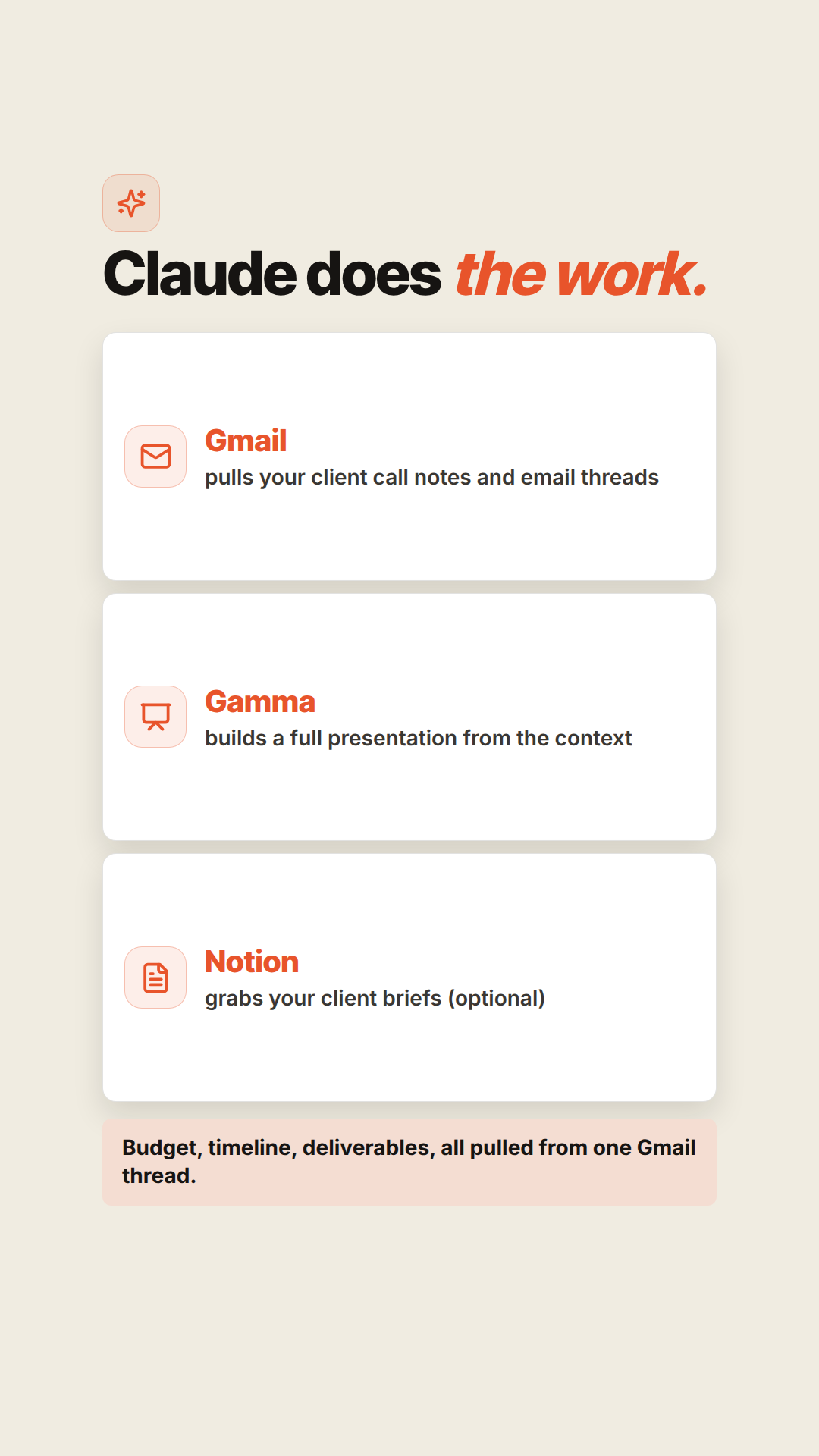
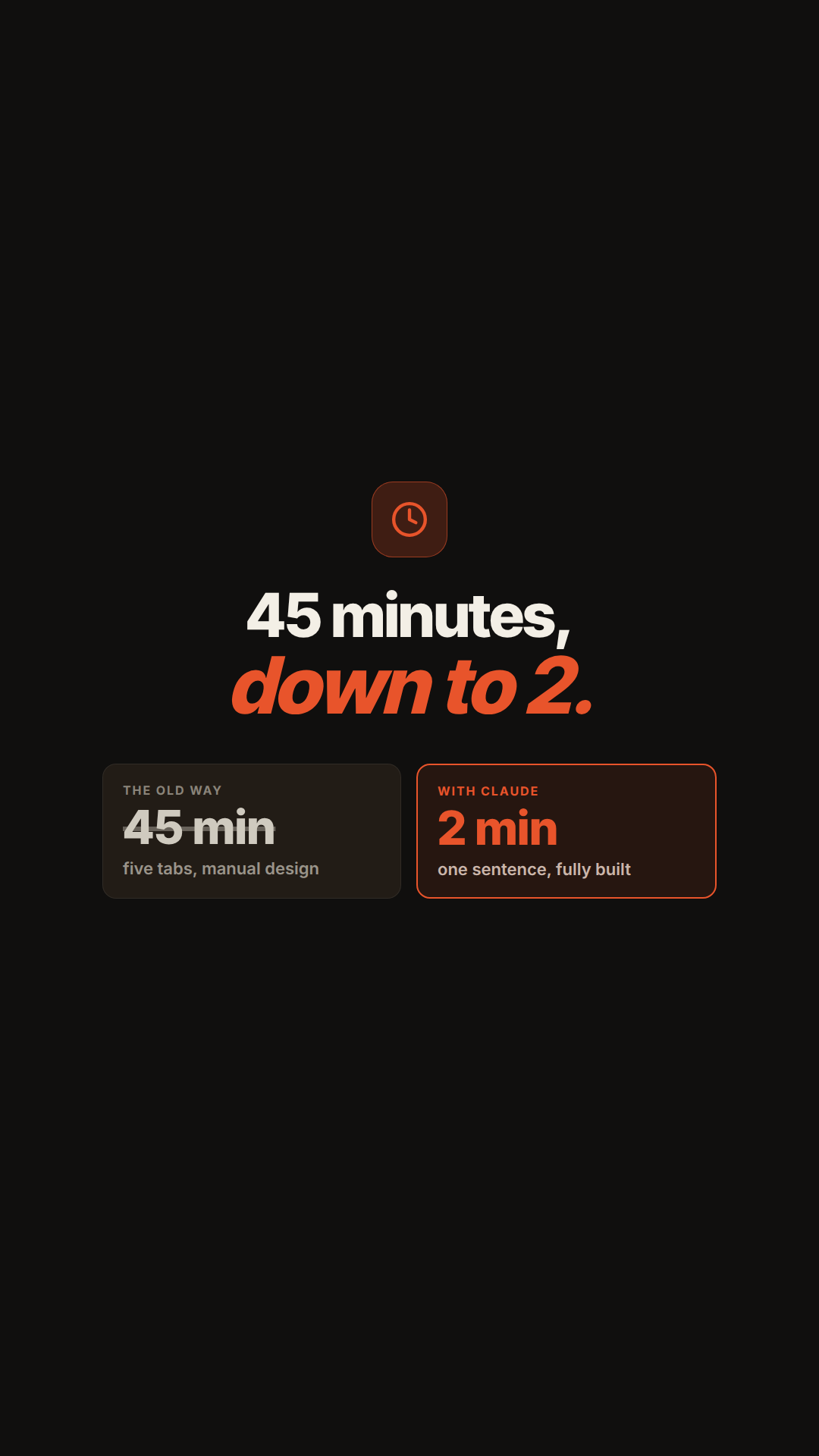
A client sends a messy email. Twenty minutes later they have a finished deck. Here is the exact handoff.

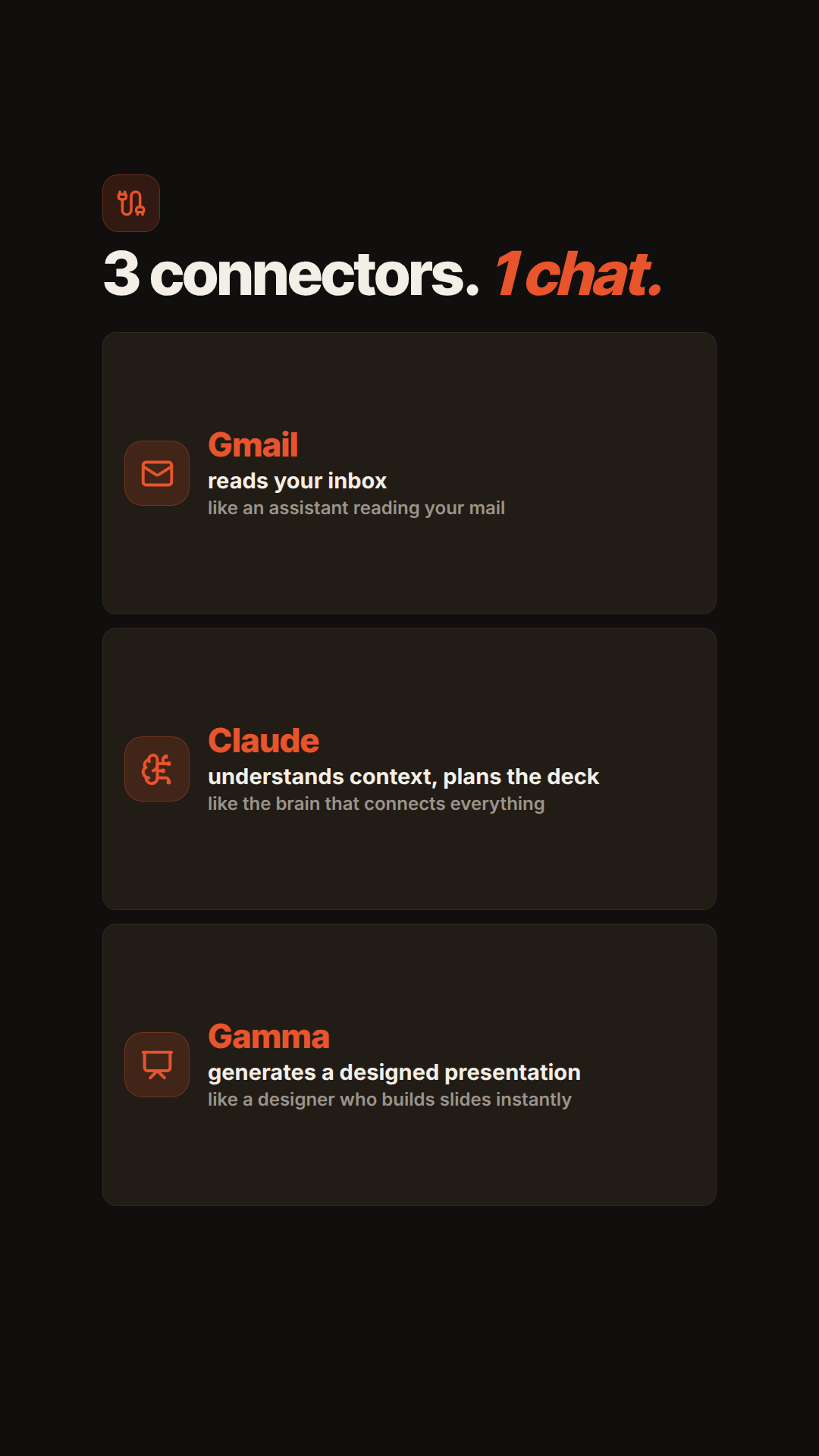
First, Claude reads the email and pulls the real structure out of it. The goal, the sections, the order, the points that actually matter.

Then it writes the outline in the format Gamma turns into slides cleanly, so you never fight with layout.

Gamma builds the deck. Claude runs a polish pass on the wording so it reads senior instead of auto generated.

That is the whole loop. Raw notes in, client ready deck out, same day.

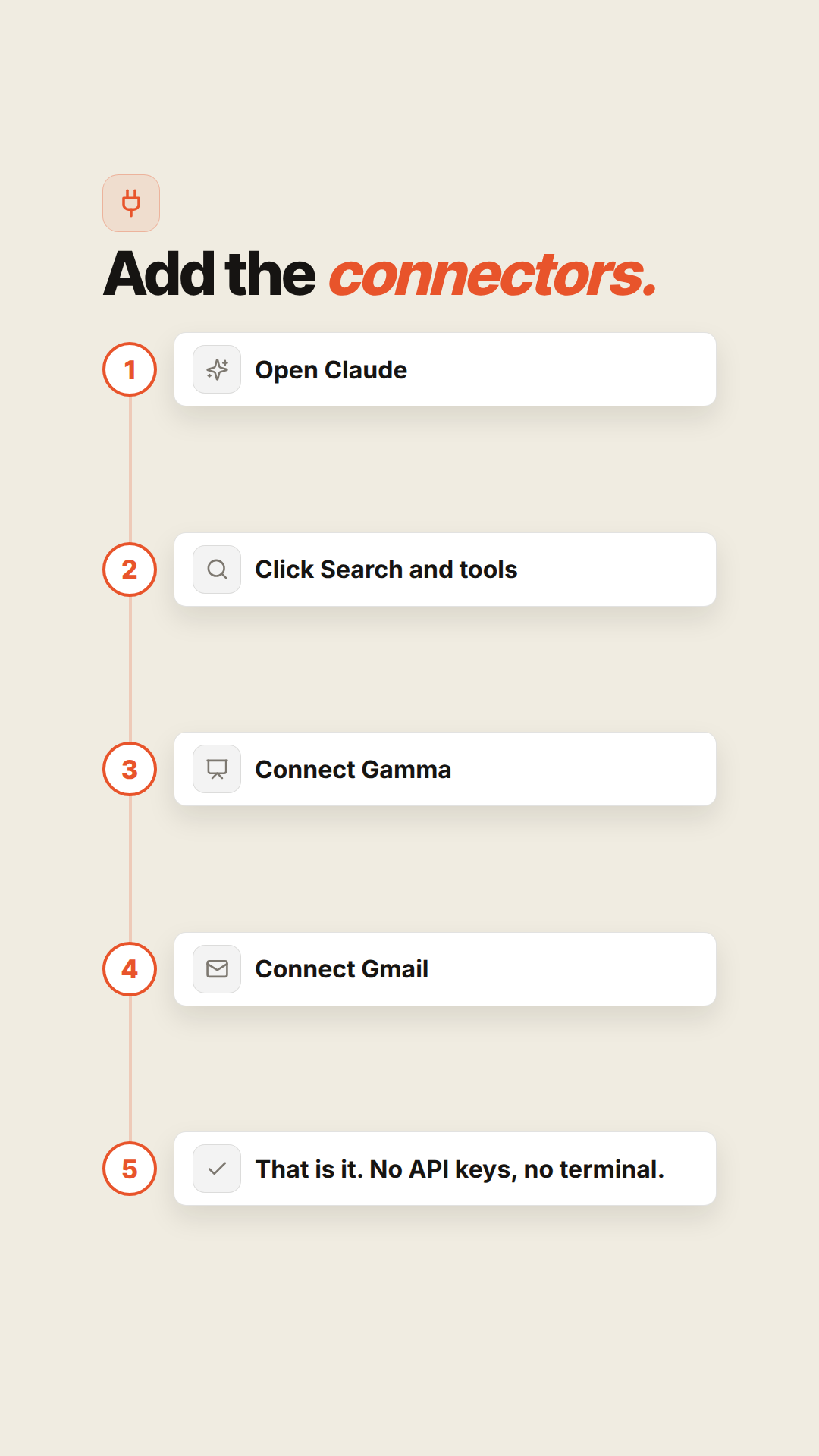
Comment GAMMA and I will send the prompt and the Claude to Gamma steps.
The 15 free Claude courses you need

01
02
03
04

05
06

07
Caption
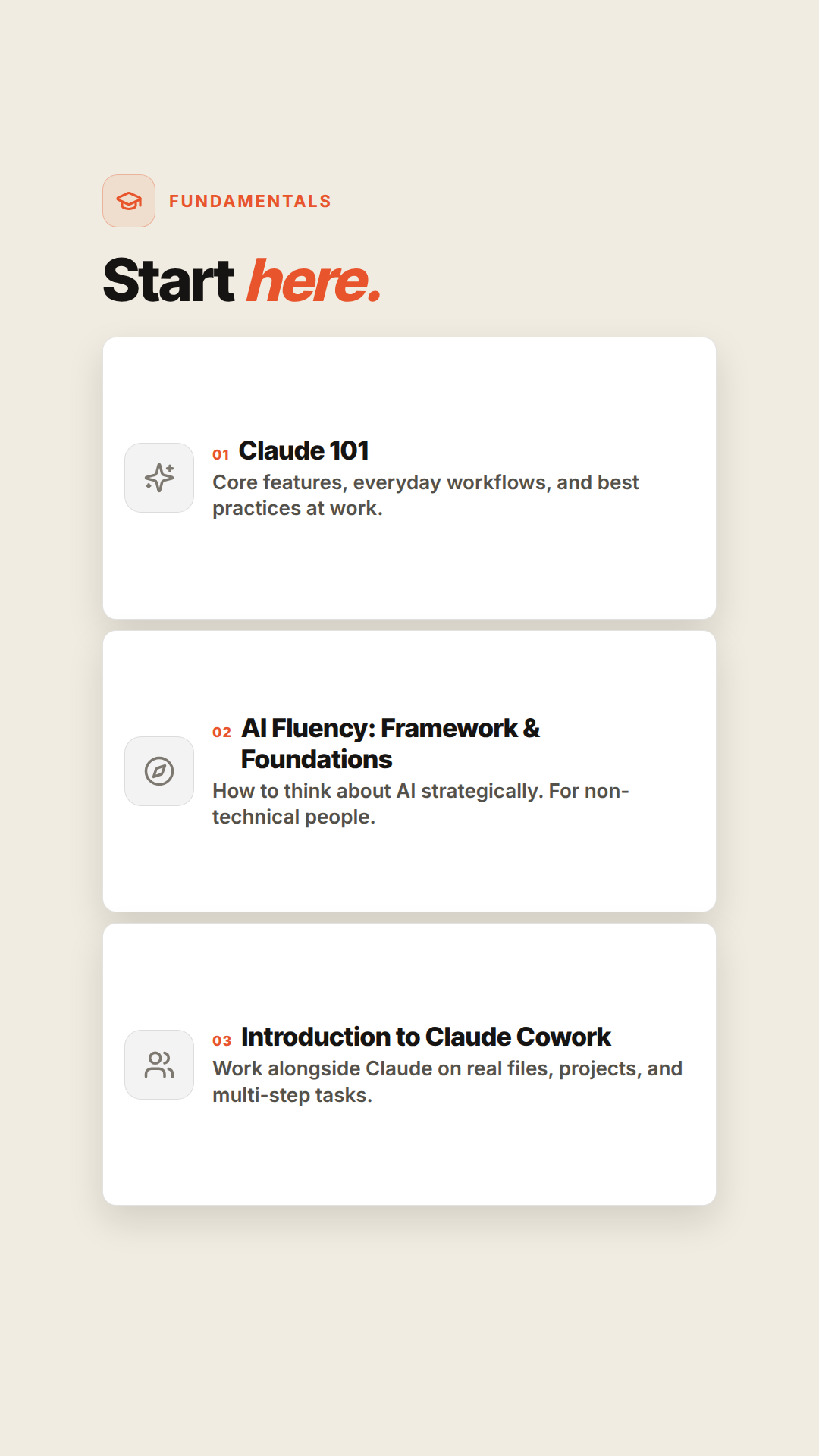
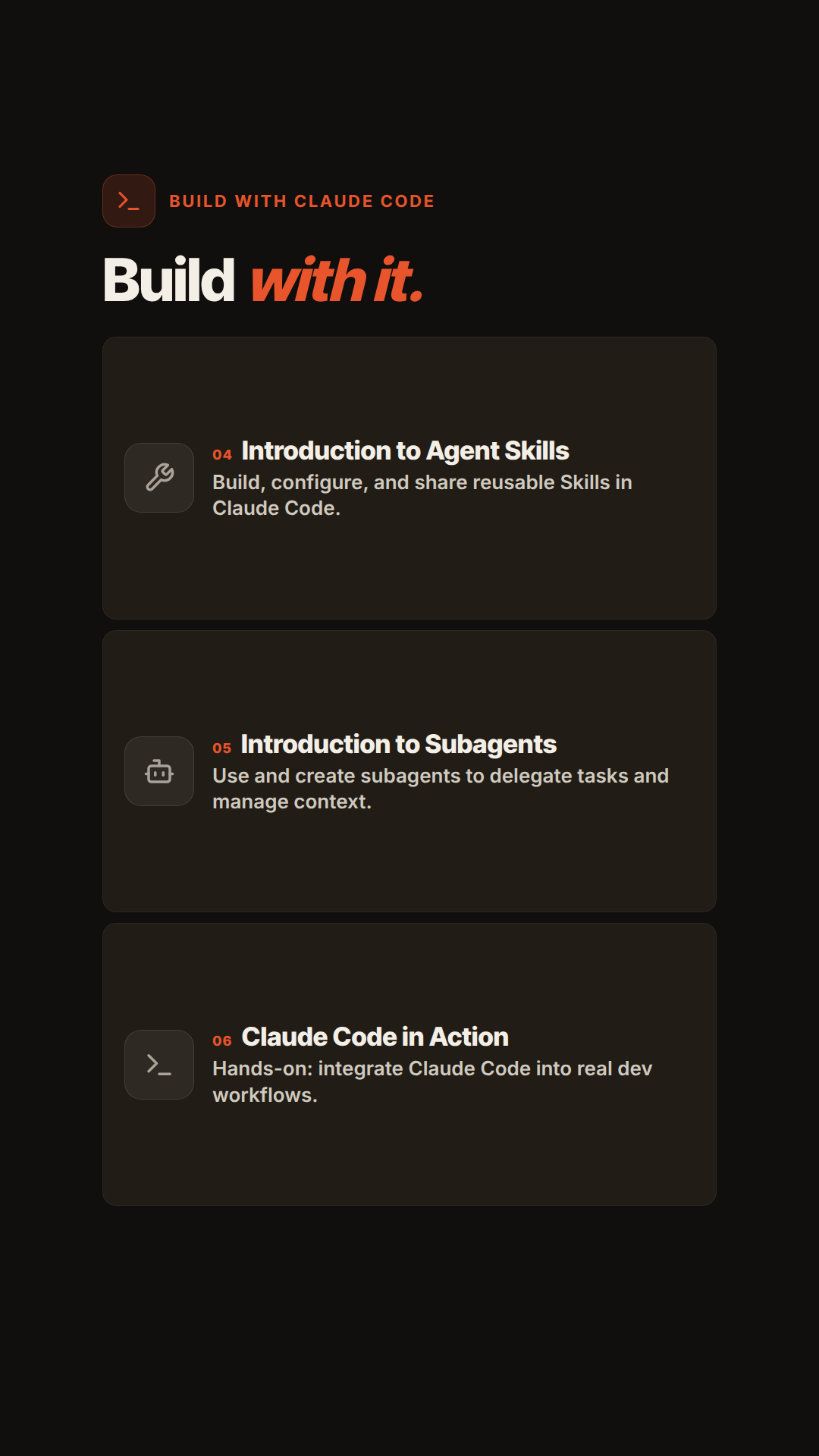
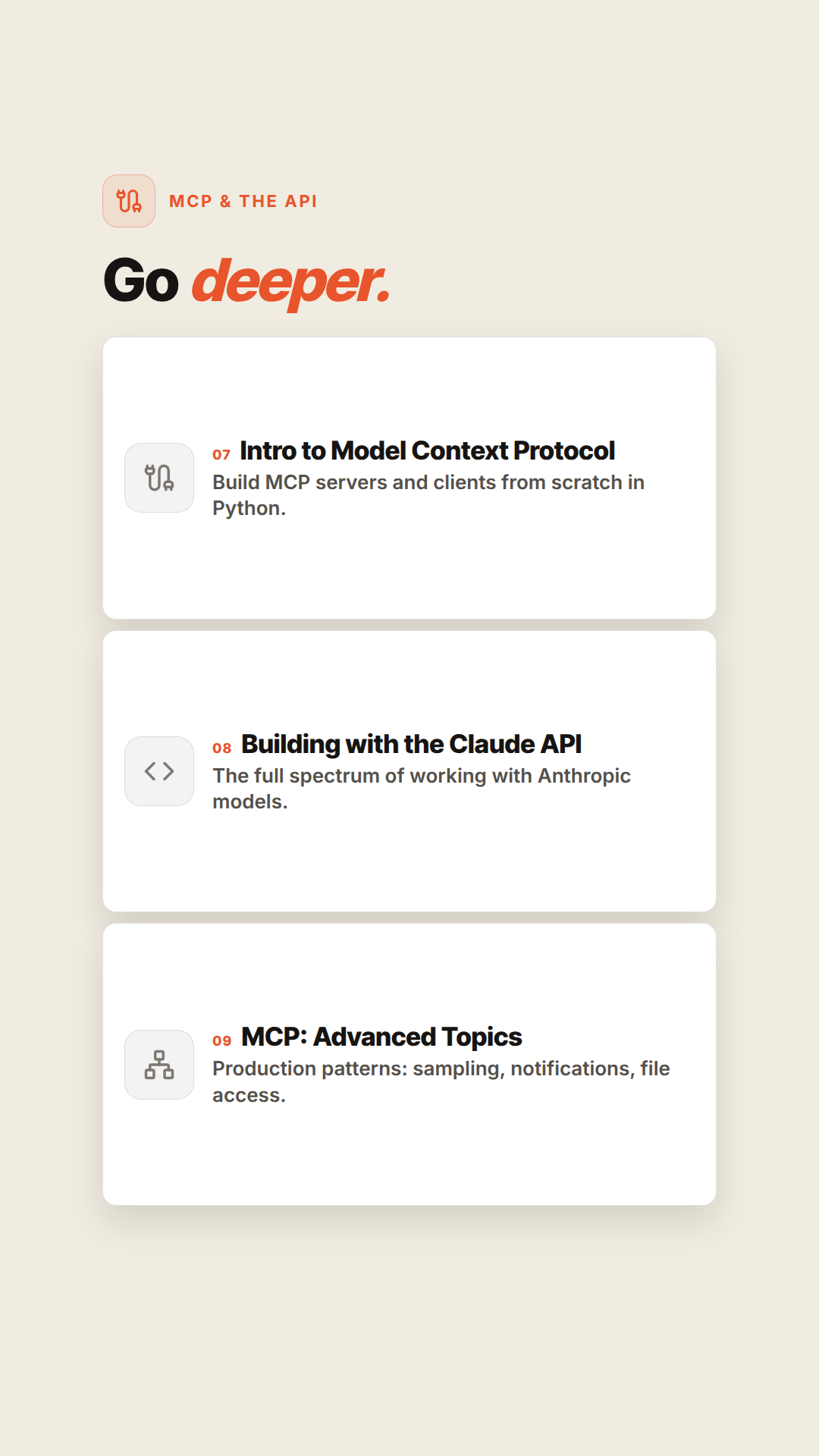
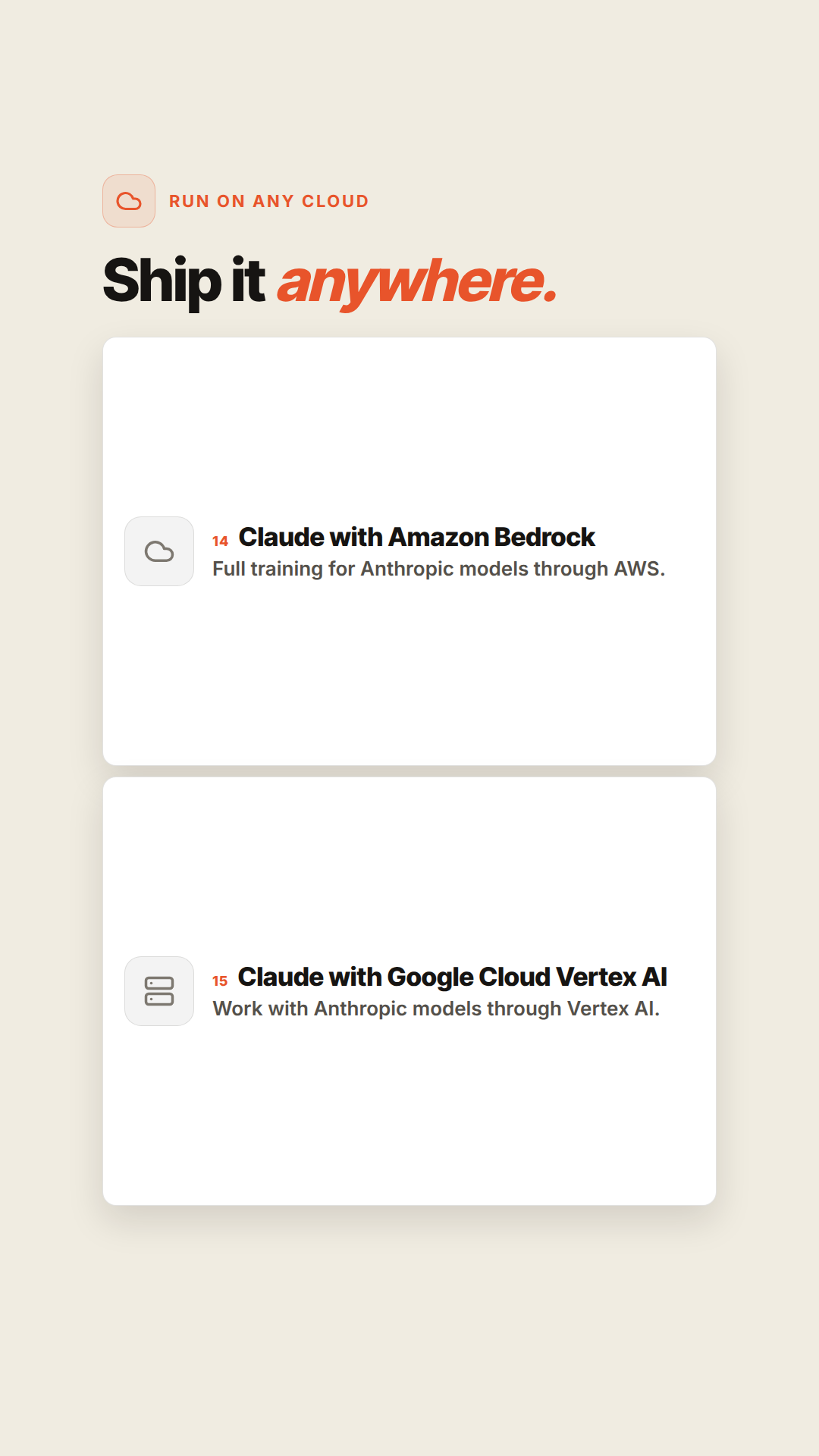
Fifteen free courses will take you from never opening Claude Code to shipping with it. The problem is the order.

Here is the path I would actually follow.

Start with the fundamentals, just enough to be dangerous. Then the agent mindset, so you stop driving it like a chat box. Then skills and commands, where the real leverage lives. Then one real project, end to end, to lock it in.

Most lists bury the few that matter under twenty you will never finish. This is the shortlist, ranked, in the order that gets you to a real build by the weekend.

Comment COURSE and I will send the fifteen, sorted, with links.
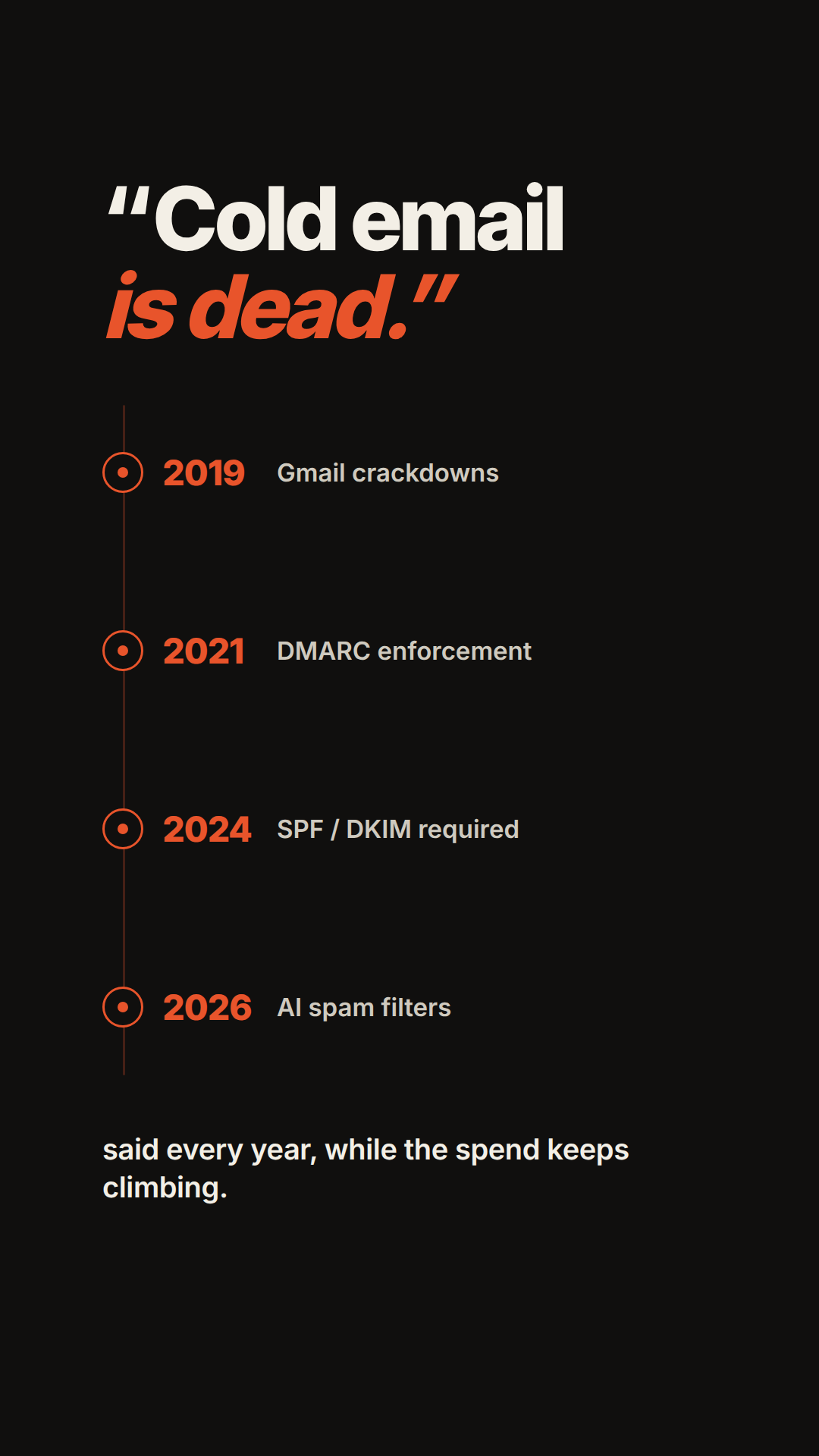
Cold email isn’t dead, you skipped warmup
01
02

03
04
05
06
07

08
Caption
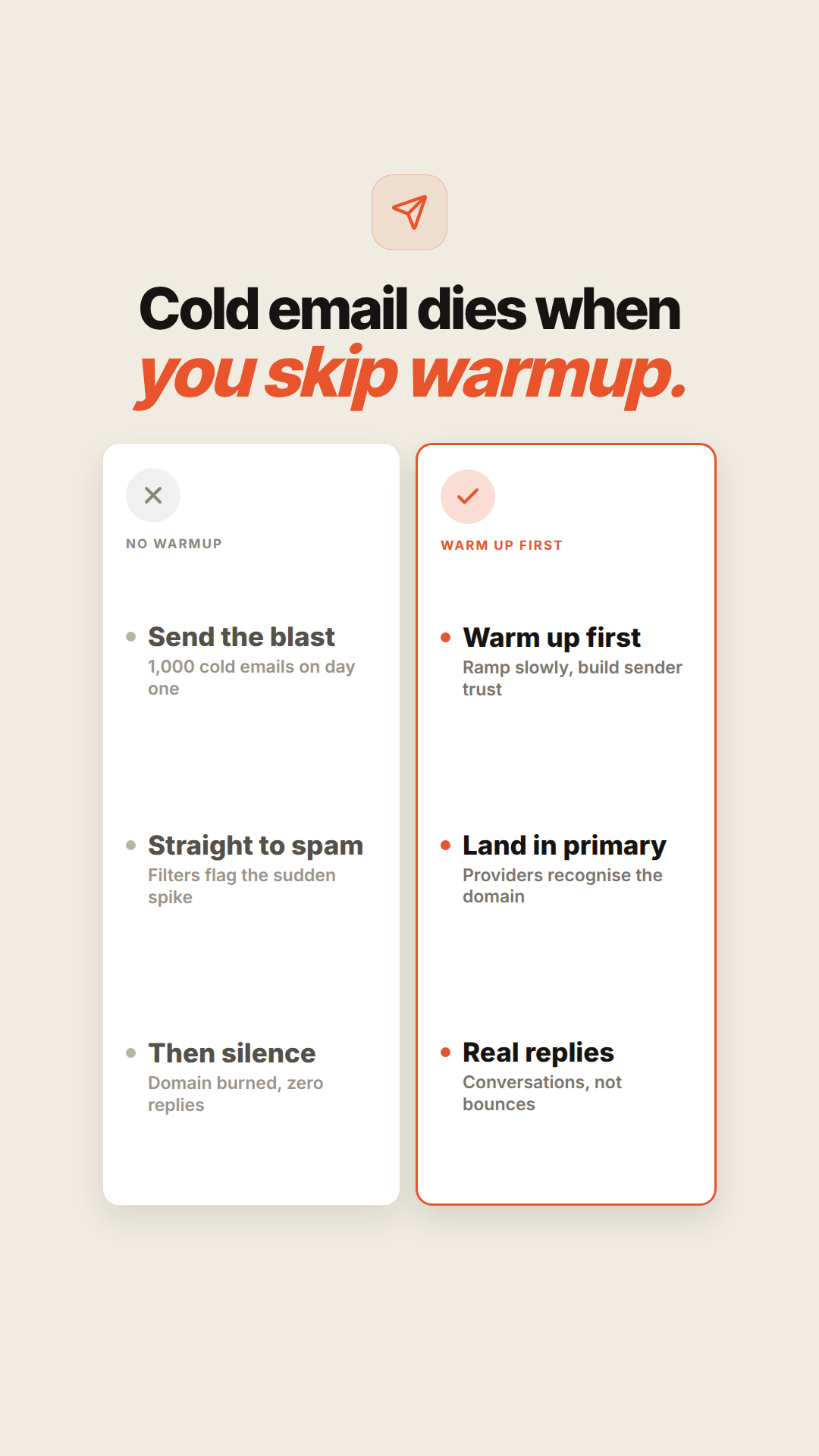
Here is what kills most cold email, and it is not the copy.

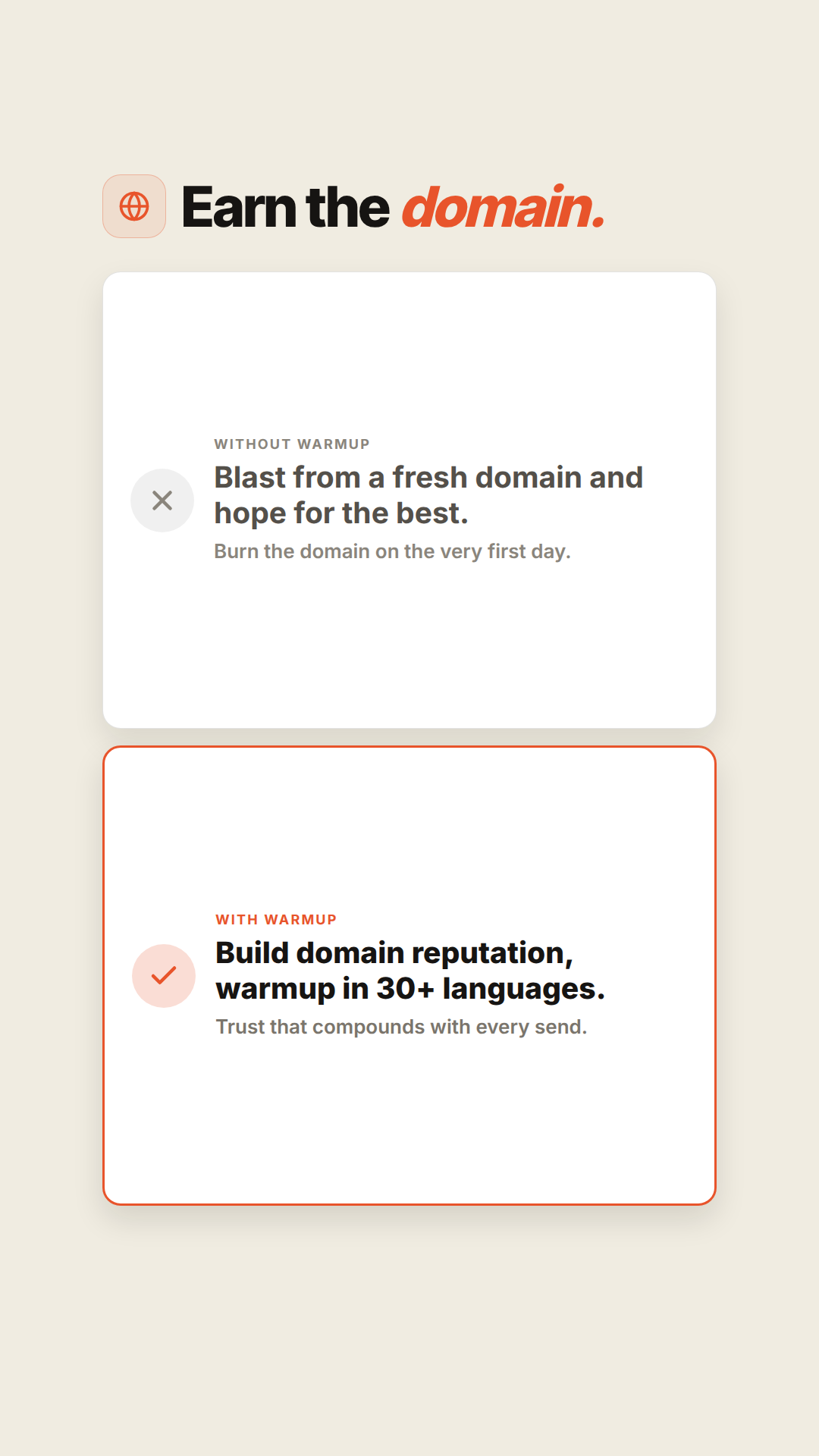
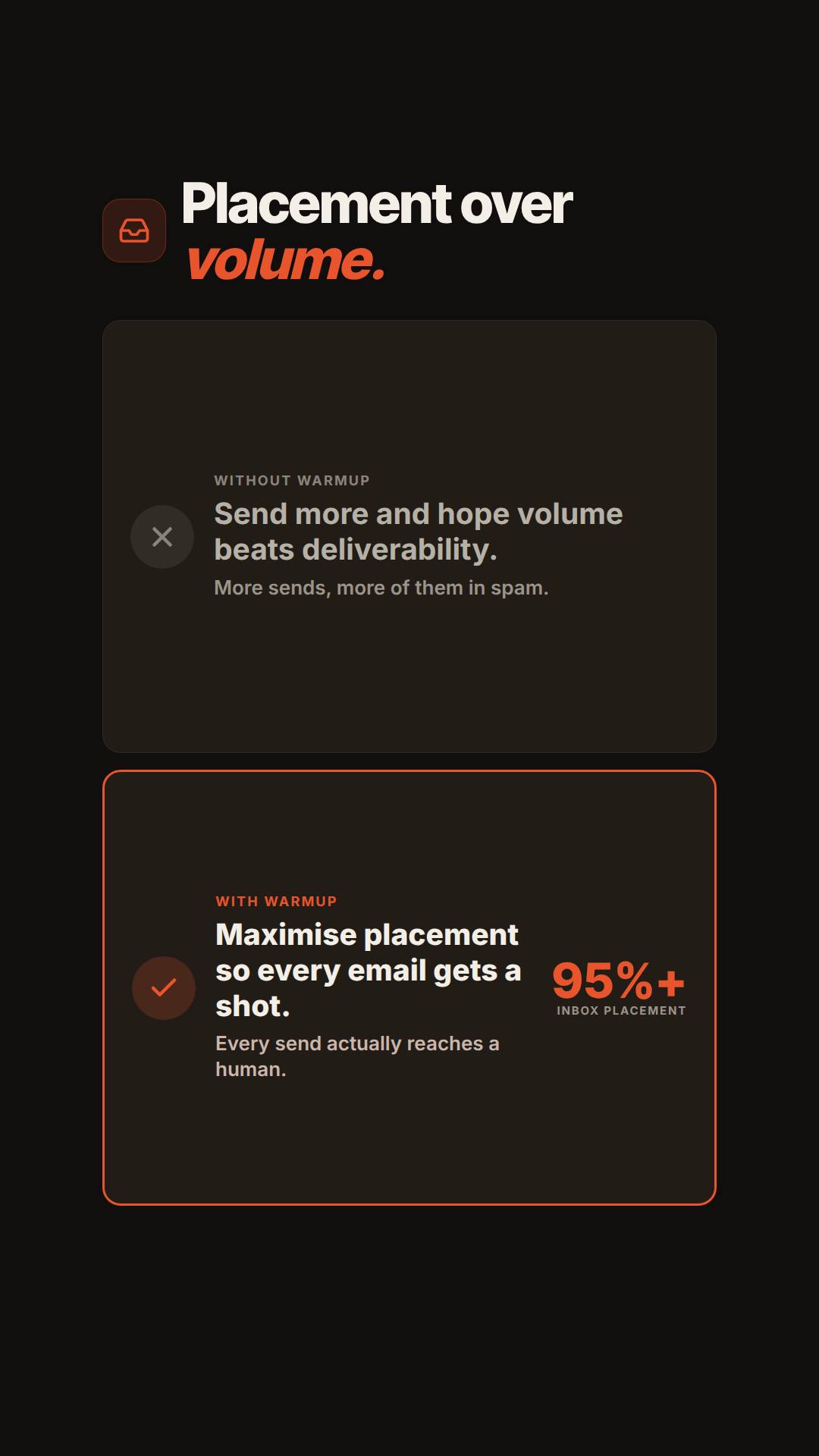
You buy a fresh domain, load five hundred contacts, and blast on day one. The filters see a brand new sender spike out of nowhere and quietly route everything to spam. You never even earn the chance to be ignored.

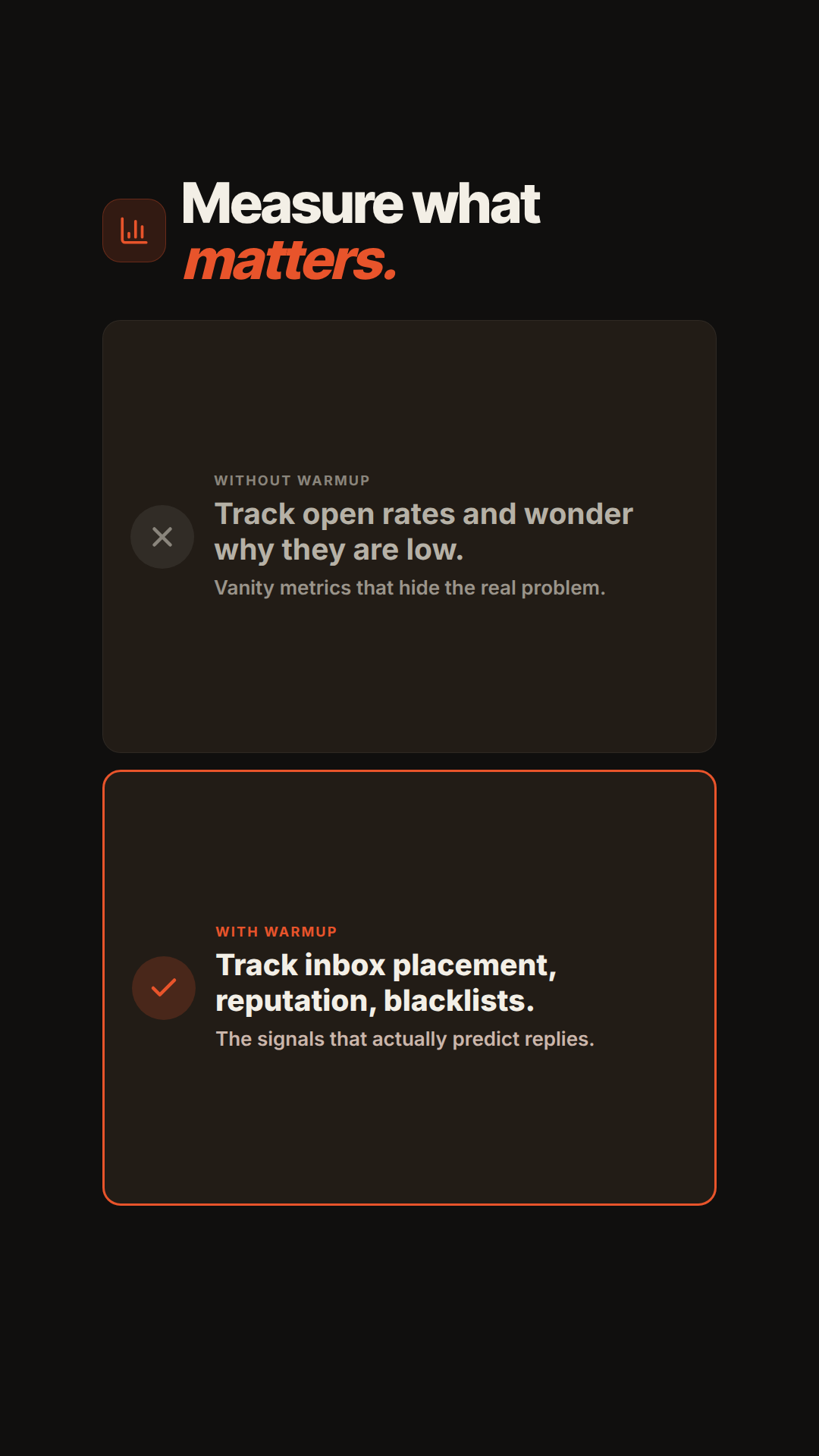
Warmup is the whole game. You ramp slowly, you build a sending reputation the inbox providers trust, and you watch placement, not open rates.

Do that and the same exact copy that used to vanish starts landing in the primary inbox.

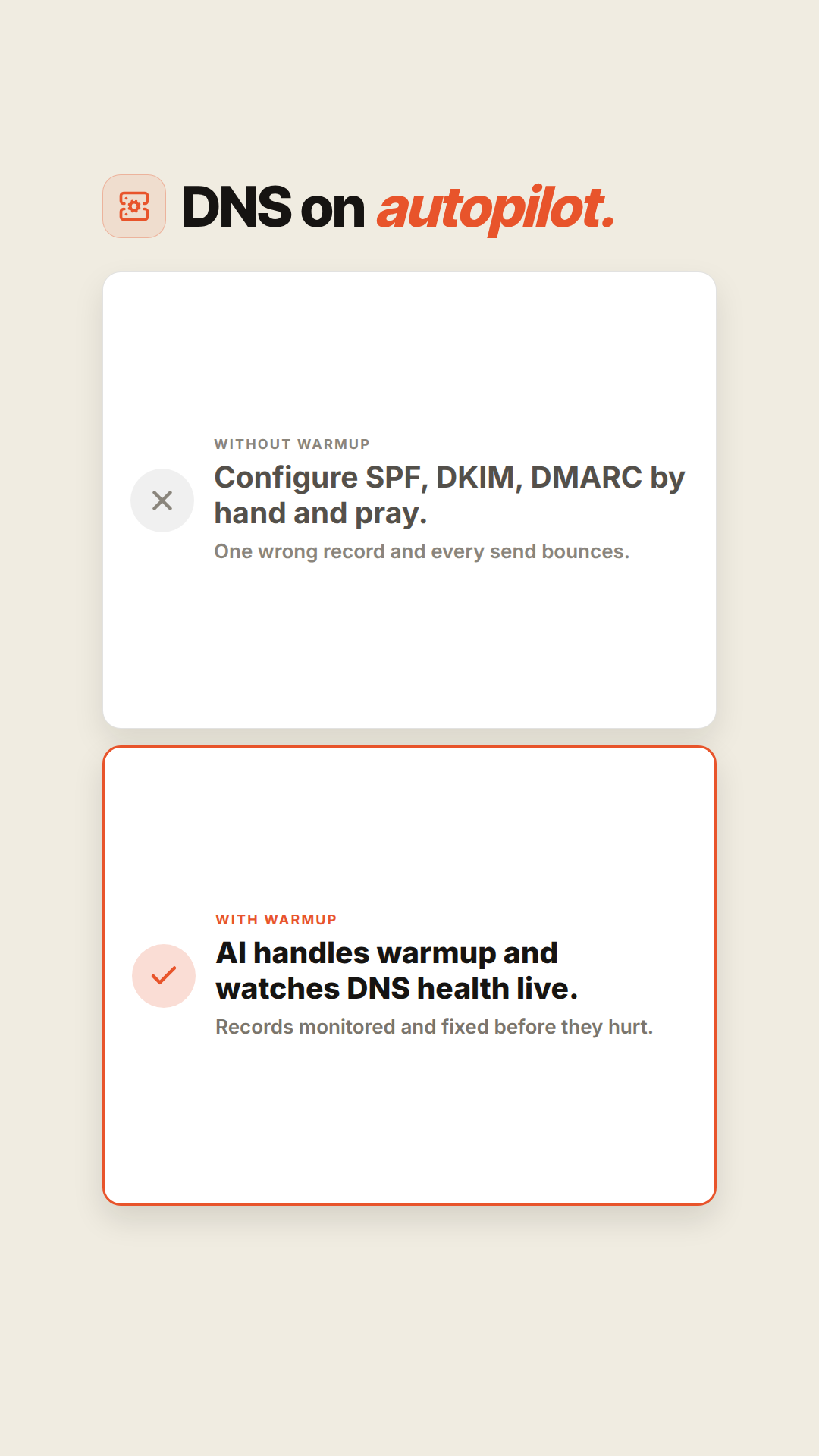
Comment WARMUP and I will send the warmup sequence, the DNS setup, and the checklist.
Claude the yes-man, meet the Council

01
02
03
04
05
06

07
08
09

10
Caption
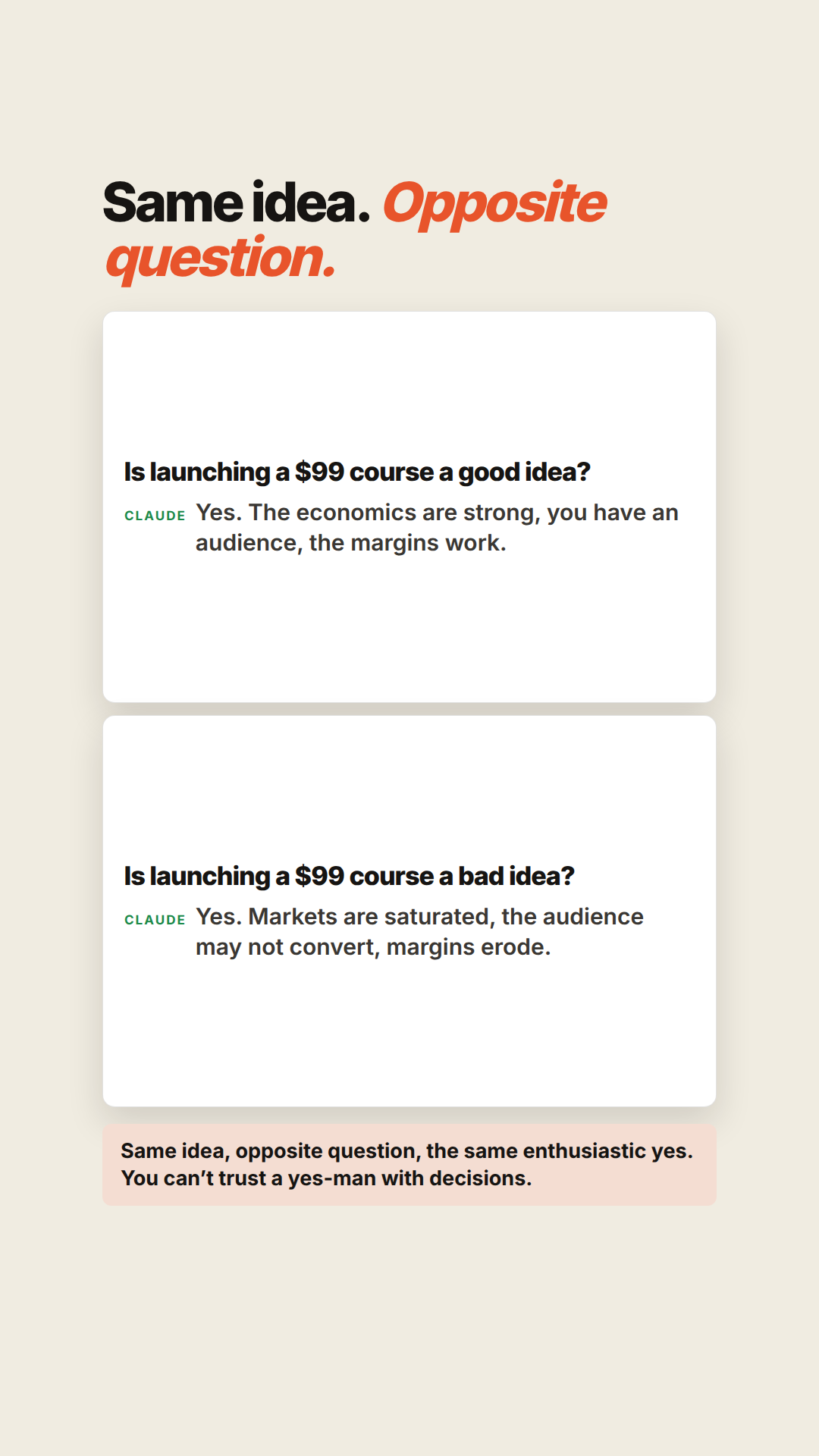
Your AI agrees with everything you say. That is not a feature, it is a risk.

You bring it a plan, it tells you the plan is great. You bring it a flawed idea, it polishes the flaw. One confident voice, no pushback, and you ship the blind spot straight to production.

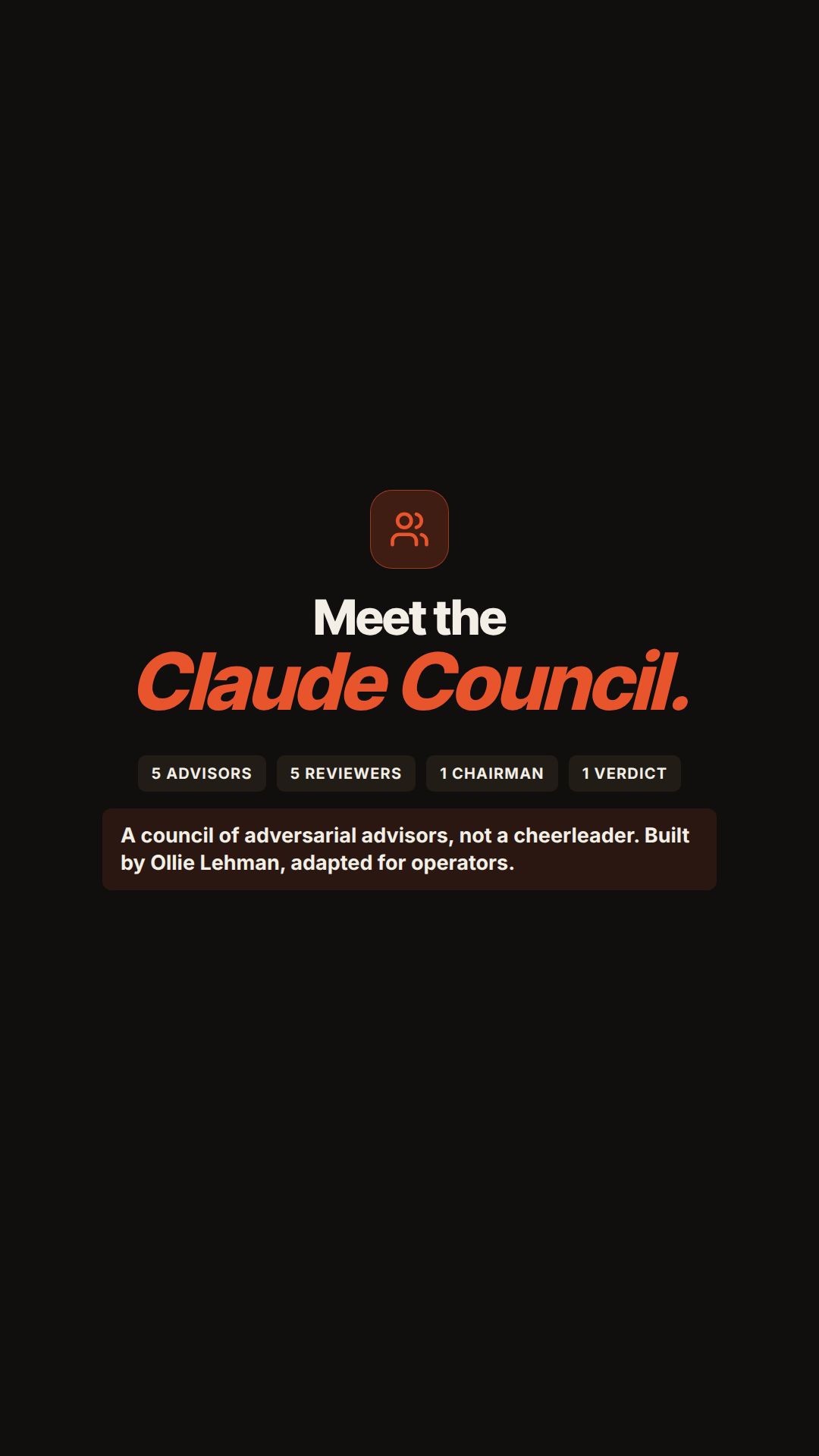
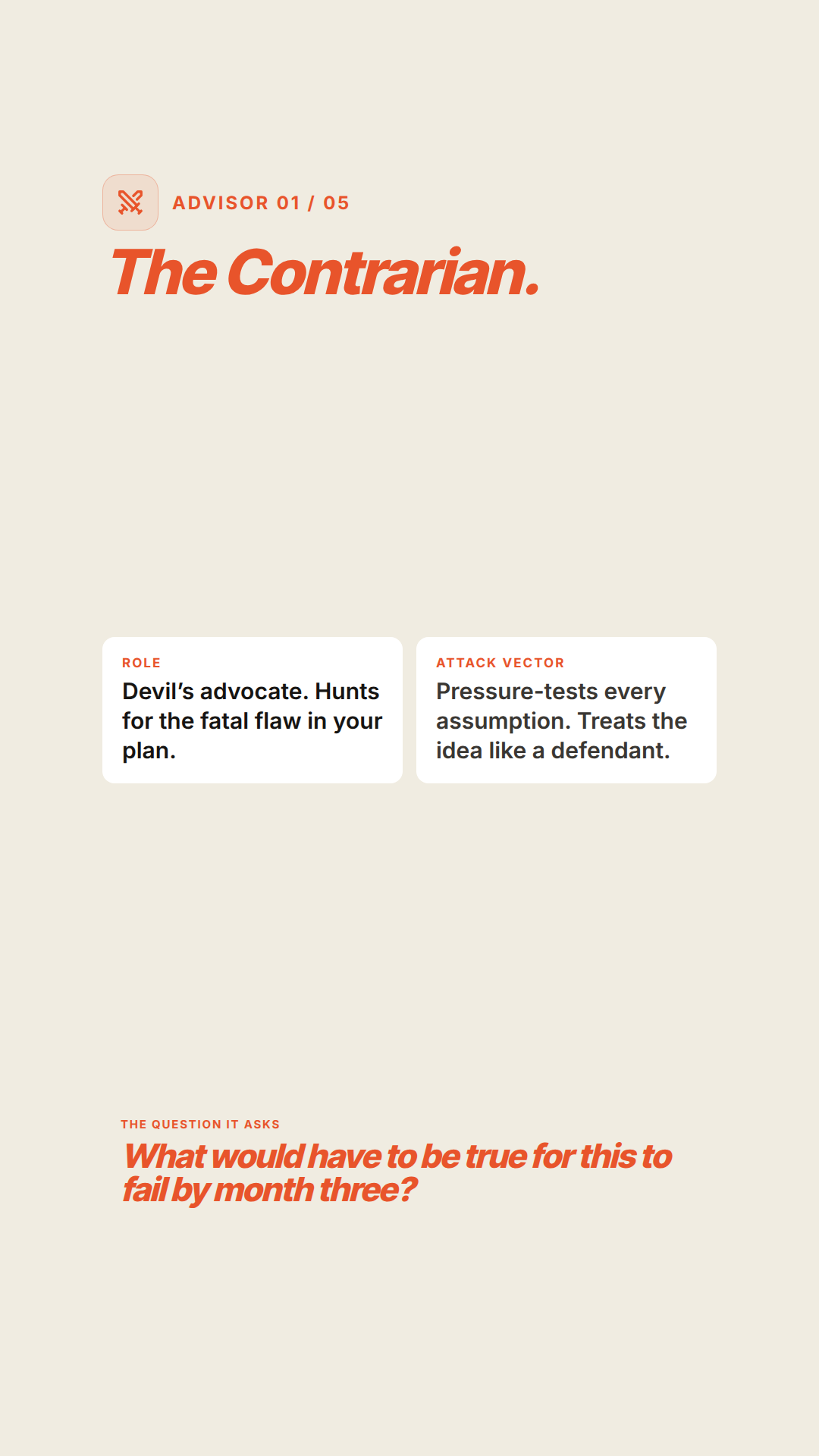
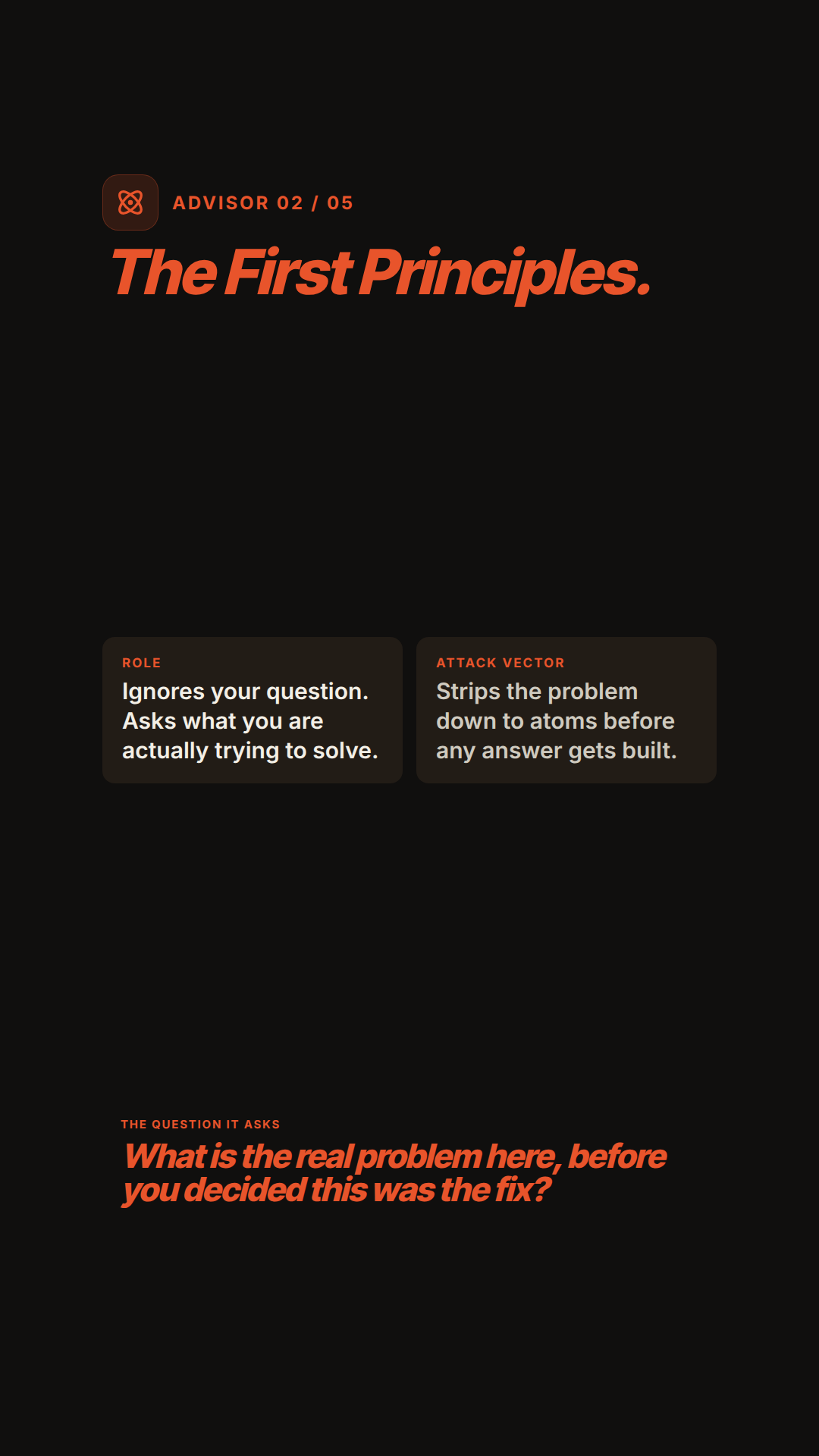
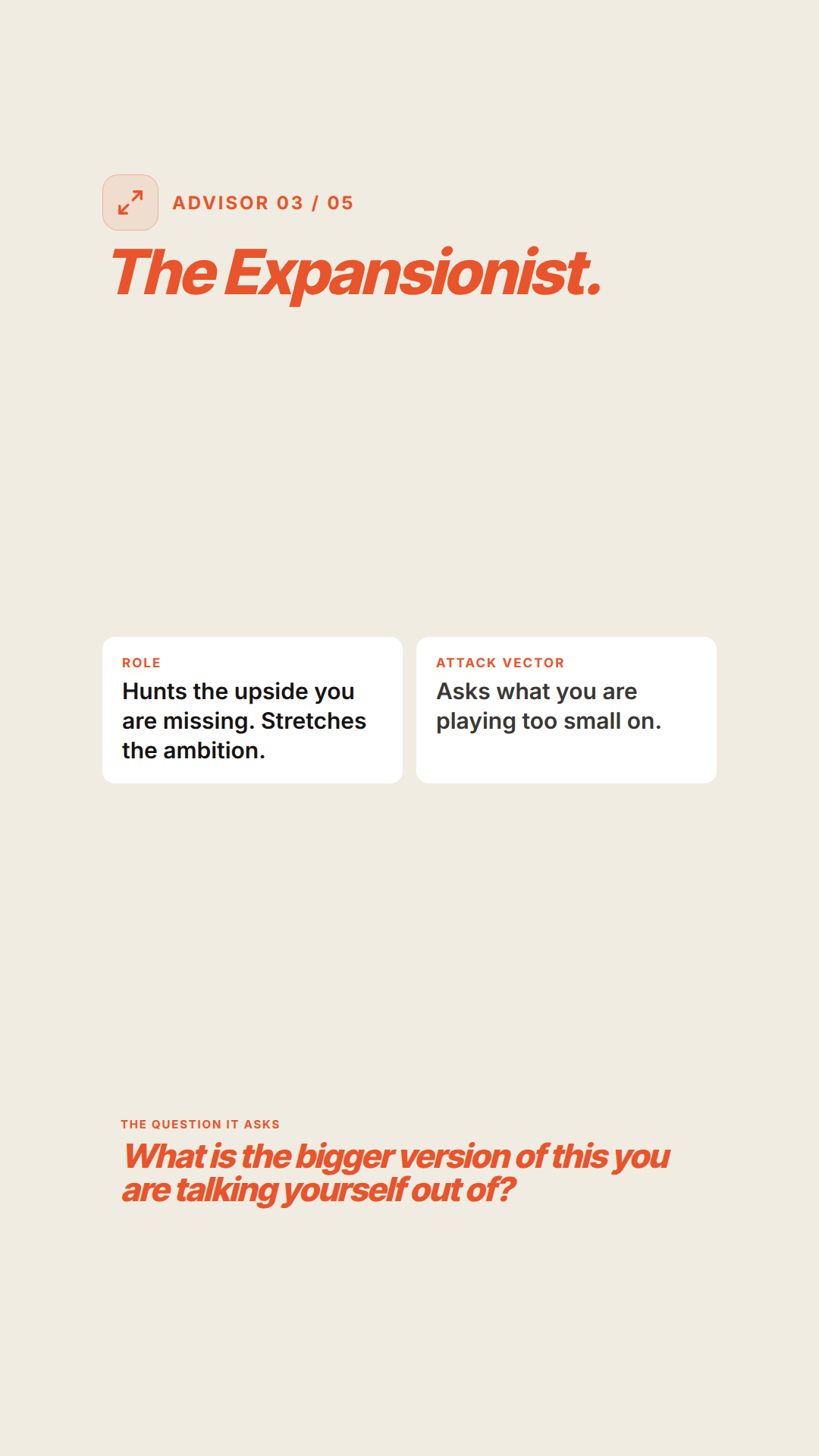
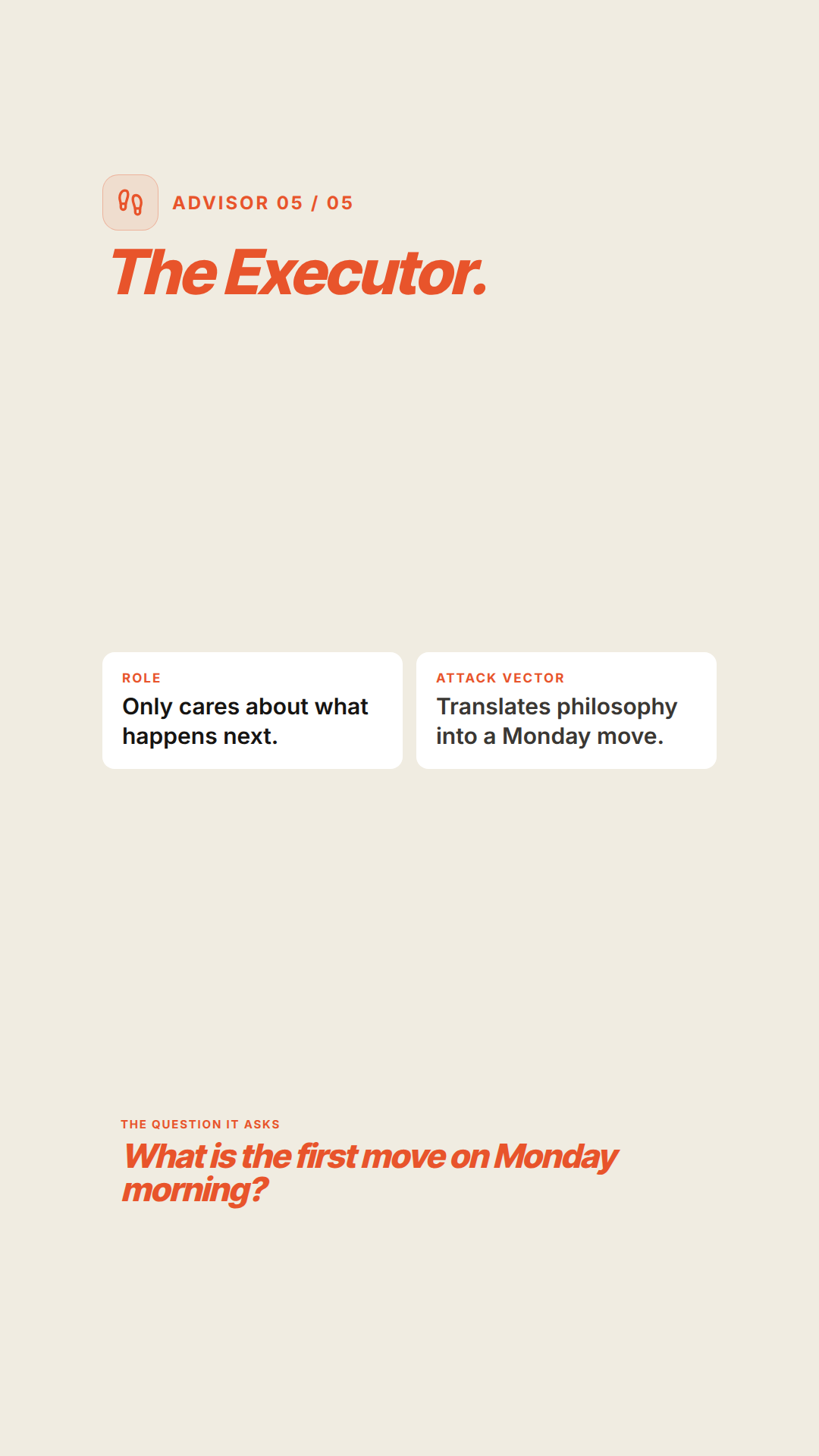
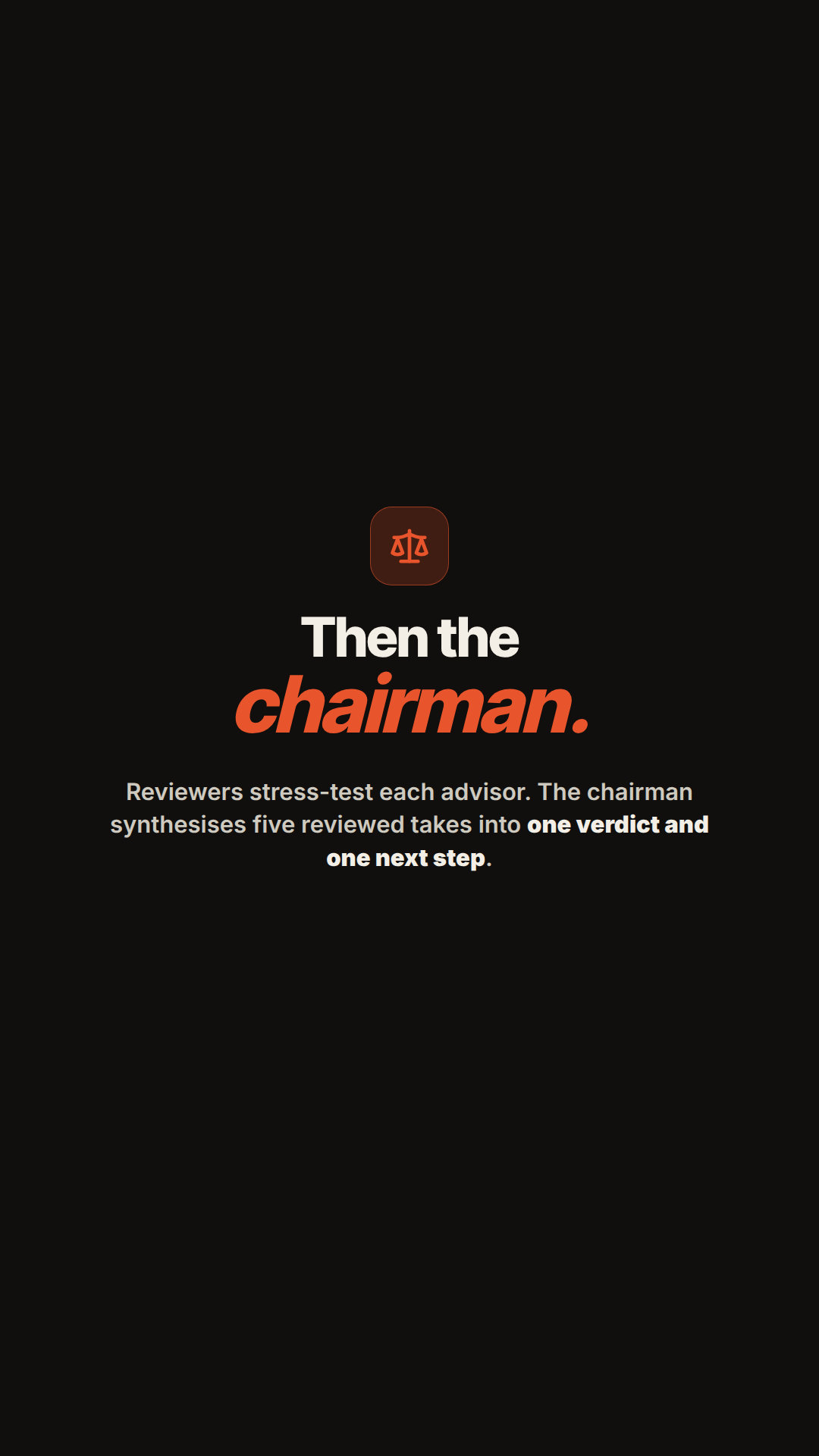
So I stopped using one assistant and built a council. A handful of distinct roles that actually argue. A critic whose only job is to find the hole. A final pass that weighs every view before you decide.

Now my ideas get pressure tested before they cost me, not after.

Comment COUNCIL and I will send the setup and the roles.
How to move like a 20-person team
01
02
03
04
05
06
07
08

09
10
11
Caption
One person can put out the work of a twenty person team right now. Not by working more hours. By running a team of agents.

You stop being the bottleneck on everything.

One agent runs research and hands the intel to the one running outreach. That one fills the pipeline the next one works. Another writes content in your voice. You sit on top as the operator and approve.

It is the same org chart a funded startup runs. The only difference is the payroll line says one.

Comment TEAM and I will send the agent roles, the handoffs, and the routine that keeps it in sync.
My Claude Skills (4 stacks)
01
02
03
04
05

06
Caption
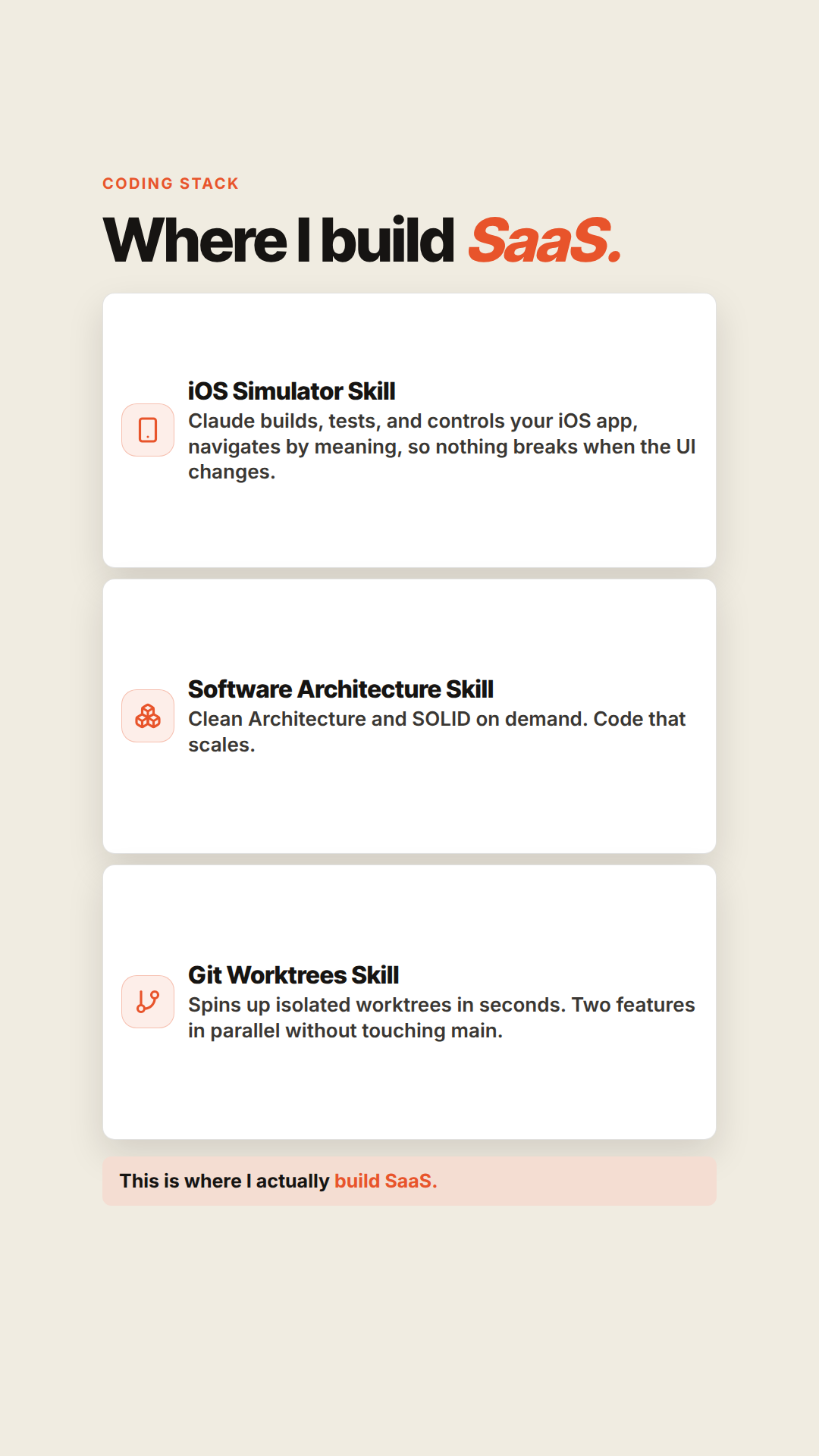
I install the same four skill stacks before I write a line of anything.

Context, so Claude pulls live, accurate docs instead of inventing an API.

Build, so it runs longer autonomous sessions without me babysitting every step.

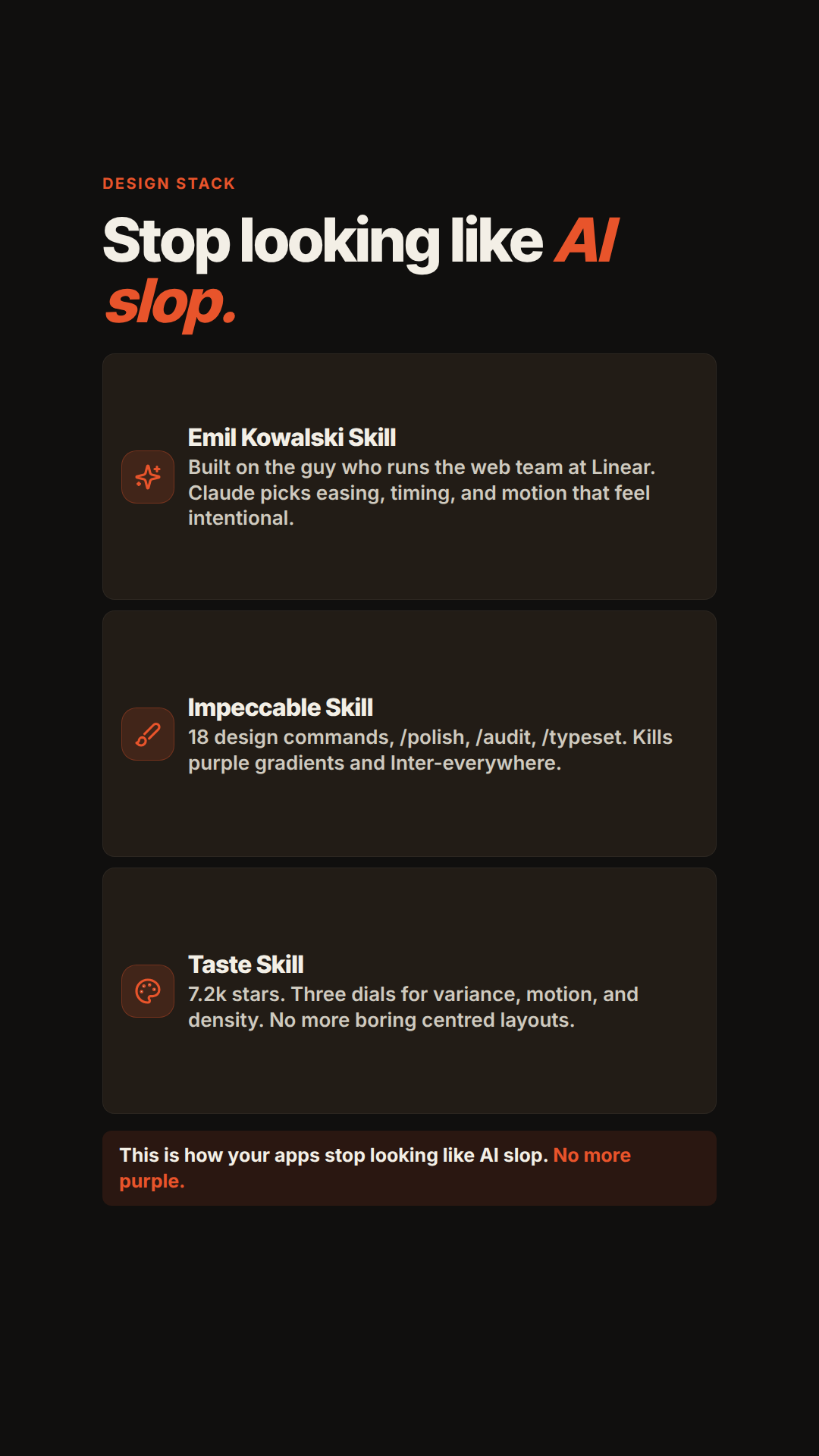
Design, so the front end looks intentional, not obviously generated.

Review, so a separate set of agents tears the work apart before I do.

Most people drown in a hundred skills and use none of them. Four stacks, each sharp at one job, beats that every time.

Comment SKILLS and I will send the install list and how they pair.
Claude Code is an agent, not a chatbot
01
02
03
04
05
06
07
Caption
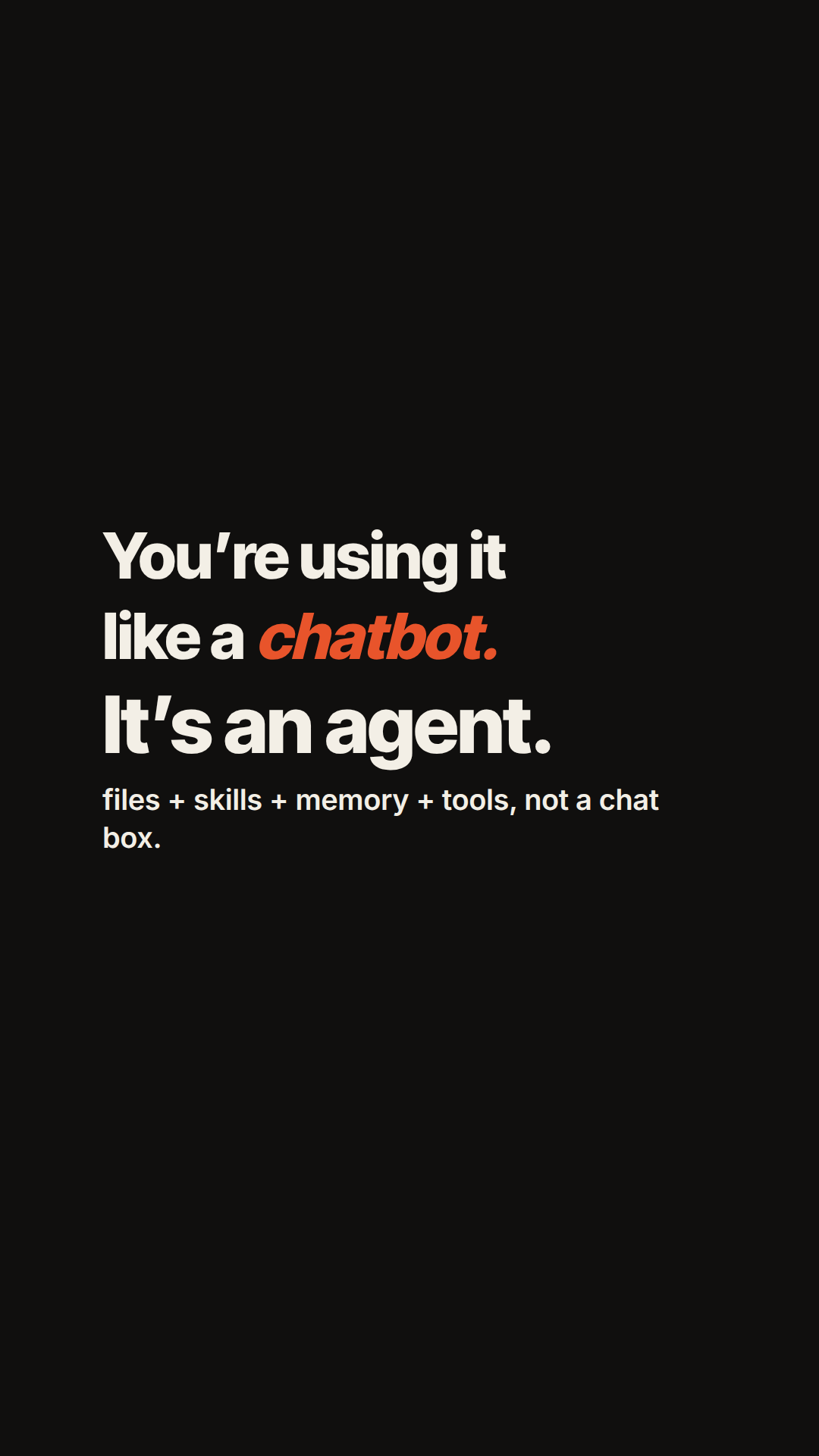
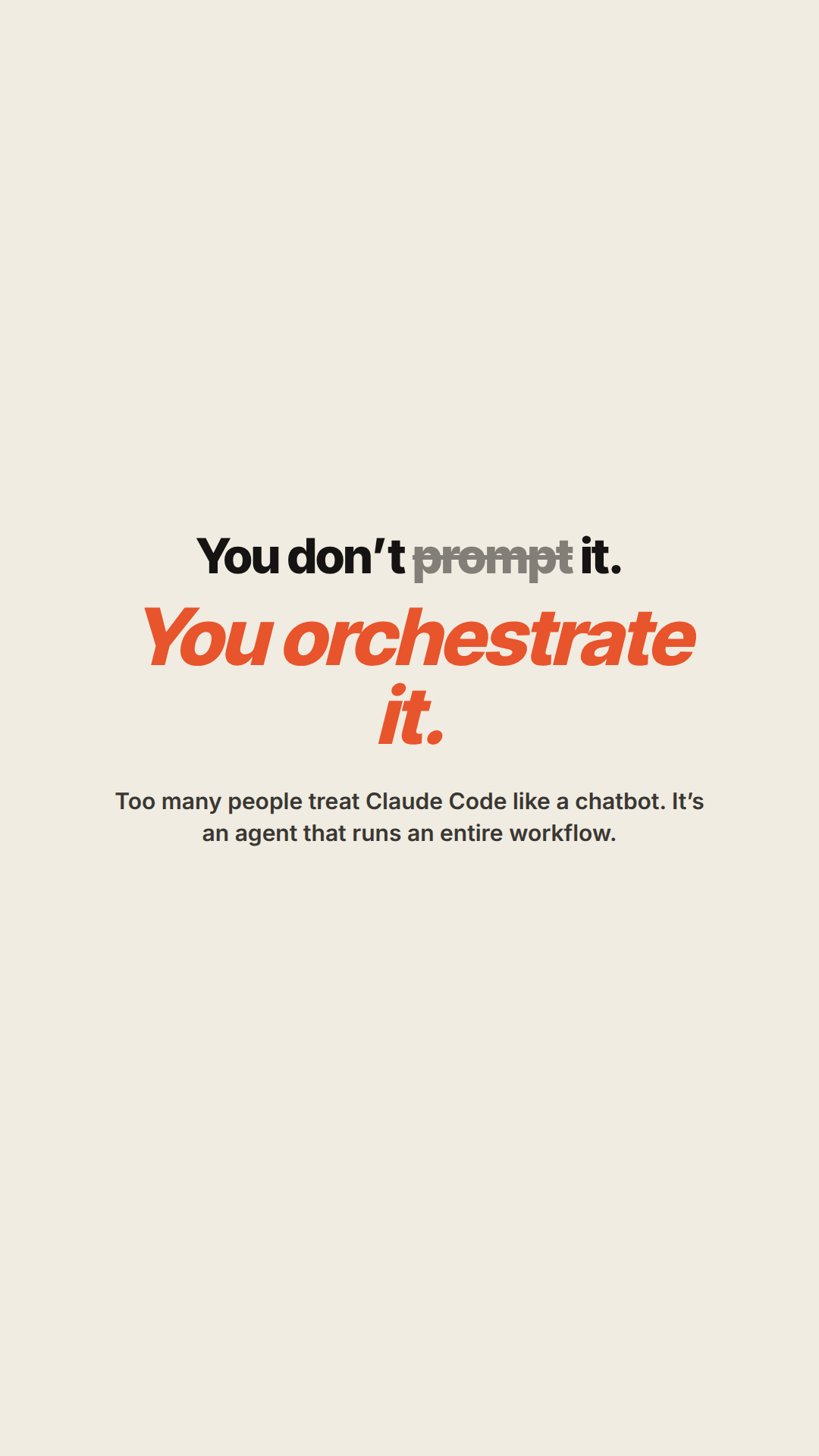
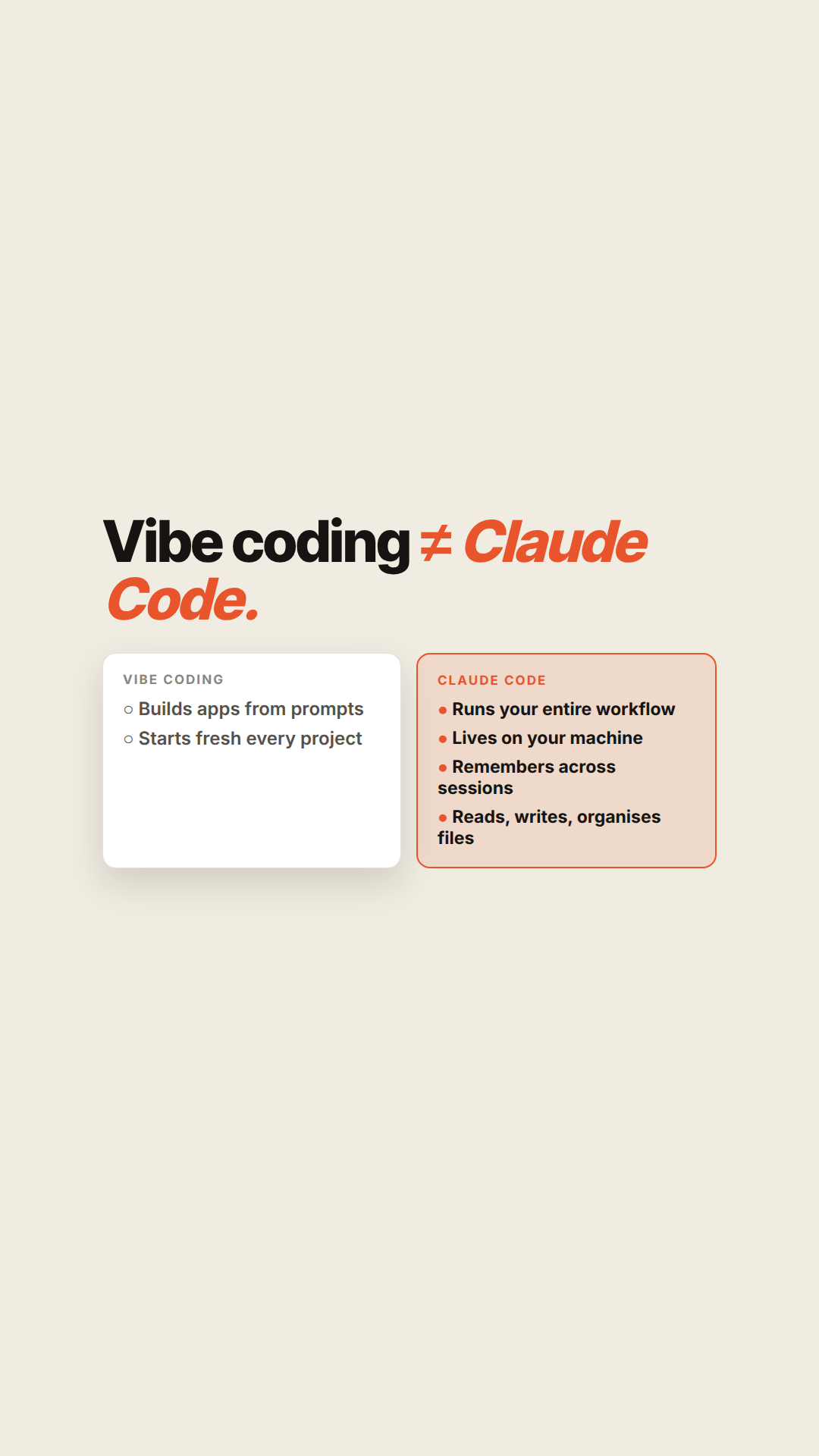
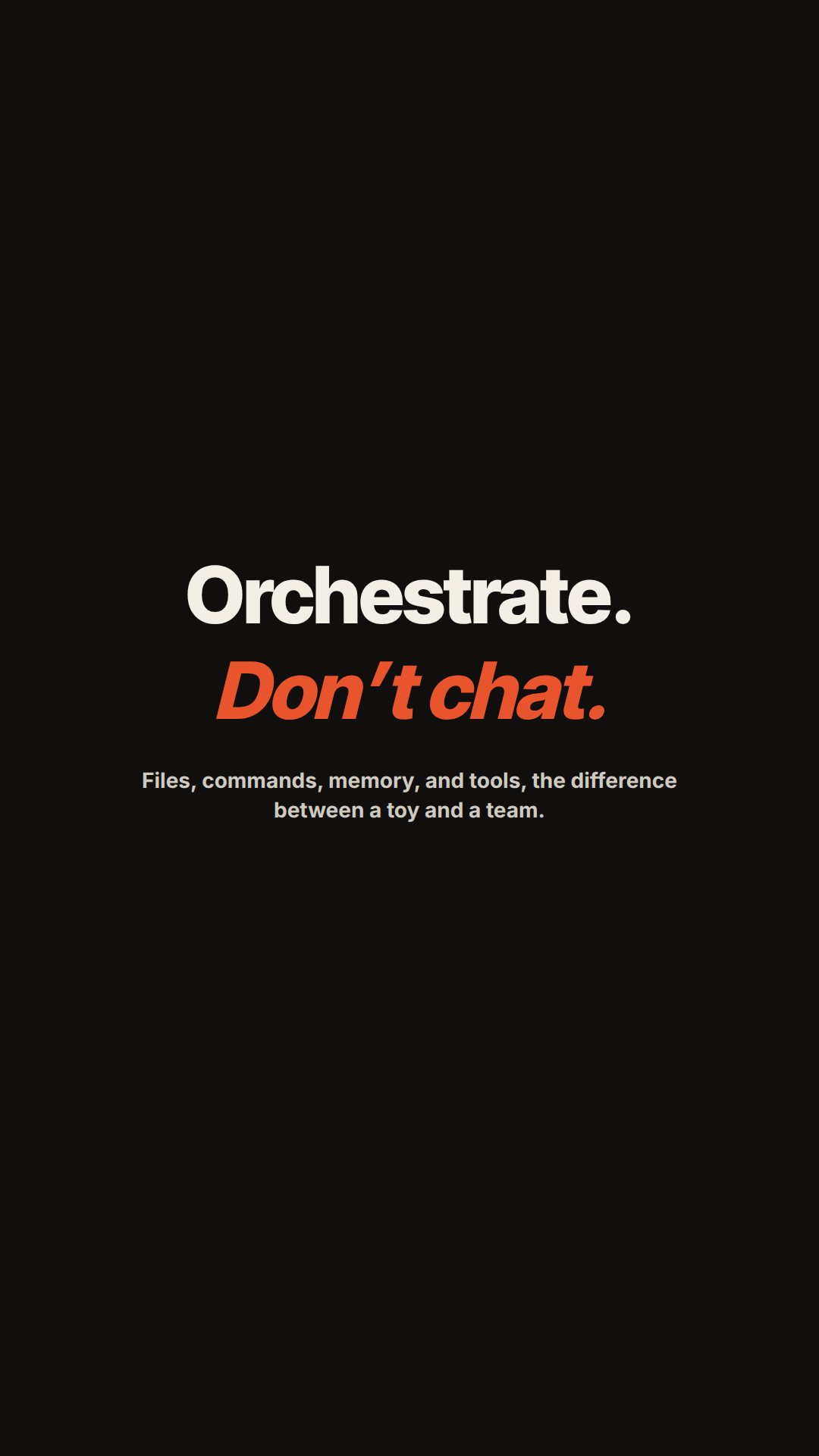
You are using Claude Code like a chatbot, and it is costing you most of its value.

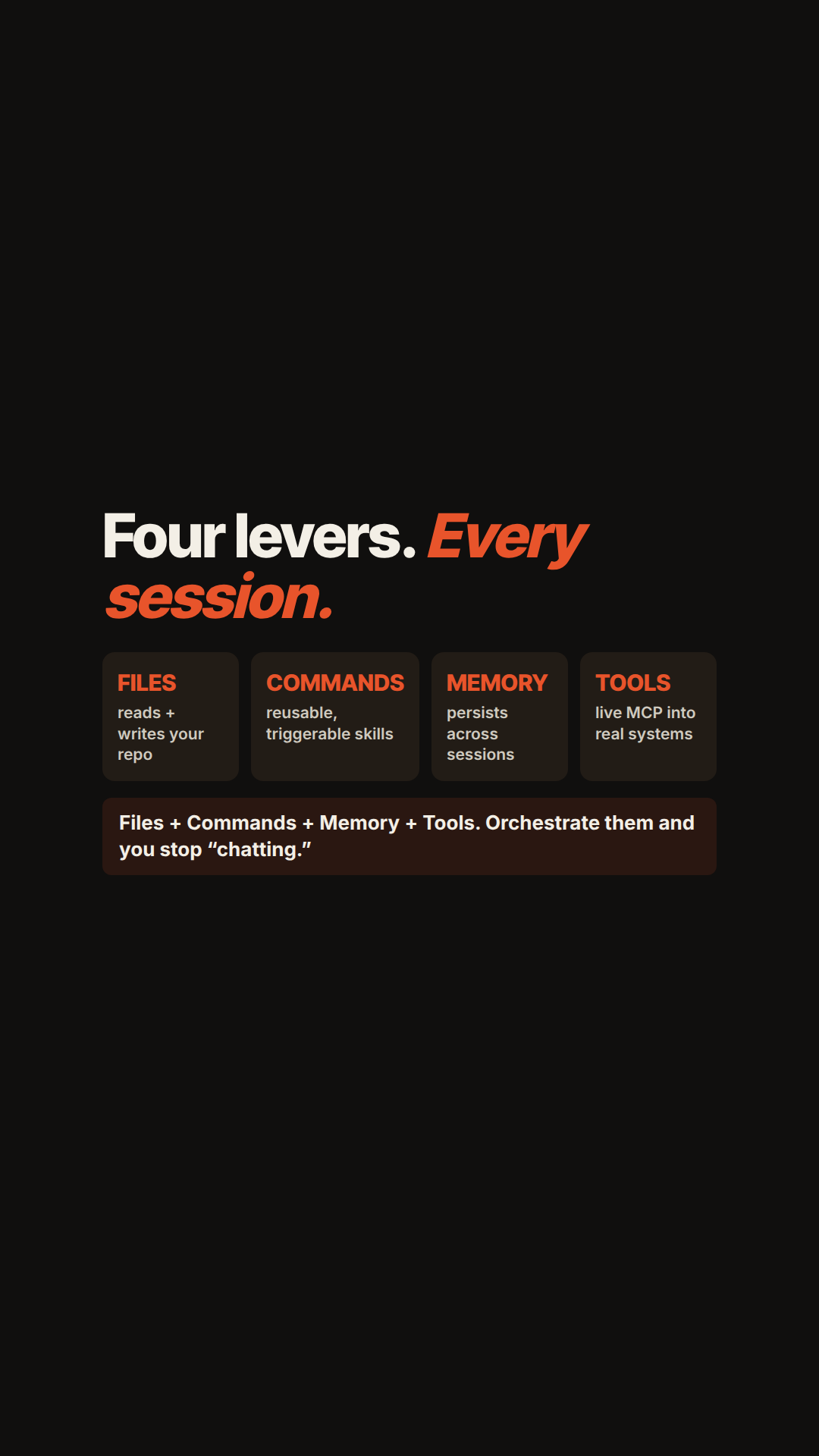
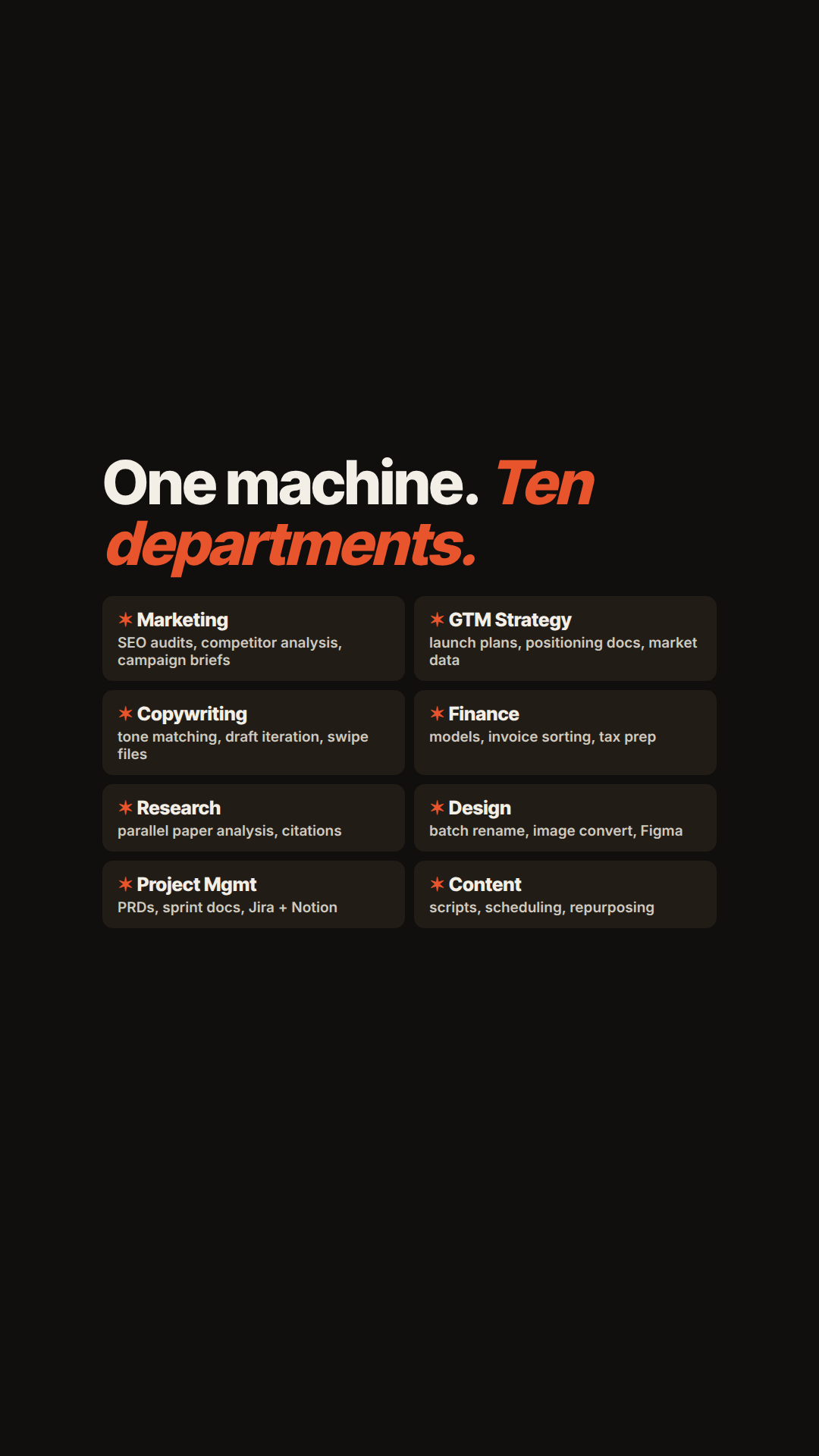
A chatbot waits for your next line. An agent takes a real brief, makes a plan, uses tools, runs the work, and checks itself before handing it back.

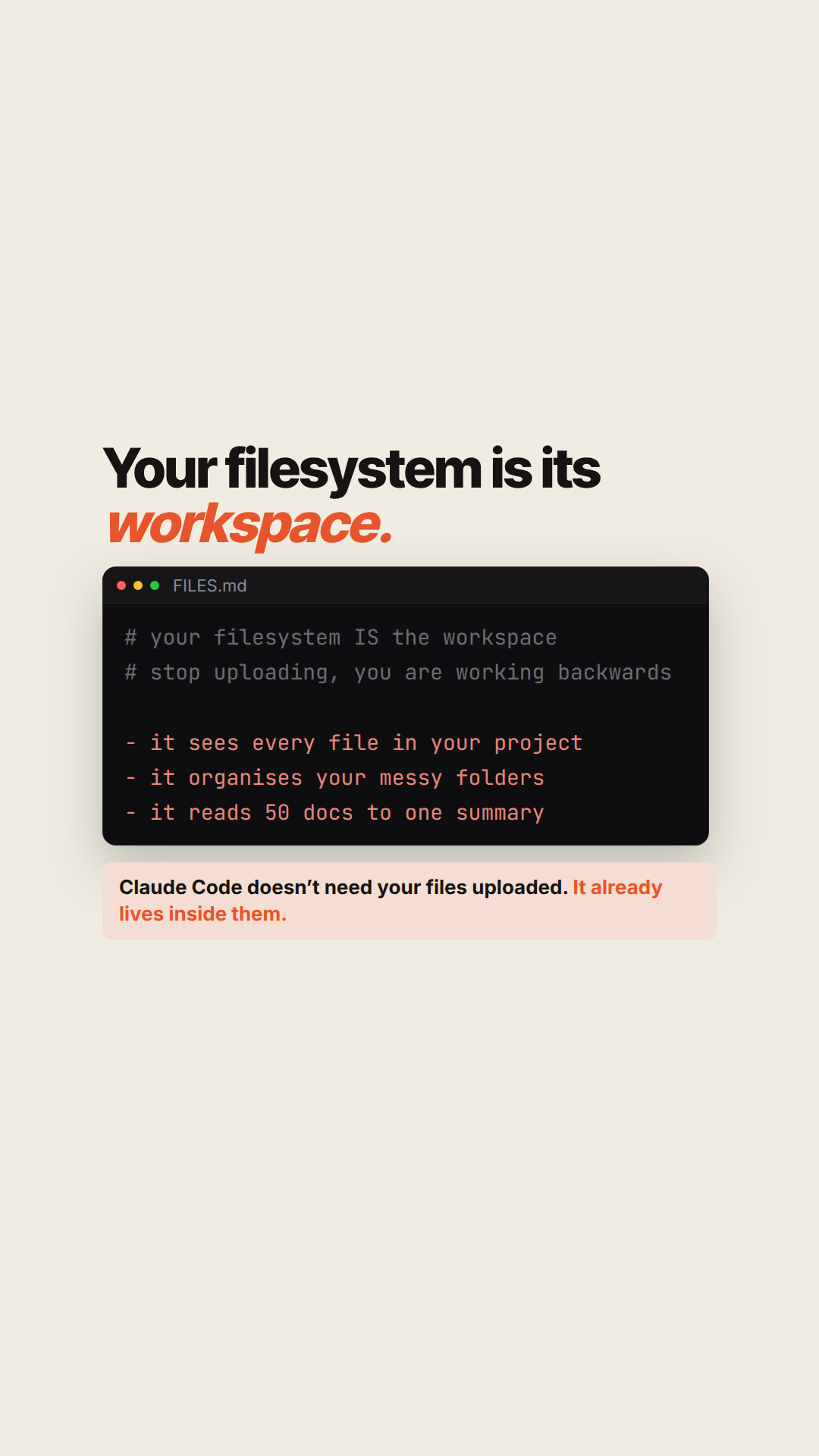
The shift is simple. Stop feeding it one vague line at a time and babysitting every step. Give it the scope, the files, what not to touch, and what done looks like. Then let it run.

That is the difference between asking for advice and getting work shipped.

Comment AGENT and I will send the agent setup and the loop I use.
5 Claude Code templates

01
02
03
04
05
06

07
Caption
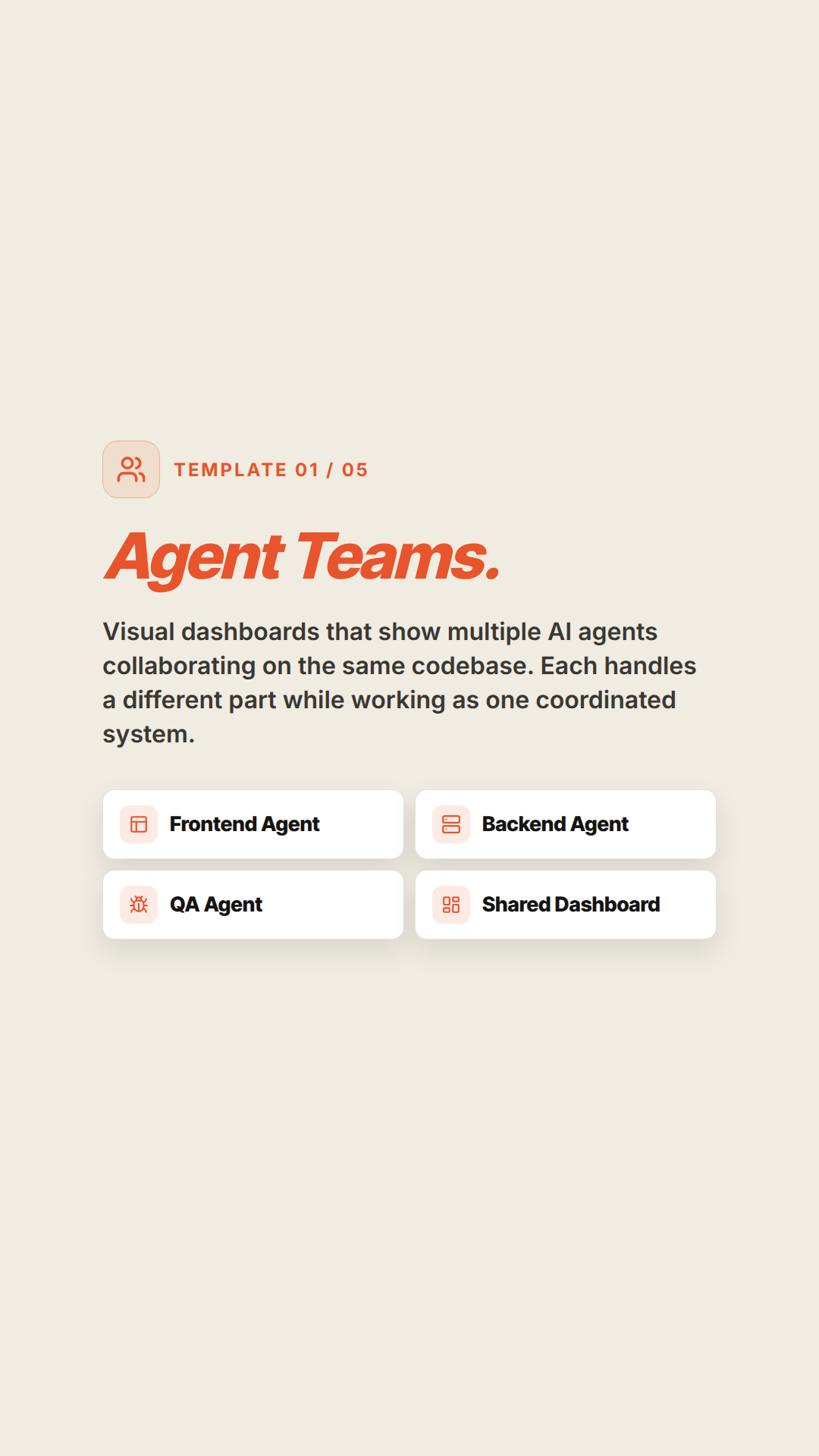
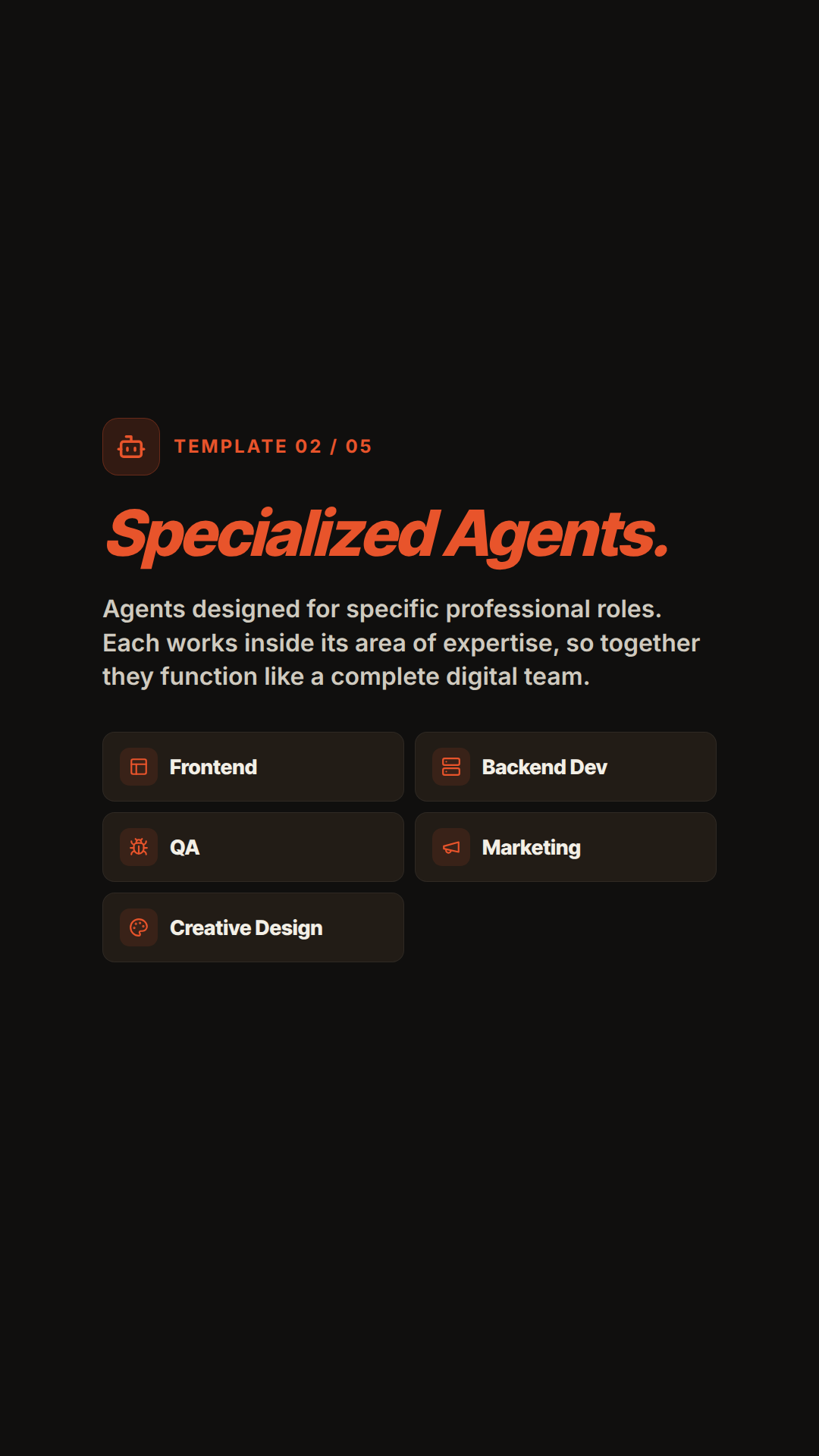
Five Claude Code templates I clone instead of starting from scratch.

Each one boots with the wiring already done. Auth, the file layout, and a CLAUDE.md that teaches Claude the conventions before you type a word.

One for a web app. One for an API. One for a scraper. One for an automation. One for a CLI tool. Spin one up in seconds and you are building, not configuring.

The point is consistency. Every project starts the same clean way, so Claude behaves the same way across all of them.

Comment TEMPLATES and I will send all five, ready to clone.
I replaced my $5K/mo video agency
01
02
03
04
05
06
07
Caption
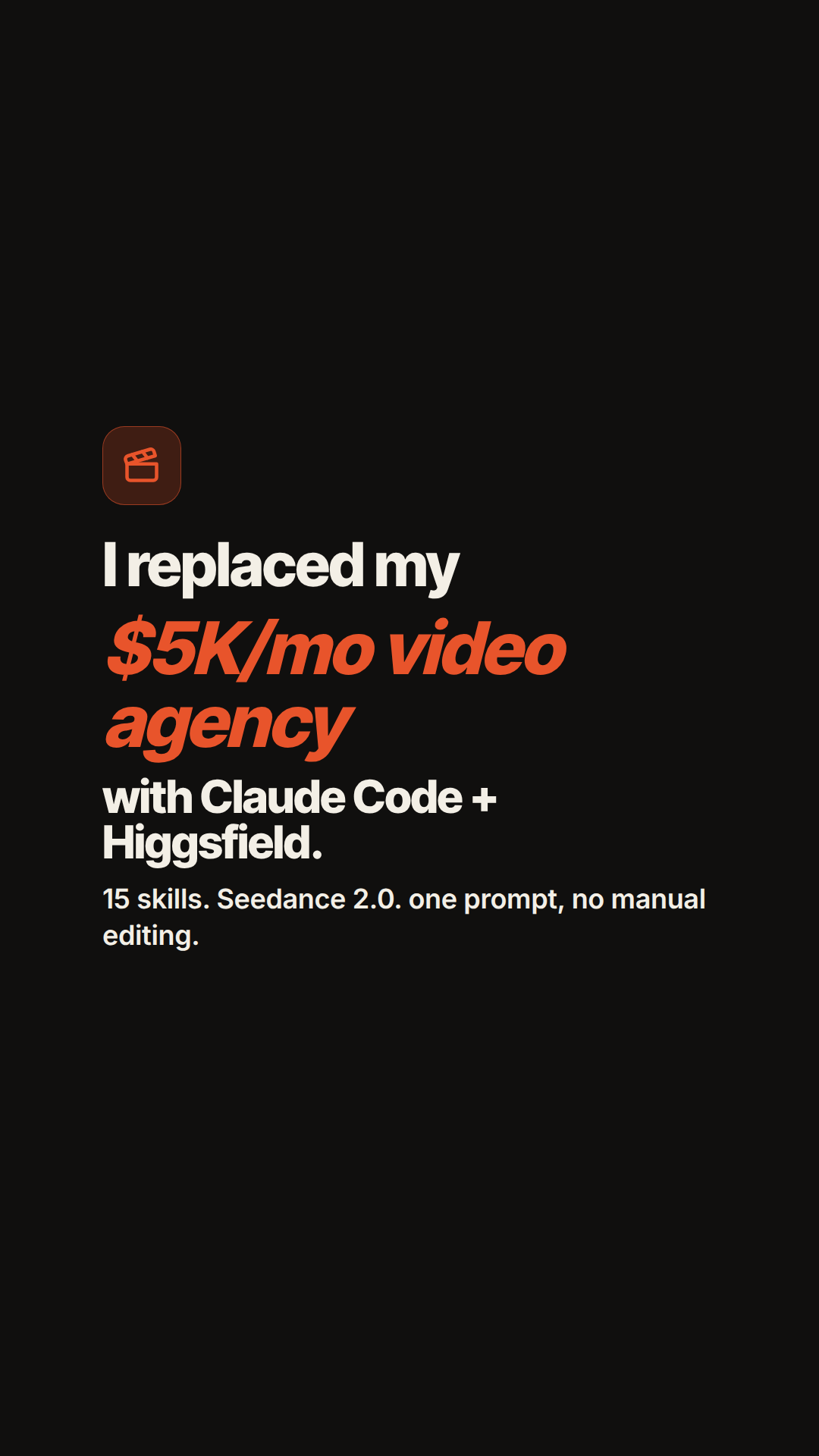
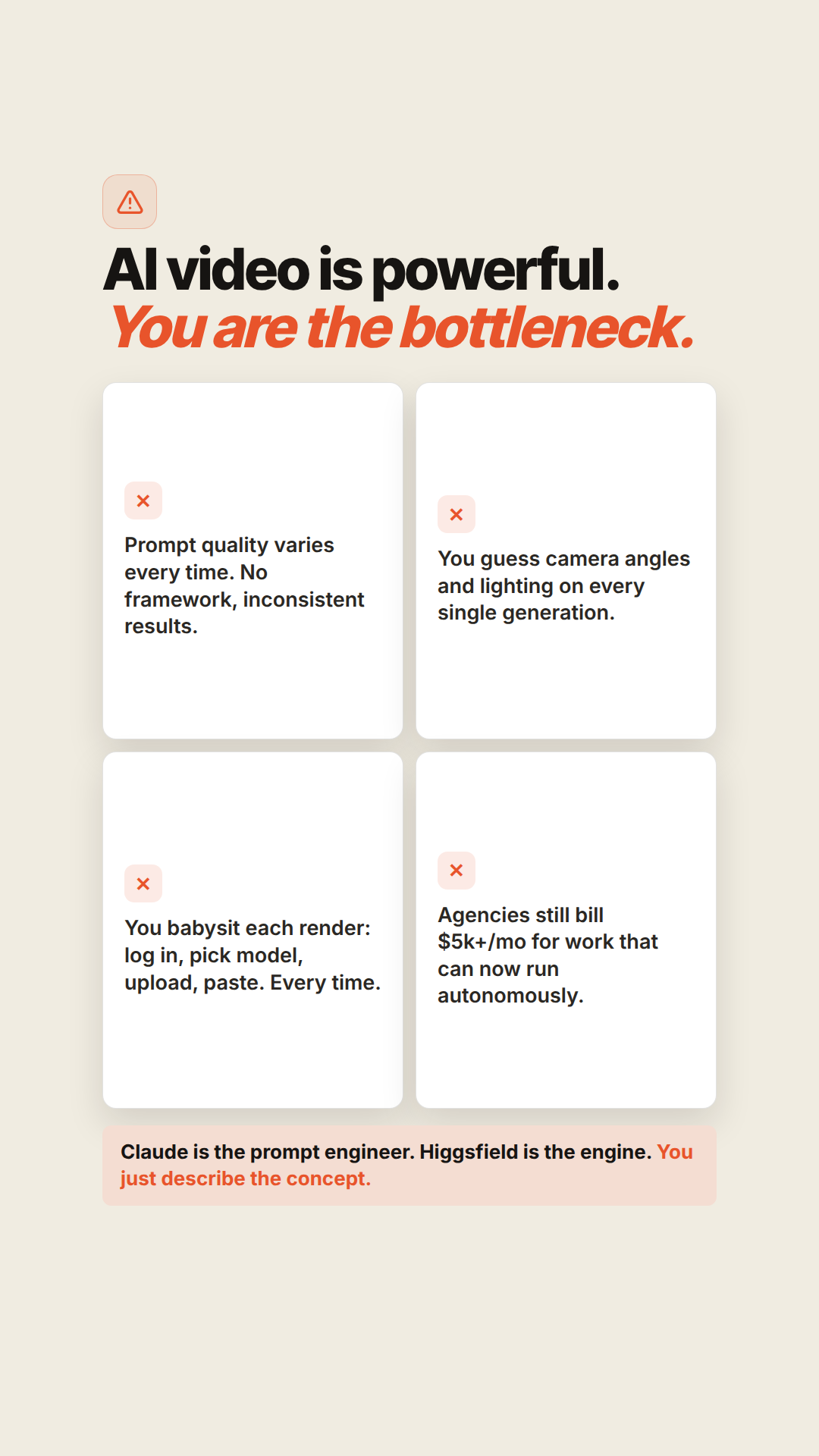
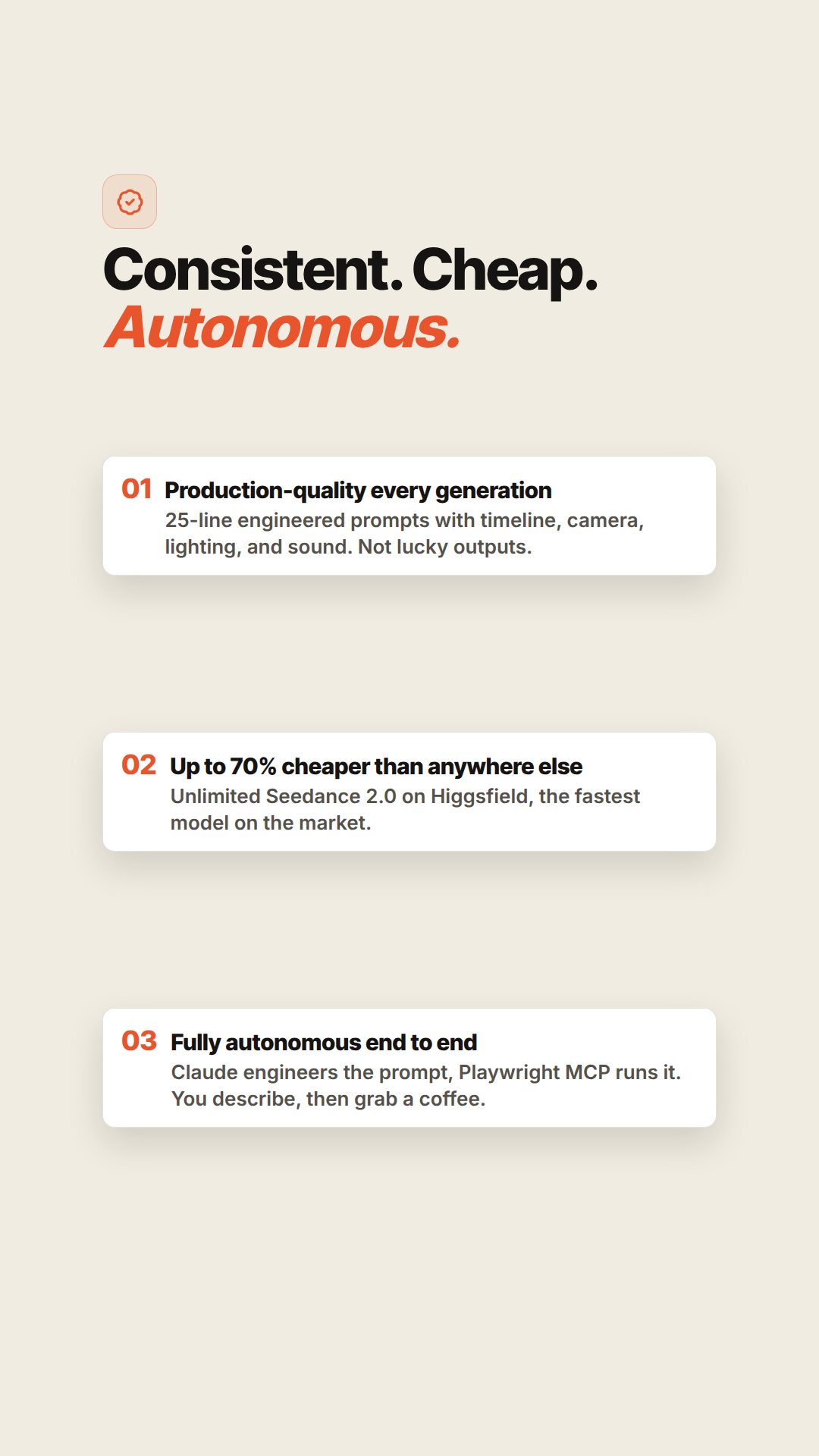
I cancelled the video agency I was paying every single month and replaced it with a setup that runs on my own schedule.

The agency was not bad. It was slow and expensive, and every change was another email and another week of waiting.

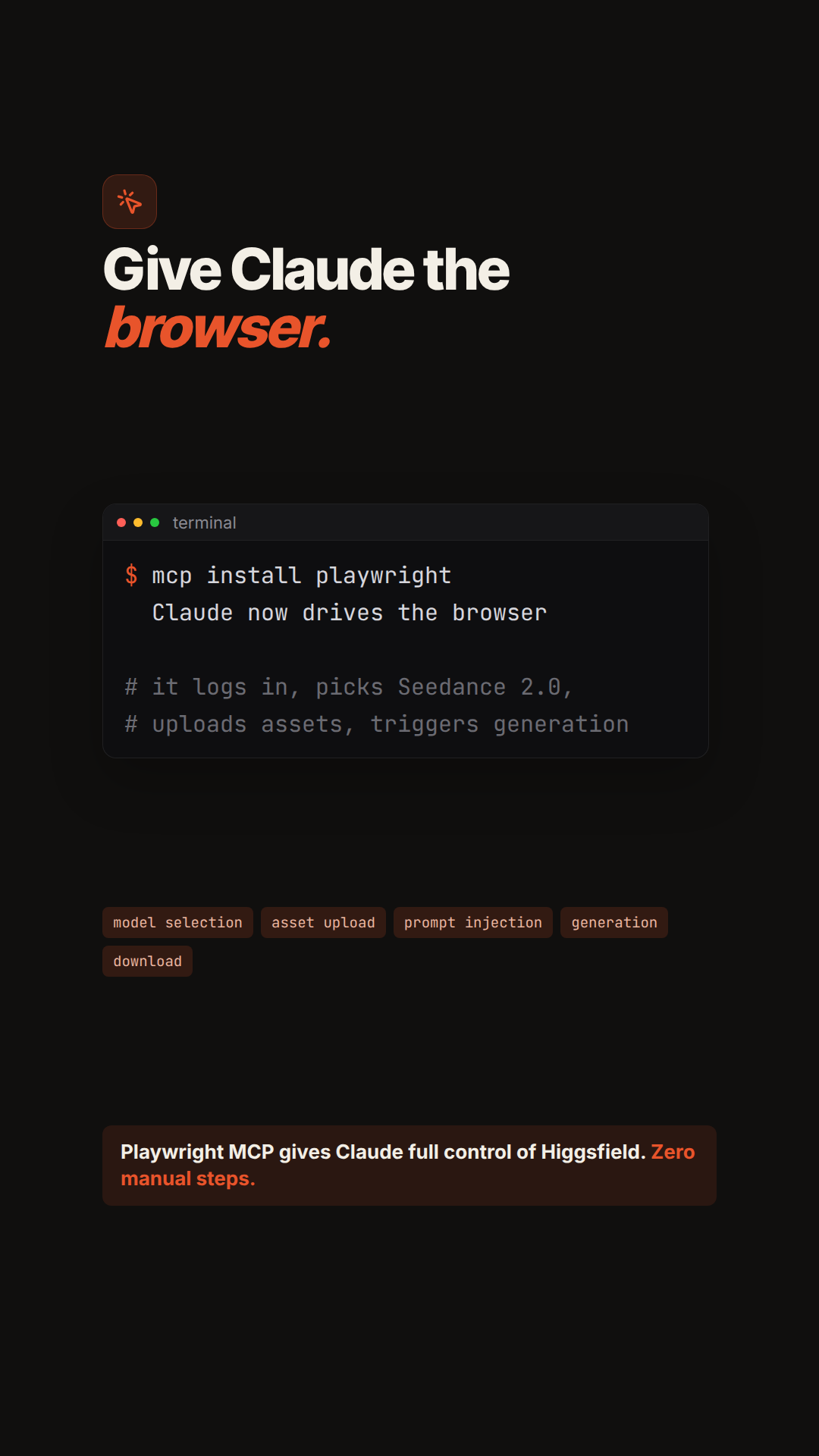
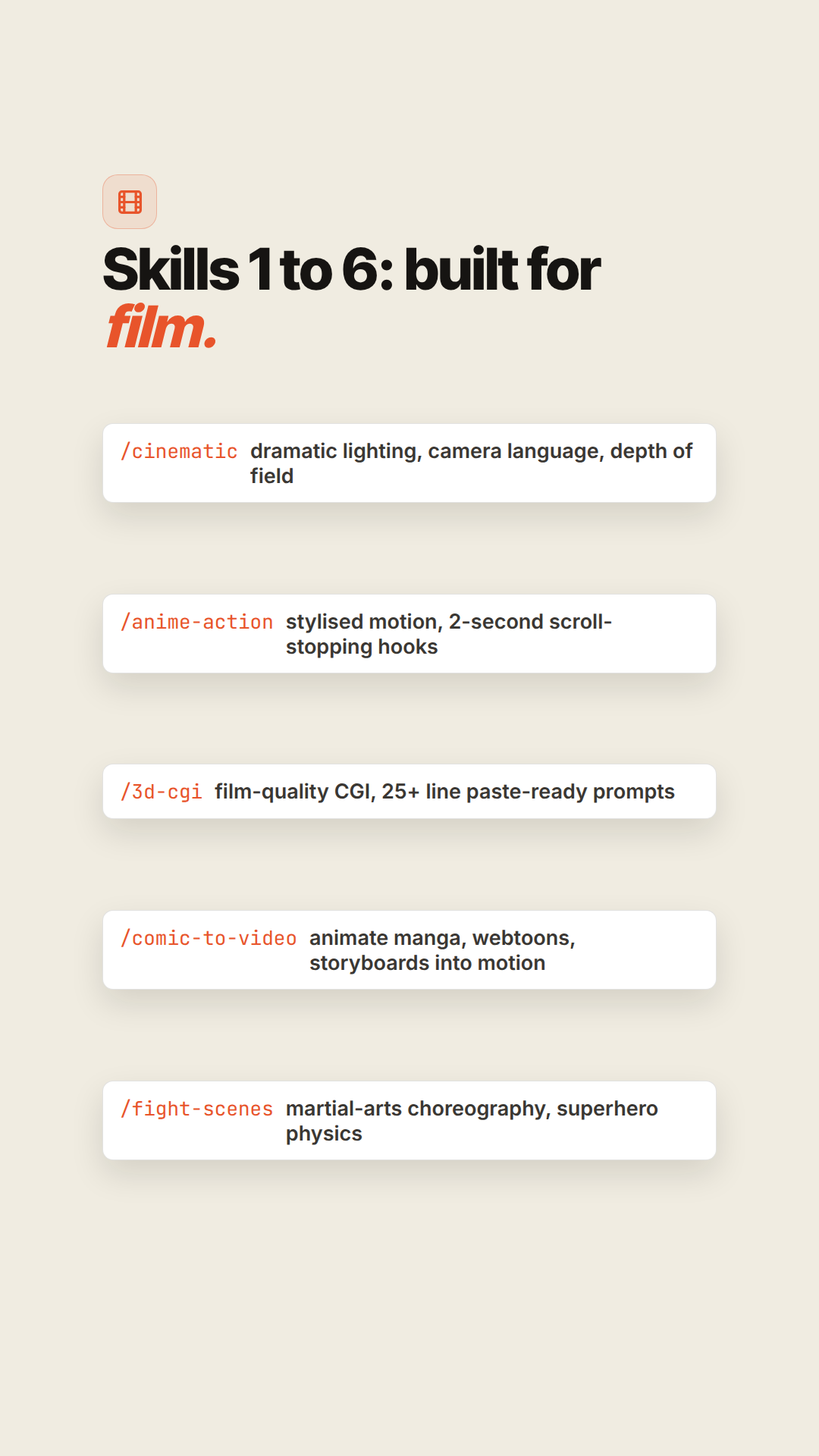
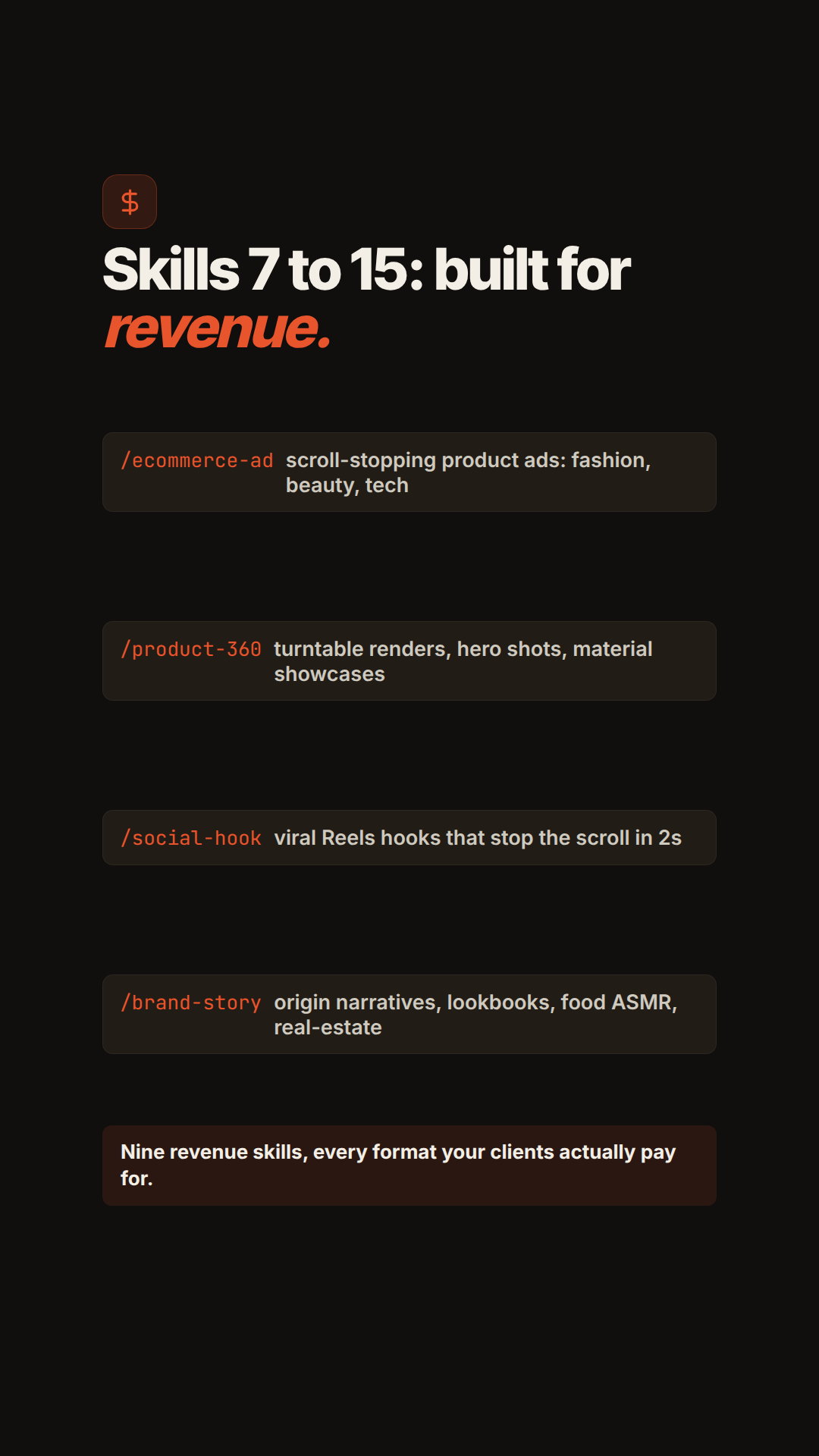
Now the pipeline is mine. Claude scripts and plans, one idea turns into a batch of cuts, and the whole thing runs as a repeatable routine instead of a retainer. Quality held. Turnaround went from weeks to the same day.

Comment CLAUDE and I will send the pipeline, the script prompts that sound like you, and the batching routine.
I built an AI marketing team
01
02
03
04
05
06
07
08

09
Caption
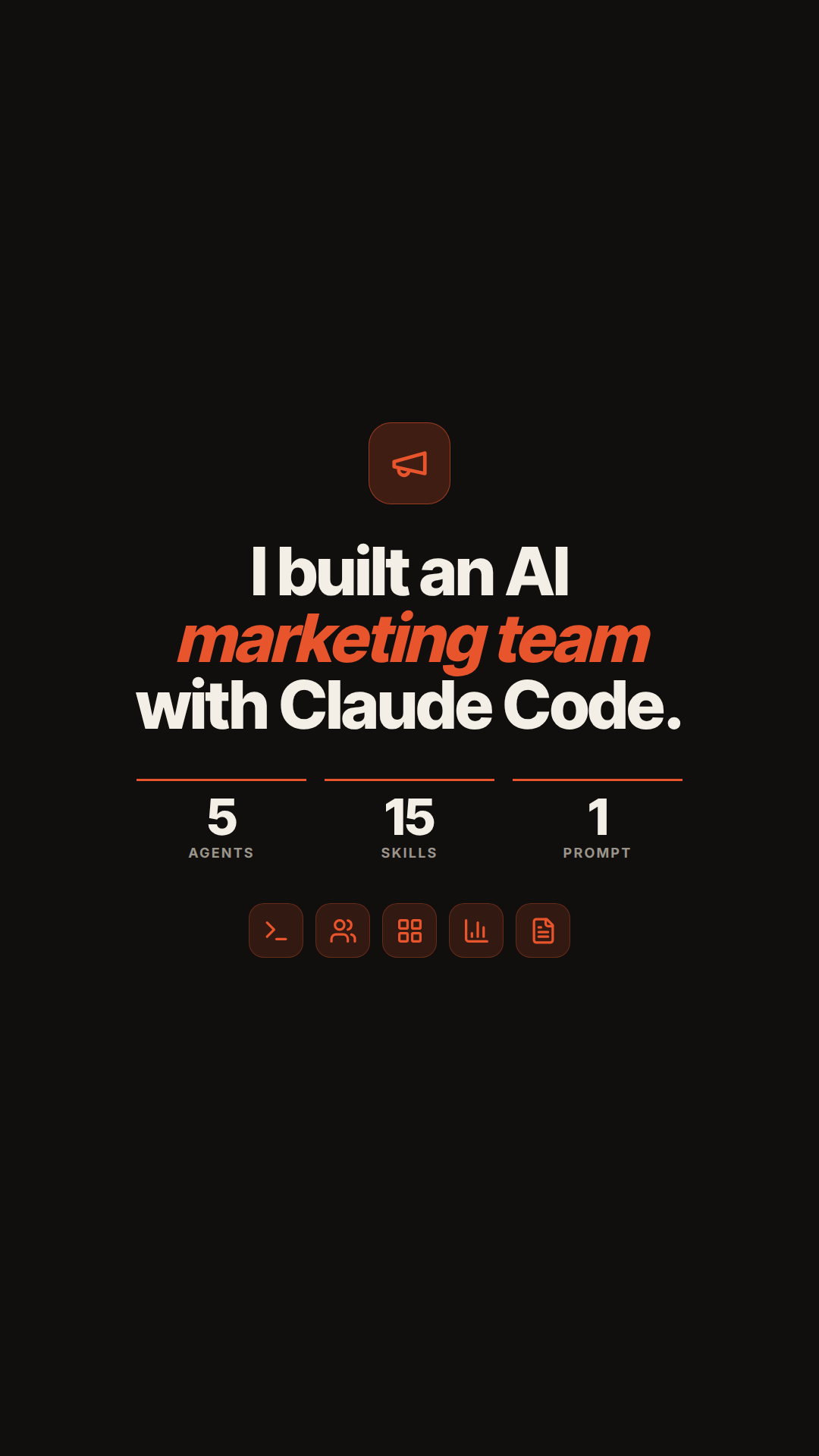
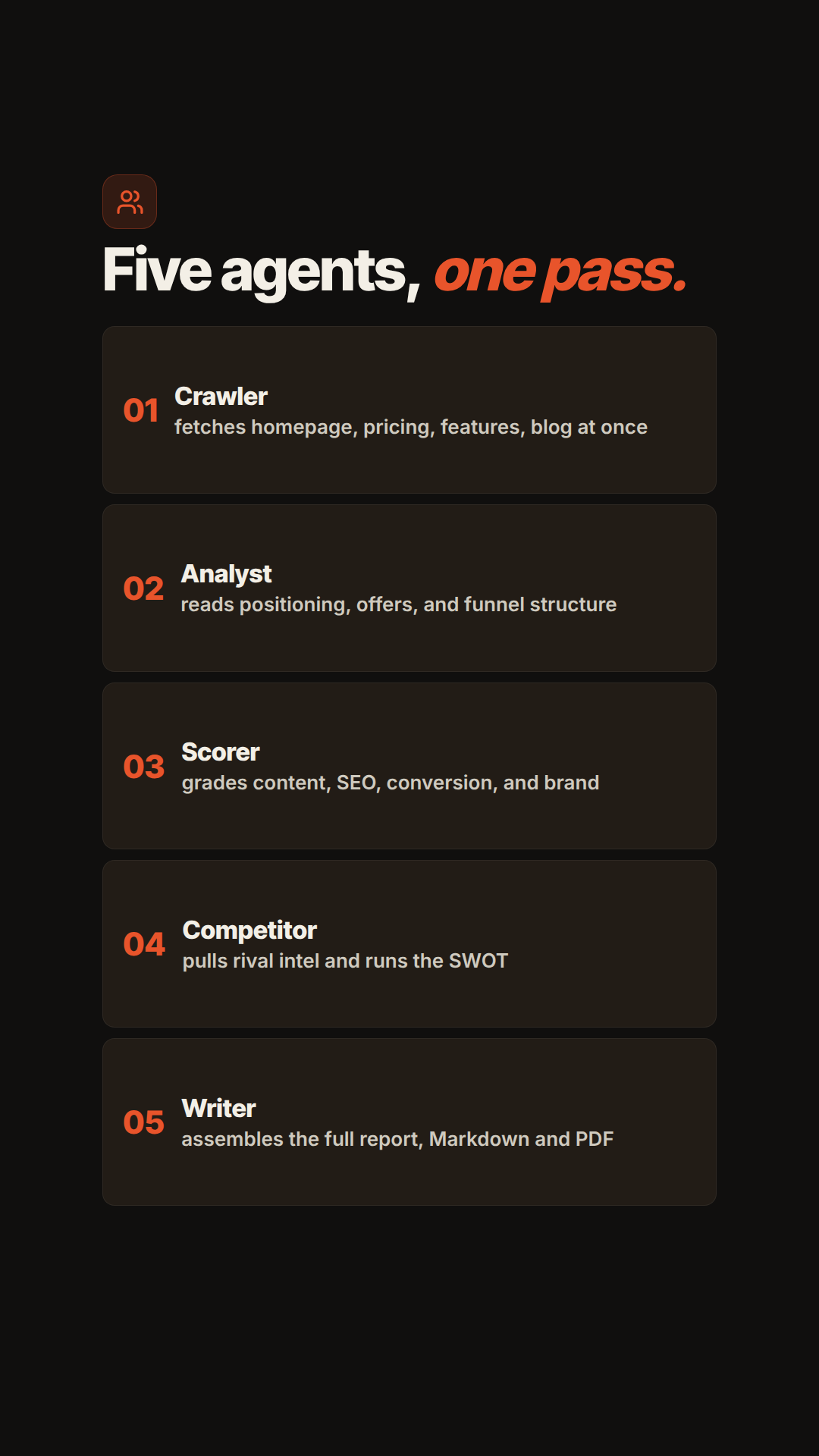
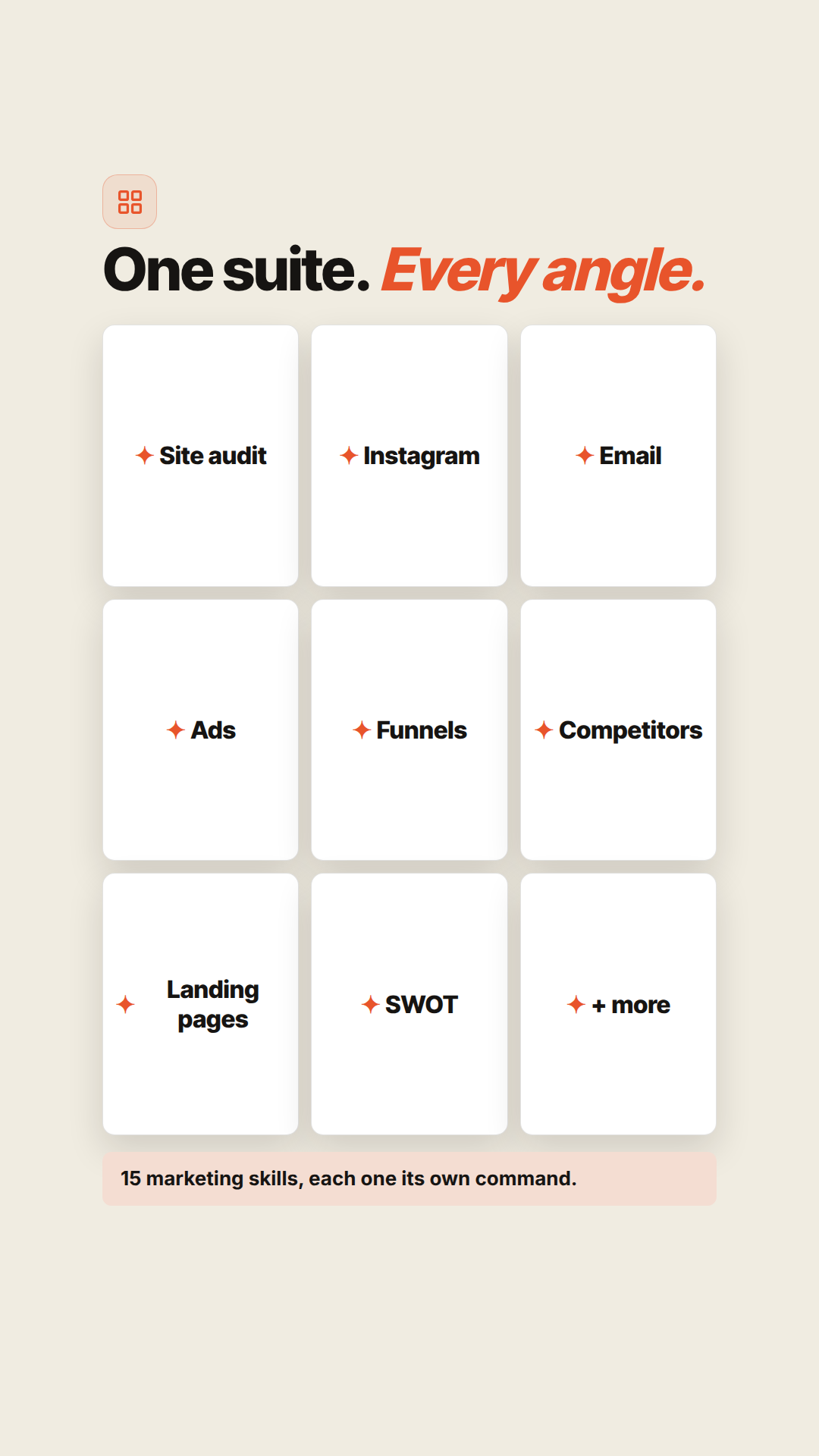
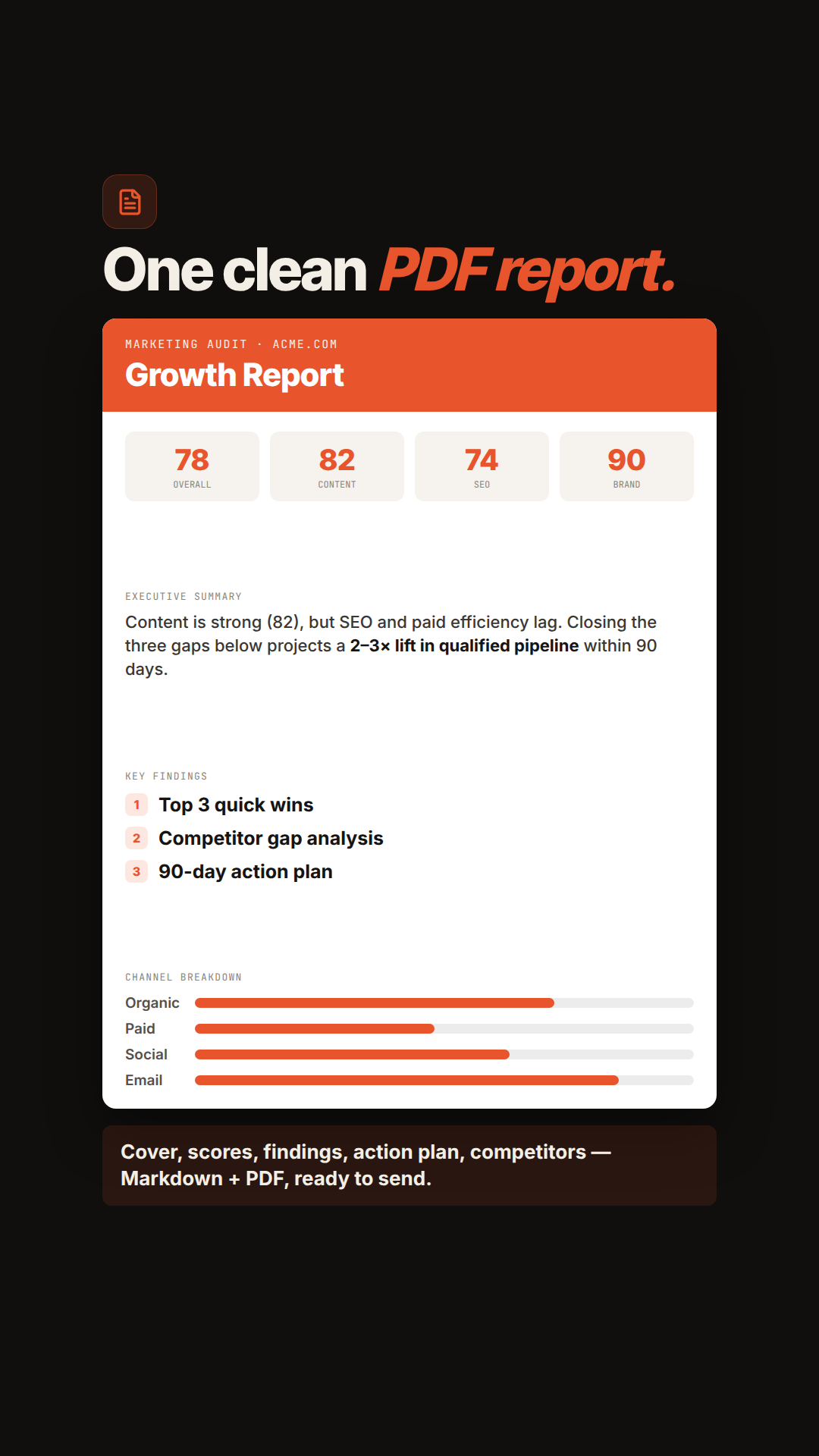
Most people run marketing as one person drowning in six tabs. The fix is to stop thinking in tasks and start thinking in agents, each with one job.

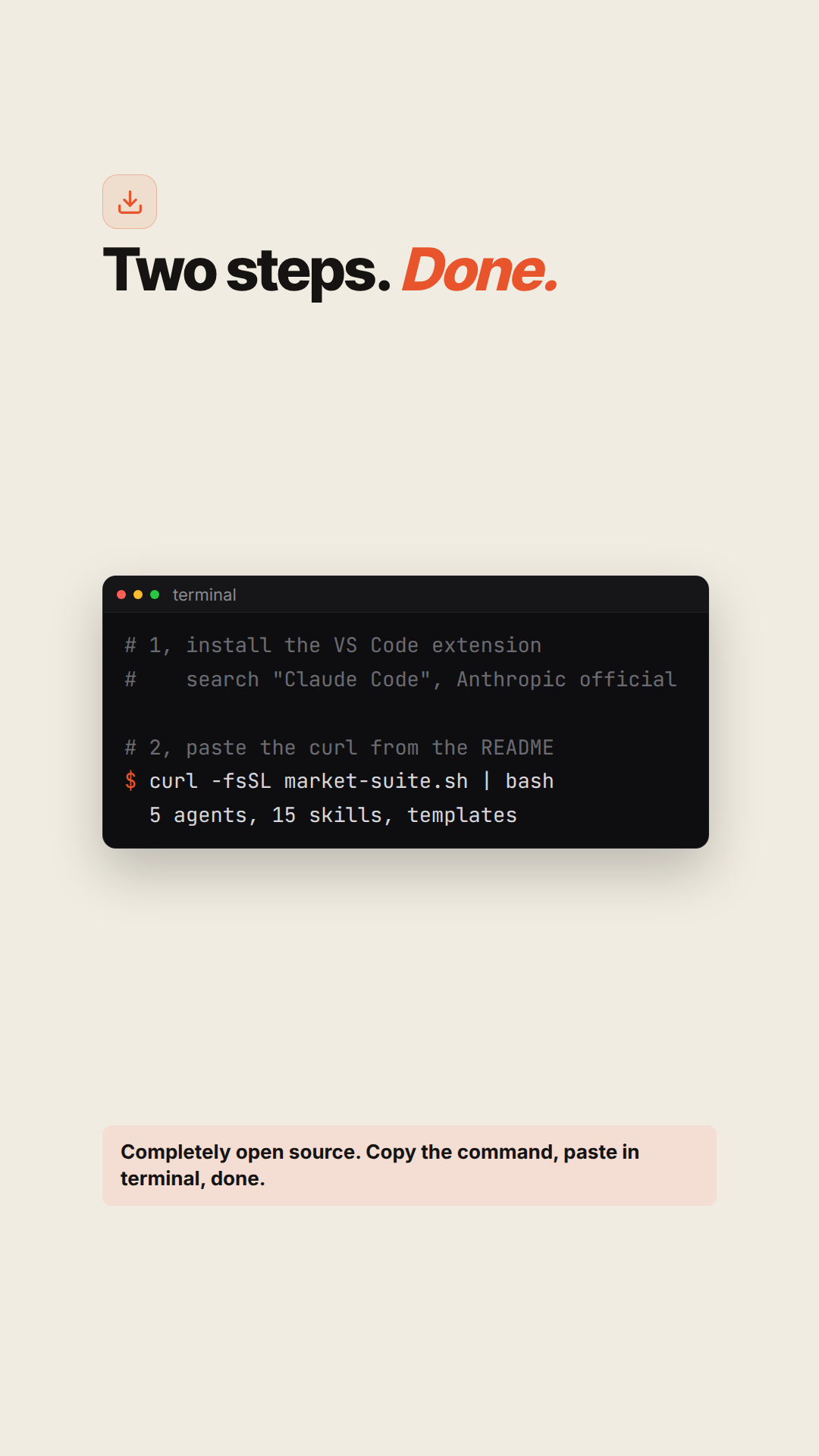
A crawler pulls the whole site, pricing, and blog in one pass.
An analyst reads the positioning and the funnel.
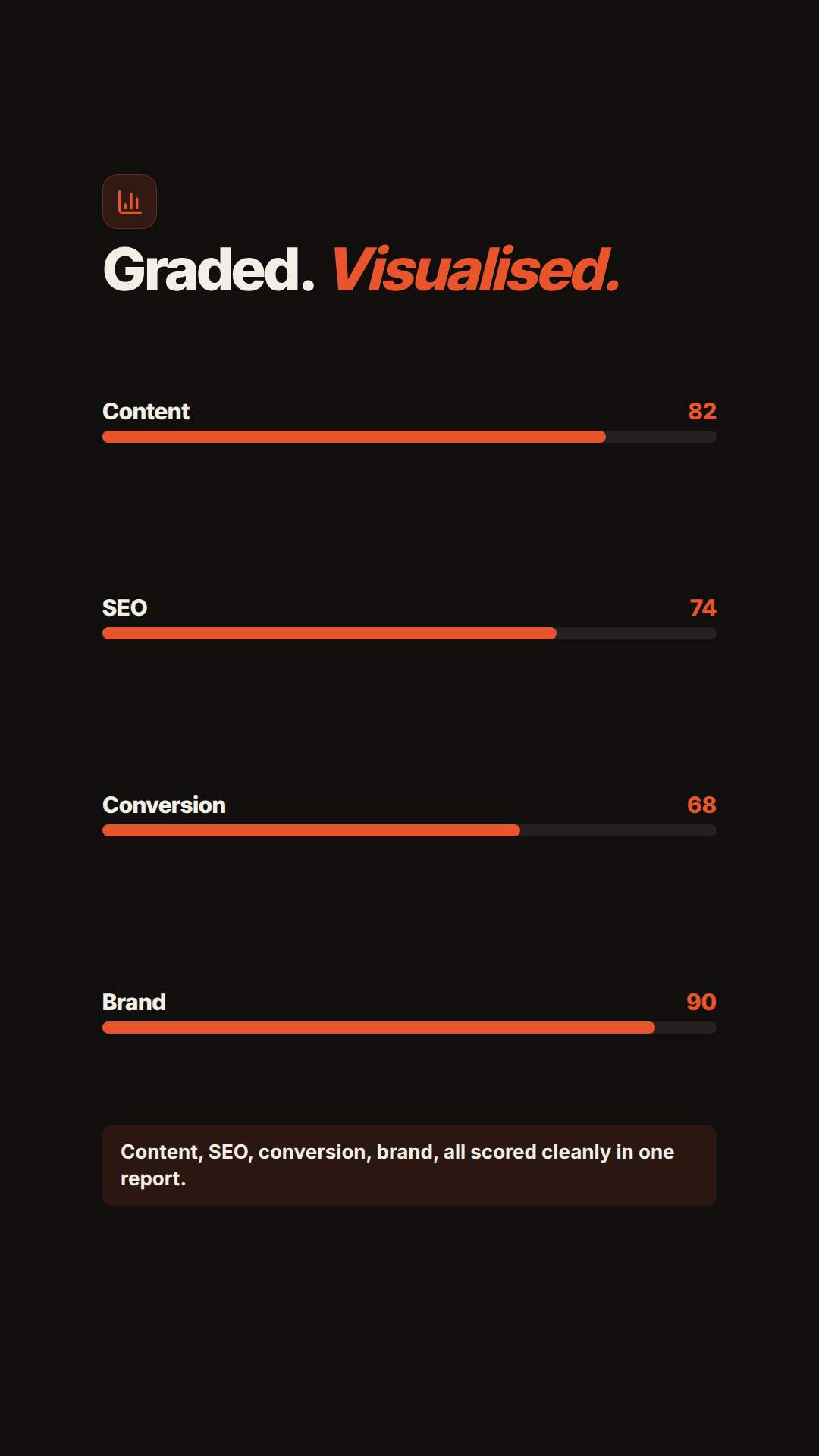
A scorer grades content, SEO, conversion, and brand.
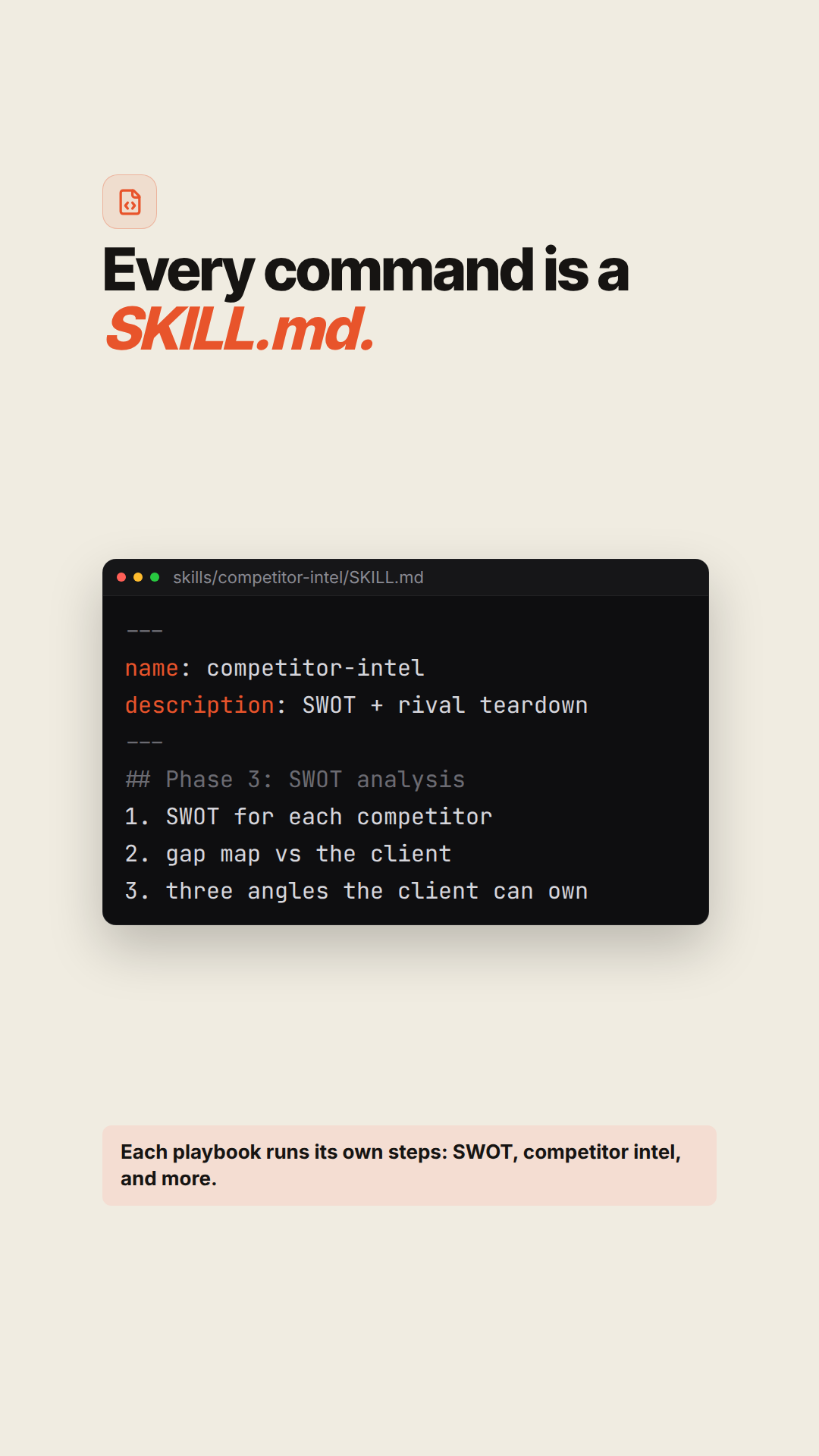
A competitor agent runs the teardown and the SWOT.
A writer assembles the full report, ready to send.

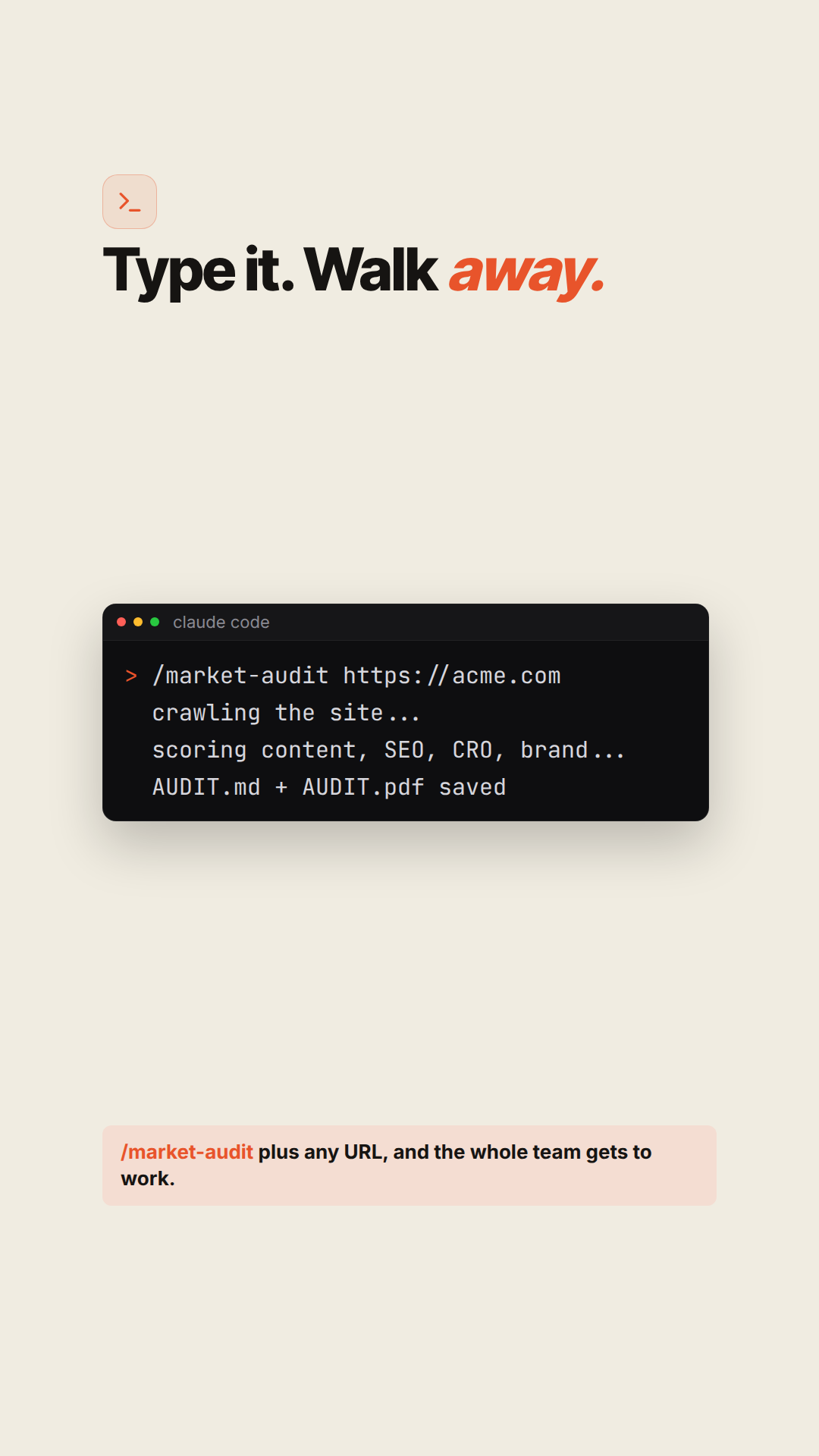
You run one command and the whole team makes a pass. Out comes a marketing audit you could hand a client and charge for.

Comment AUDIT and I will send the agents and the install.
I replaced a $300K sales team
01
02
03
04
05
06
07
Caption
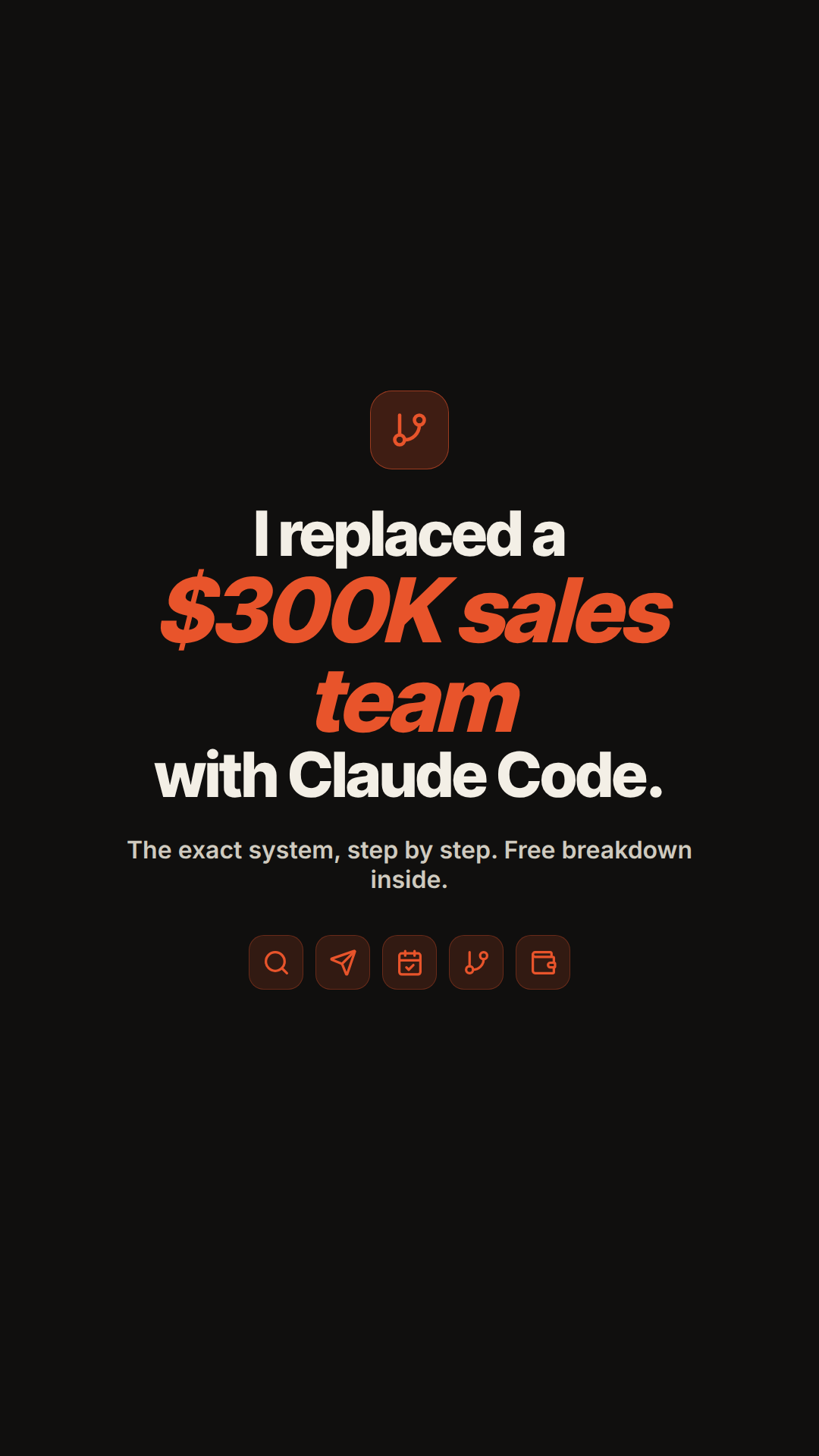
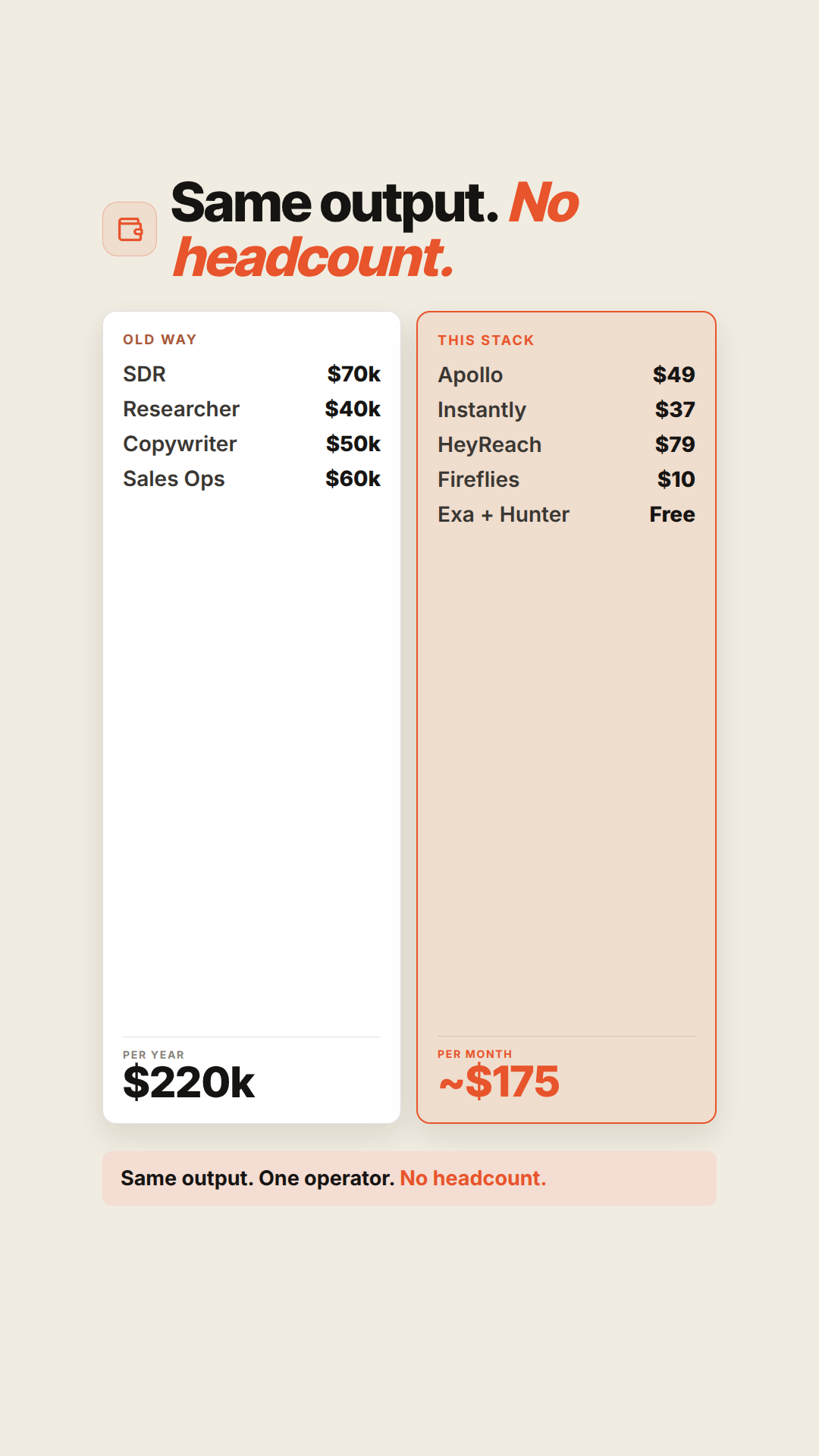
I replaced a six figure sales team with a setup that never sleeps and never forgets a lead. Here is how it actually works.

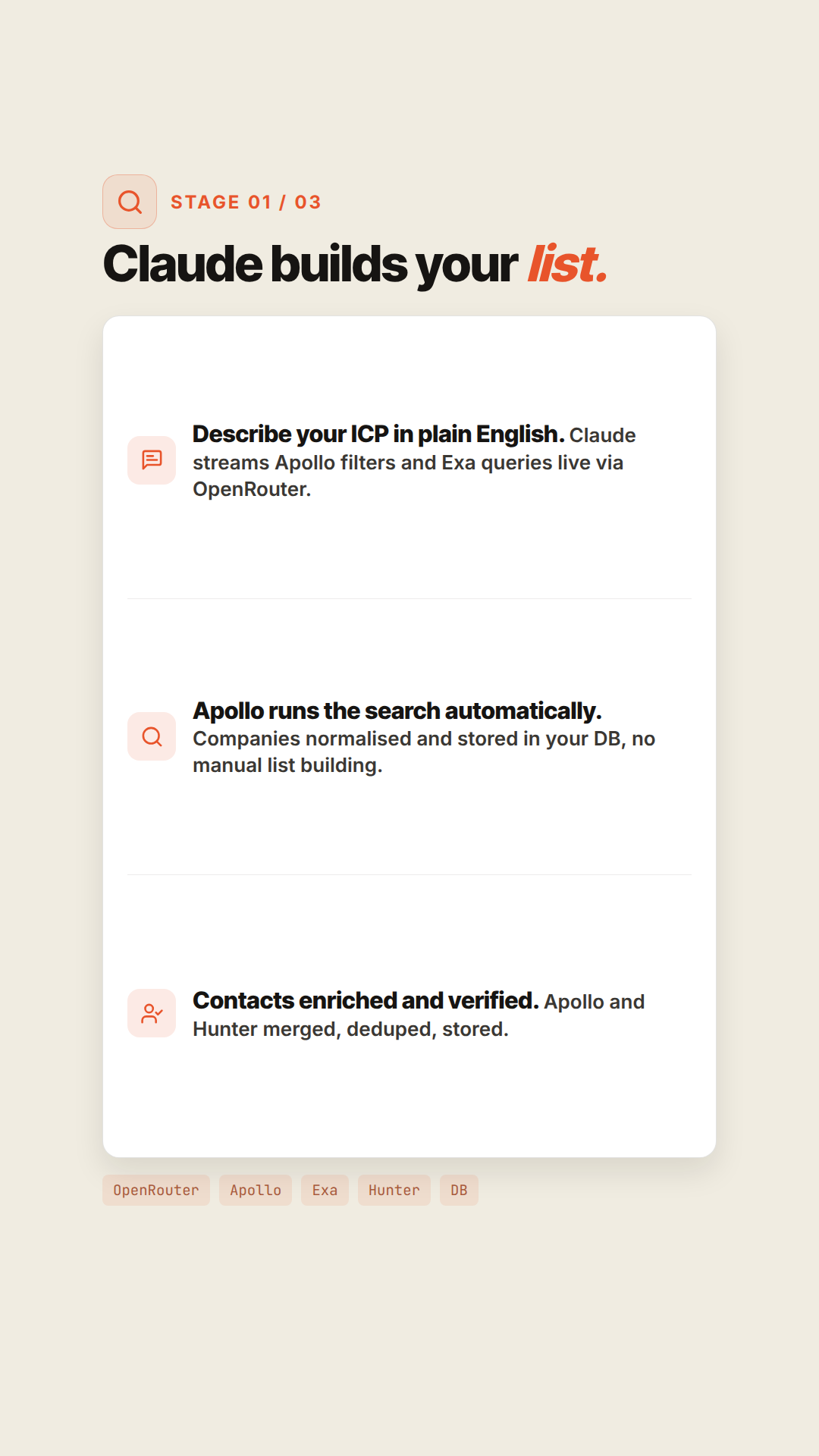
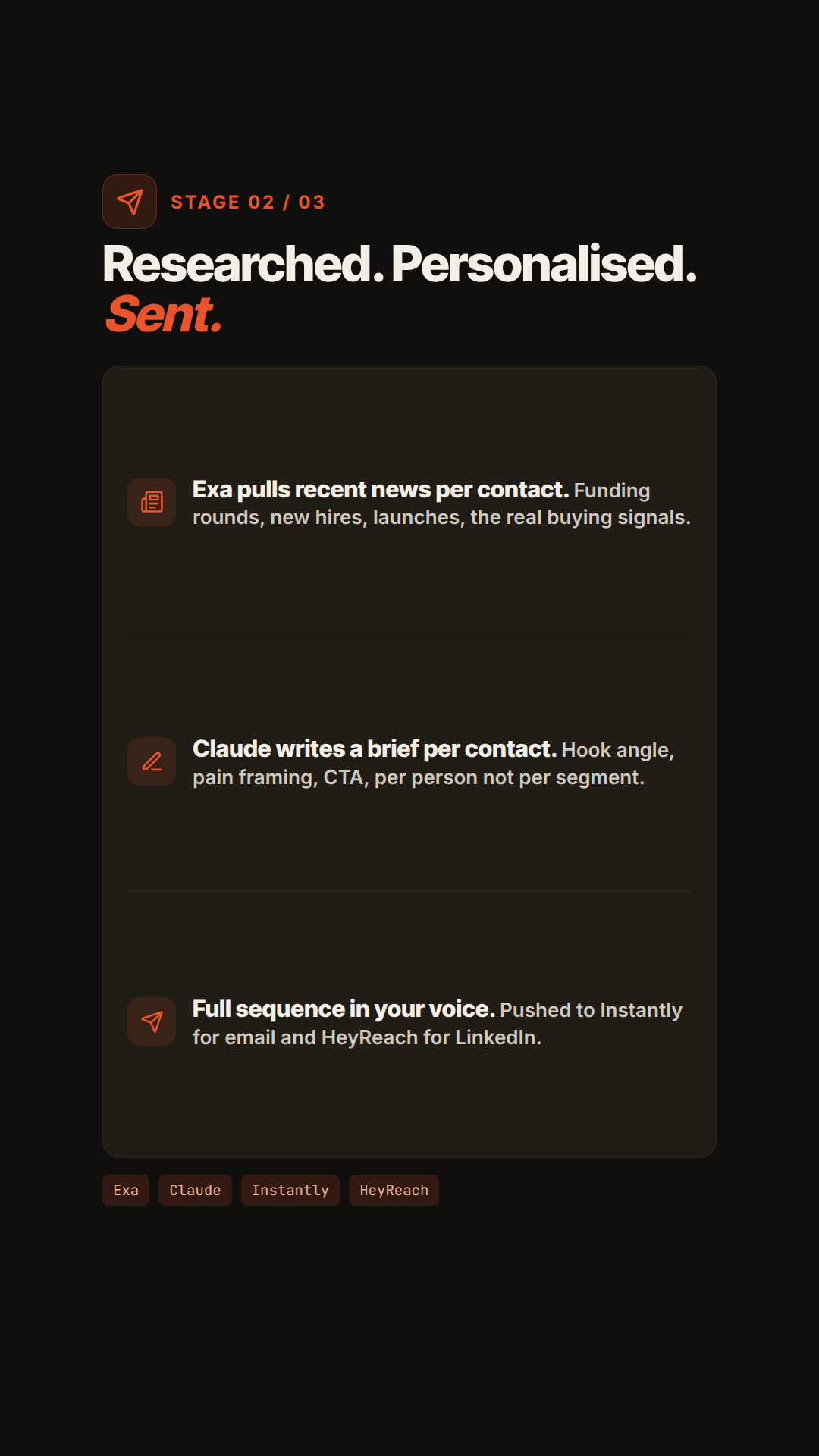
It builds the list from a plain English description of your ideal customer, then enriches every name from several sources before a single word gets written.

It writes outreach that reads human, references their real world, and routes to the right channel automatically. Email if the address verifies, social if not, manual queue if neither.

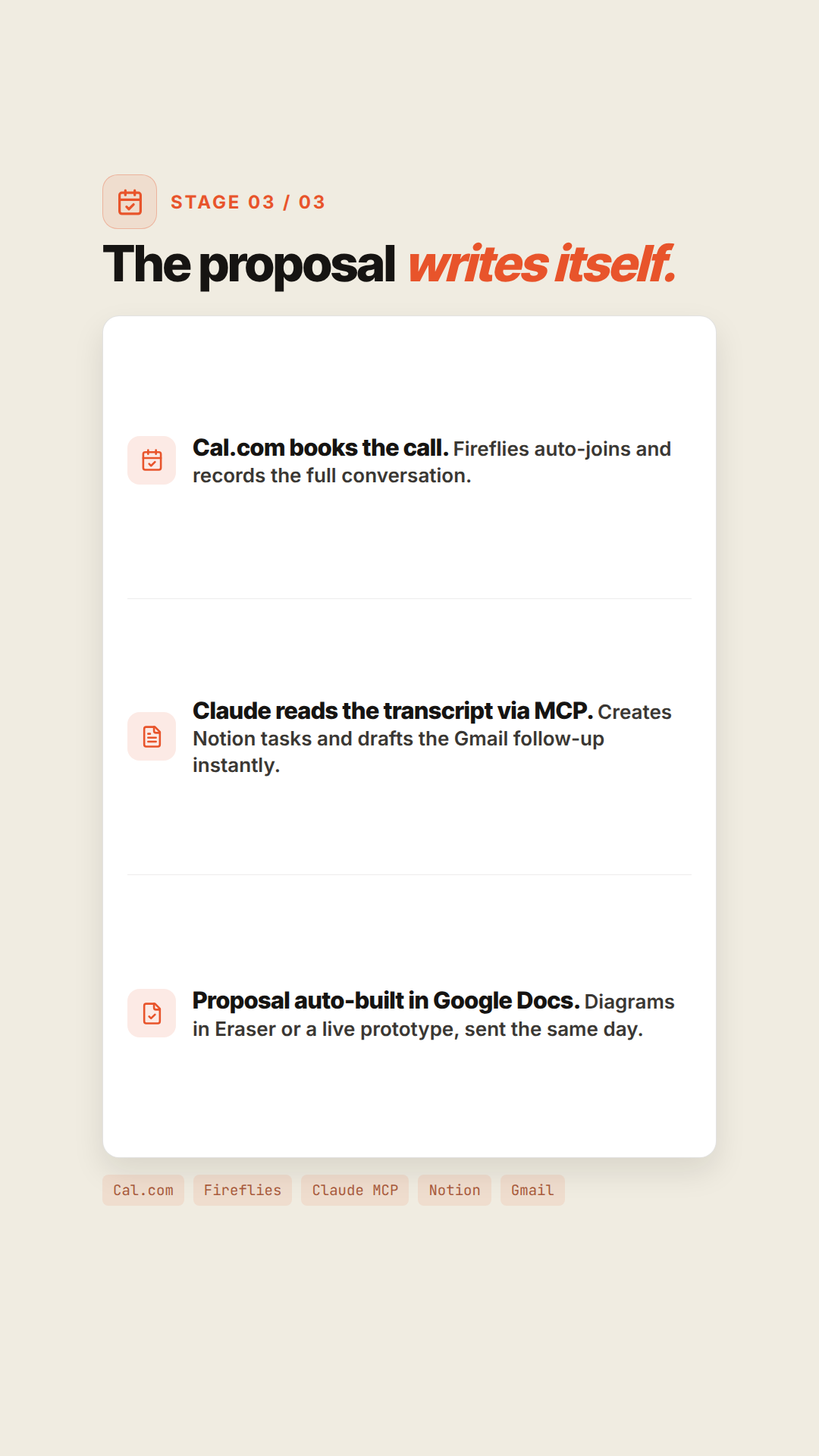
Then it works the follow up forever. No lead goes cold because someone got busy.

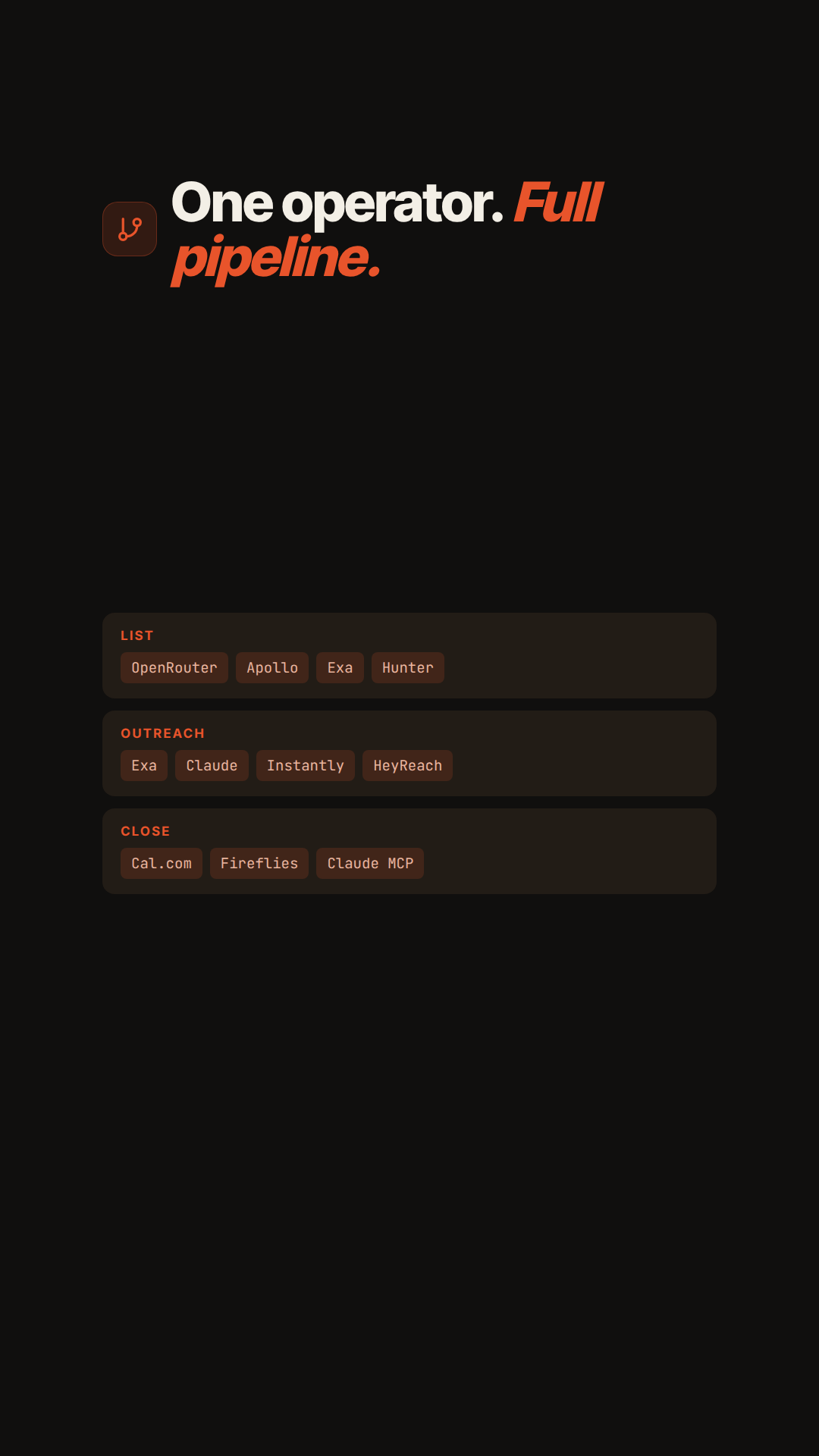
One operator watches a clean pipeline. That is the whole team, running as software.

Comment GTM and I will send the full build.
I built an $80K sales rep
01
02
03
04
05

06
Caption
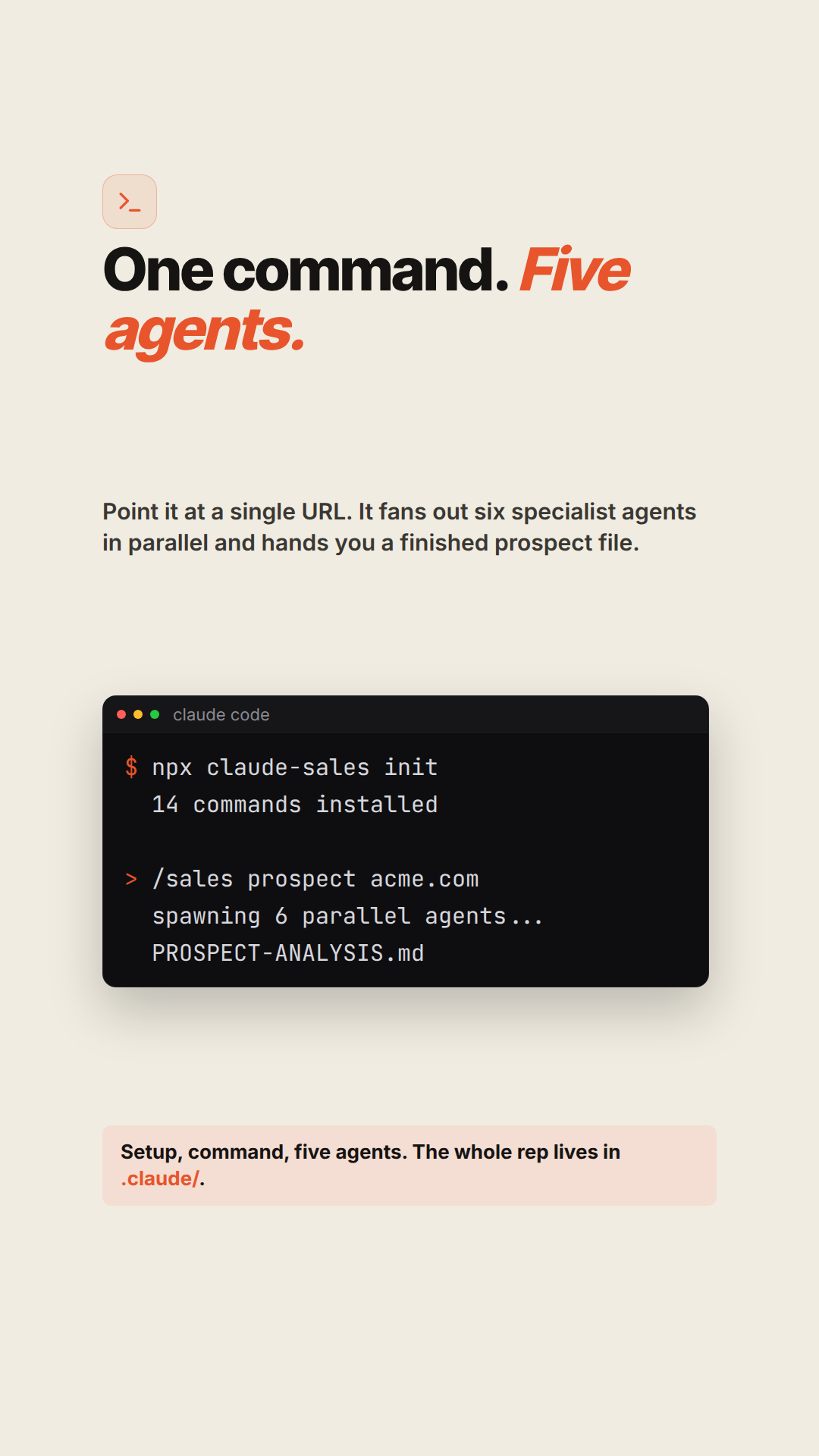
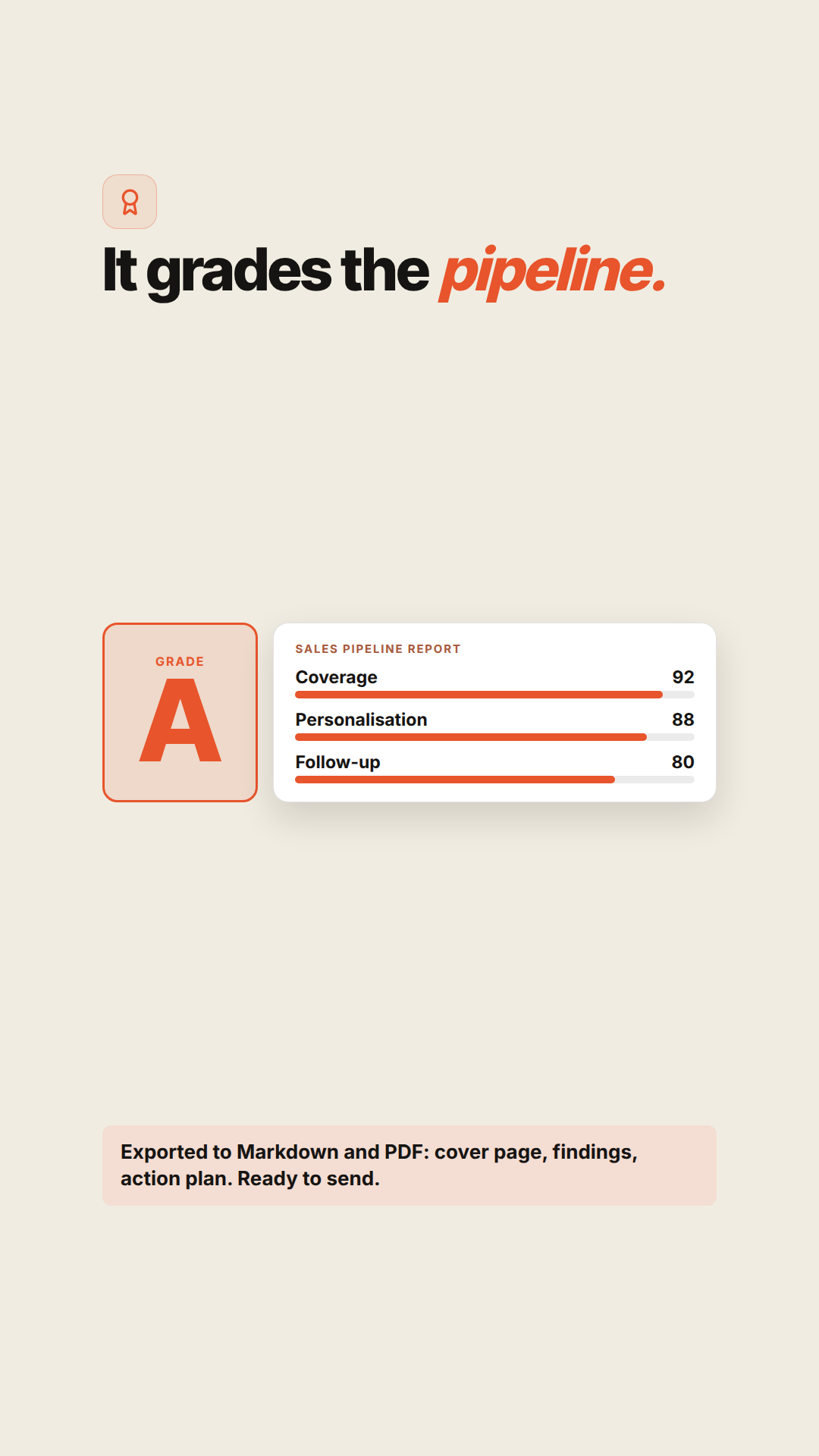
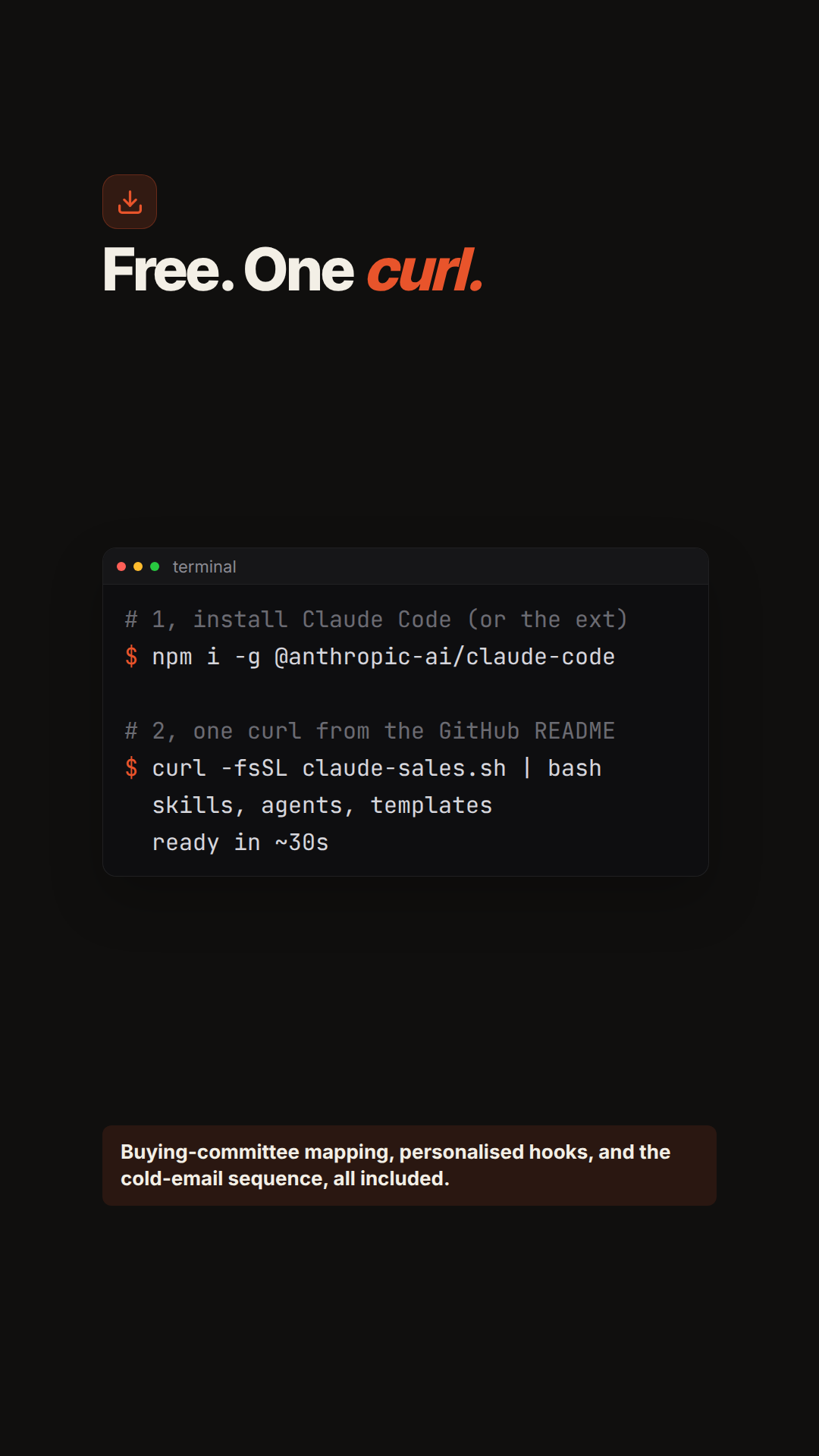
I built an AI sales rep that does the job I used to pay a full salary for, and it works every lead the same way every day.

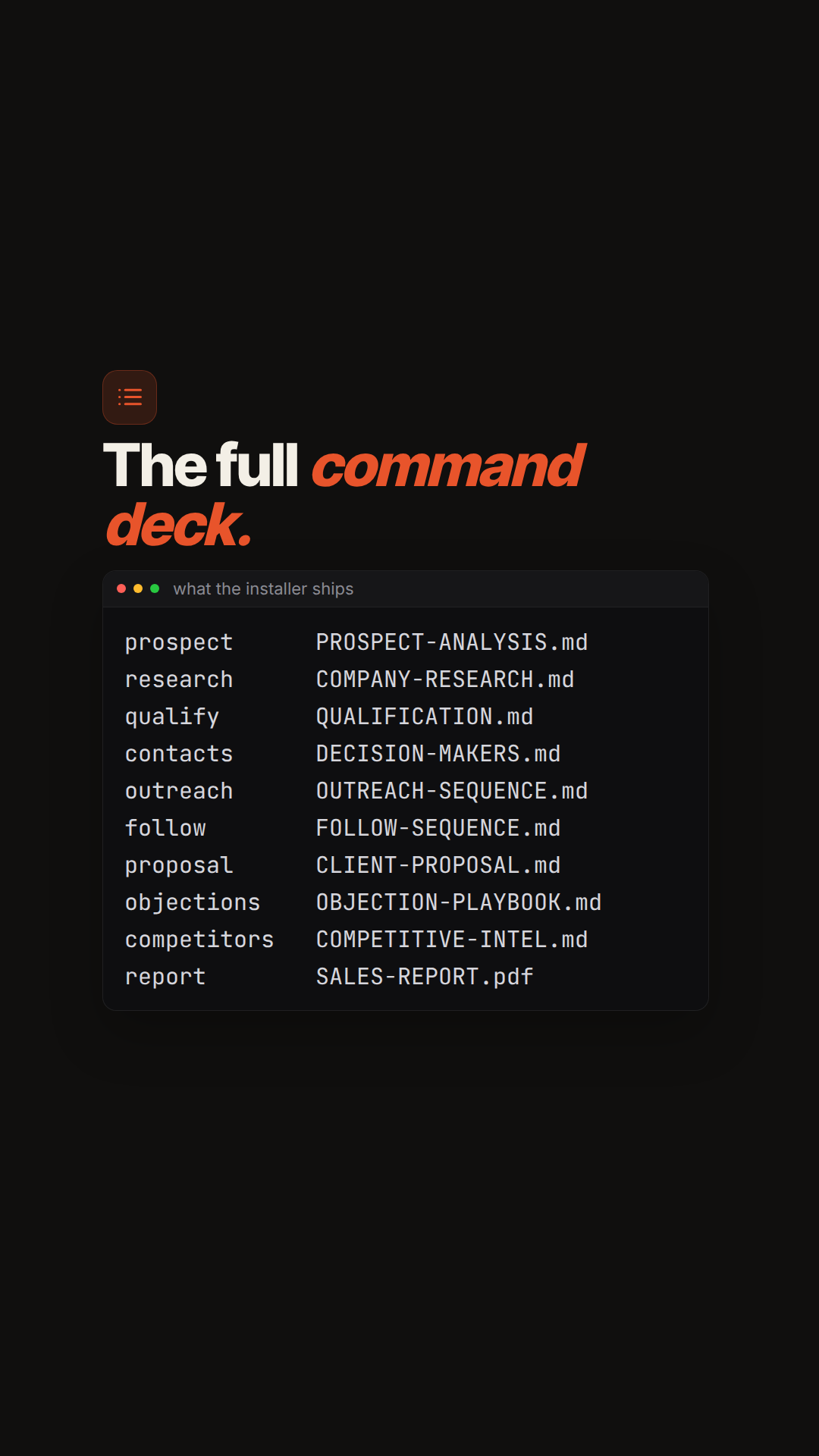
It does the research first, so it opens with their real pain instead of a template. It writes the message that earns a reply. It runs the follow up cadence that humans always let slip. When a lead goes hot, it hands off to me.

No managing, no ramp, no quota drama. Just the boring, consistent outbound that actually closes.

Comment SALES and I will send the rep setup, the research playbook, and the cadence.
I gave Claude all my competitors
01
02
03
04
05
06
07
08
09
Caption
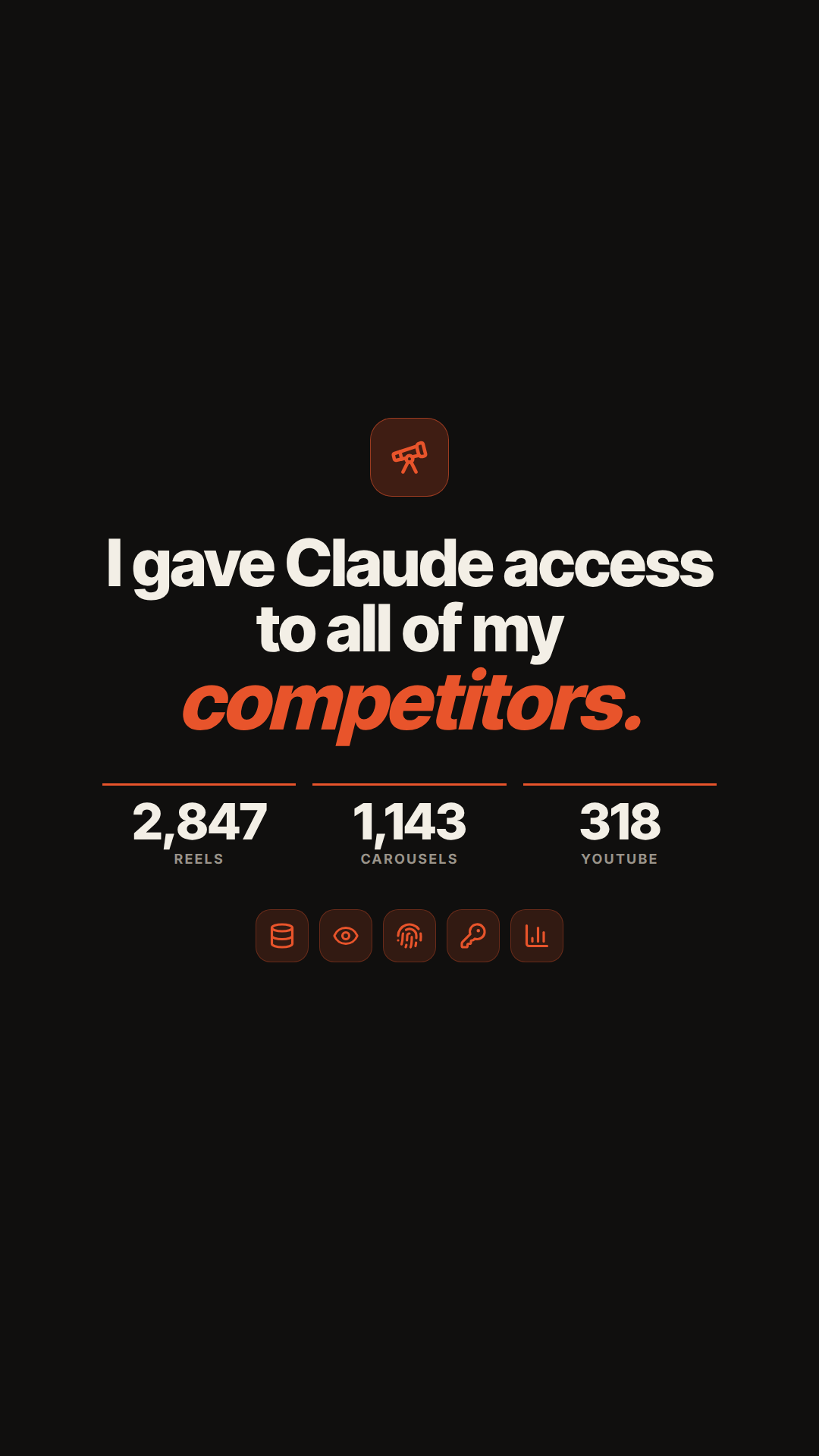
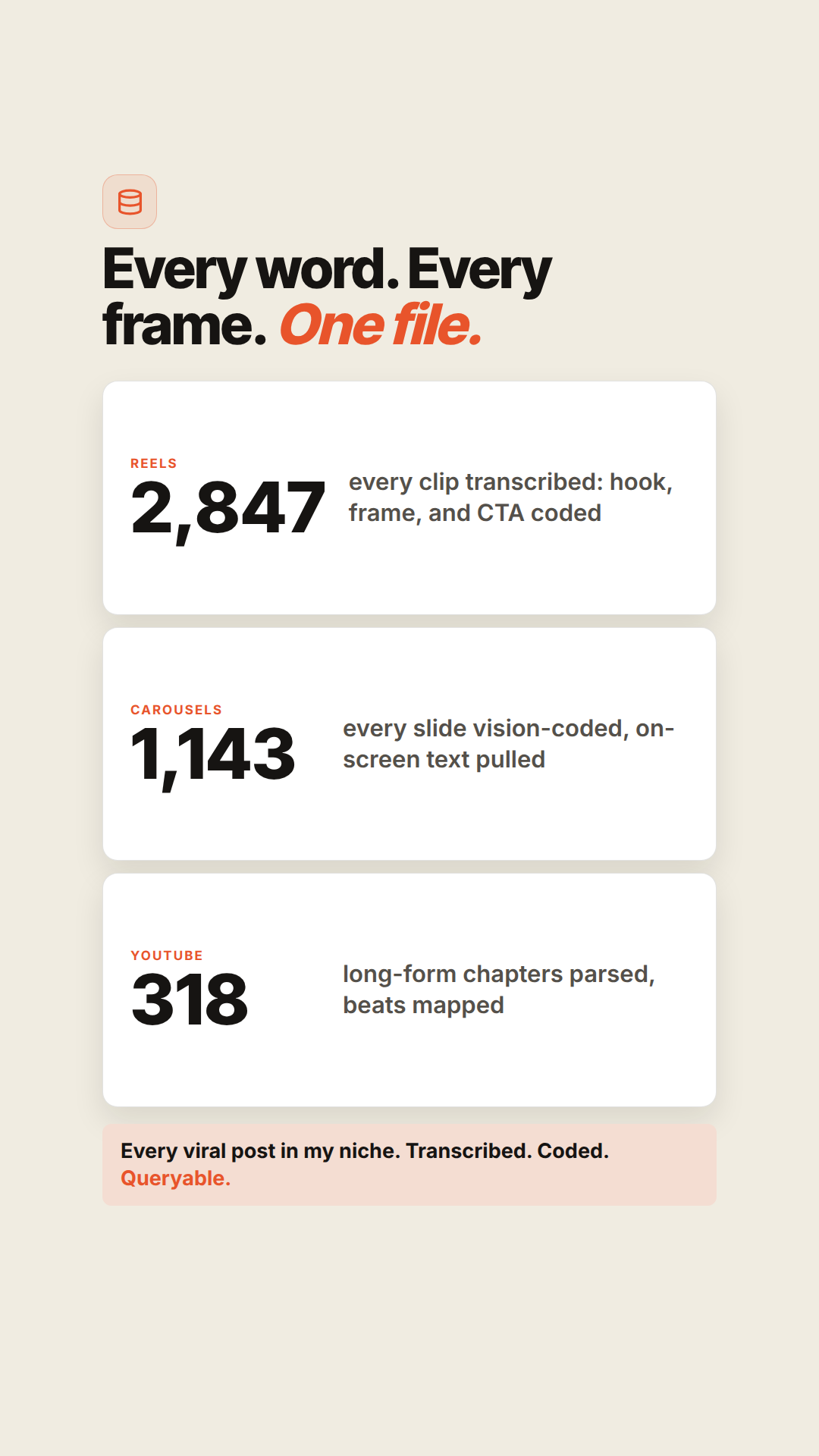
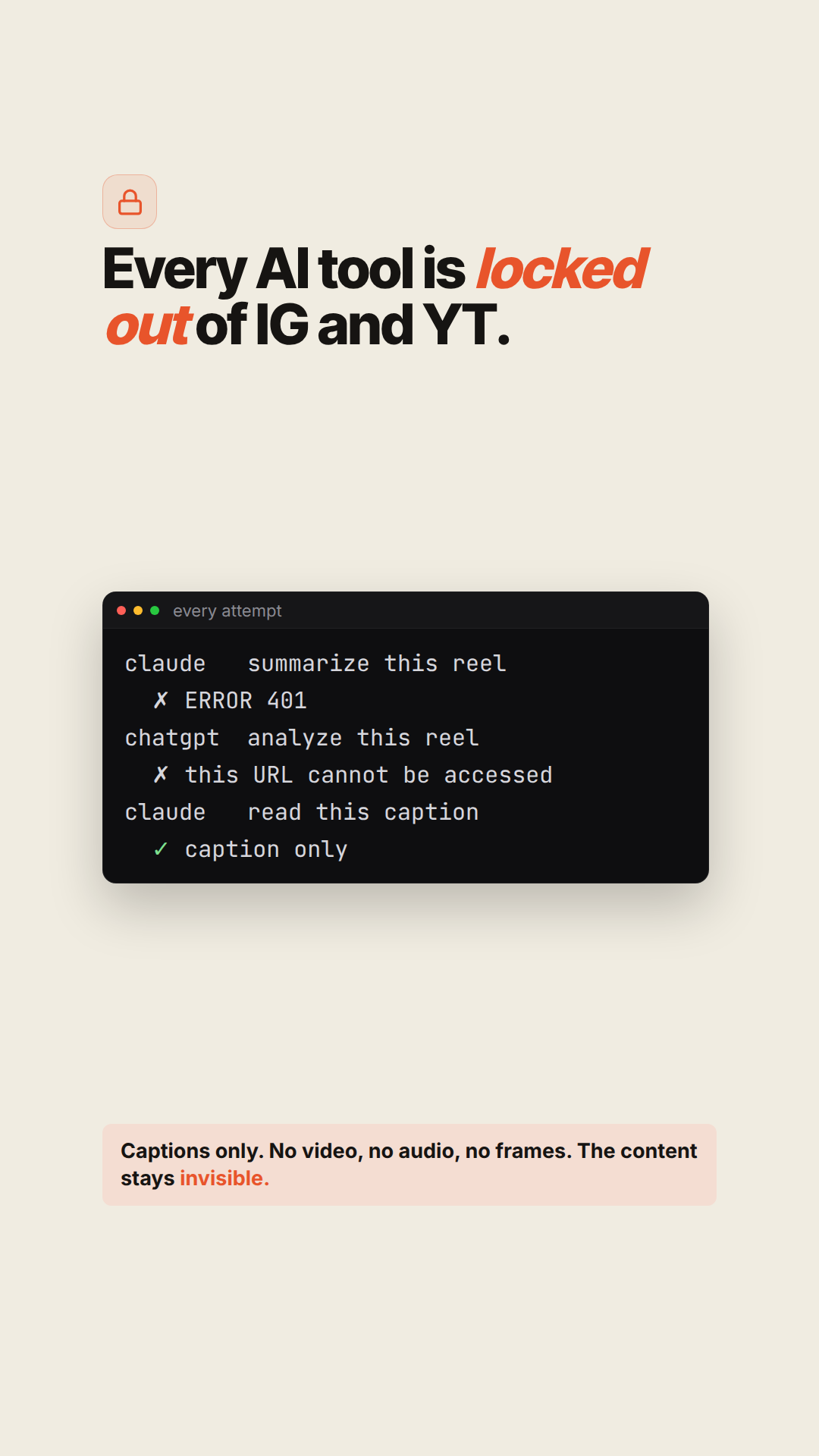
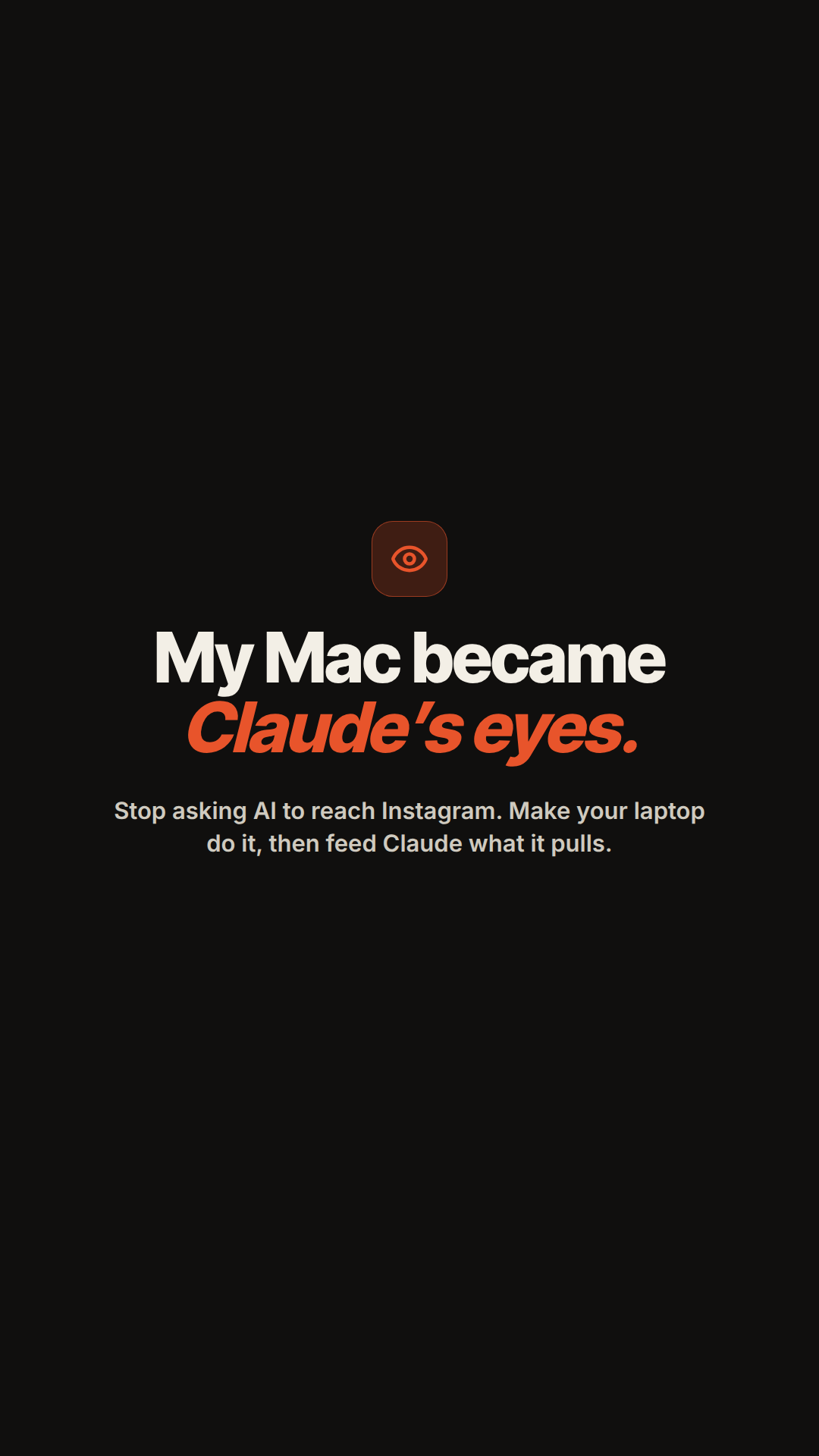
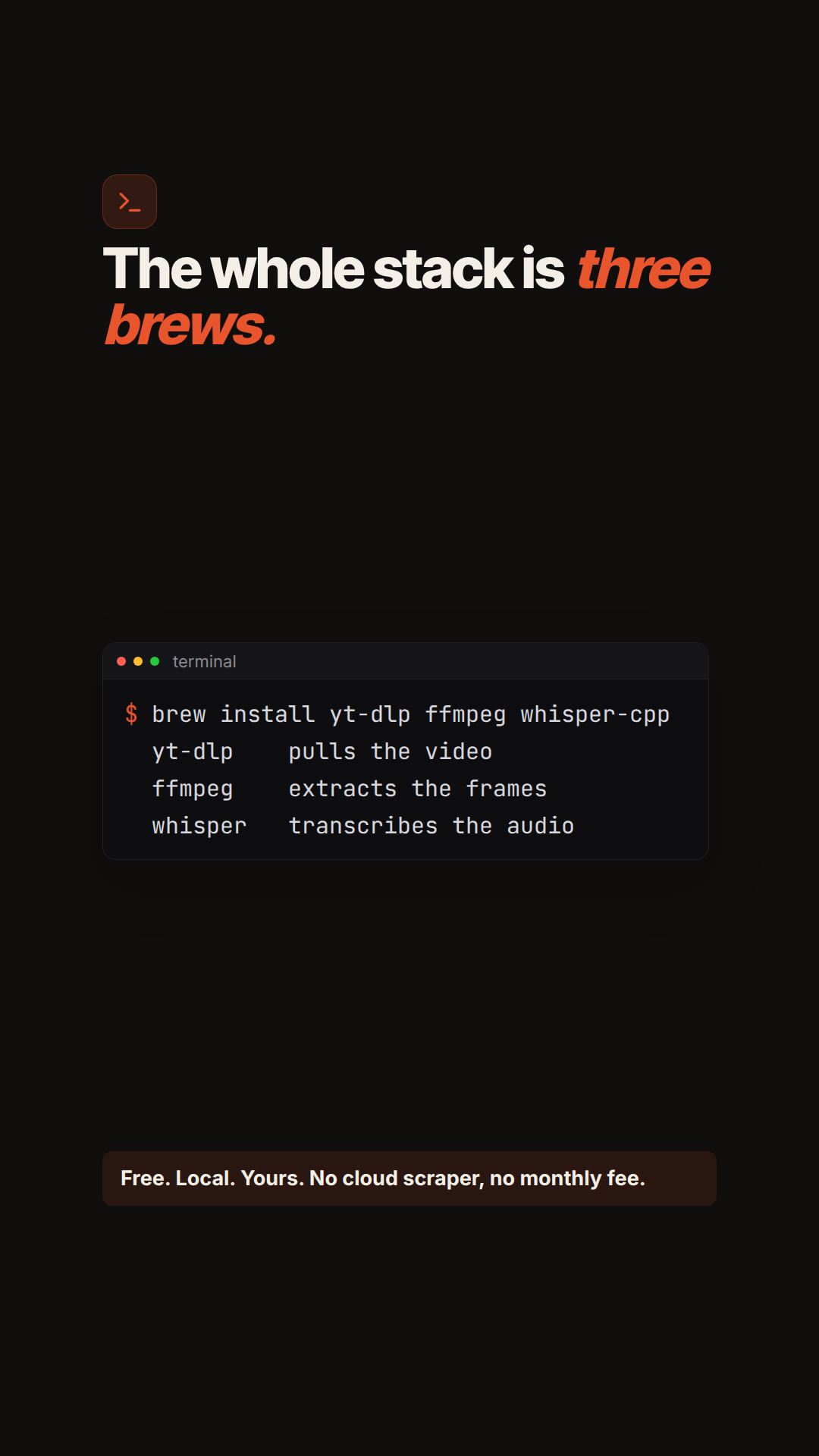
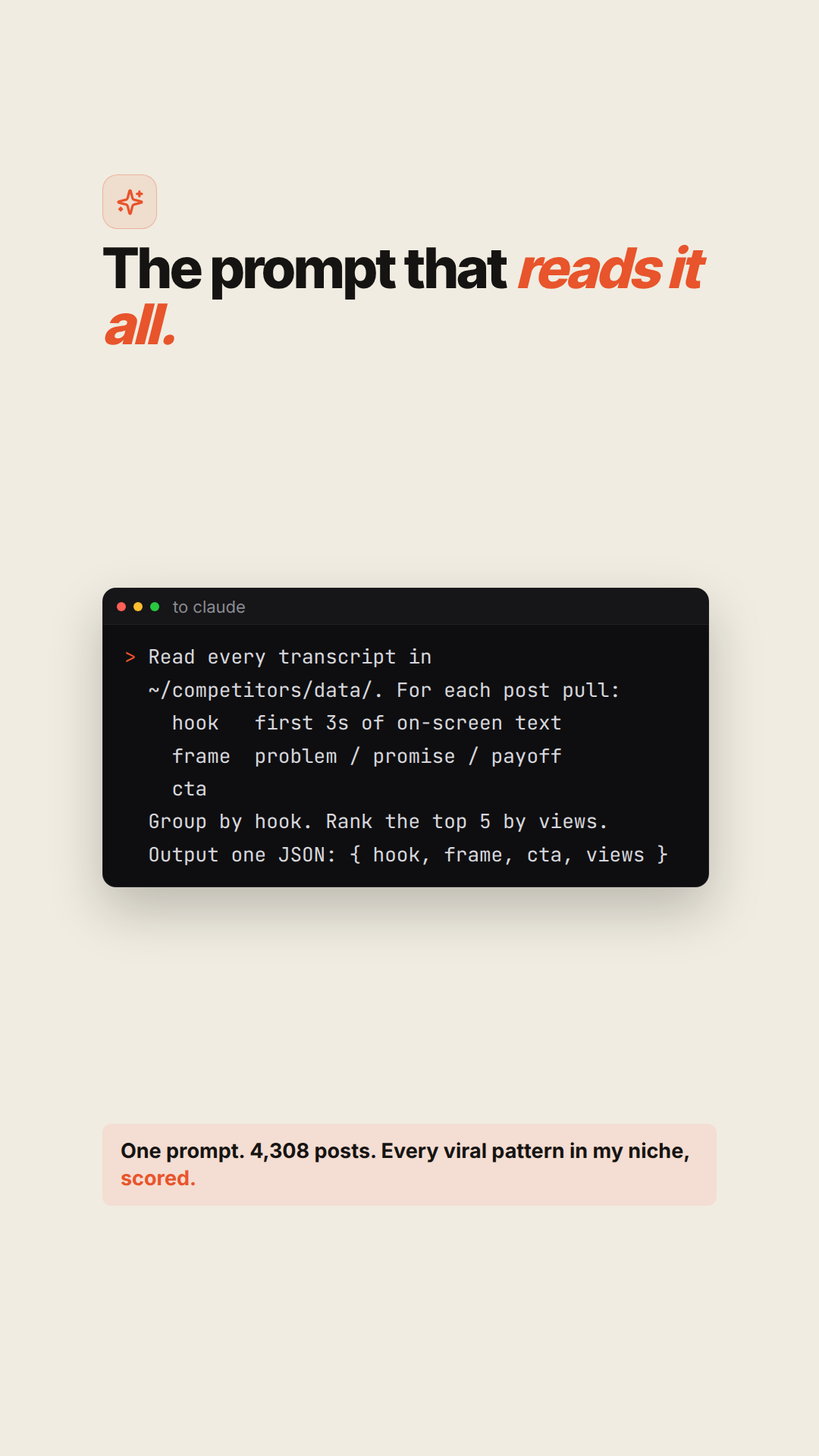
I gave Claude every competitor I have and got back a plan, not a spreadsheet.

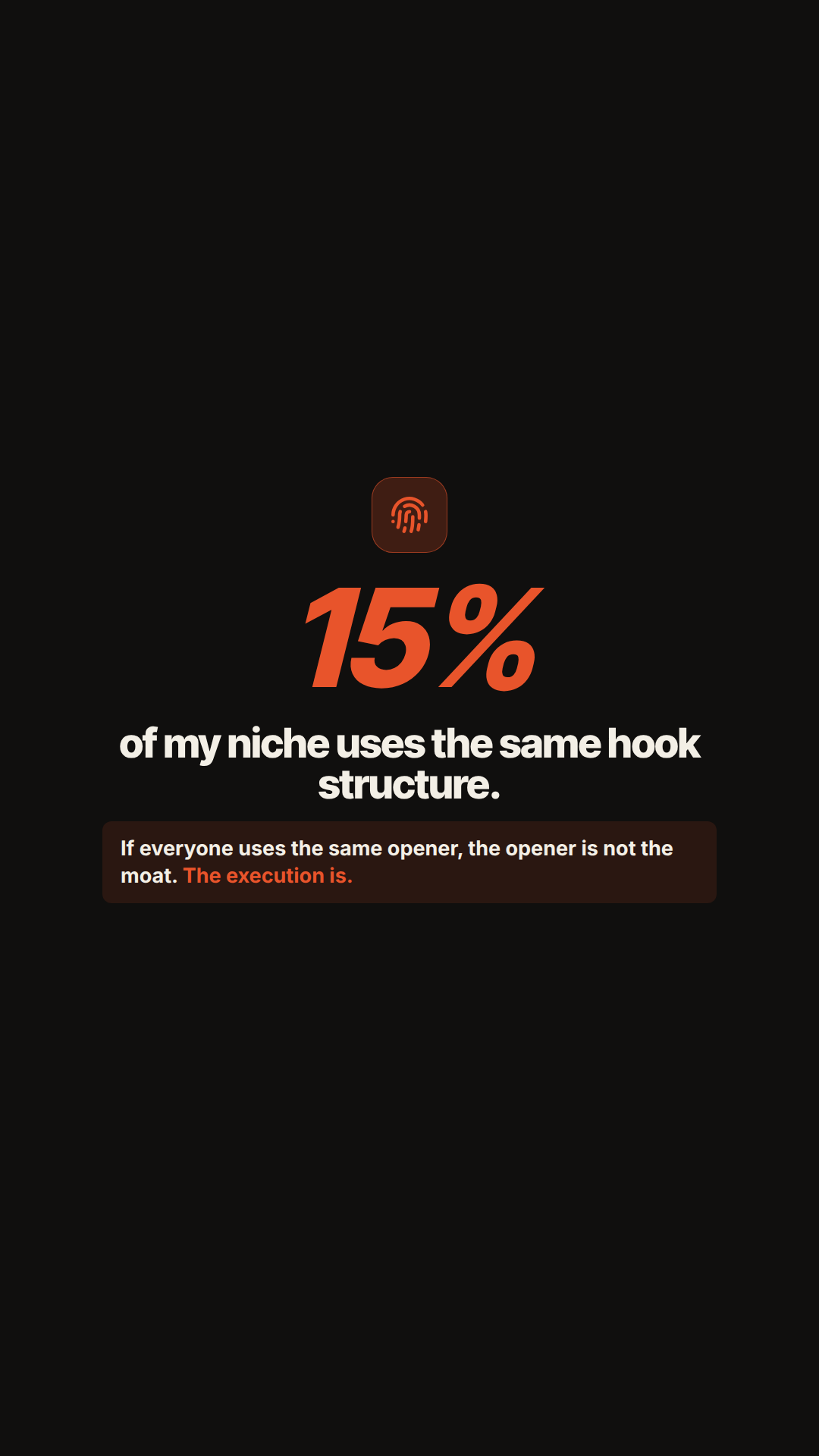
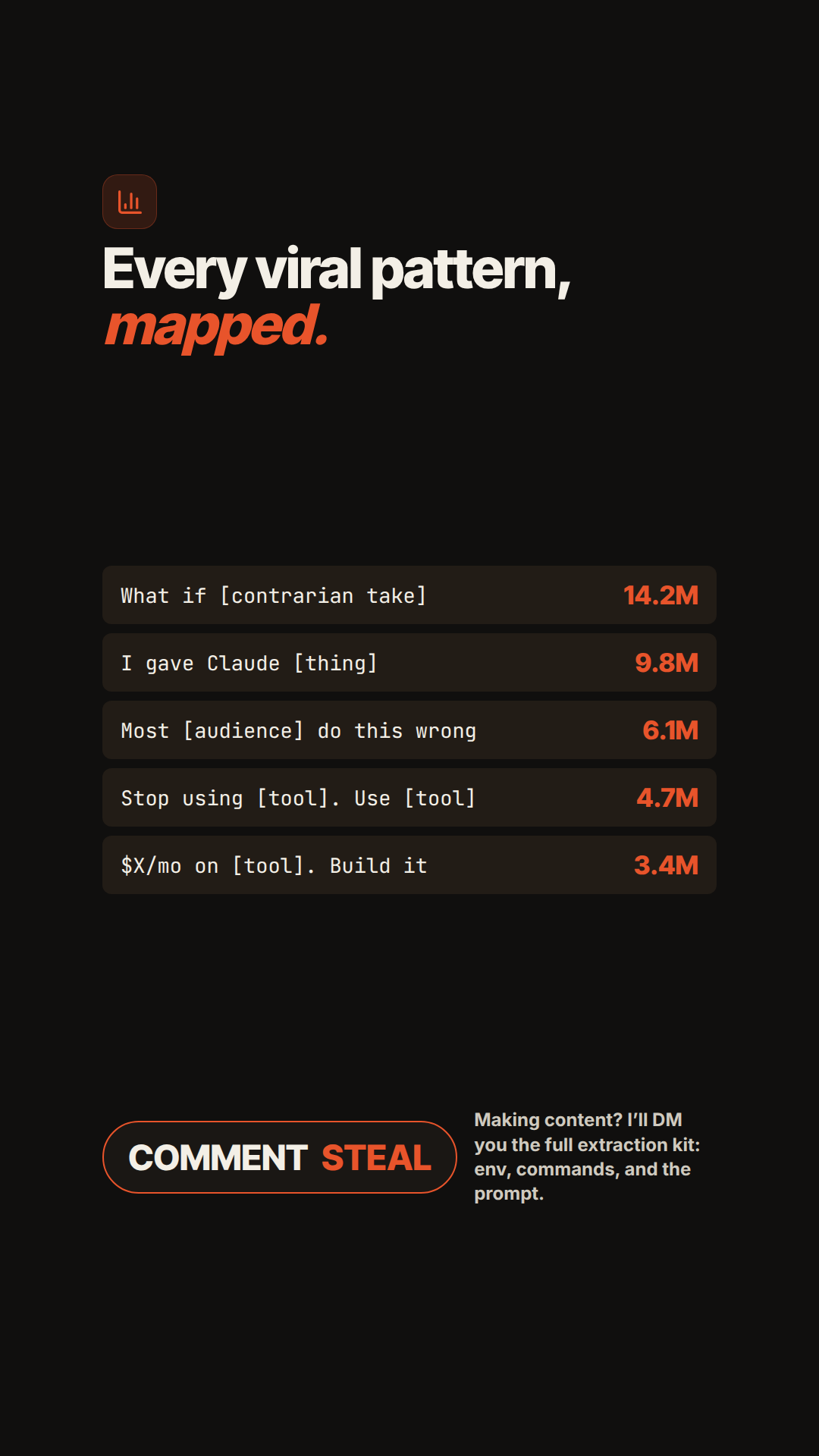
It ingests all of them at once. It reads their positioning, their offers, and their messaging, then maps the thing they all do badly. That gap is where you win.

What comes out is three angles I can take this week, ranked, with the reasoning. Not an observation. A move.

This took the part of strategy that used to eat a full week and turned it into an afternoon.

Comment STEAL and I will send the intel prompt and the scoring.
Learn Claude Code in one weekend
01
02
03
04
05
06
07
Caption
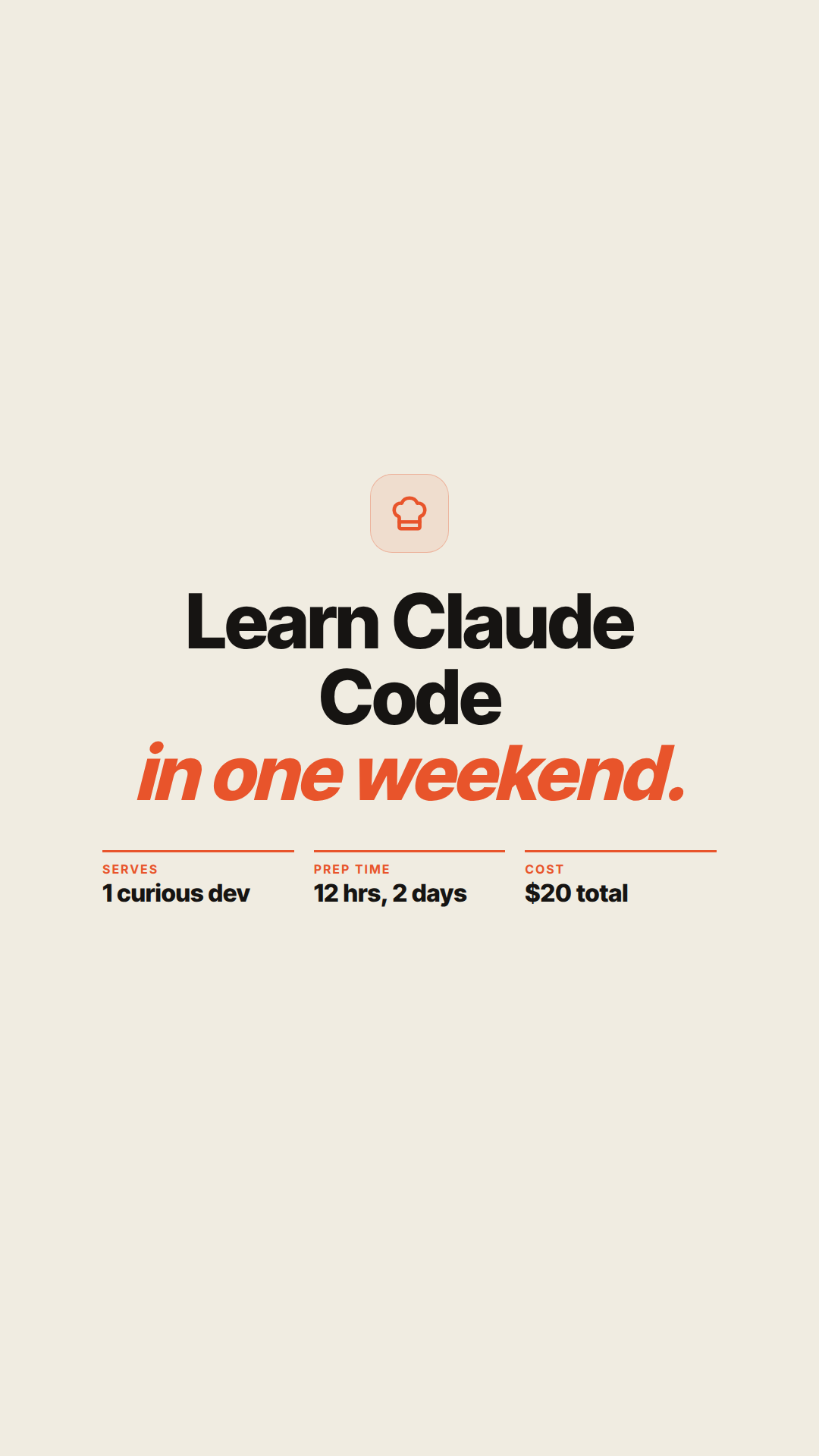
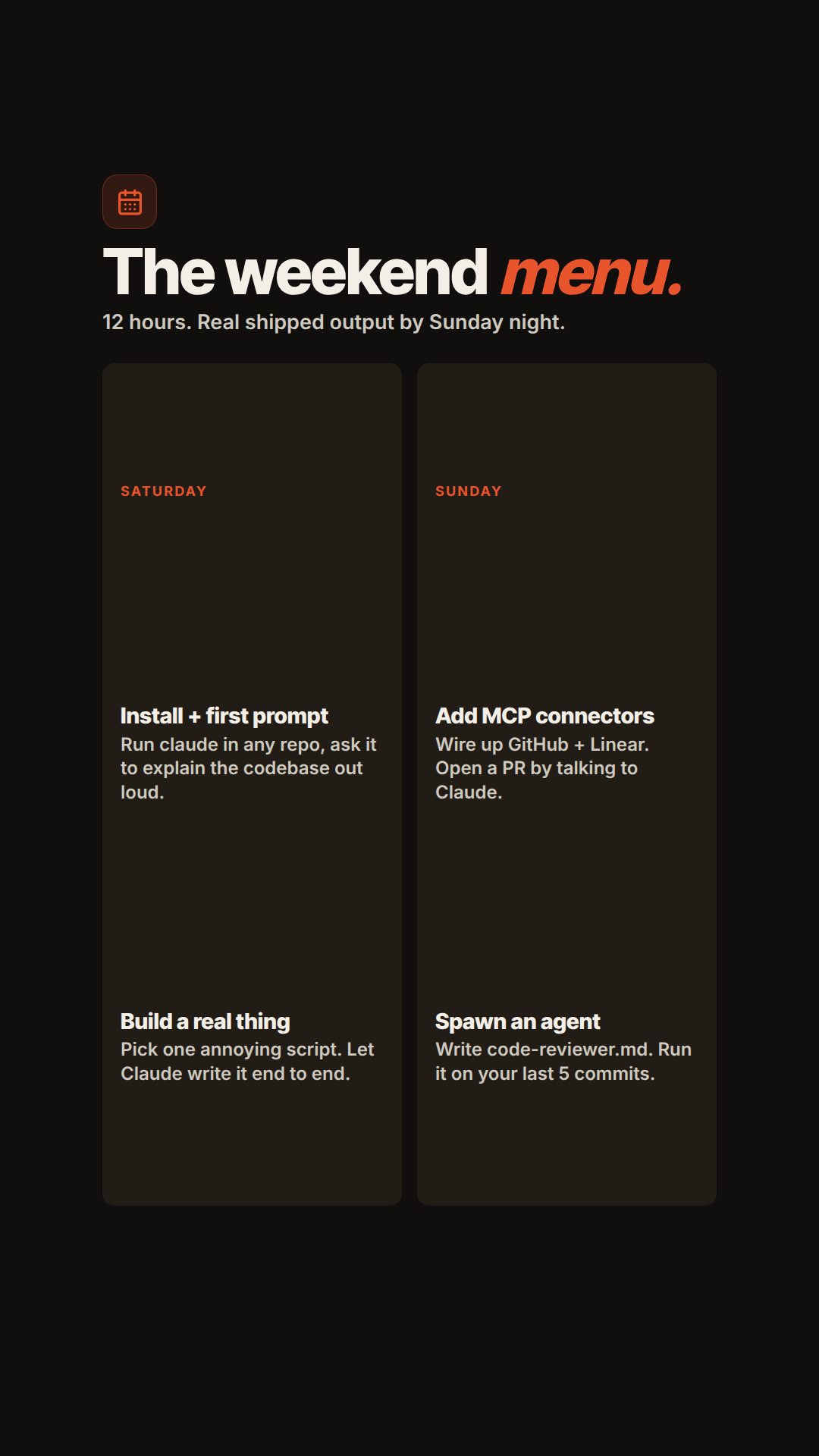
You can go from never opening Claude Code to shipping something real in one weekend. Here is the recipe.

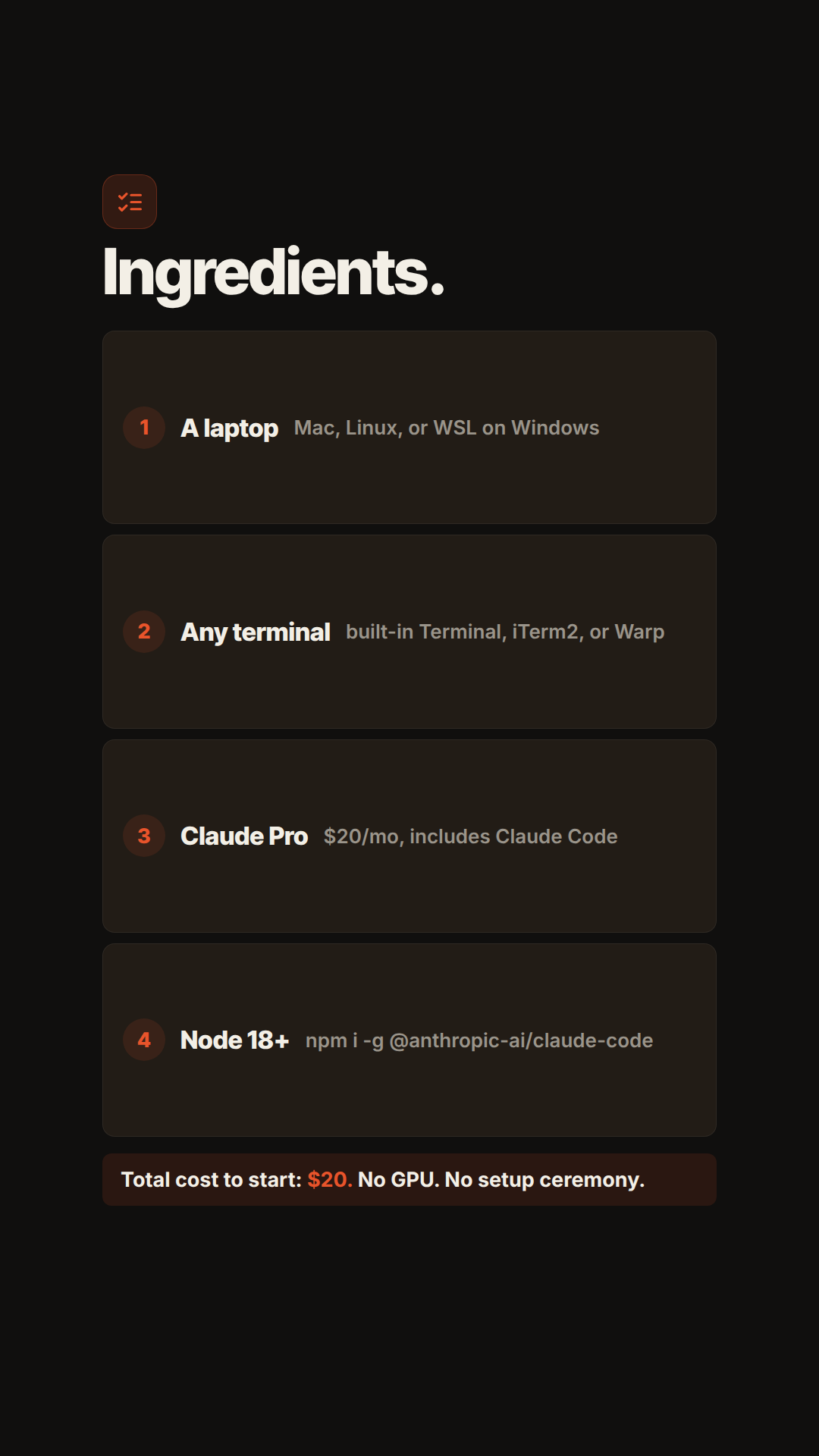
Friday night: setup and the basics, just enough to move.
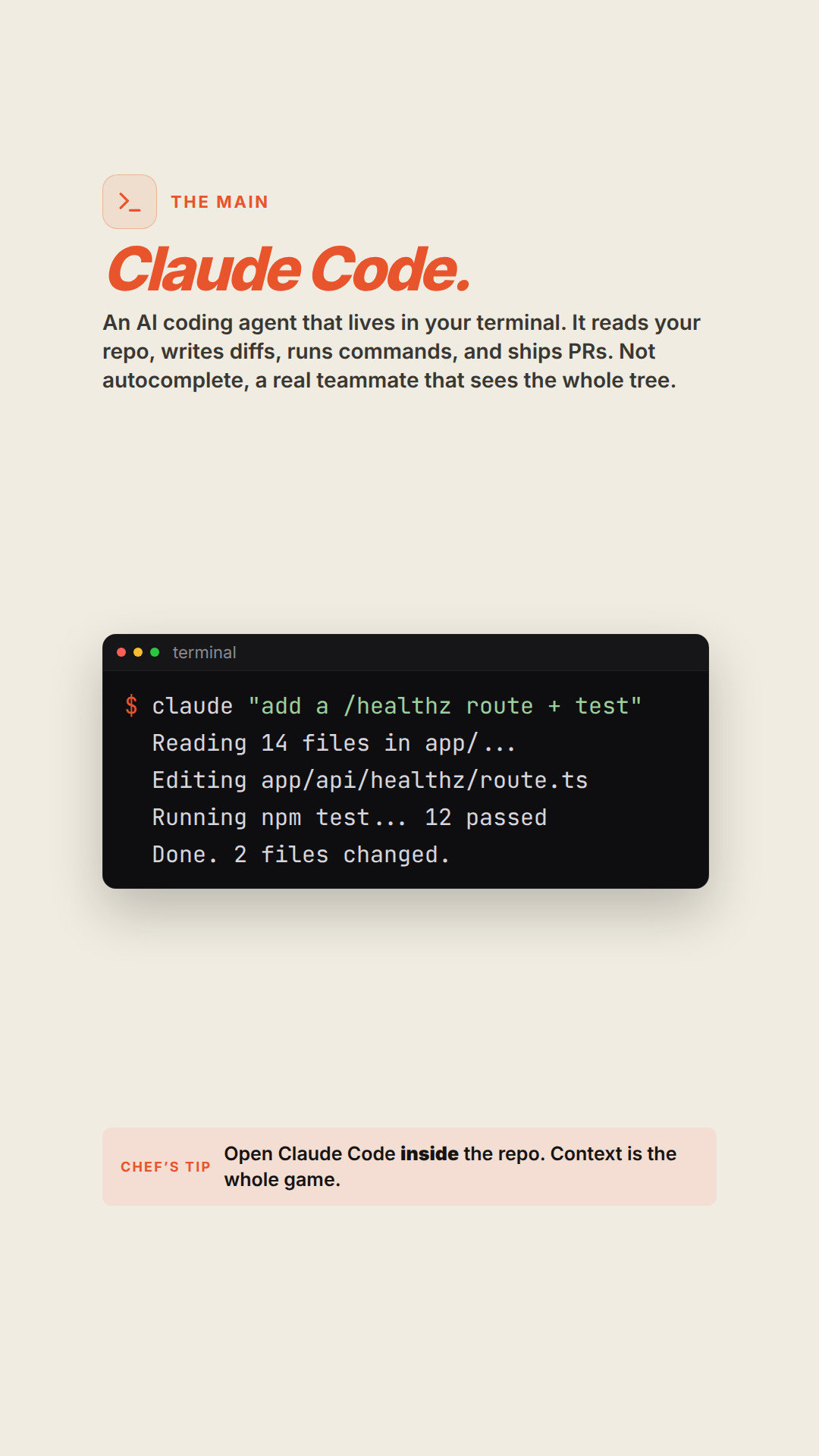
Saturday morning: the agent mindset and your first real prompt, written properly.
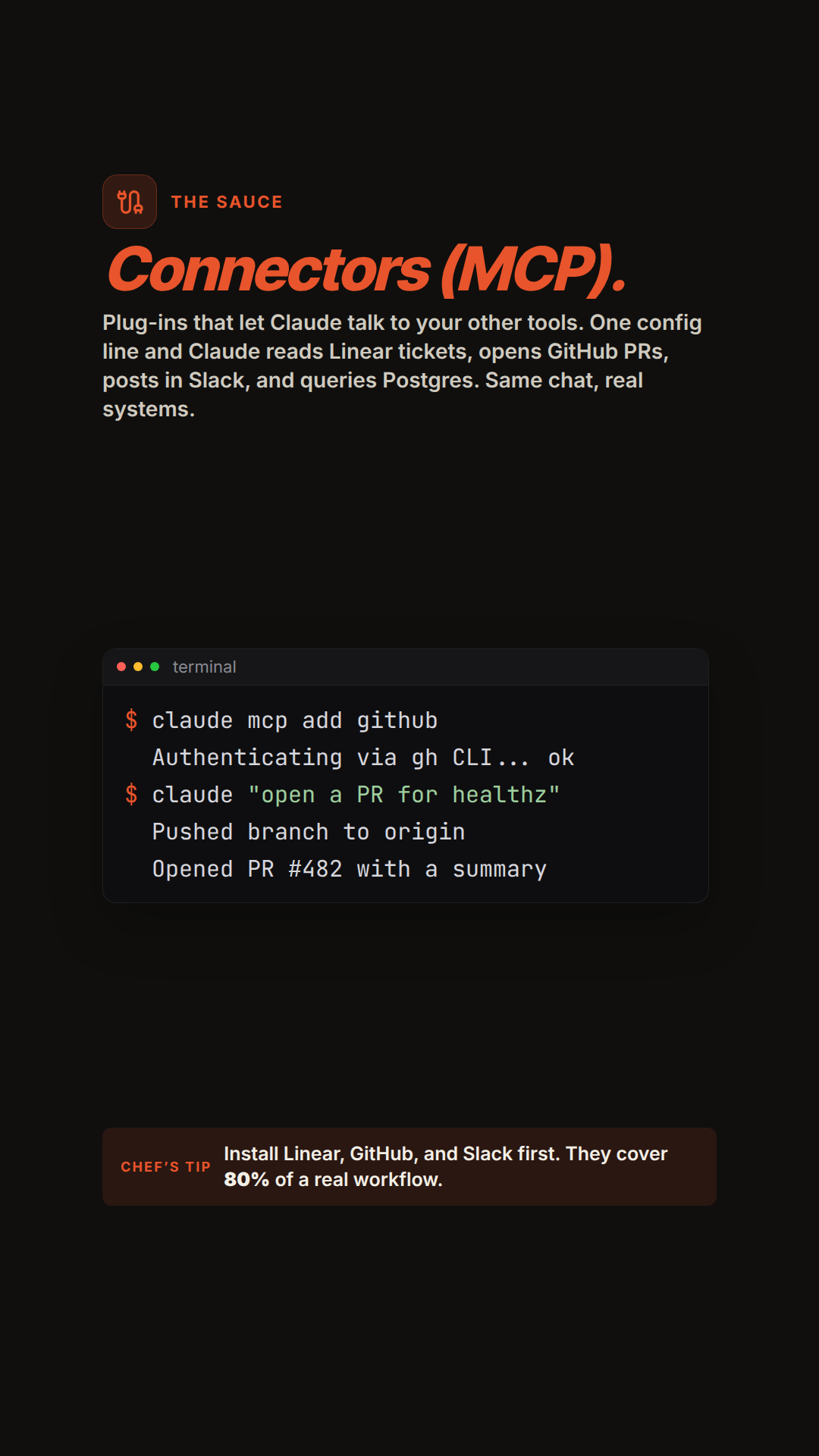
Saturday afternoon: skills and commands, where it gets powerful.
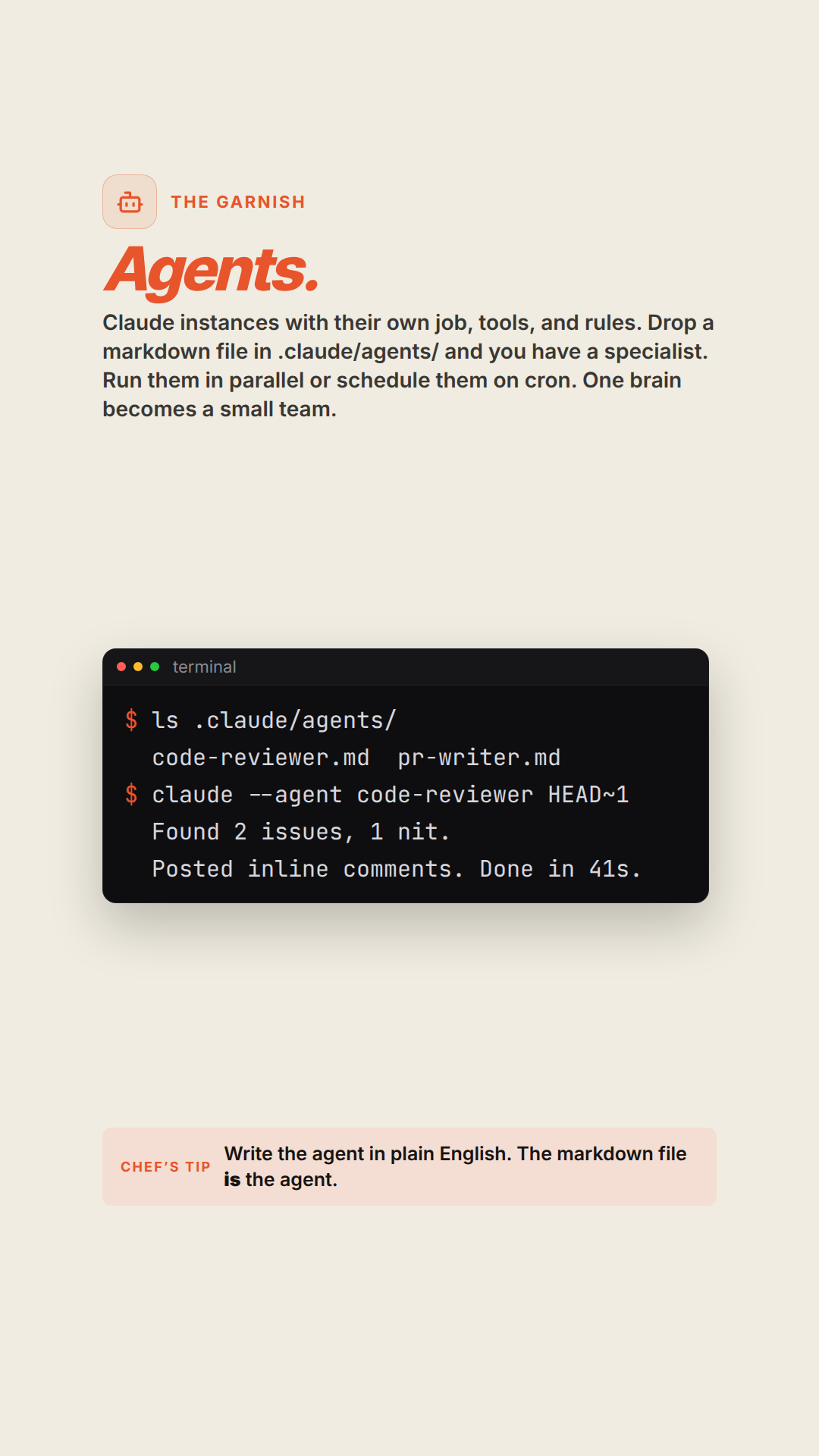
Sunday: build one small project end to end and ship it.

No months of tutorials. No theory you forget by Tuesday. By Sunday night you have a thing that works and the muscle to build the next one.

Comment RECIPE and I will send the hour by hour plan and the starter project.
People only use 10% of Claude
01
02
03
04
05
06
07
08

09
Caption
Most people use about ten percent of Claude, then call it overrated.

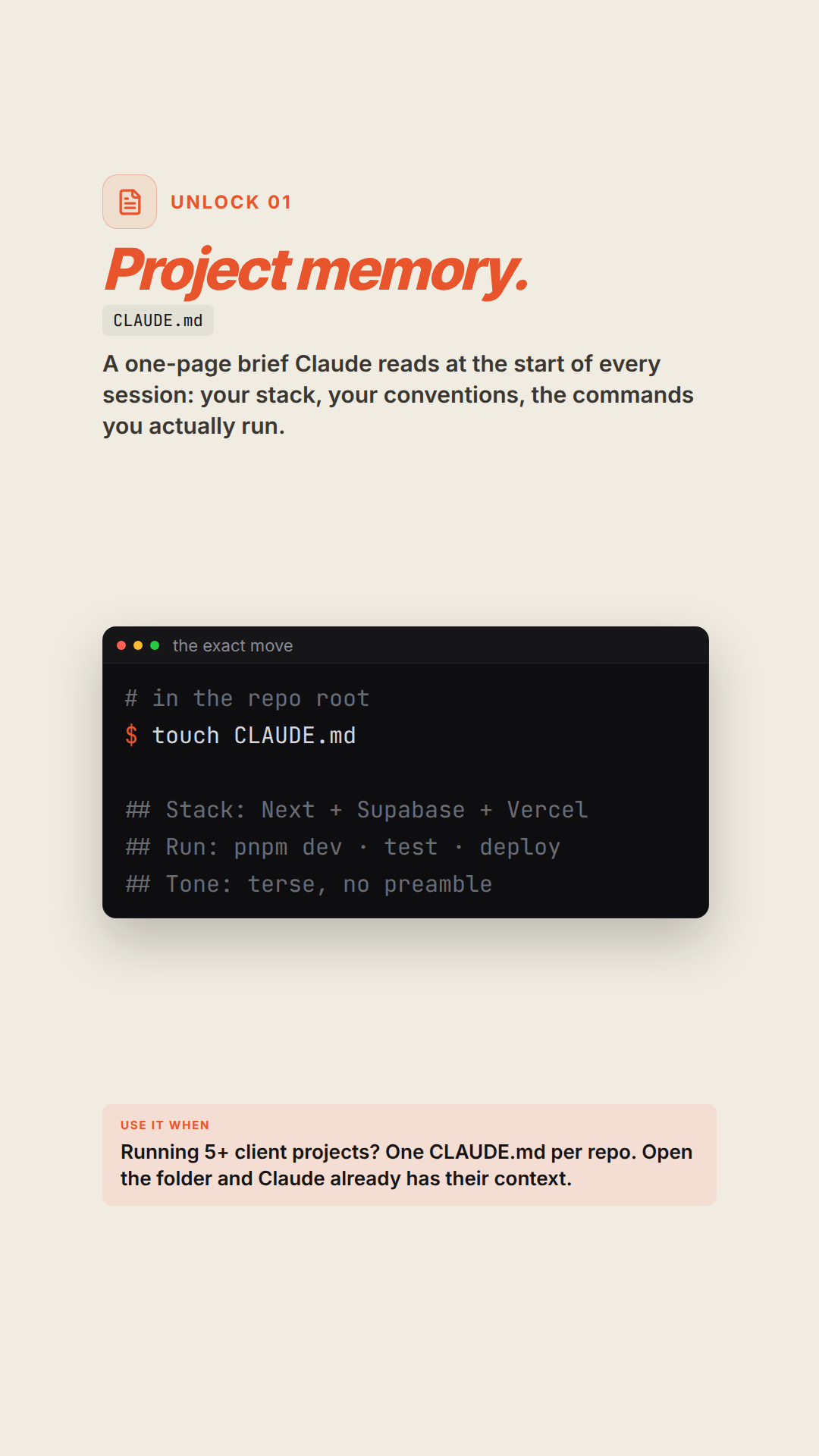
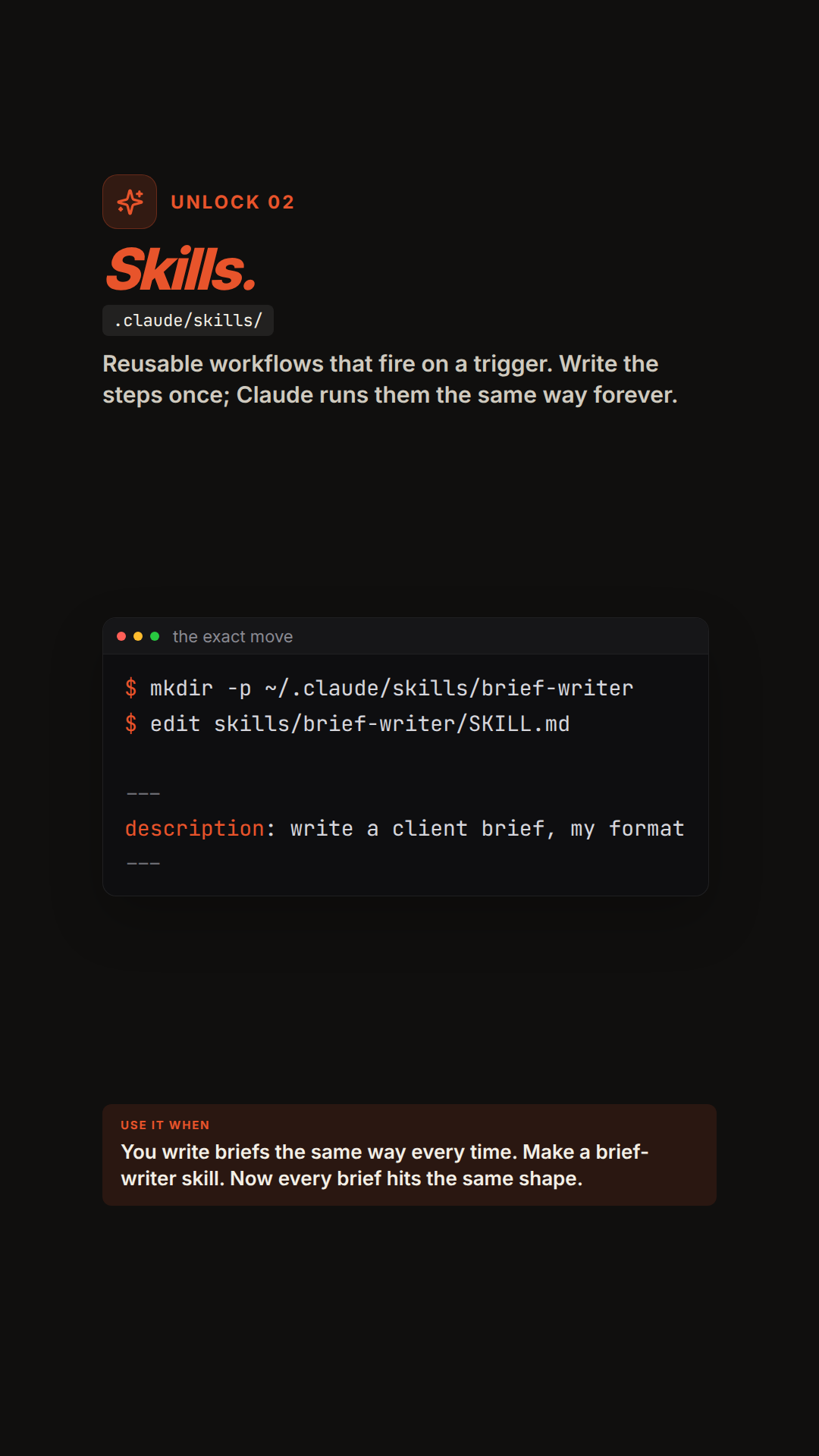
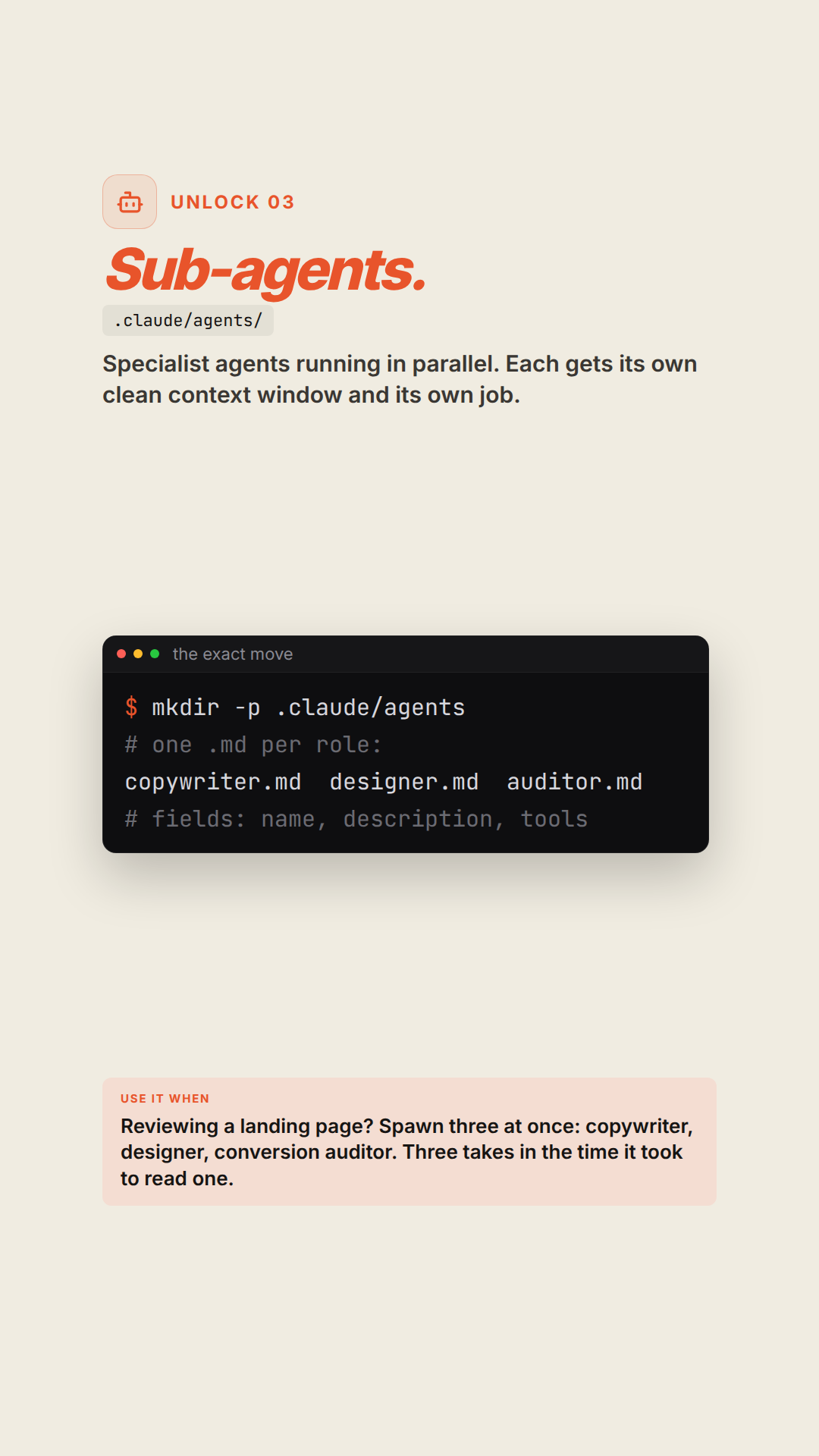
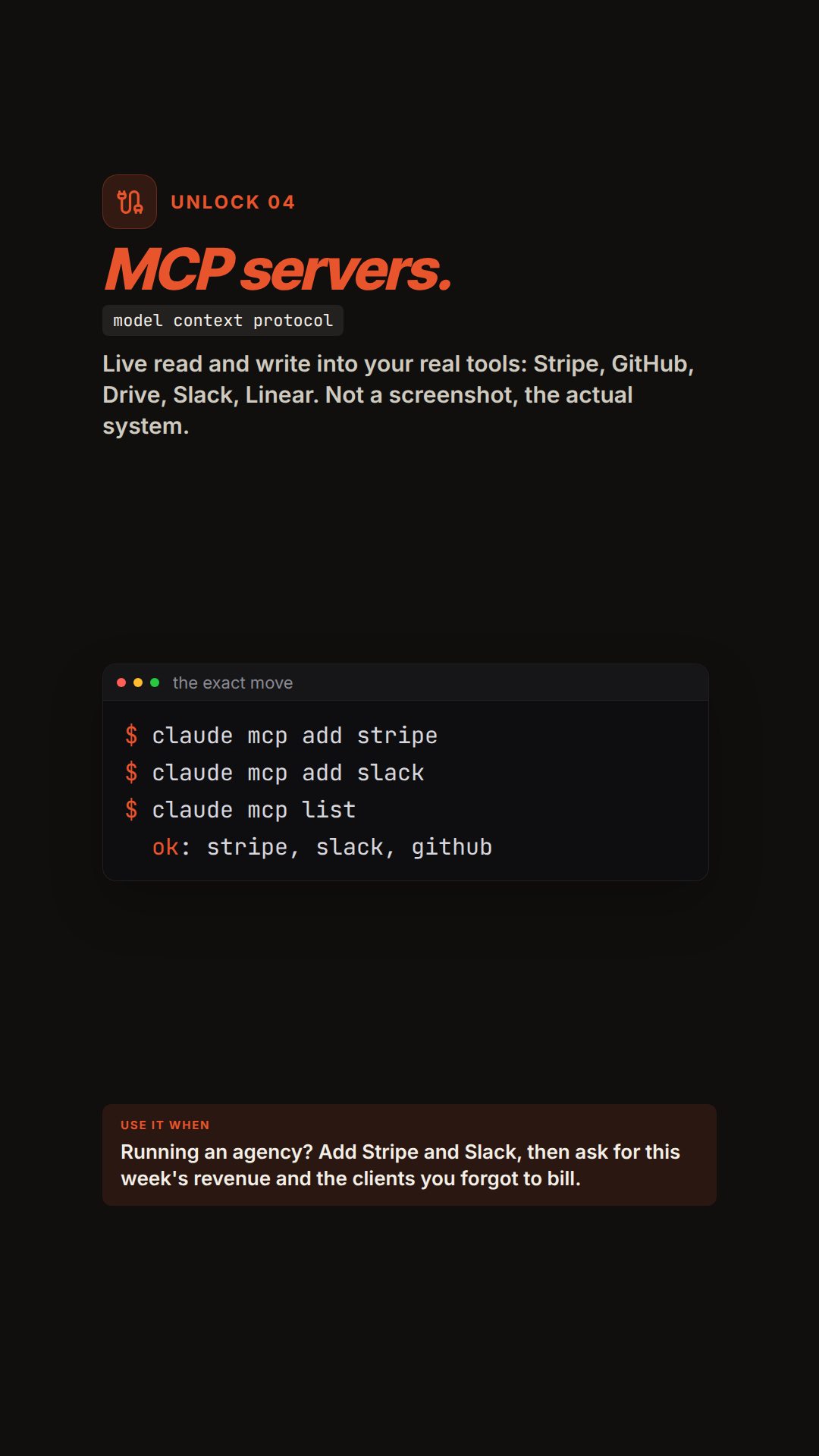
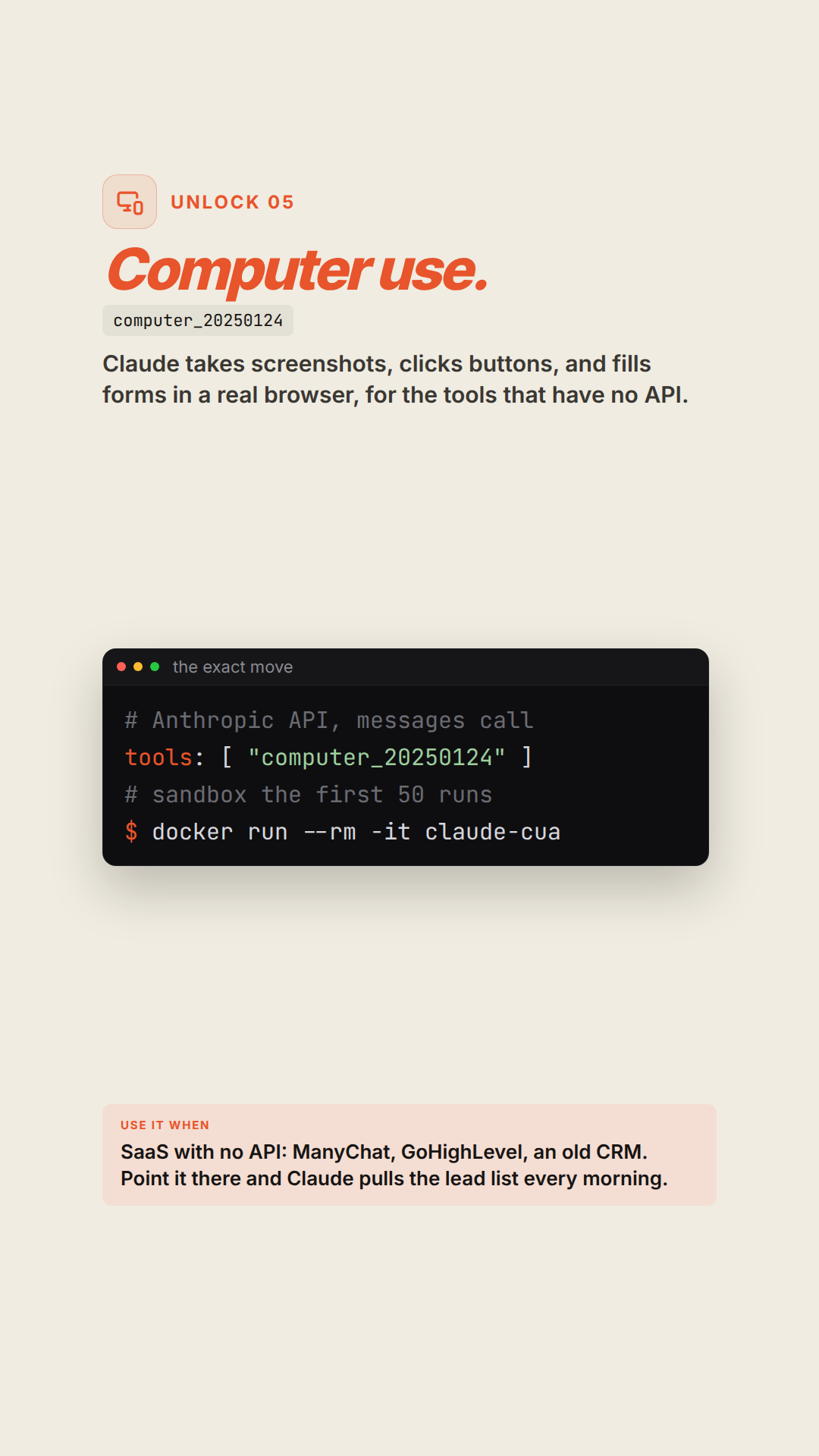
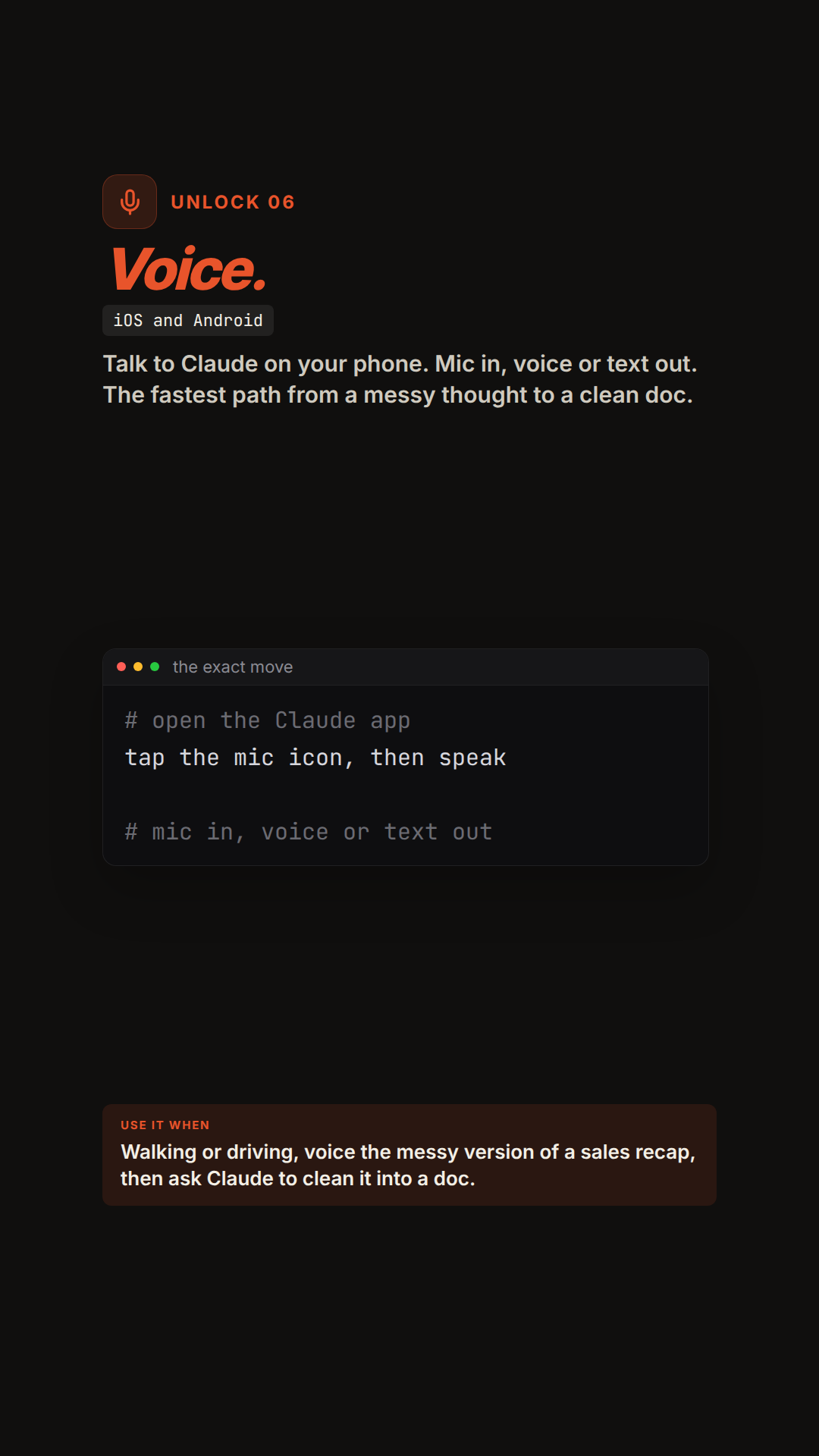
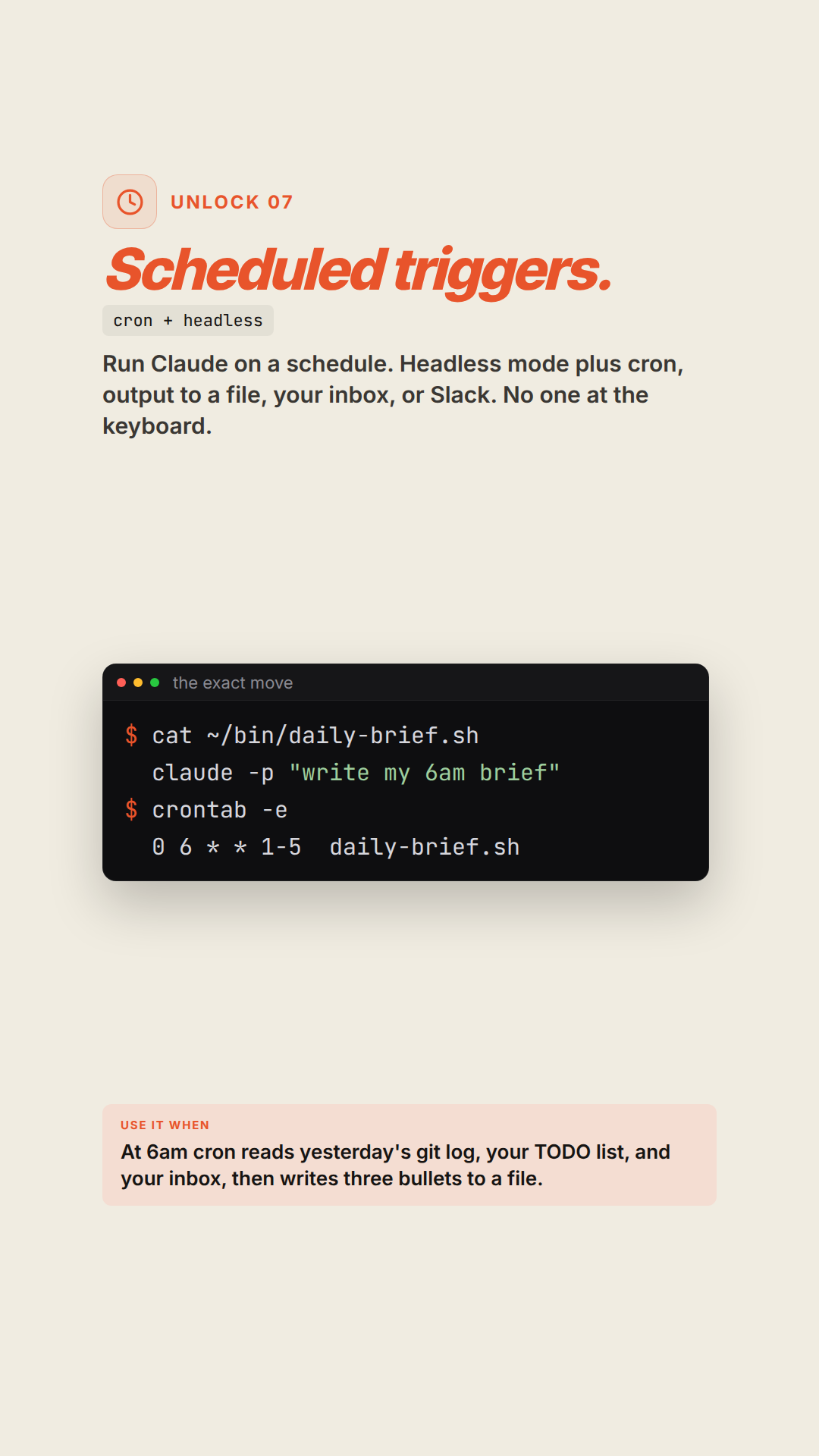
The ten percent is the chat box. The other ninety is where the work happens. Skills that change what it can do. Agents that run tasks without you. Memory that survives across sessions. Commands that fire a whole workflow from one word.

It is the difference between asking questions and running an operation.

I mapped the part almost nobody turns on, and the order to adopt it without the overwhelm.

Comment UNLOCK and I will send the full thing.
Infinite memory for Claude
01
02
03
04

05
06
07
08

09
Caption
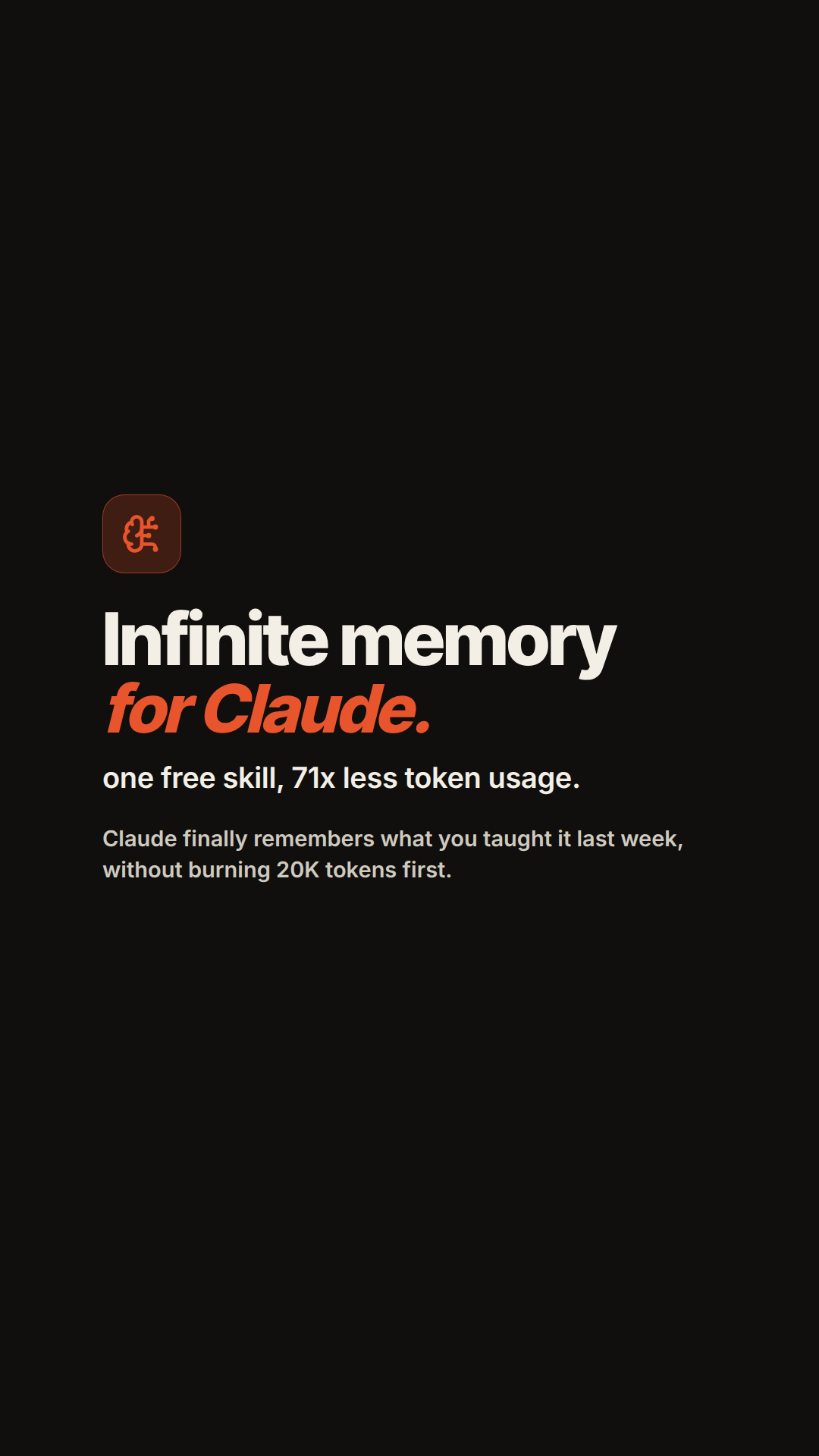
Claude forgetting everything between sessions is not a limit you have to live with.

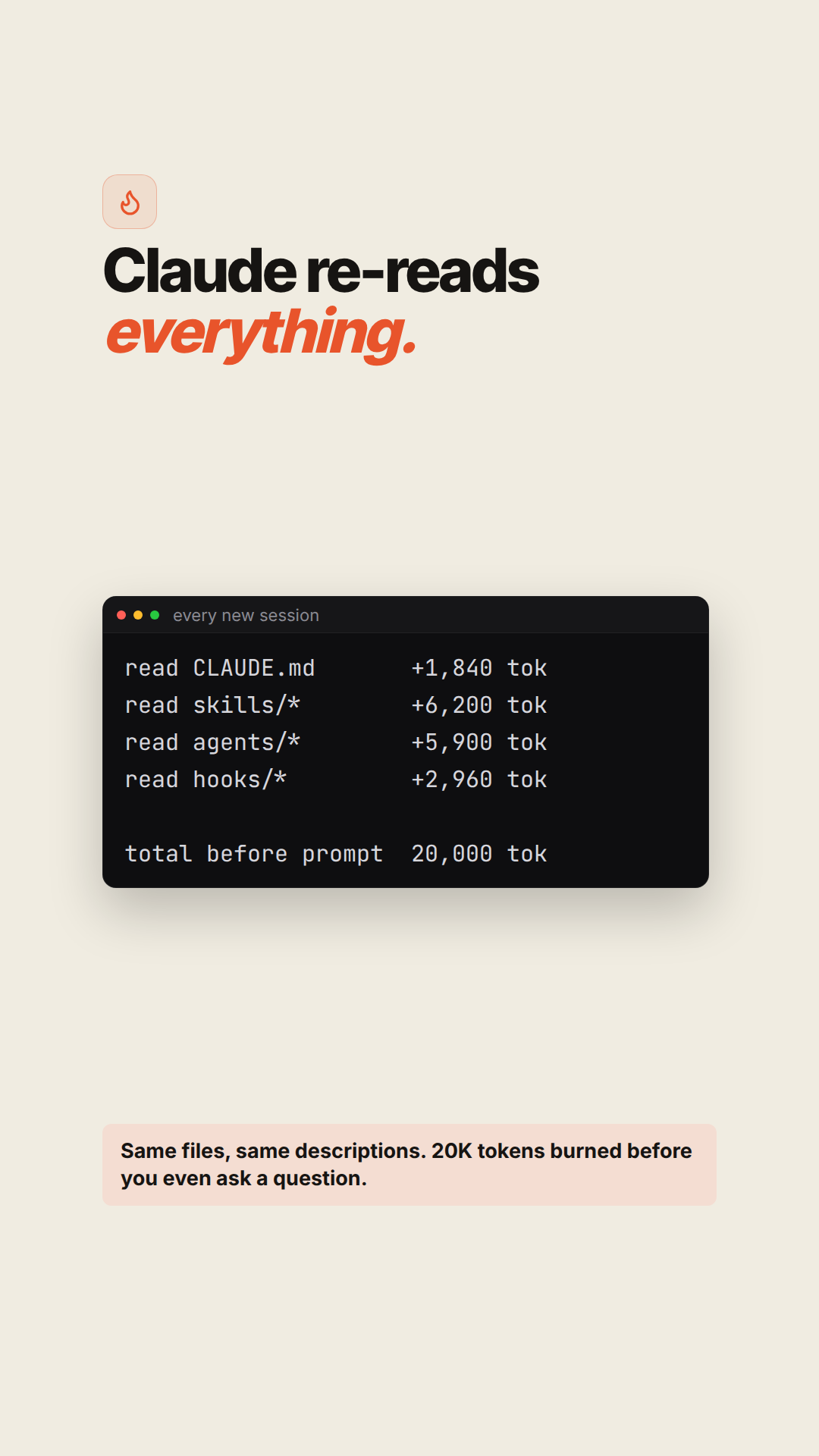
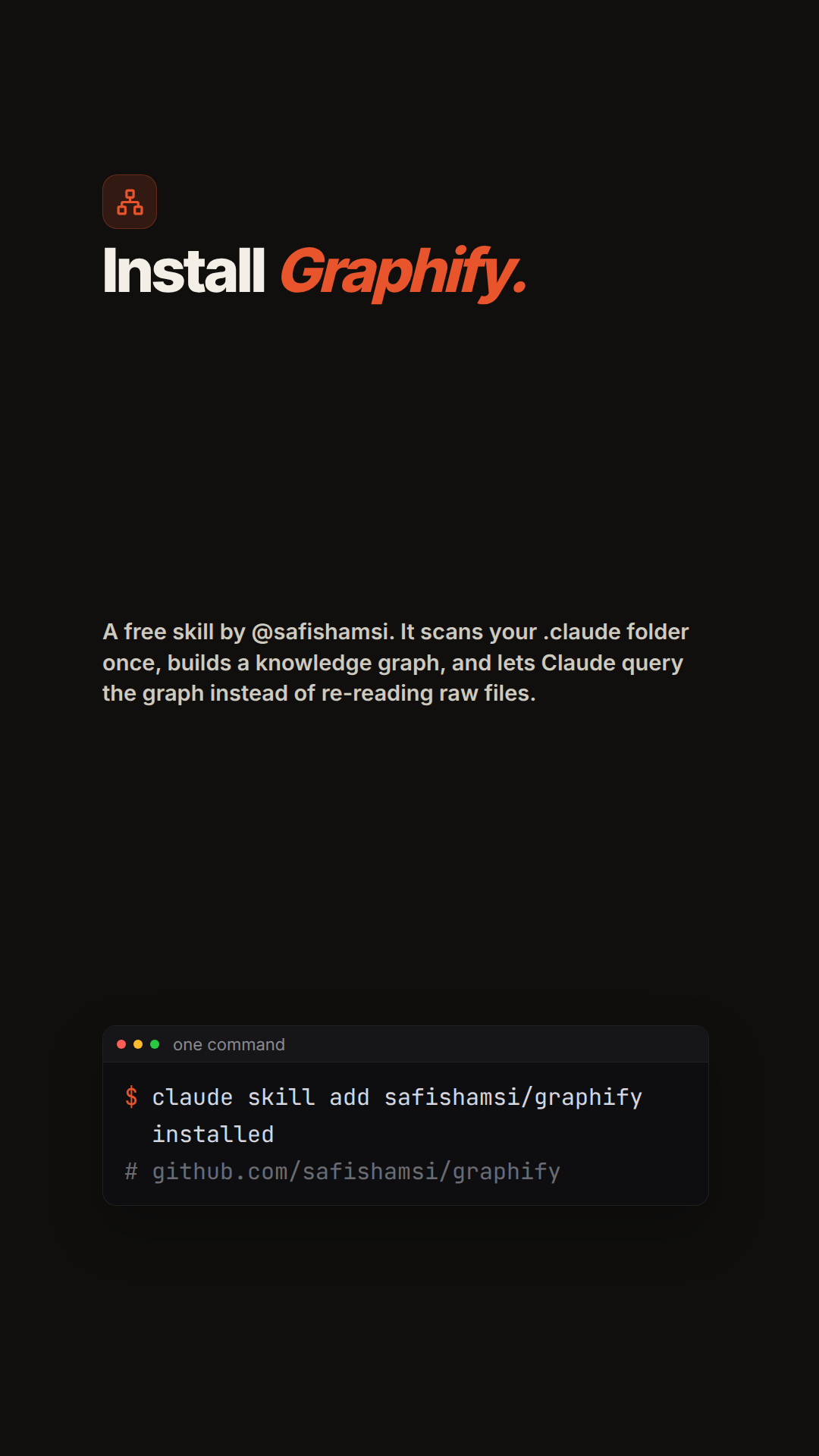
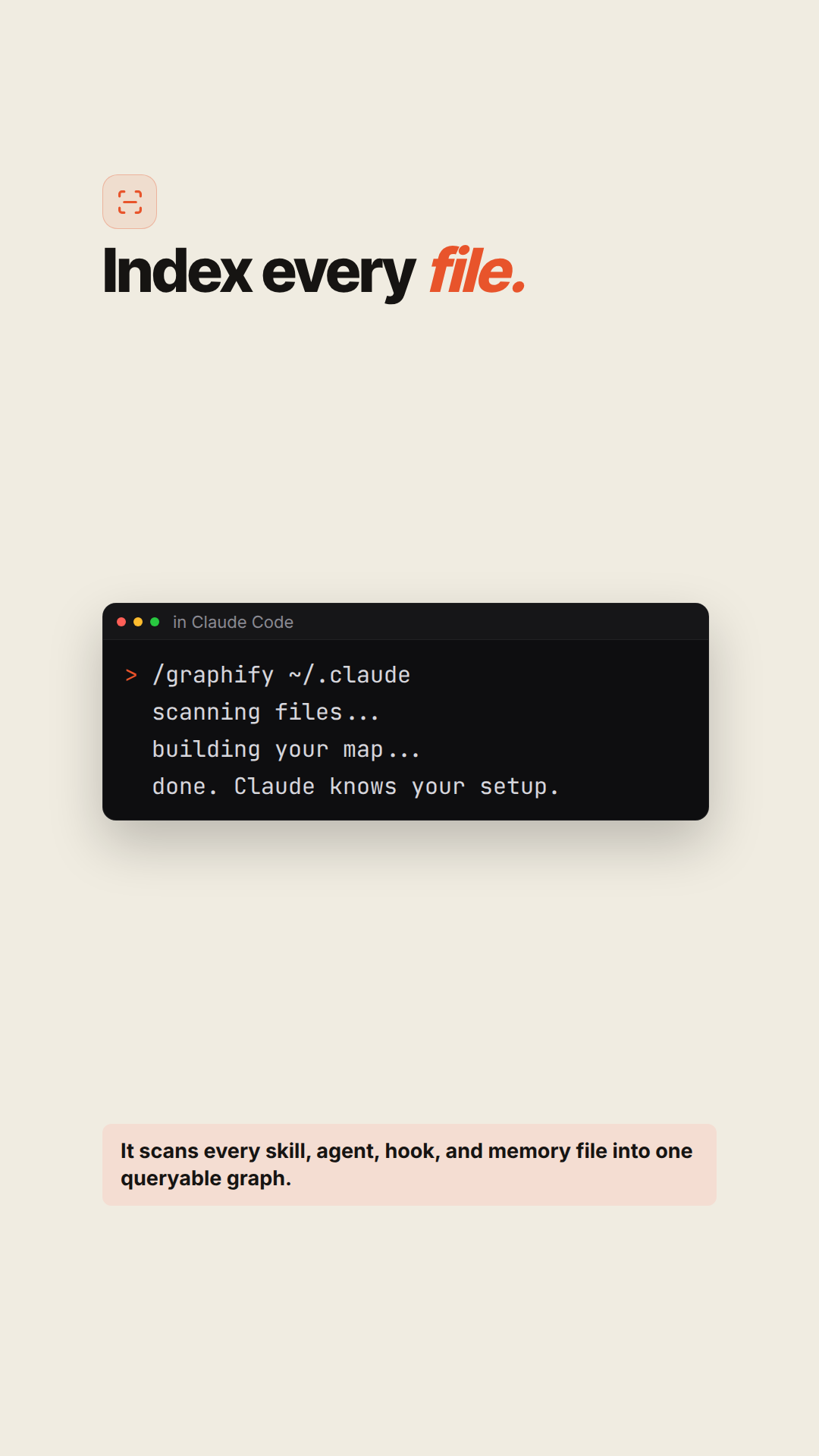
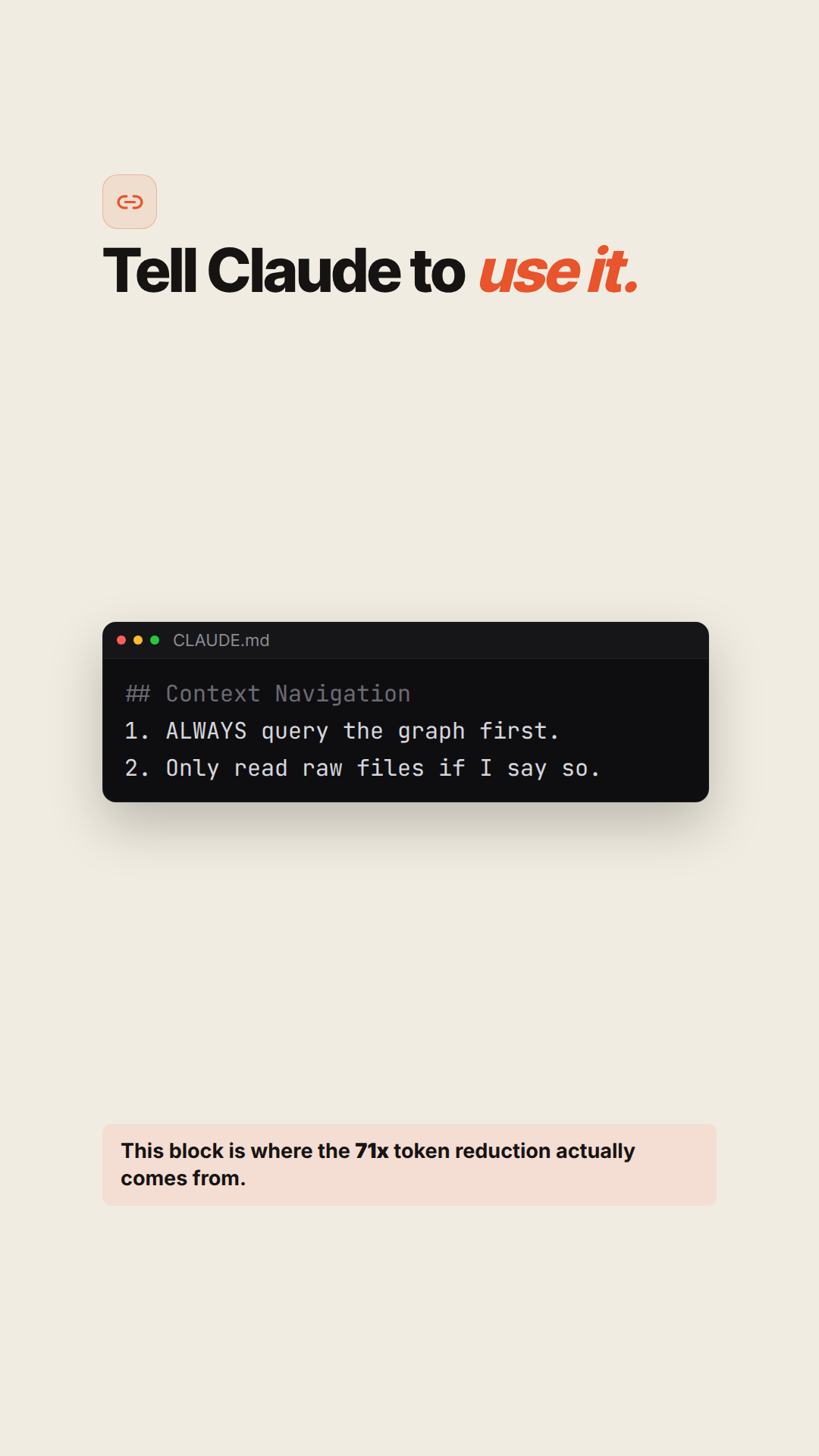
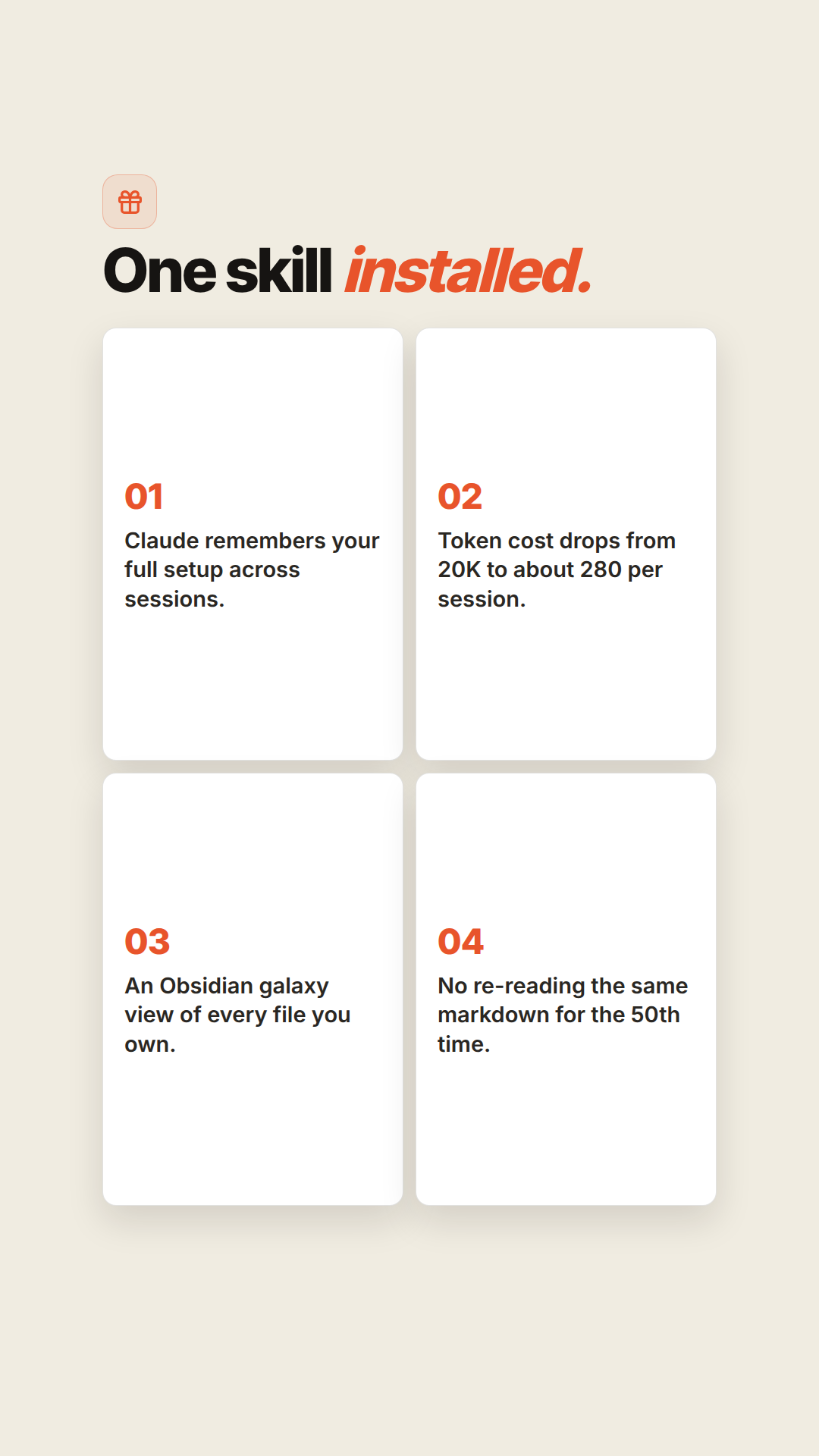
The fix is a memory graph. Your project, your decisions, and your context get stored in a structure Claude loads at the start of every session. It stops asking what it already knew yesterday.

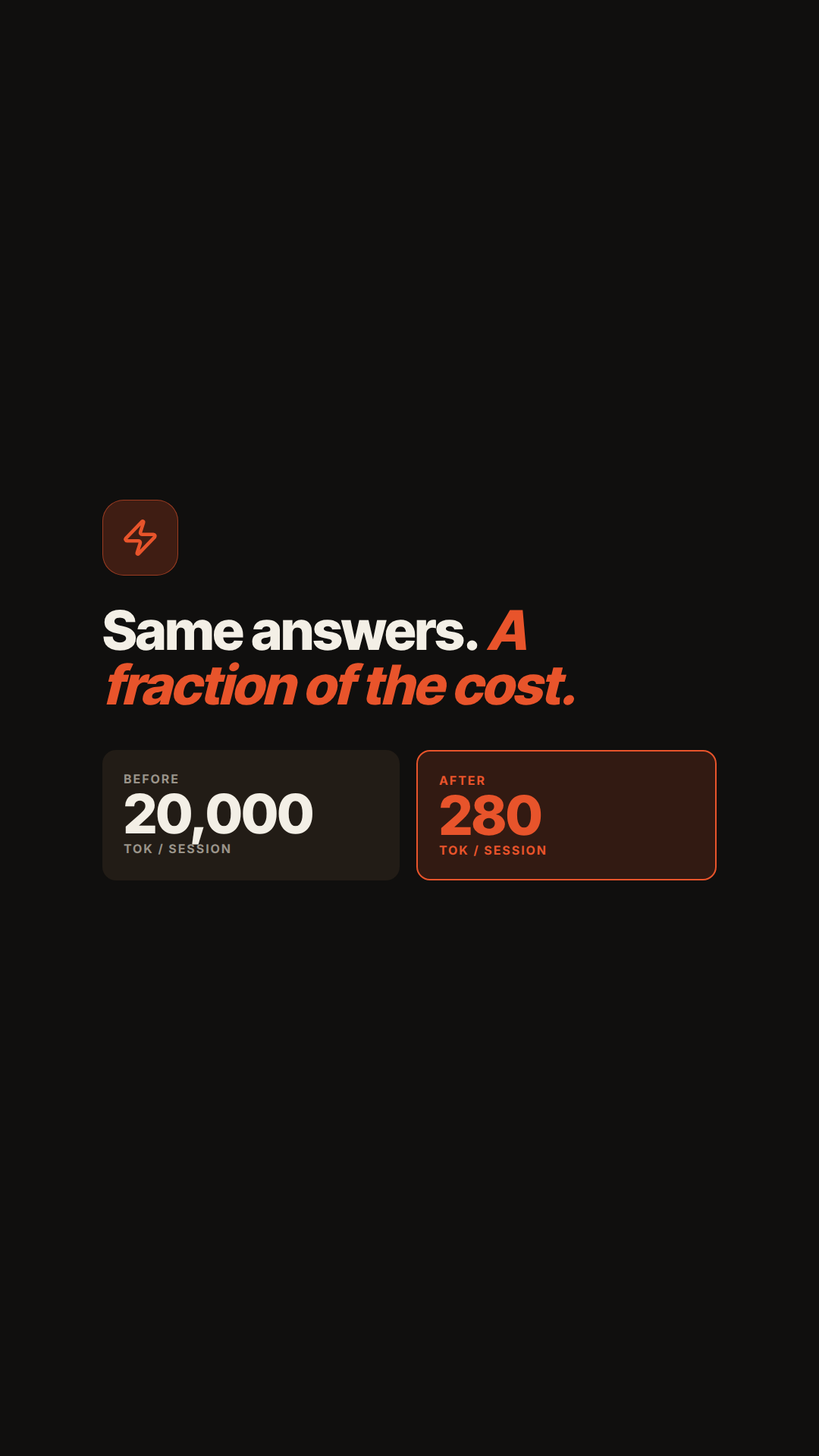
You stop re-explaining. It builds on the last conversation instead of resetting to a stranger. And a monthly pass prunes whatever went stale, so the memory stays accurate instead of bloating.

Comment GRAPH and I will send the graph setup, the load routine, and the cleanup.
Claude super employee

01
02
03
04
05
06
07
08
09

10
Caption
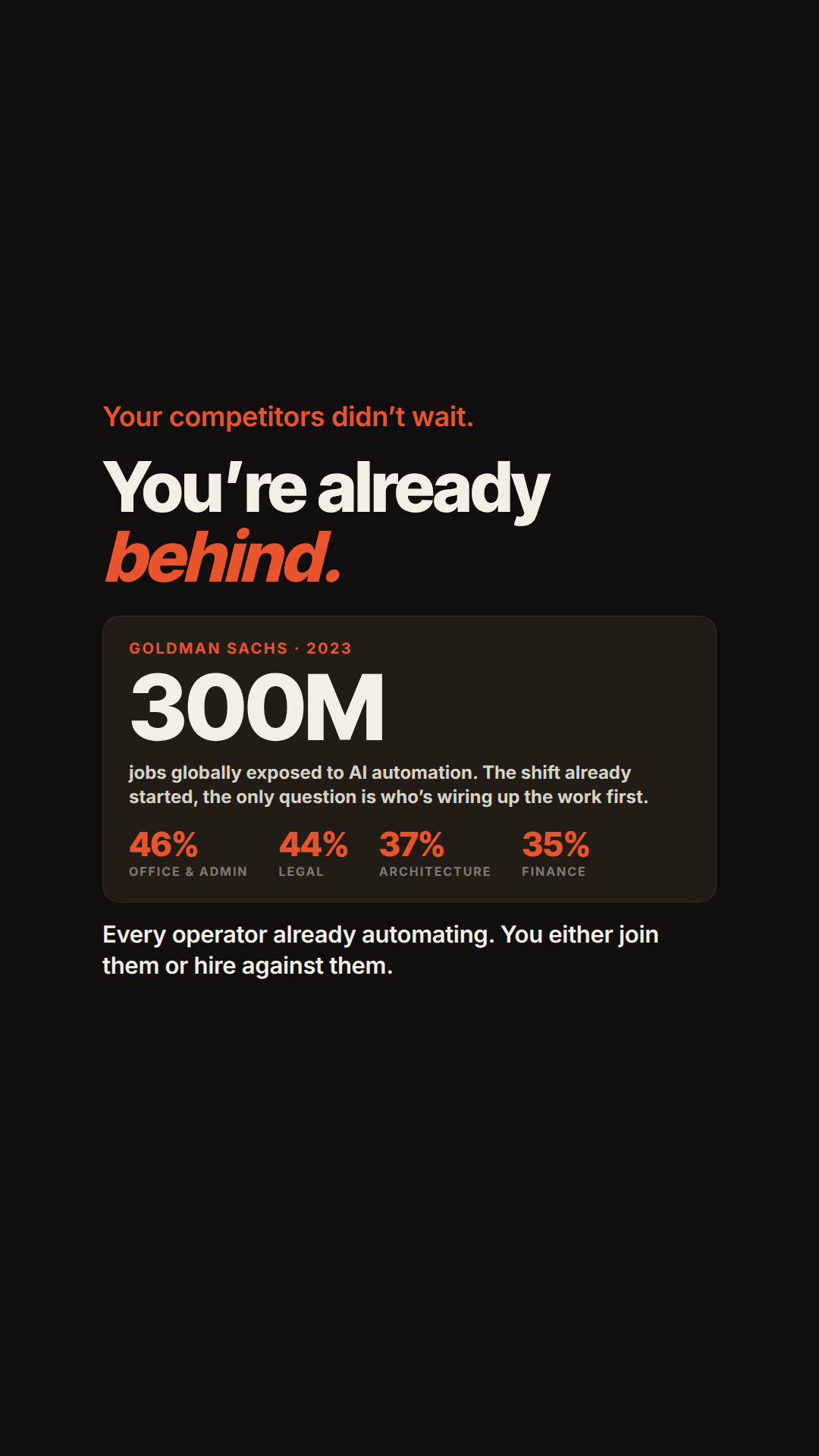
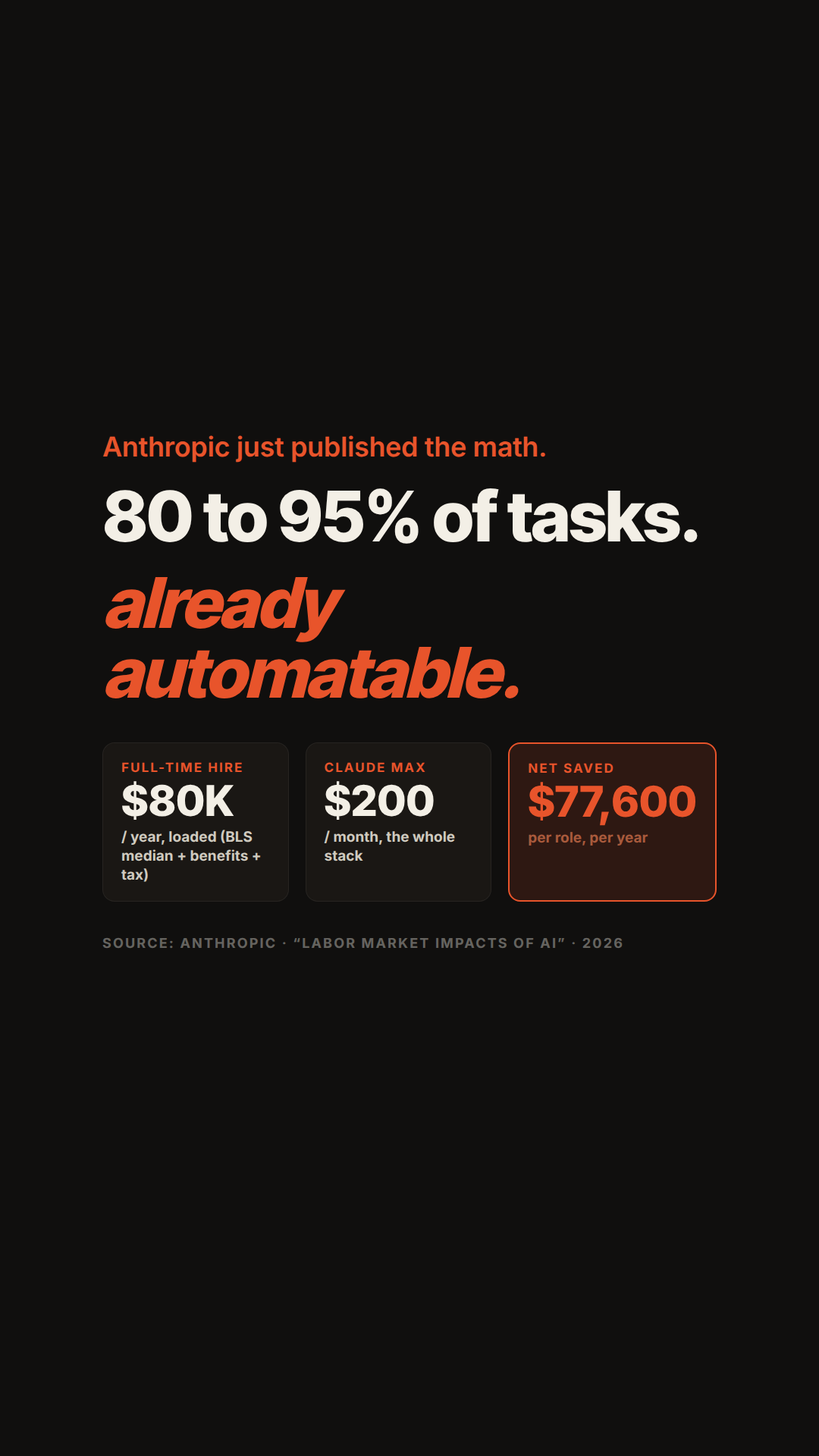
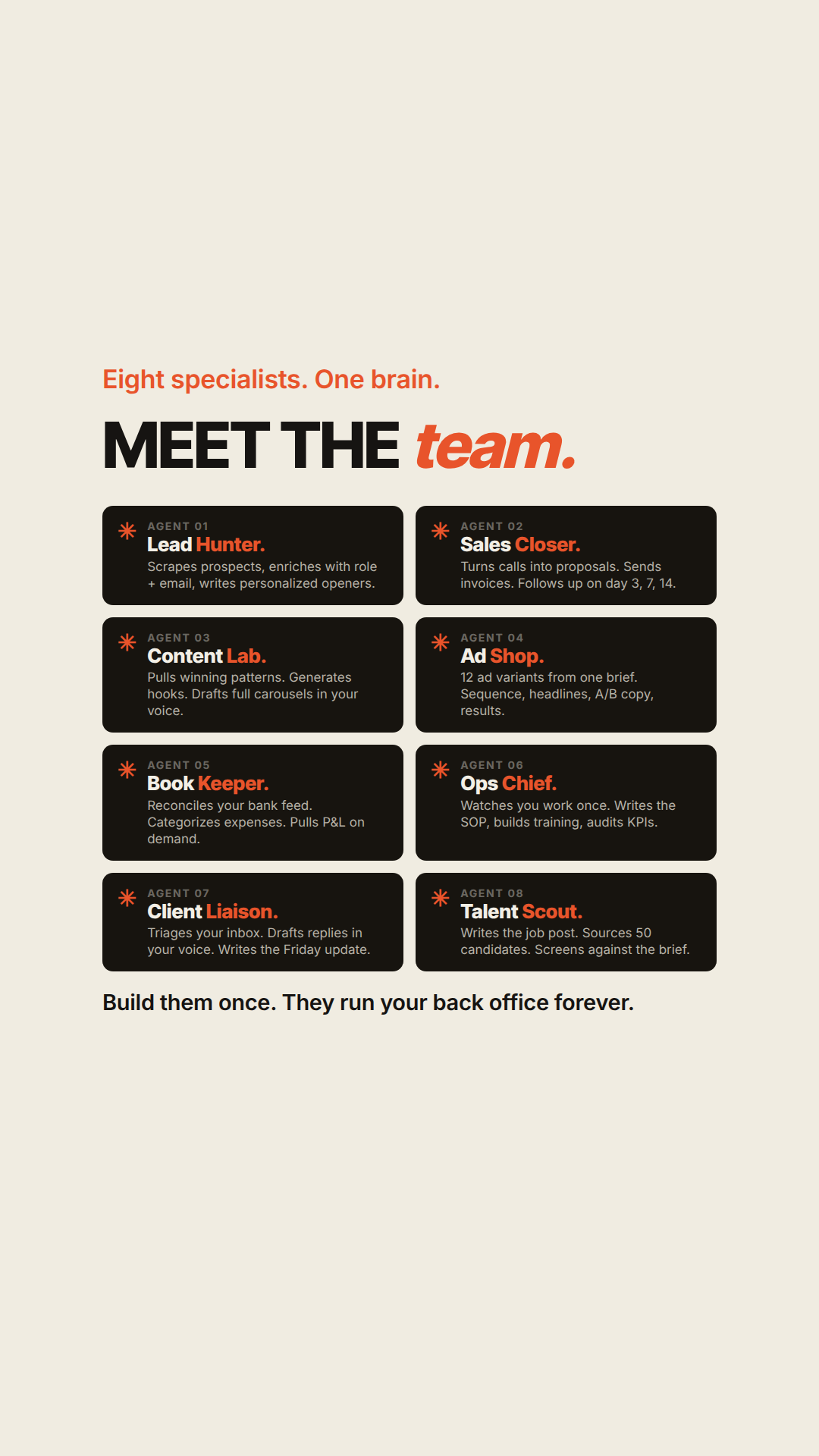
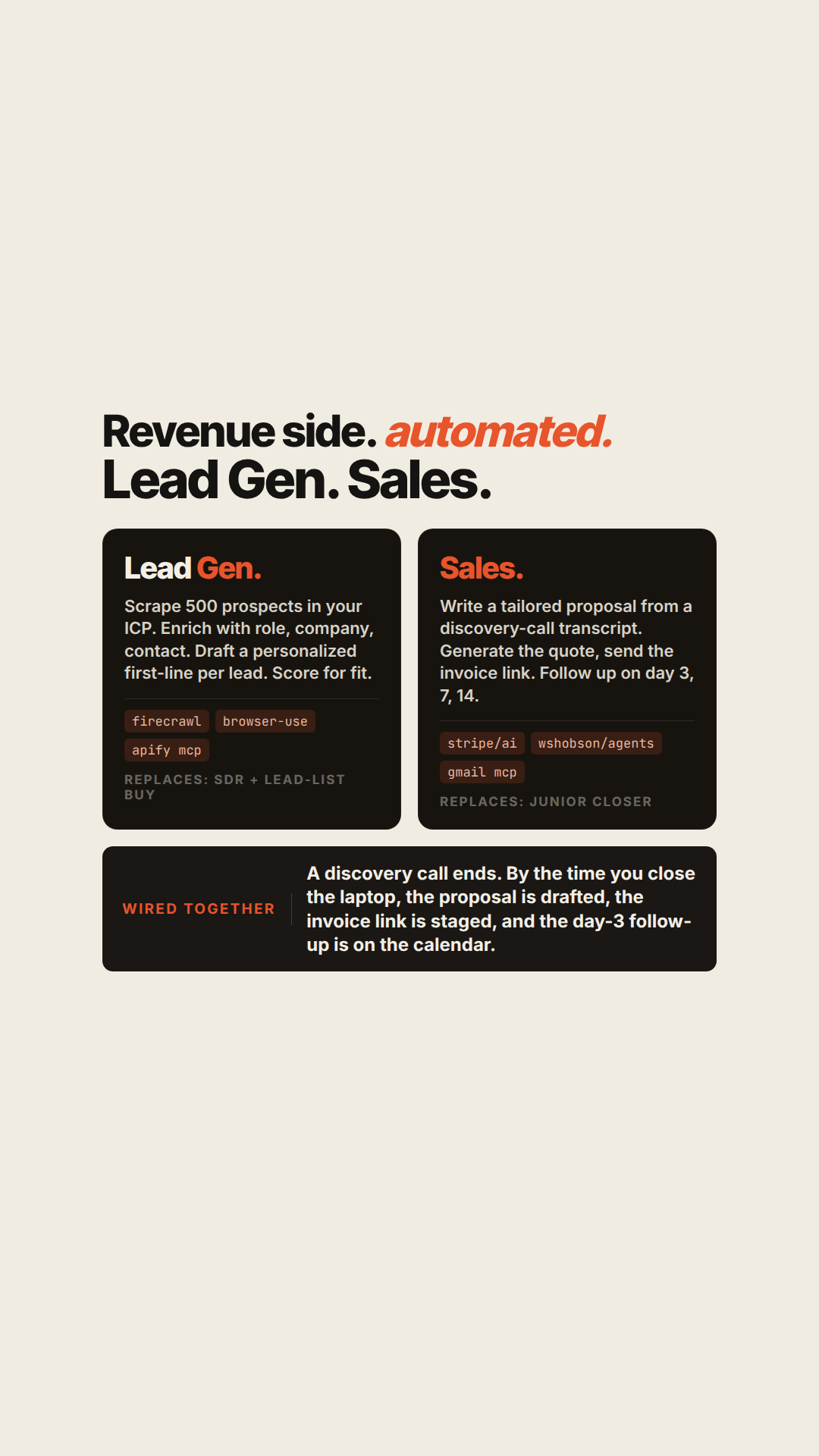
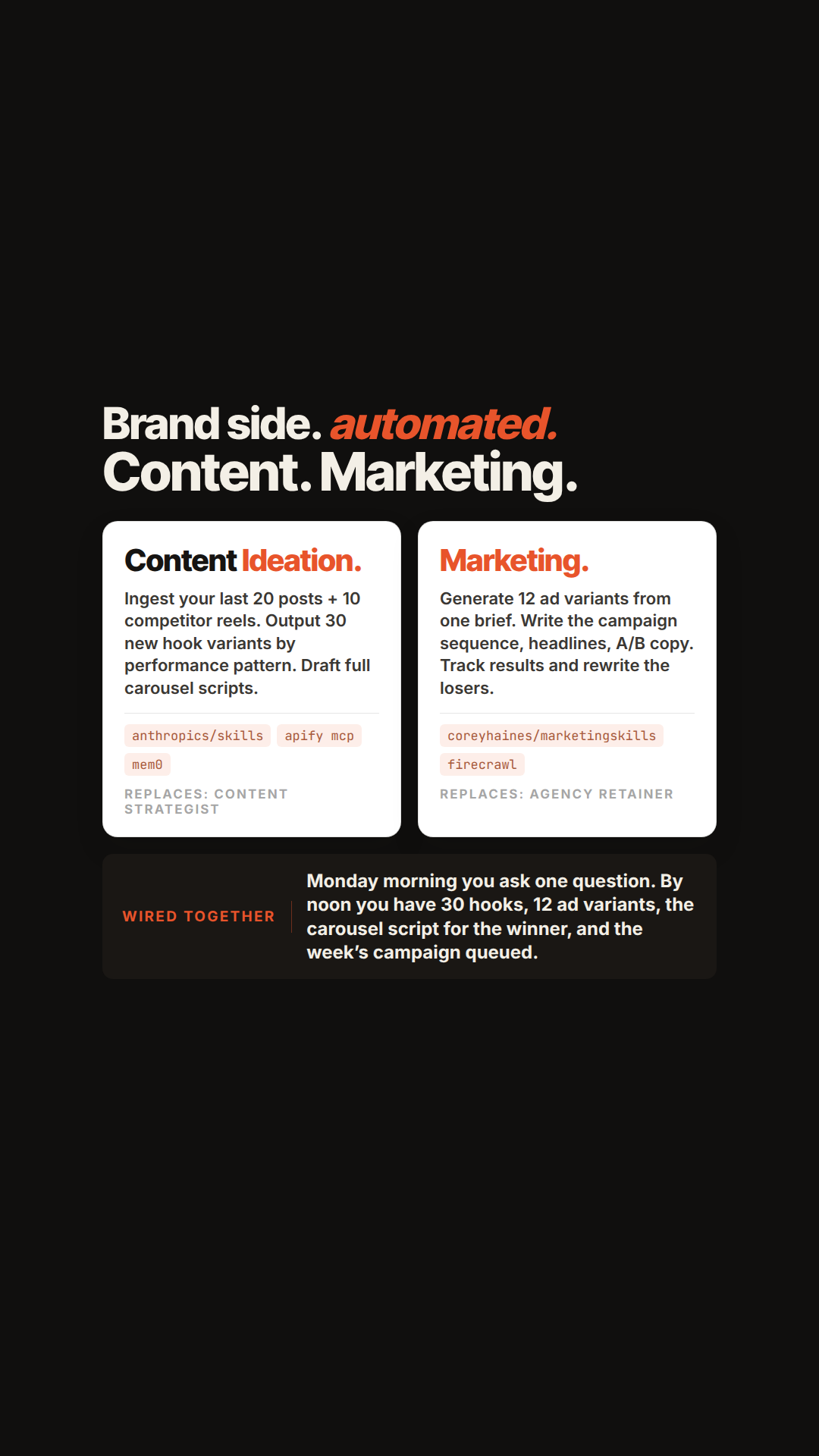
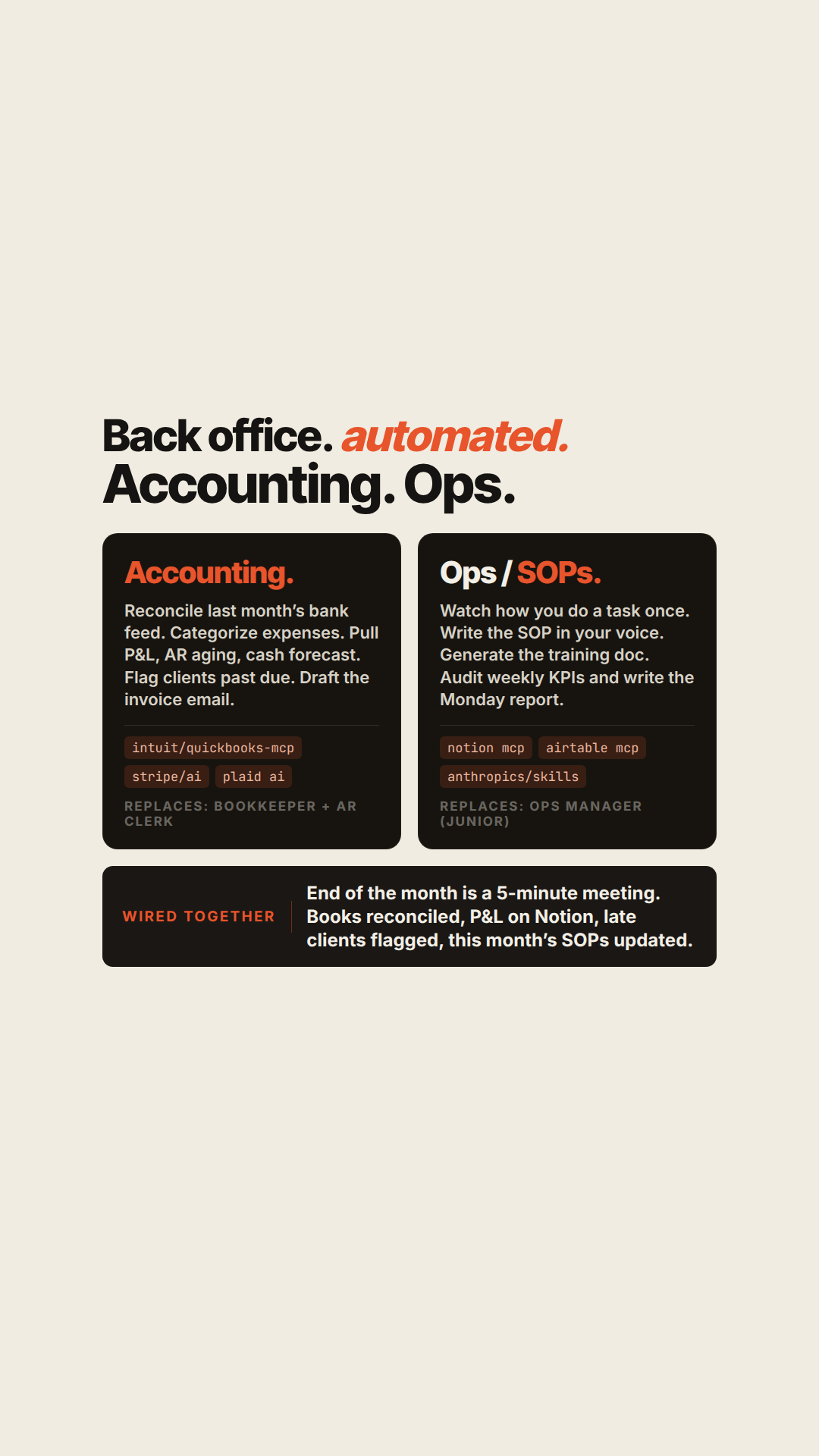
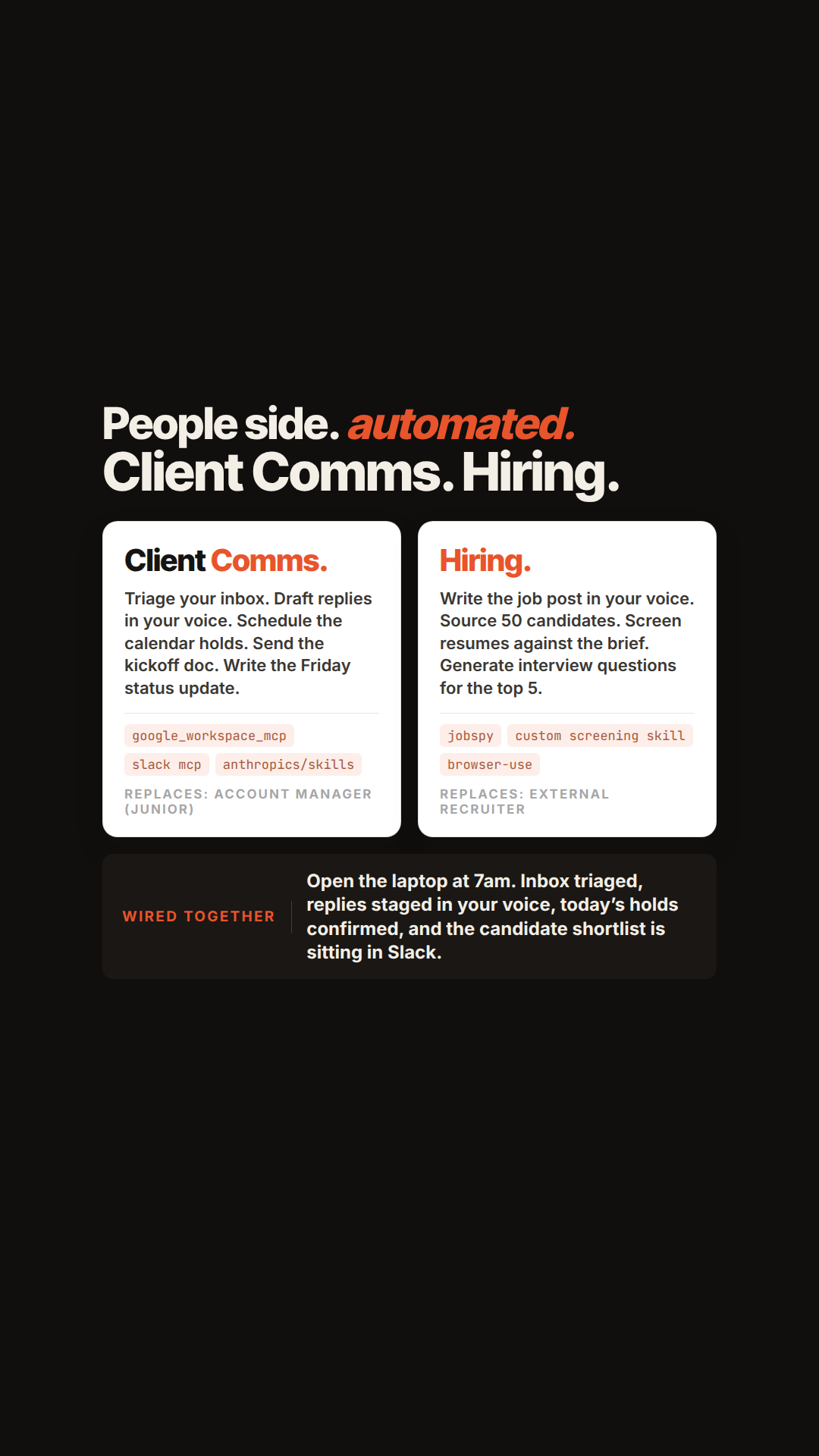
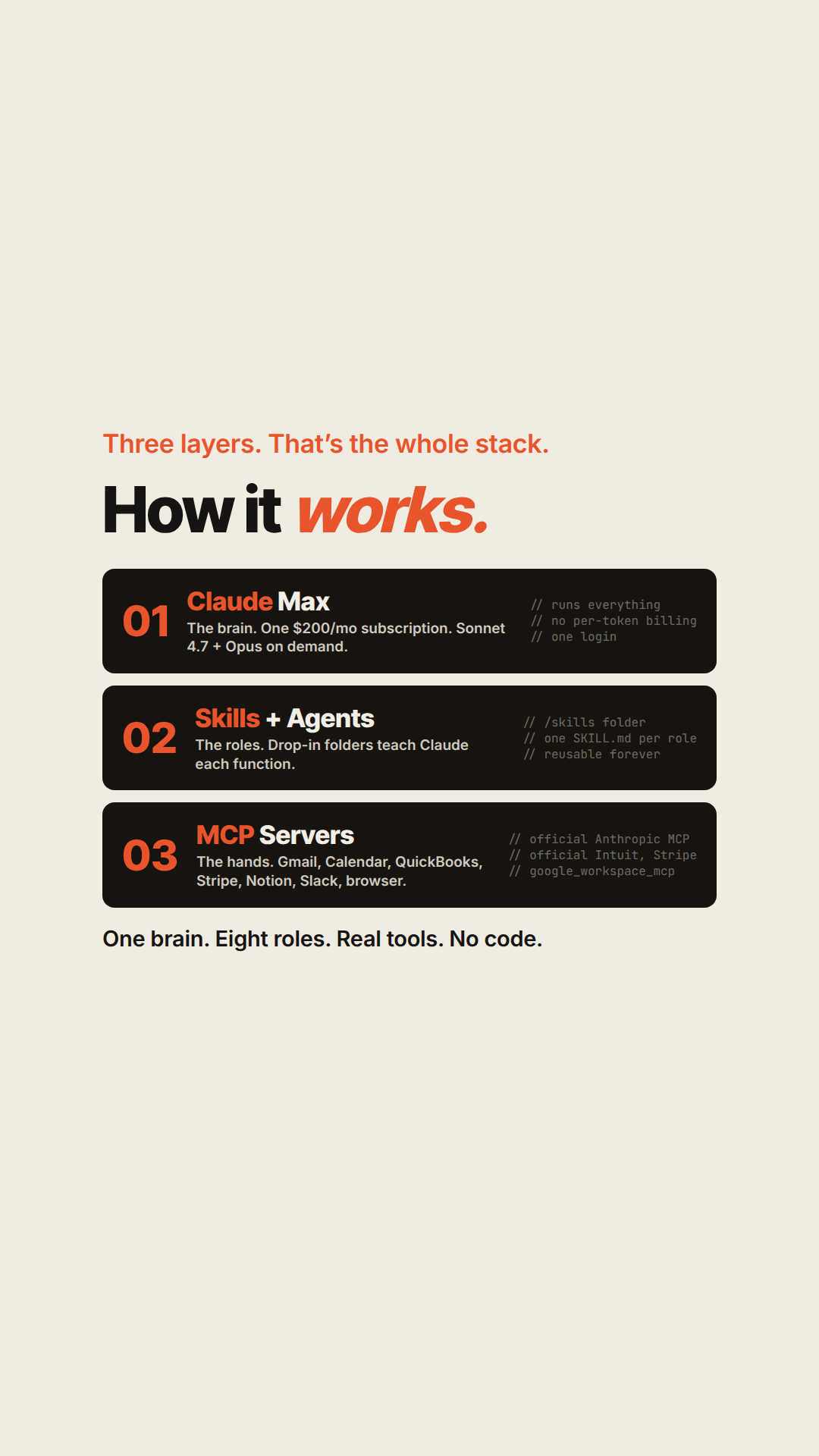
Stop treating Claude like one assistant. Treat it like a team of employees, each scoped like a real hire.

One owns research. One owns outreach. One owns content. One owns ops. Each gets a job description as tight as you would give a person, and each owns its lane instead of one helper doing everything badly.

You become the operator. You brief, you approve, they run. It is an org chart where the payroll line is empty.

Comment SUPER and I will send the roles, the briefs, and the review that keeps their output high.
6 agents every service biz needs
01
02
03
04
05
06
07
08
Caption
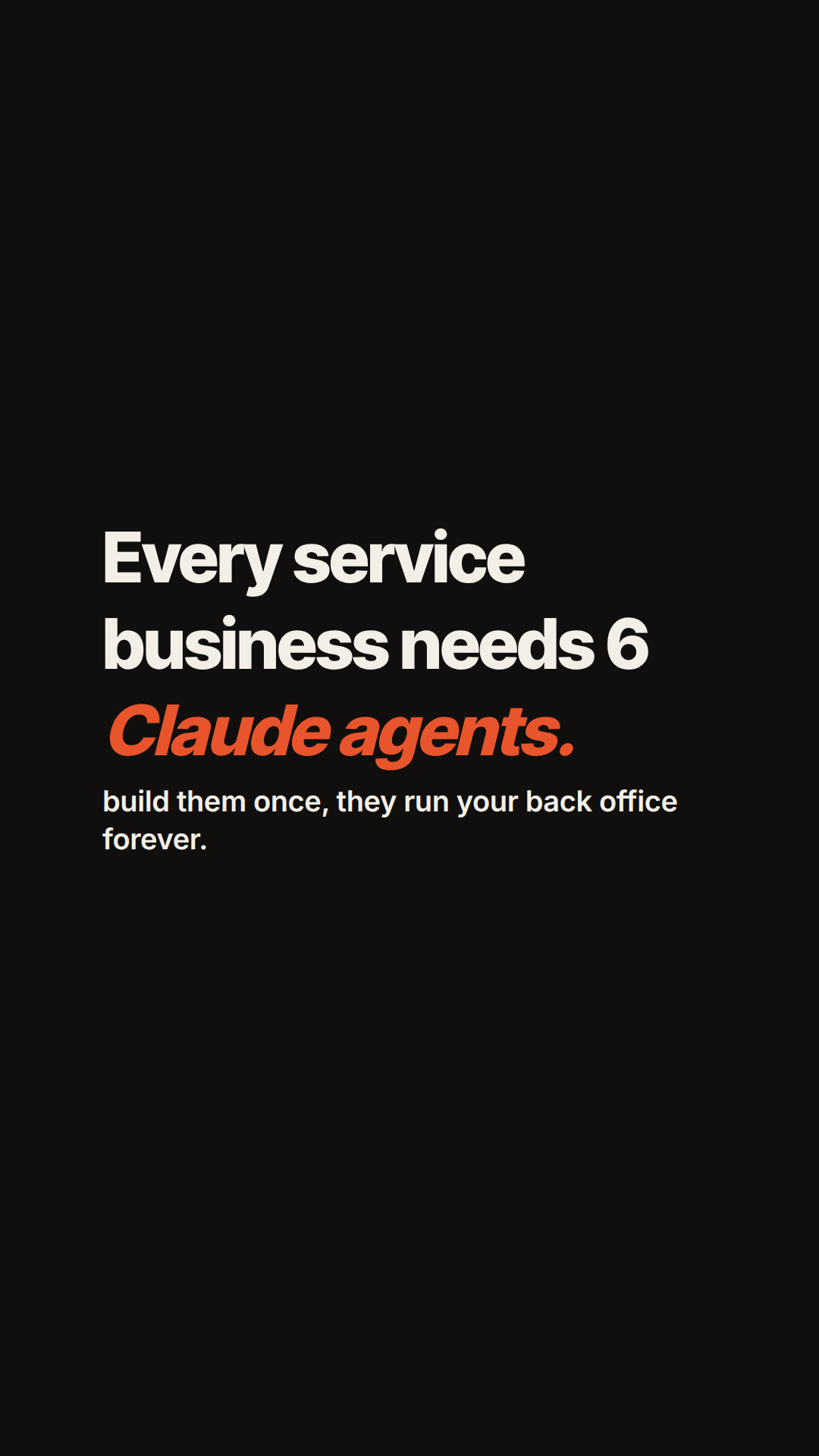
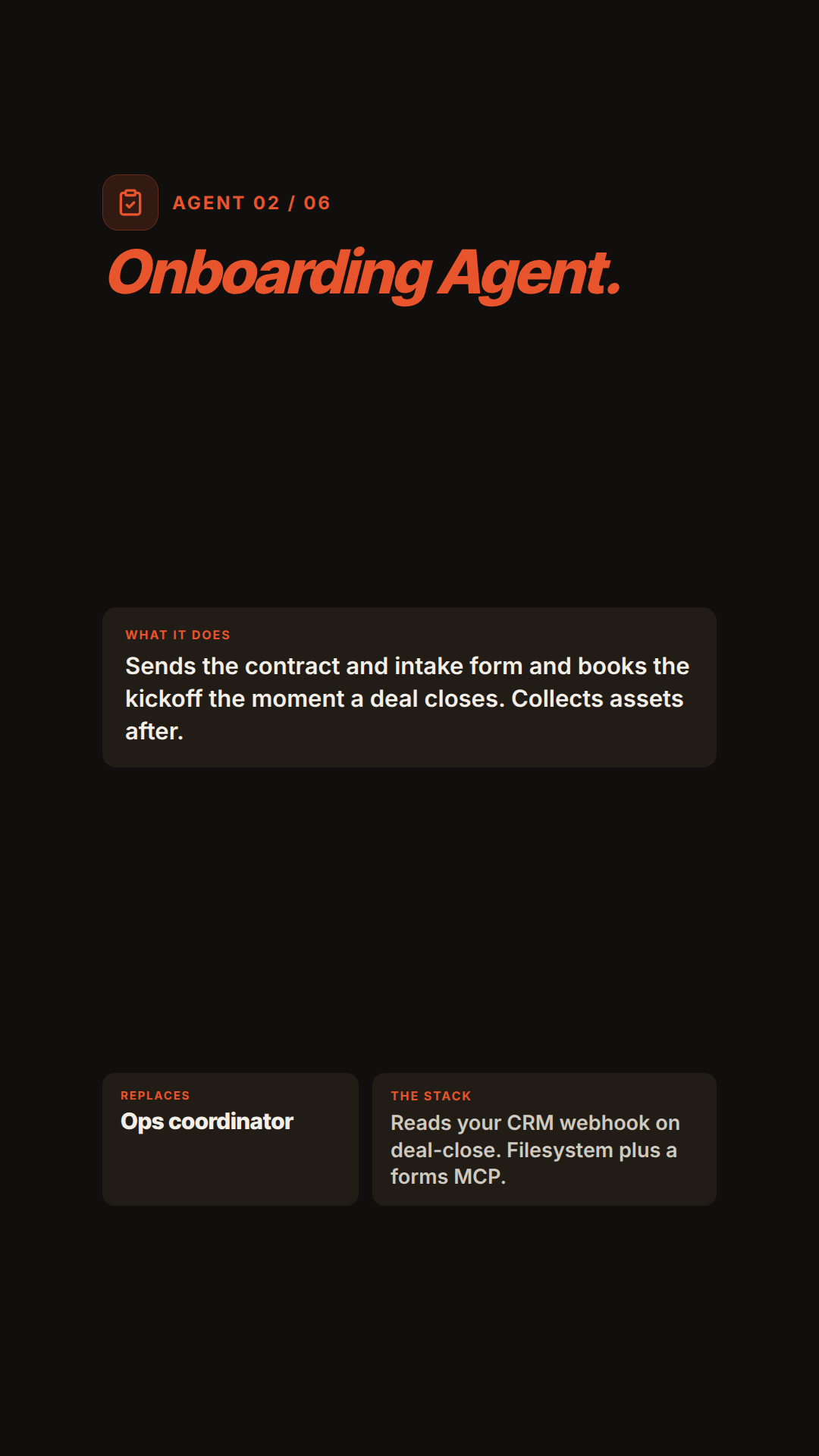
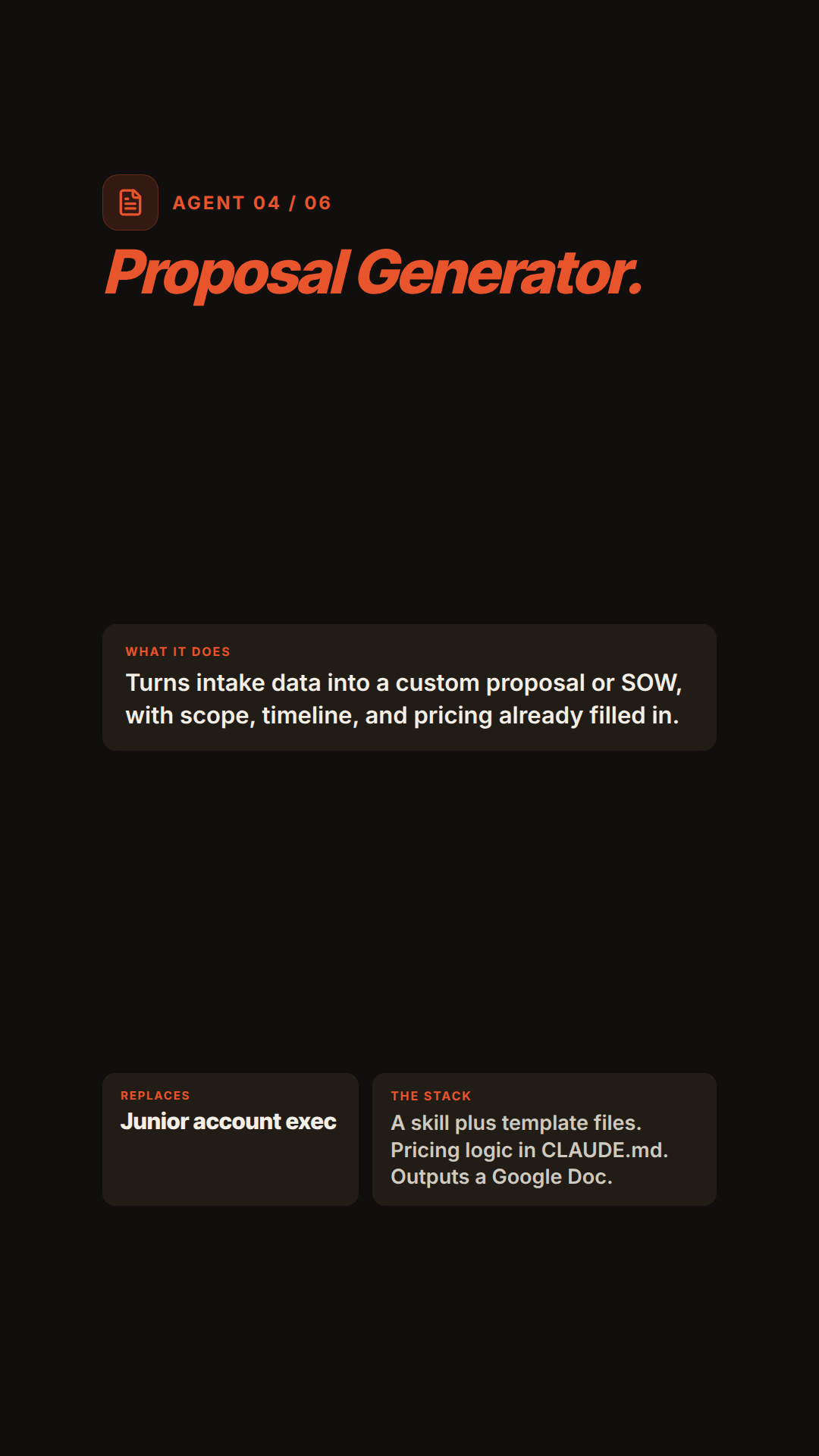
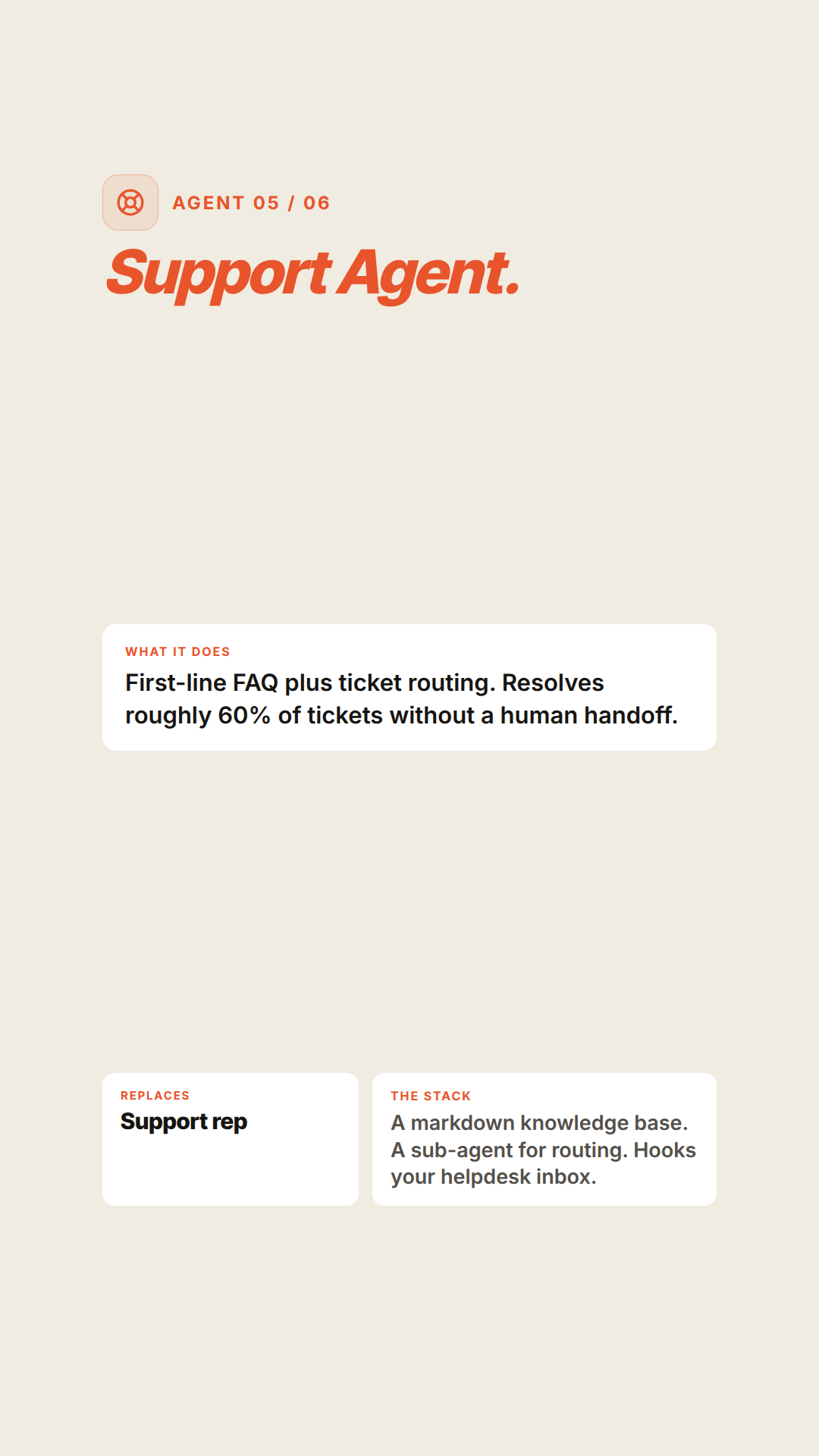
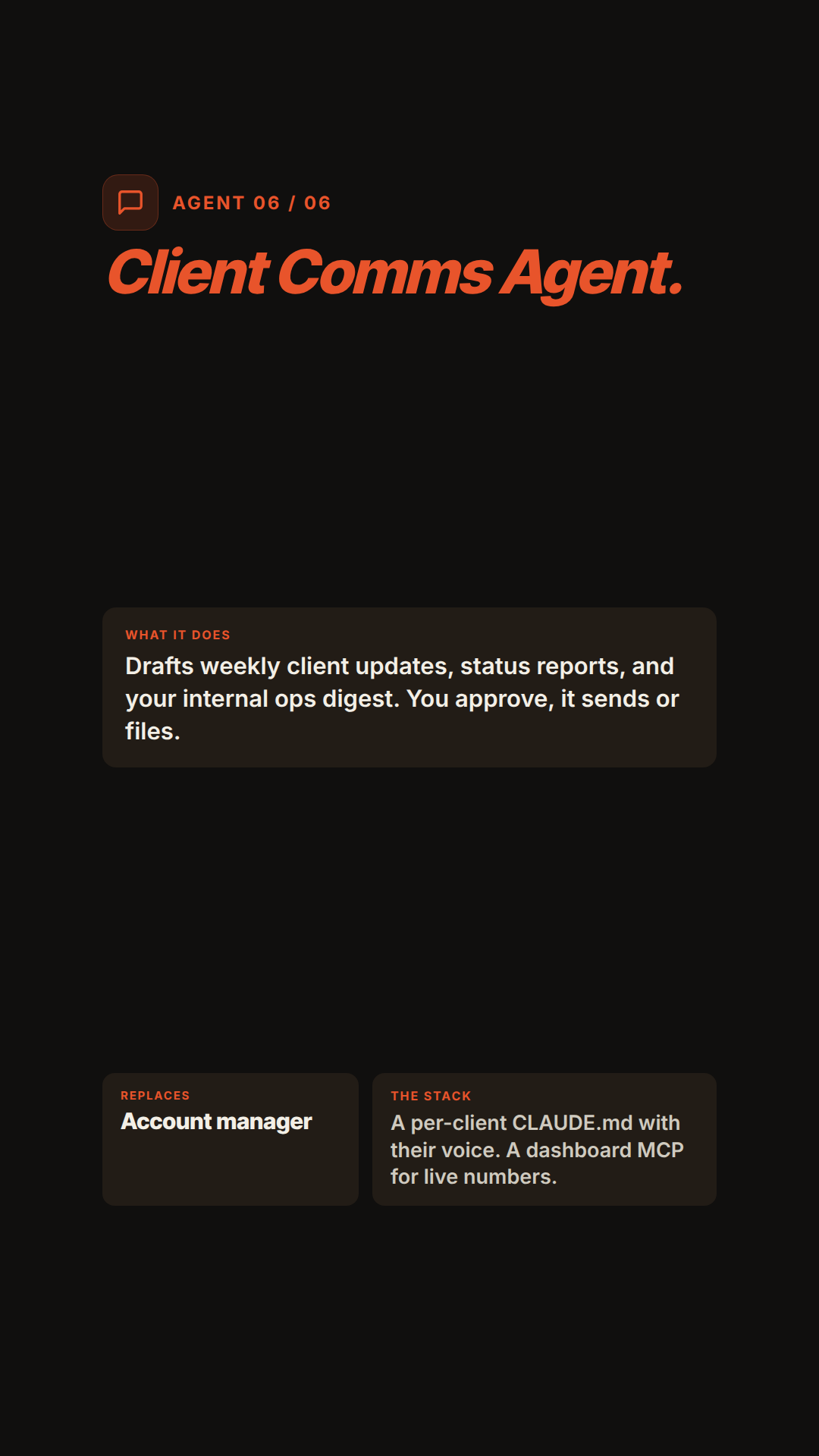
Six agents every service business should be running, because the admin is eating your week.

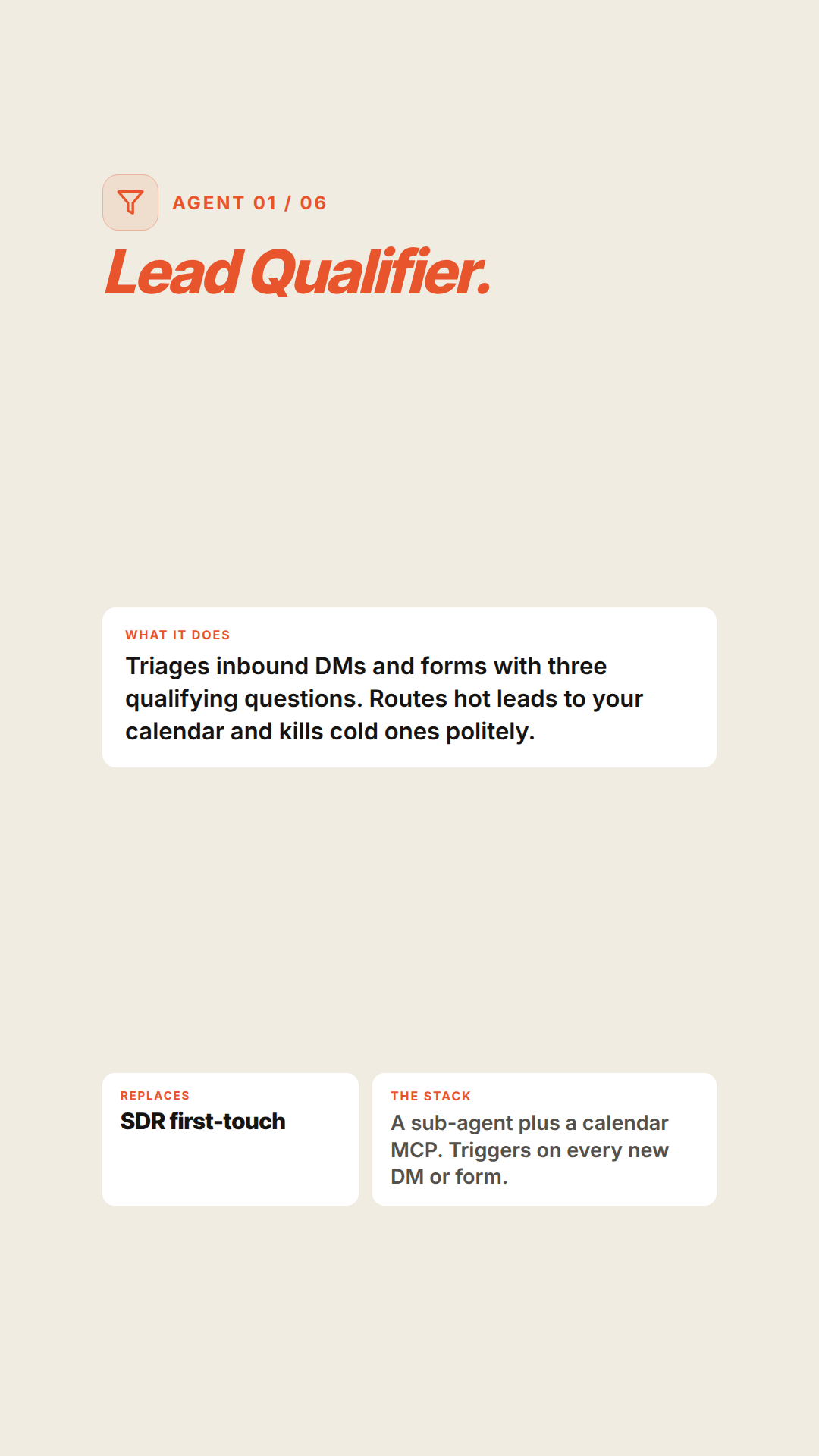
One handles intake, so a lead never sits in an inbox for three hours while a competitor closes it.
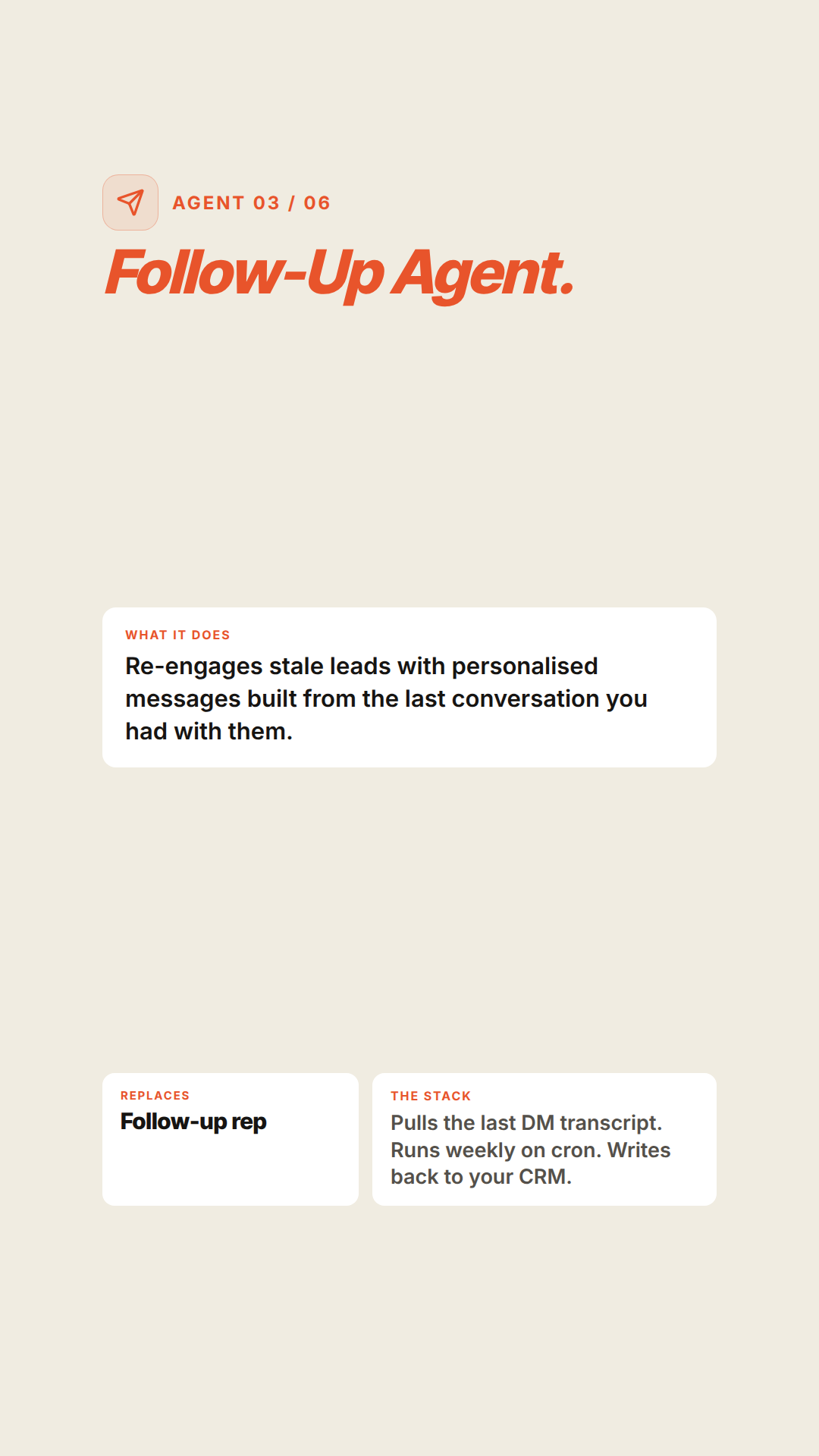
One does follow up, so quiet leads get nudged.
One runs scheduling, so you stop playing calendar tag.
One chases invoices.
One turns finished jobs into clean records.
One pulls the weekly numbers so you actually know where you stand.

They share one source of truth, so nothing falls through. You run the work, they run the busywork.

Comment AGENTS and I will send the setup and the checklist for each.
Claude skills to install

01
02
03
04
05
06
07
Caption
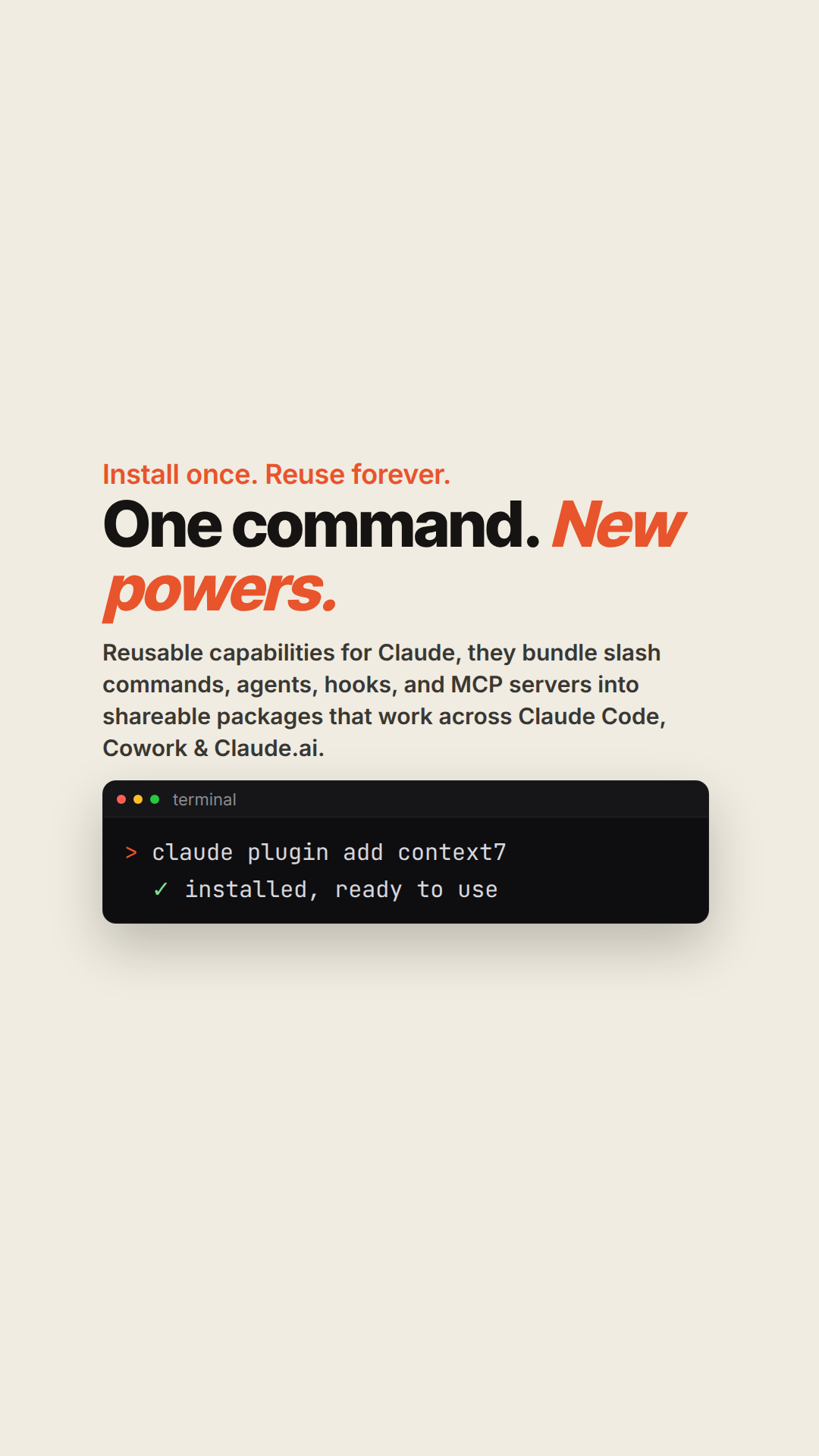
The Claude skills worth installing before you do real work, ranked, with the install command for each.

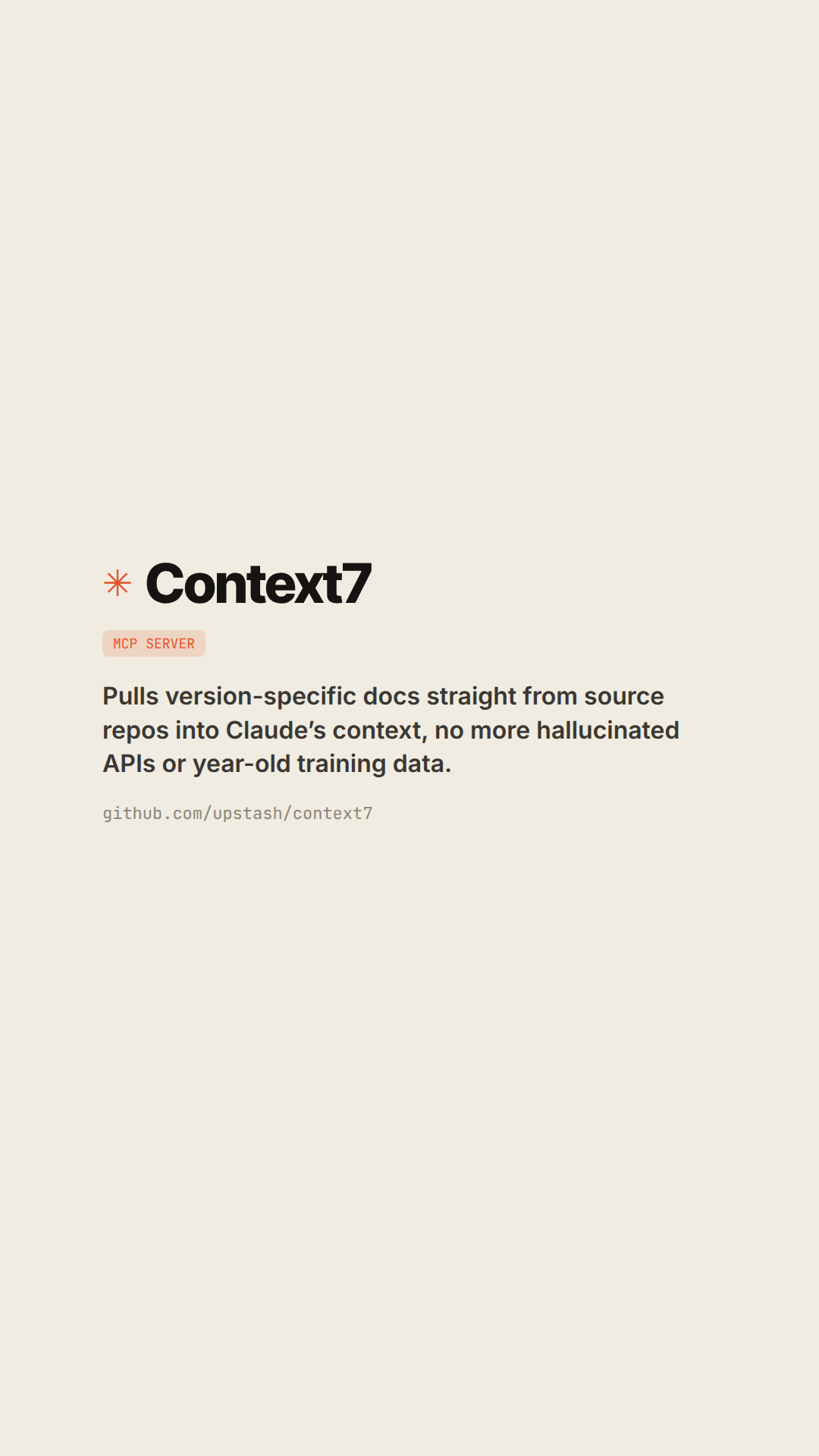
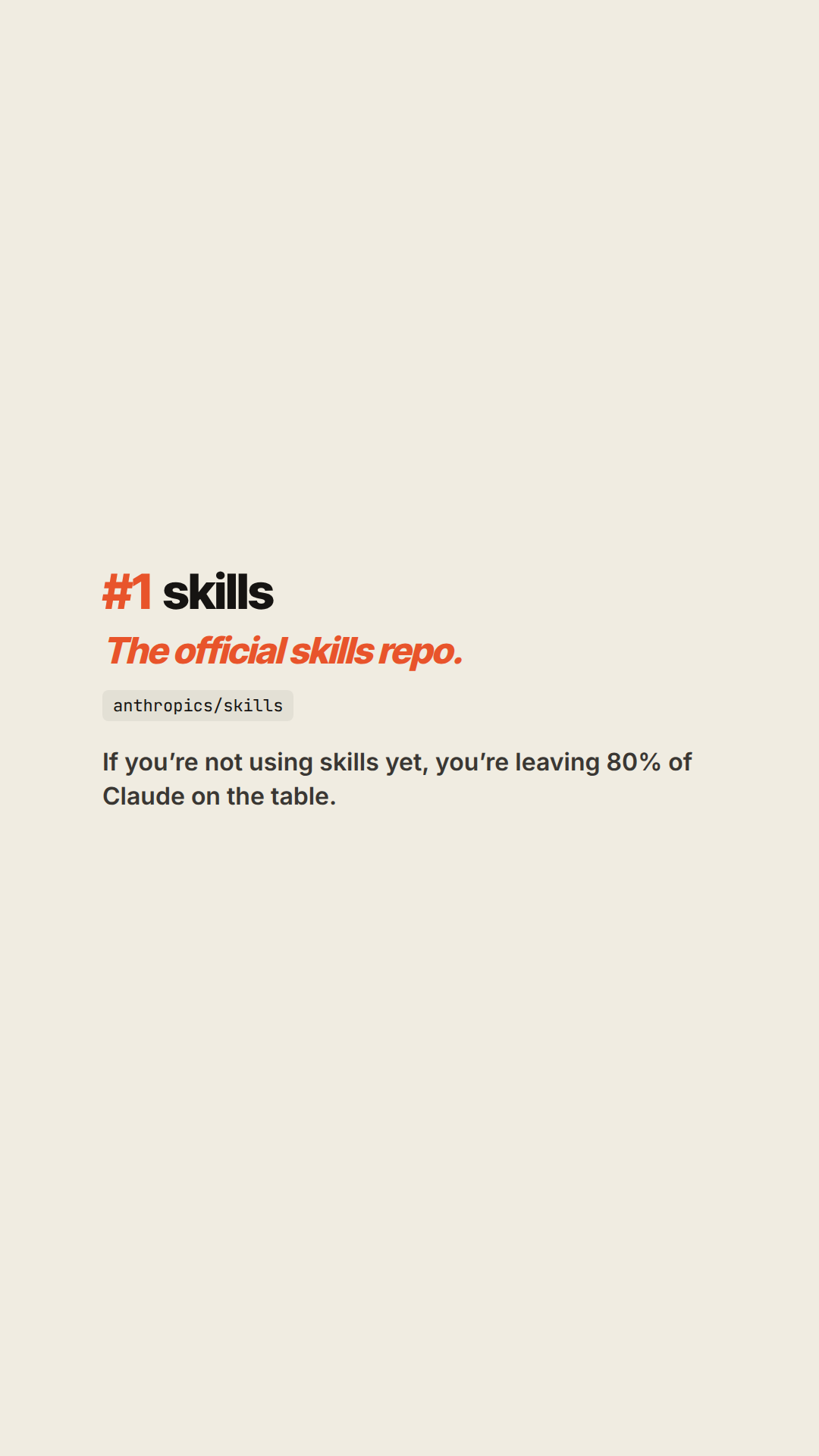
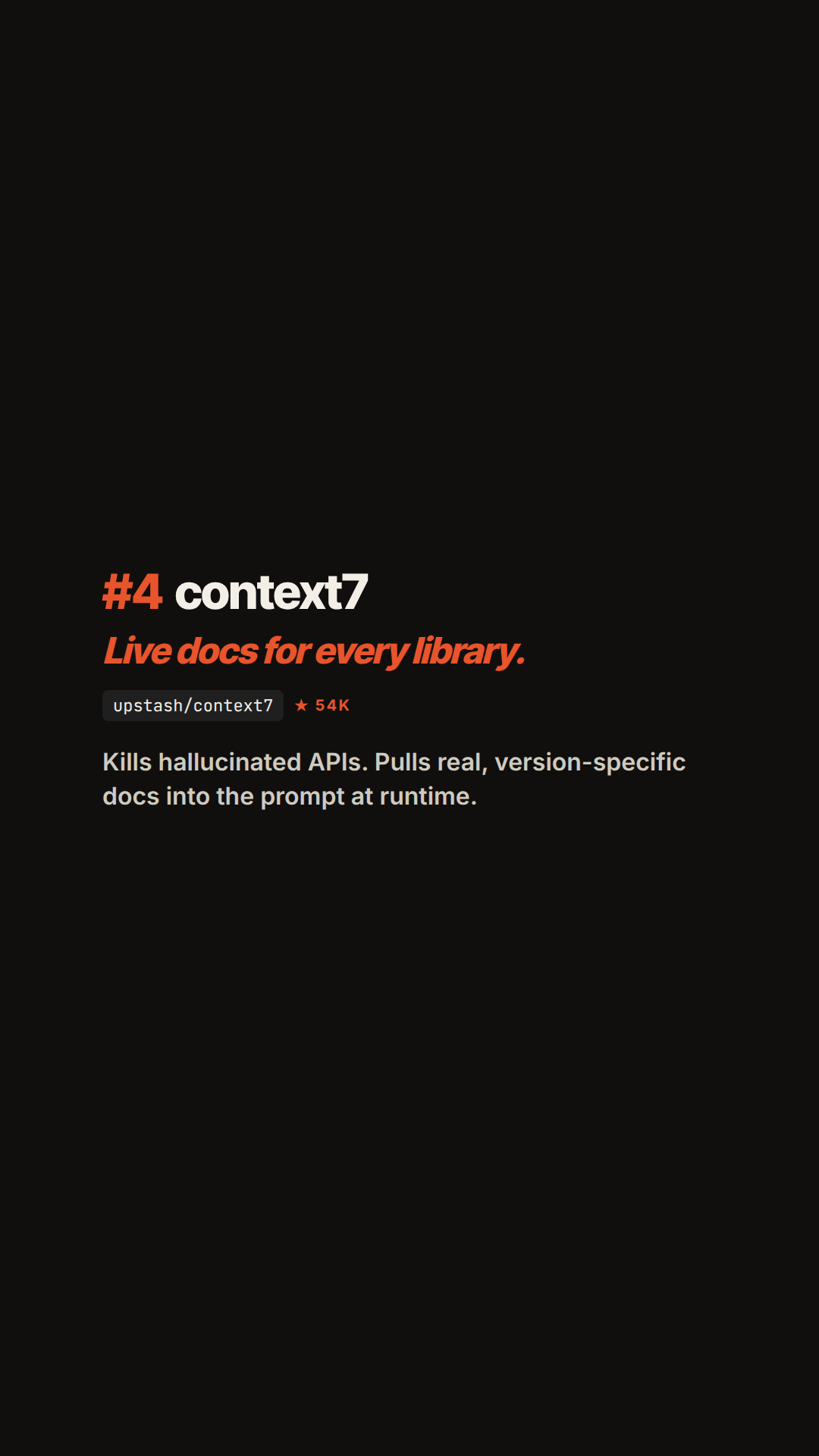
Context7 for live, accurate docs.
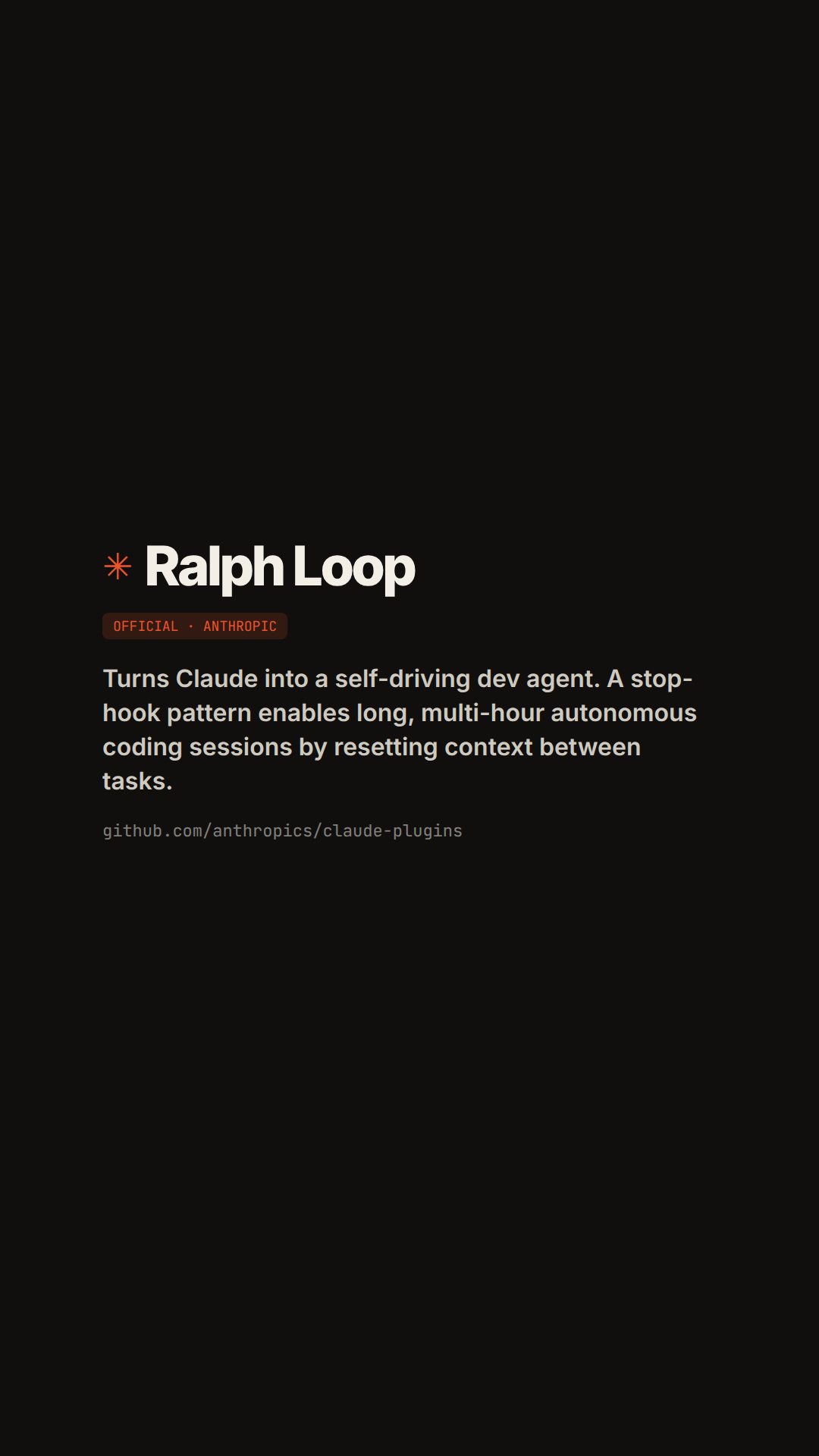
A loop skill for longer autonomous sessions.
A front end skill so the UI looks intentional.
Review agents, so the work gets torn apart before you ship.
Project memory, so it stops starting from zero.

Skip the hundred you will never touch. These are the ones that change the output.

Comment INSTALL and I will send the list and when to use each.
7 cheat codes for Claude
01
02
03
04
05
06
07
08

09
Caption
Seven cheat codes that make Claude feel twice as capable. None of them are obvious.

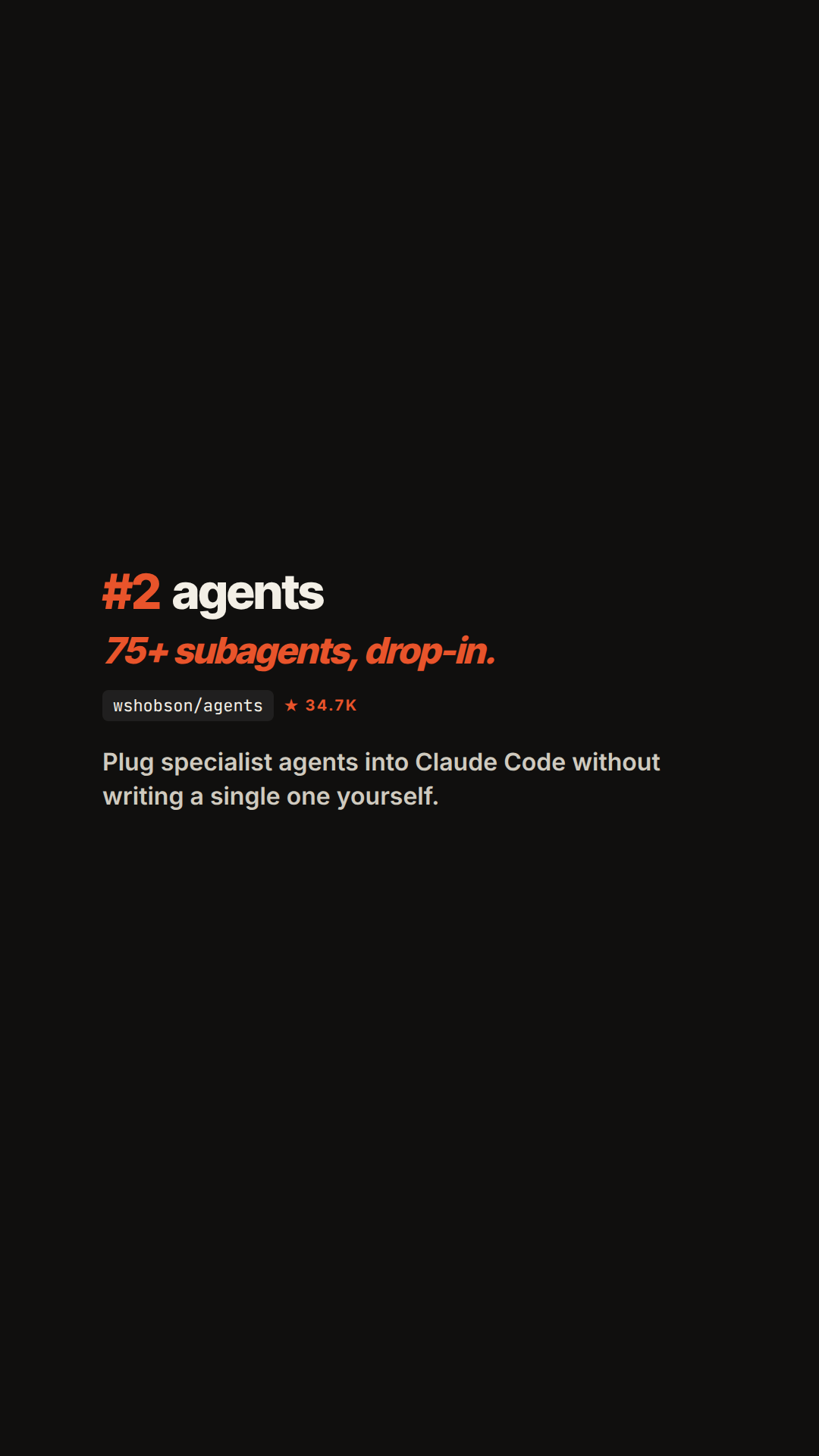
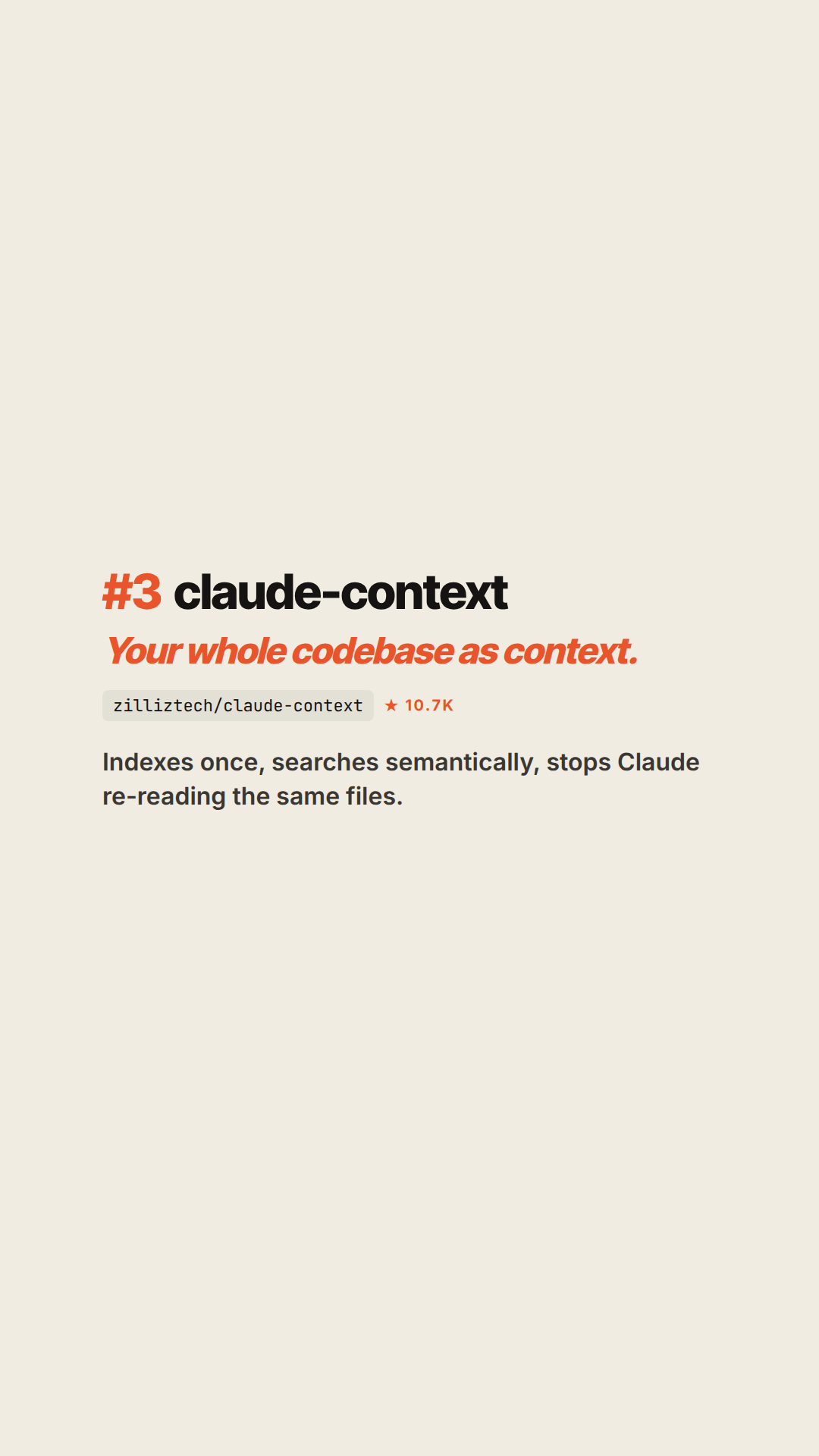
Point it at an example in your repo instead of describing your style. Make it plan before it edits. Let it verify its own work. Tell it the files it can touch and the ones it cannot. Ask for the diff, not a description. Save the prompts you reuse as commands. Give it memory so it stops re-asking.

Small moves. Each one removes a place where it used to guess.

Comment CHEAT and I will send all seven, written to copy.
Valuation vs revenue
01
02
03
04

05
Caption
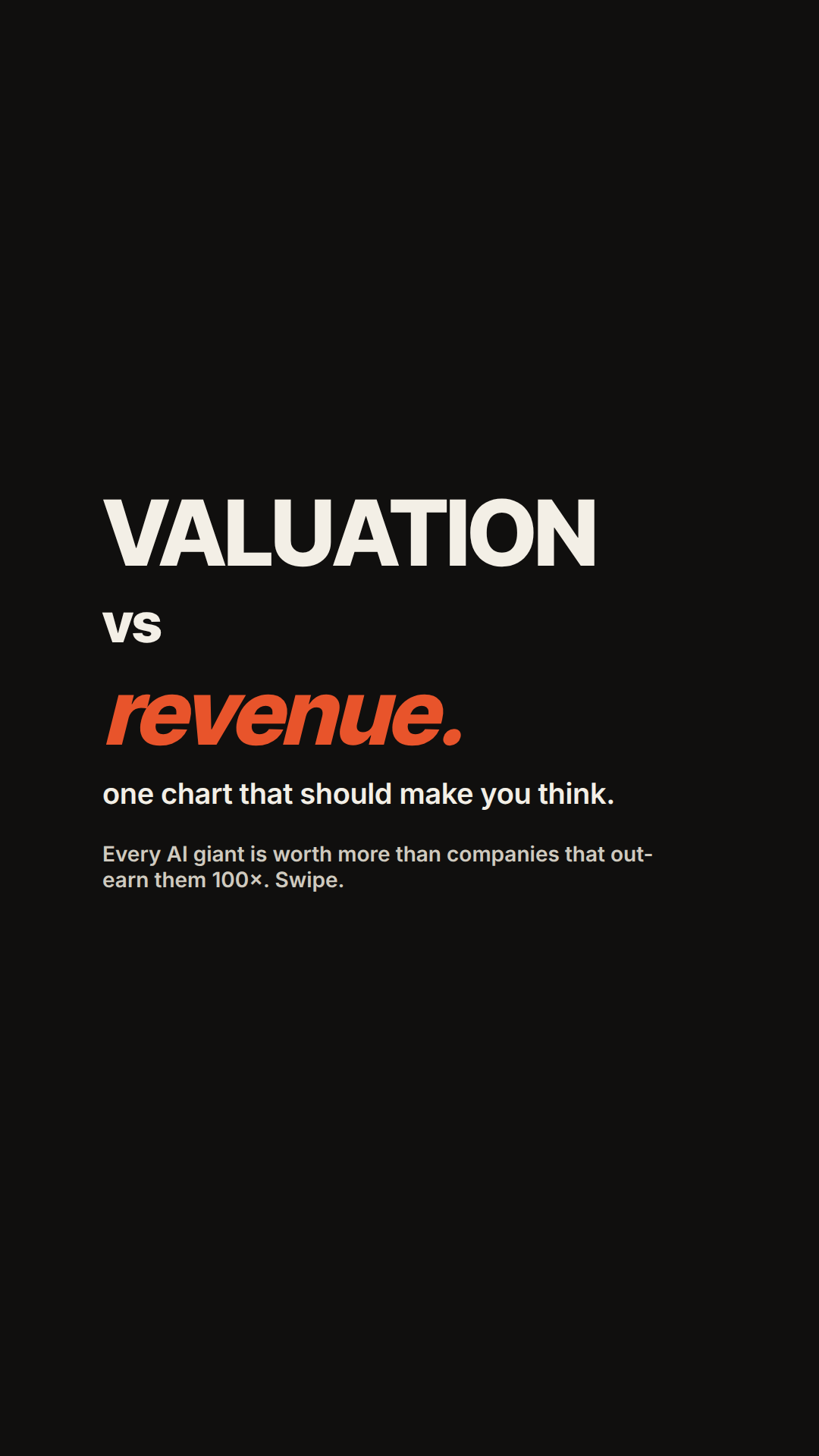
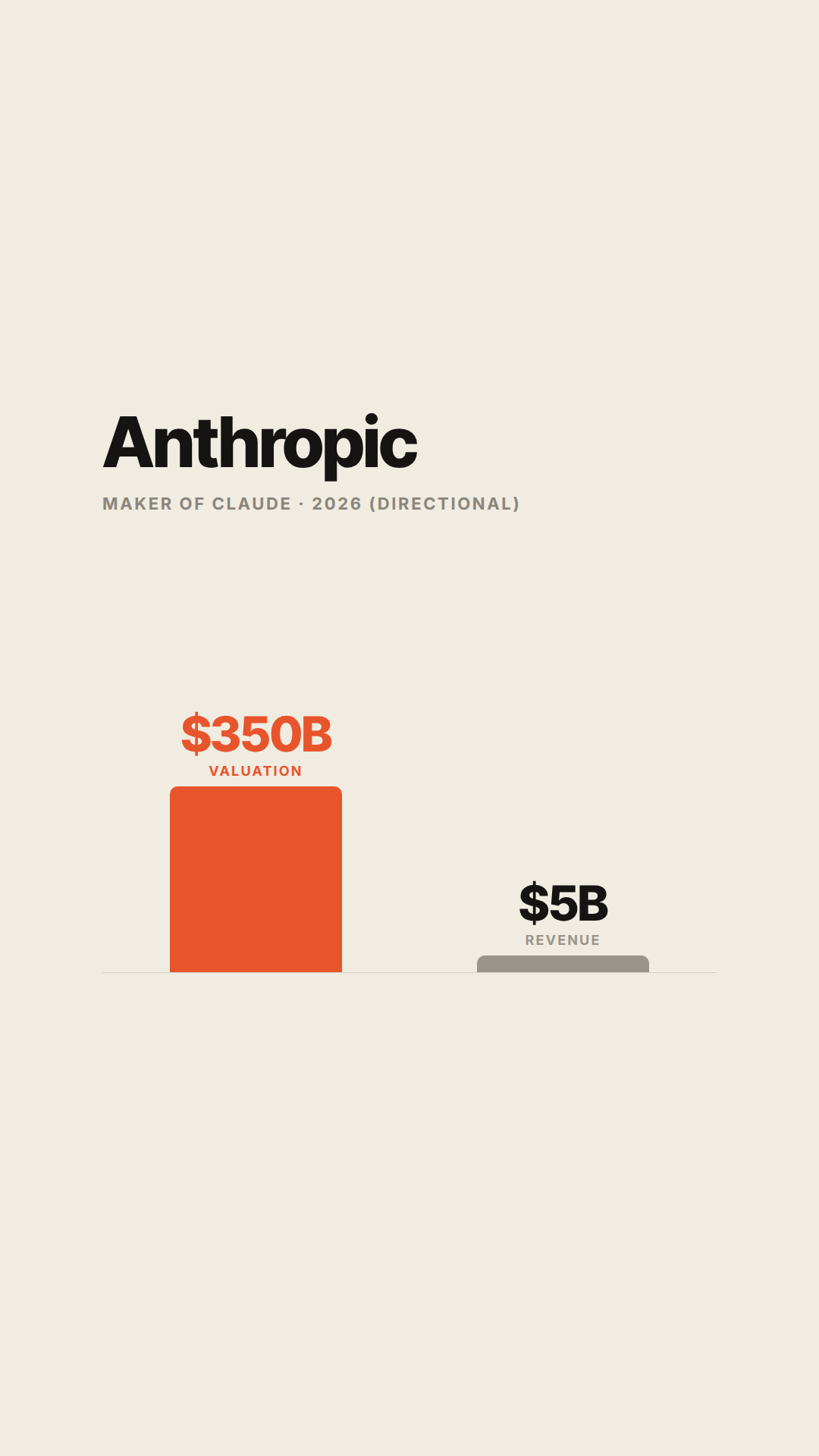
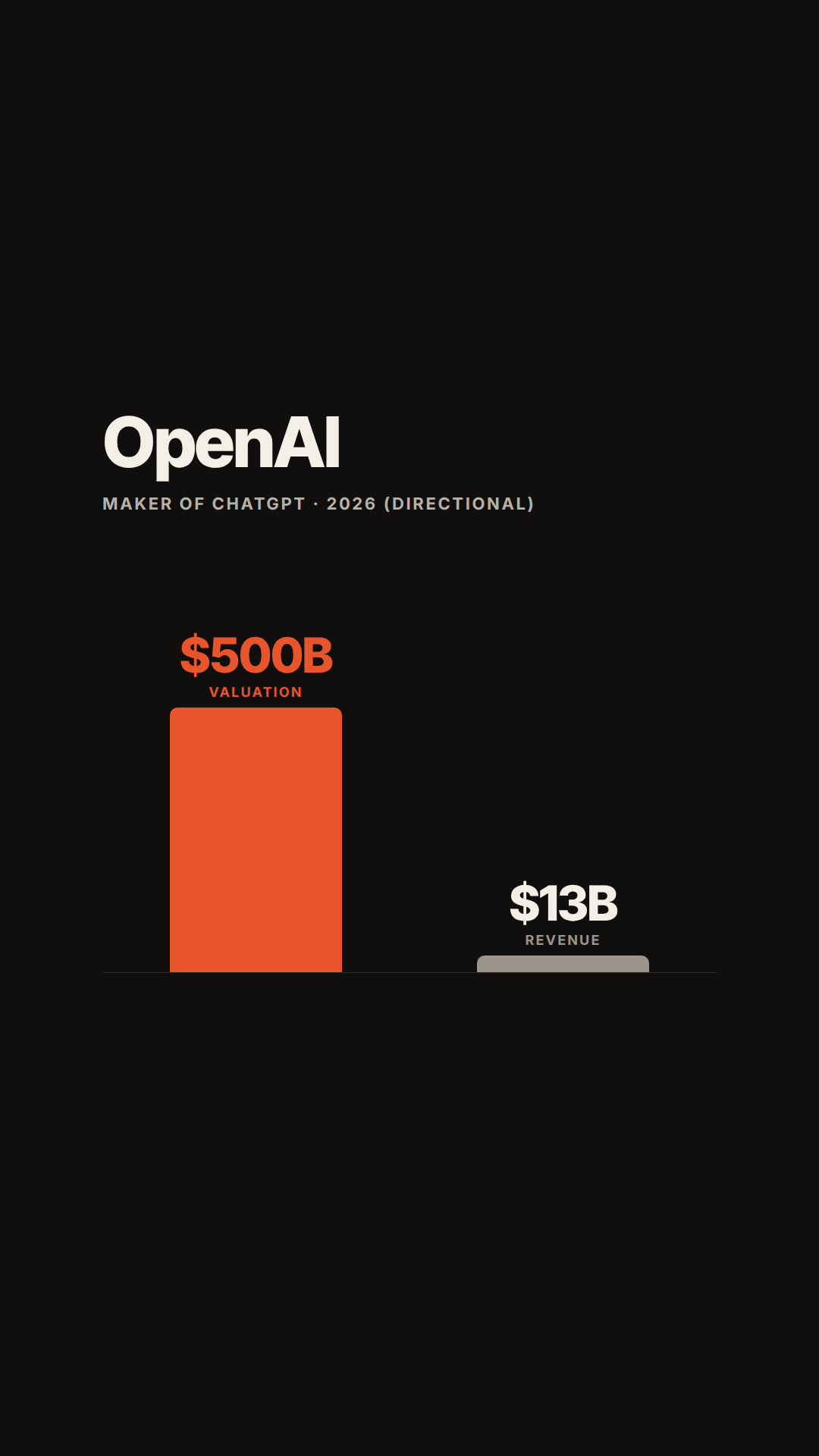
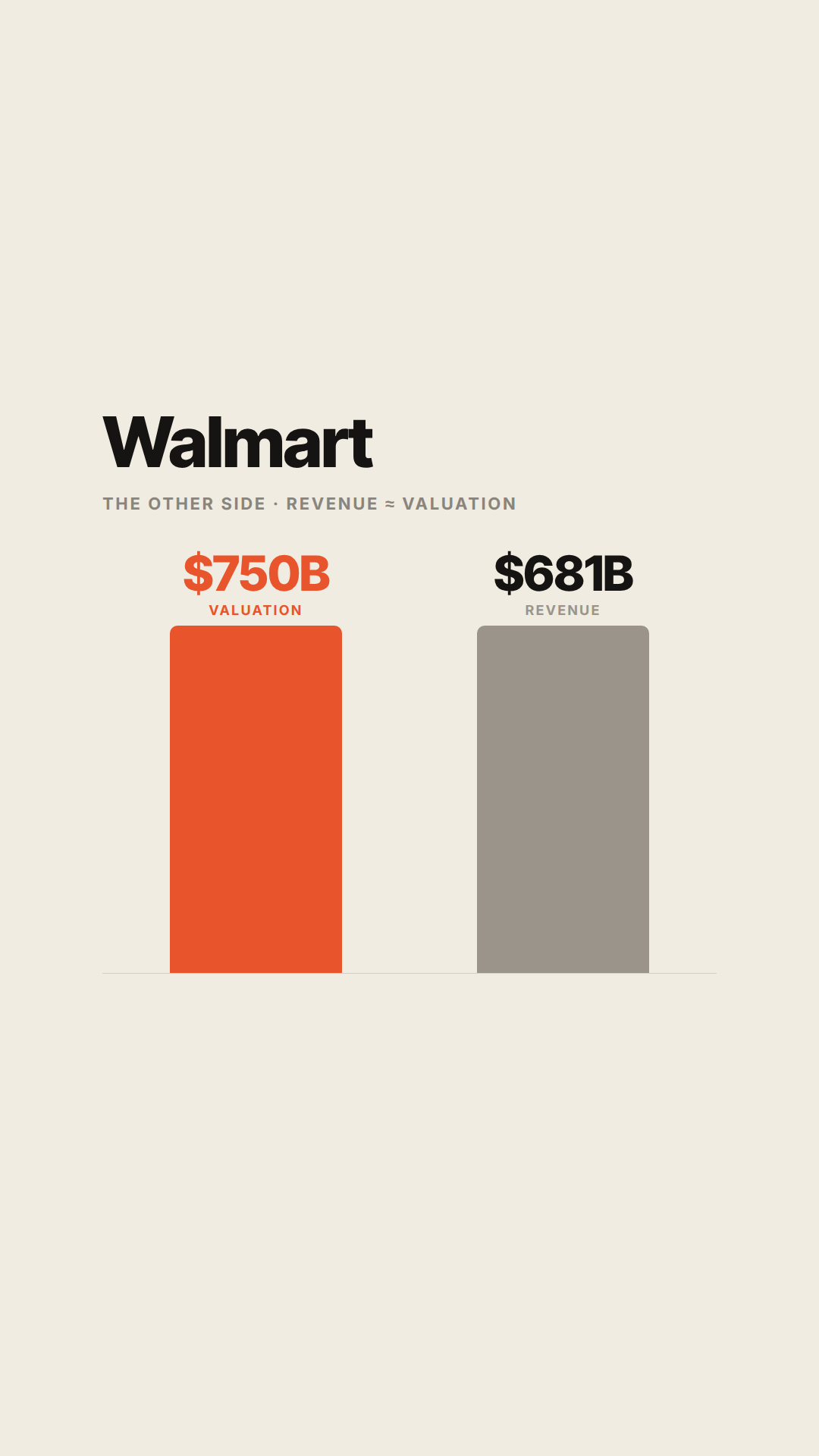
Revenue is the number everyone chases. Valuation is the number that actually builds wealth. They are not the same thing.

You can grind revenue that resets to zero every month and own nothing at the end of it. Or you can build the same work into an asset that gains value while you sleep, because of what someone would pay to own it.

The shift is from earning to owning. From doing the work to building the thing that does the work. The multiple is where the money is, not the monthly.

Comment VALUE and I will break down the drivers that move a valuation and the levers you can pull now.
Multi-agent patterns

01
02
03
04
05
06
07
08
09
10
Caption
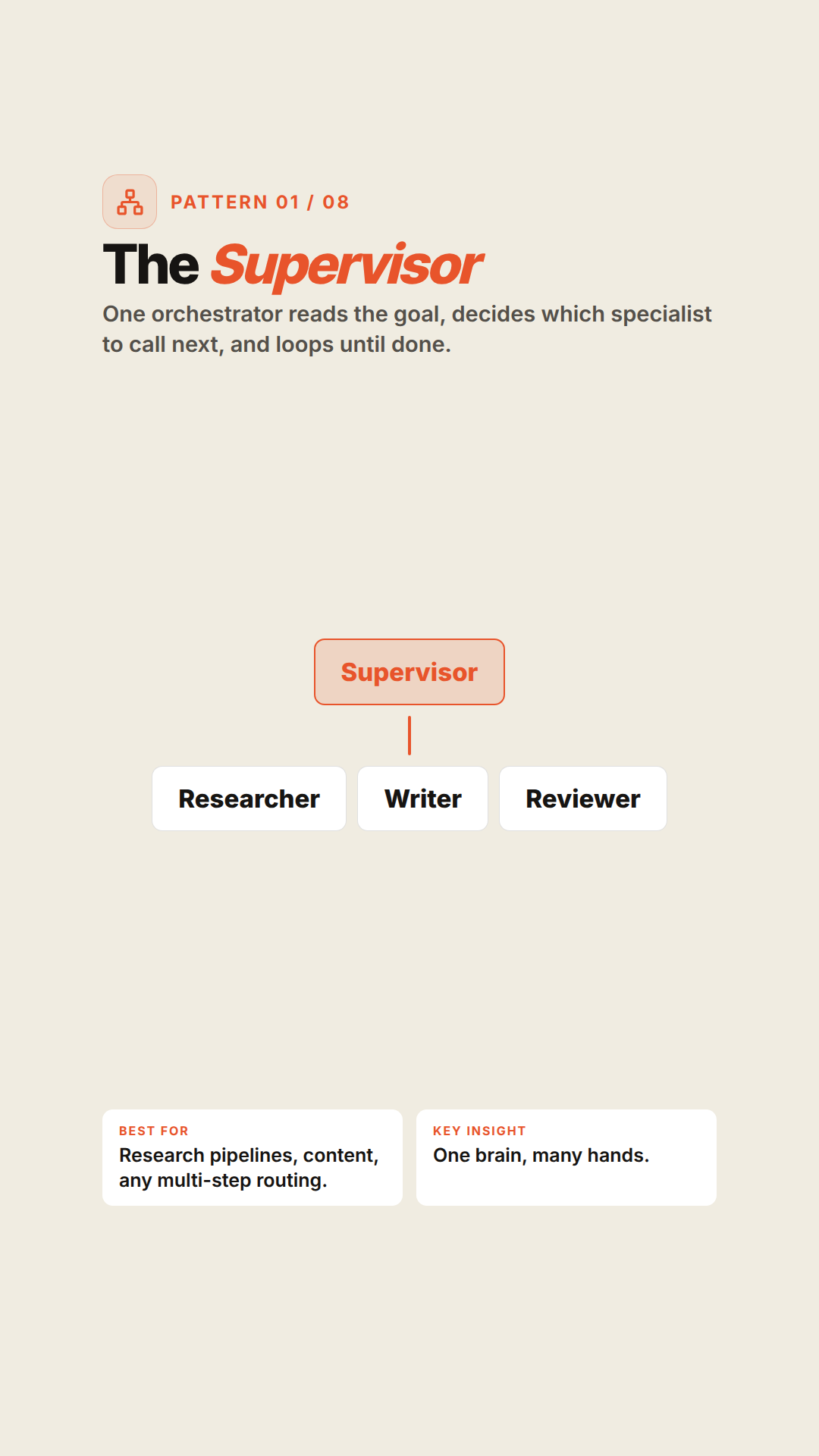
Most agent builds are one agent told to do everything, which is exactly why they fall apart. The fix is knowing the patterns.

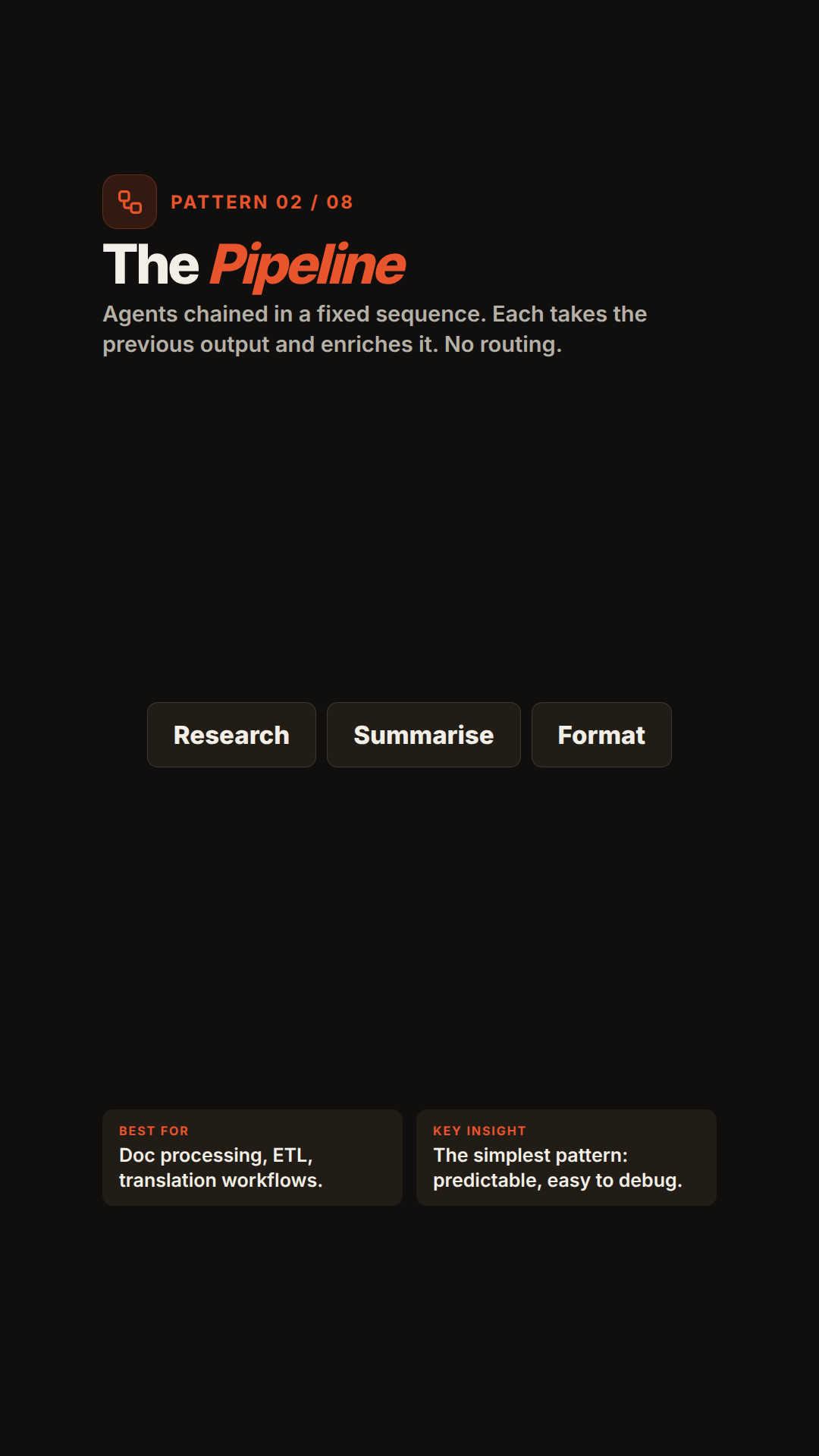
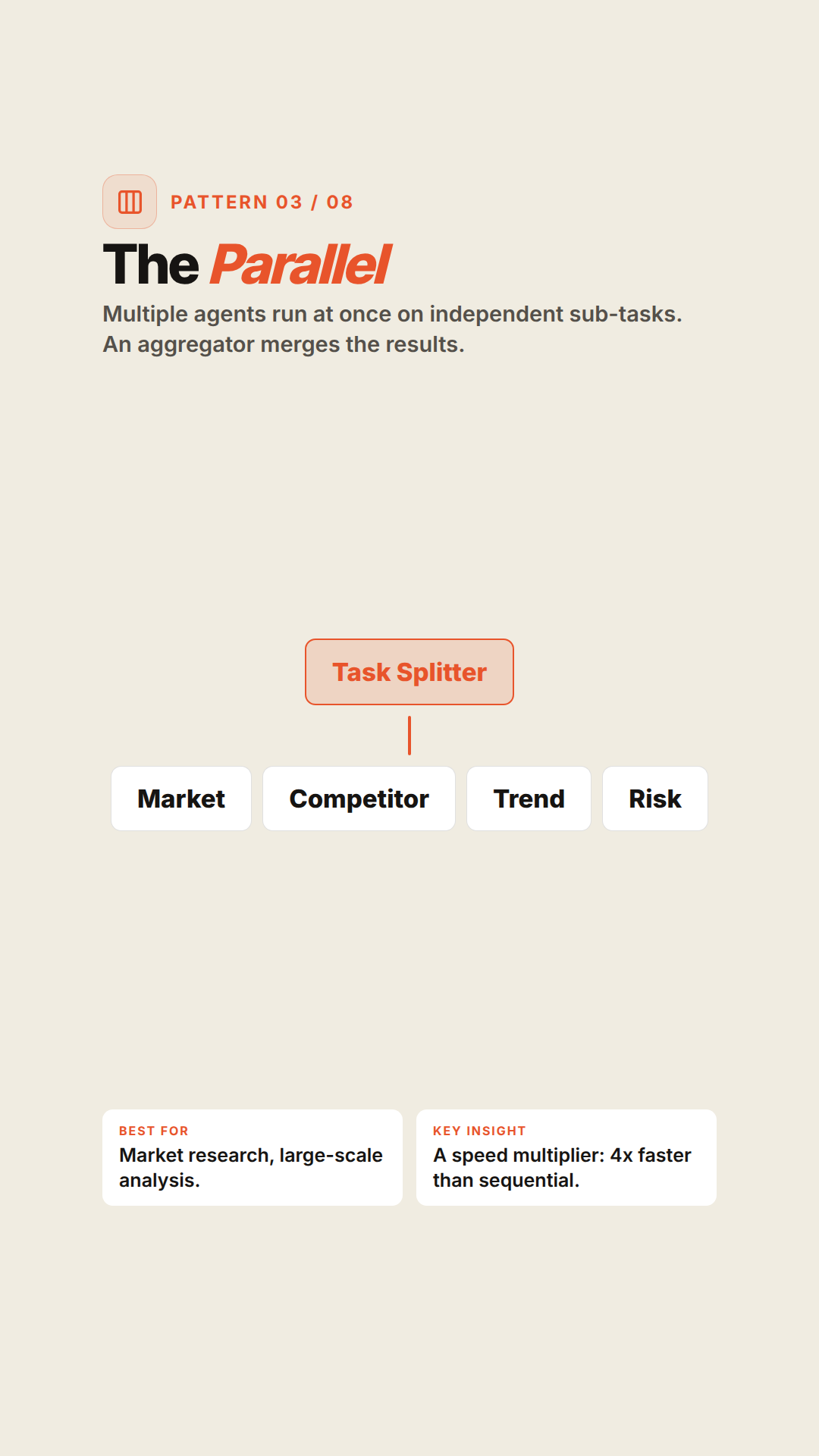
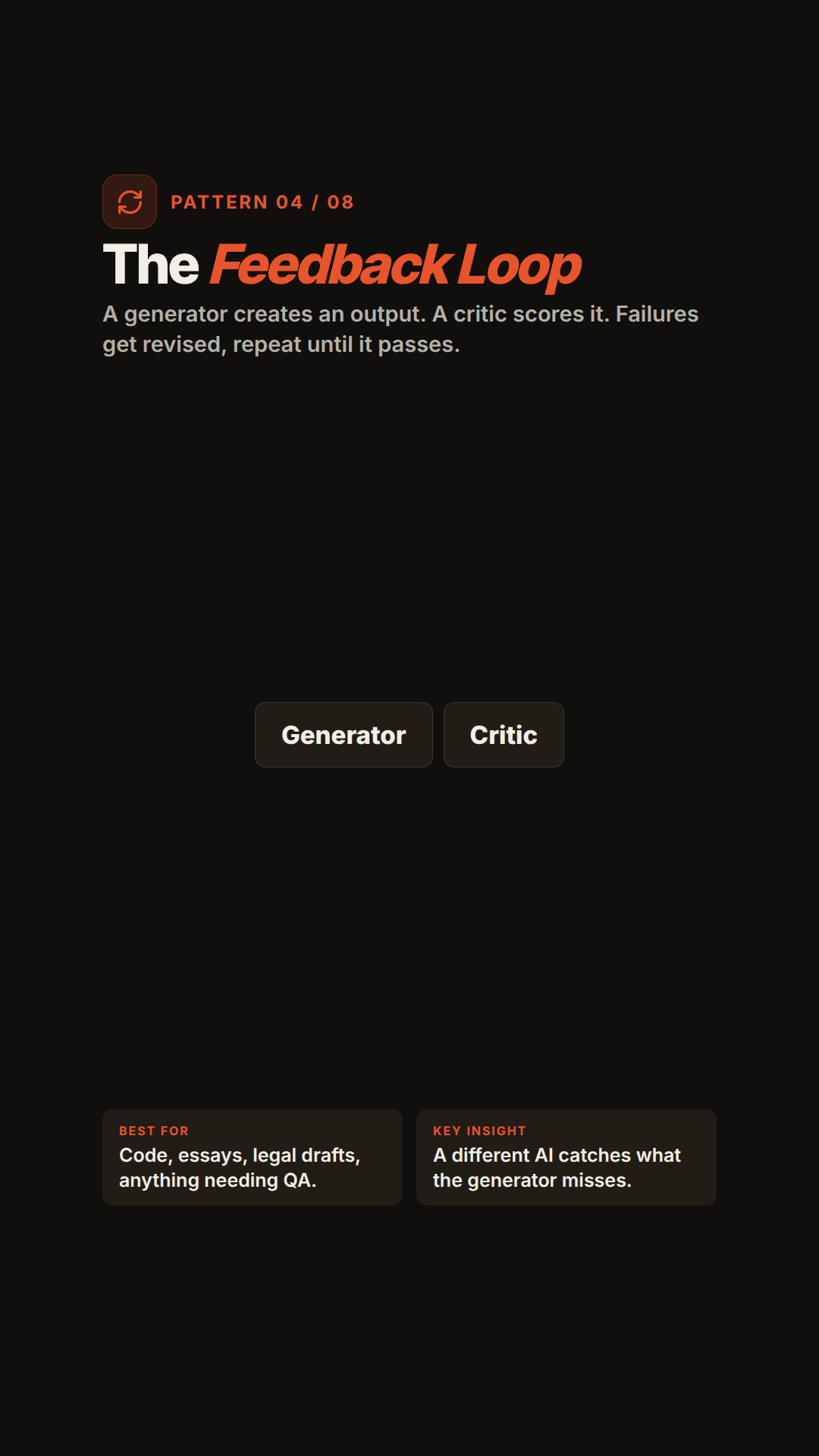
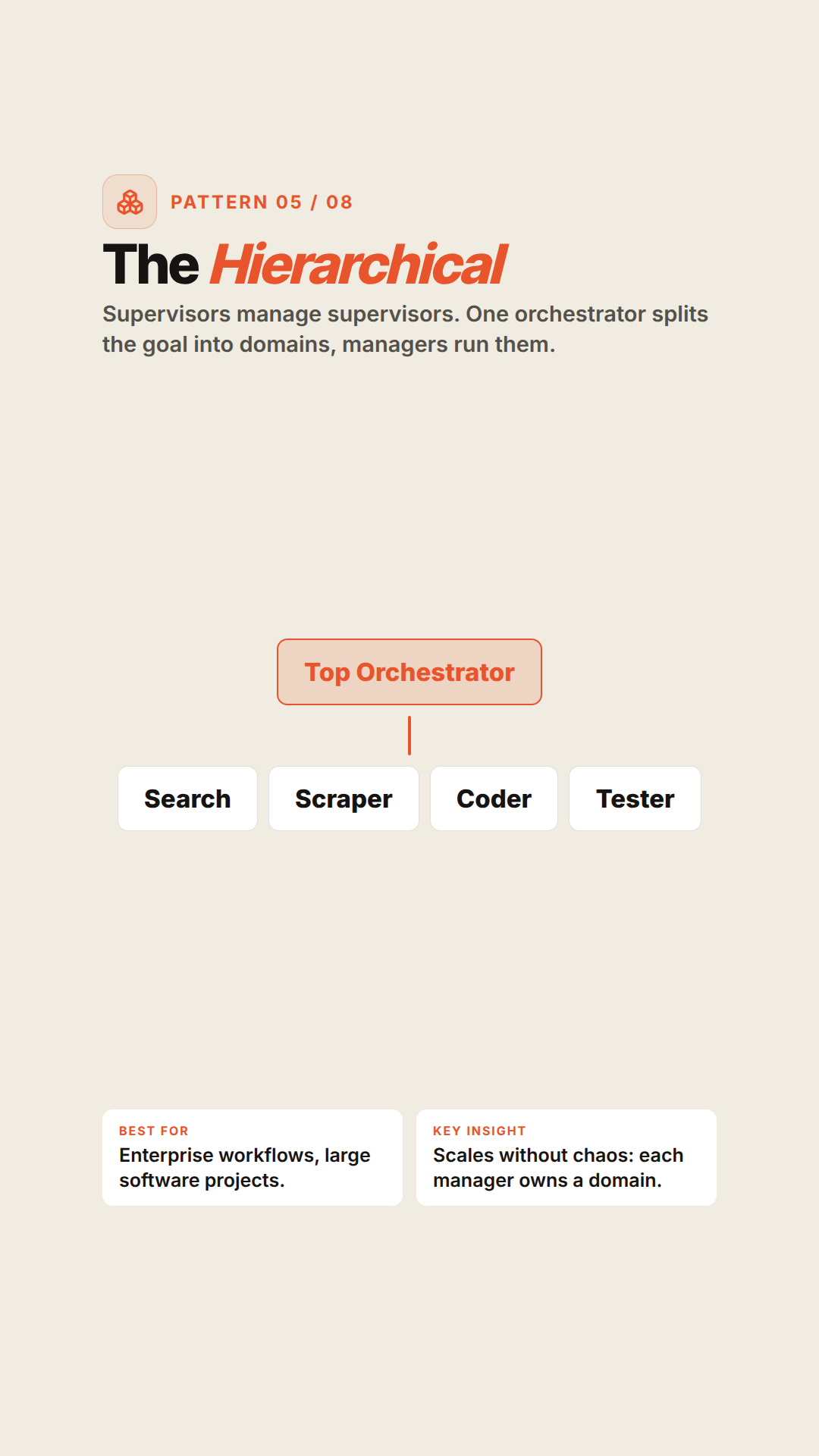
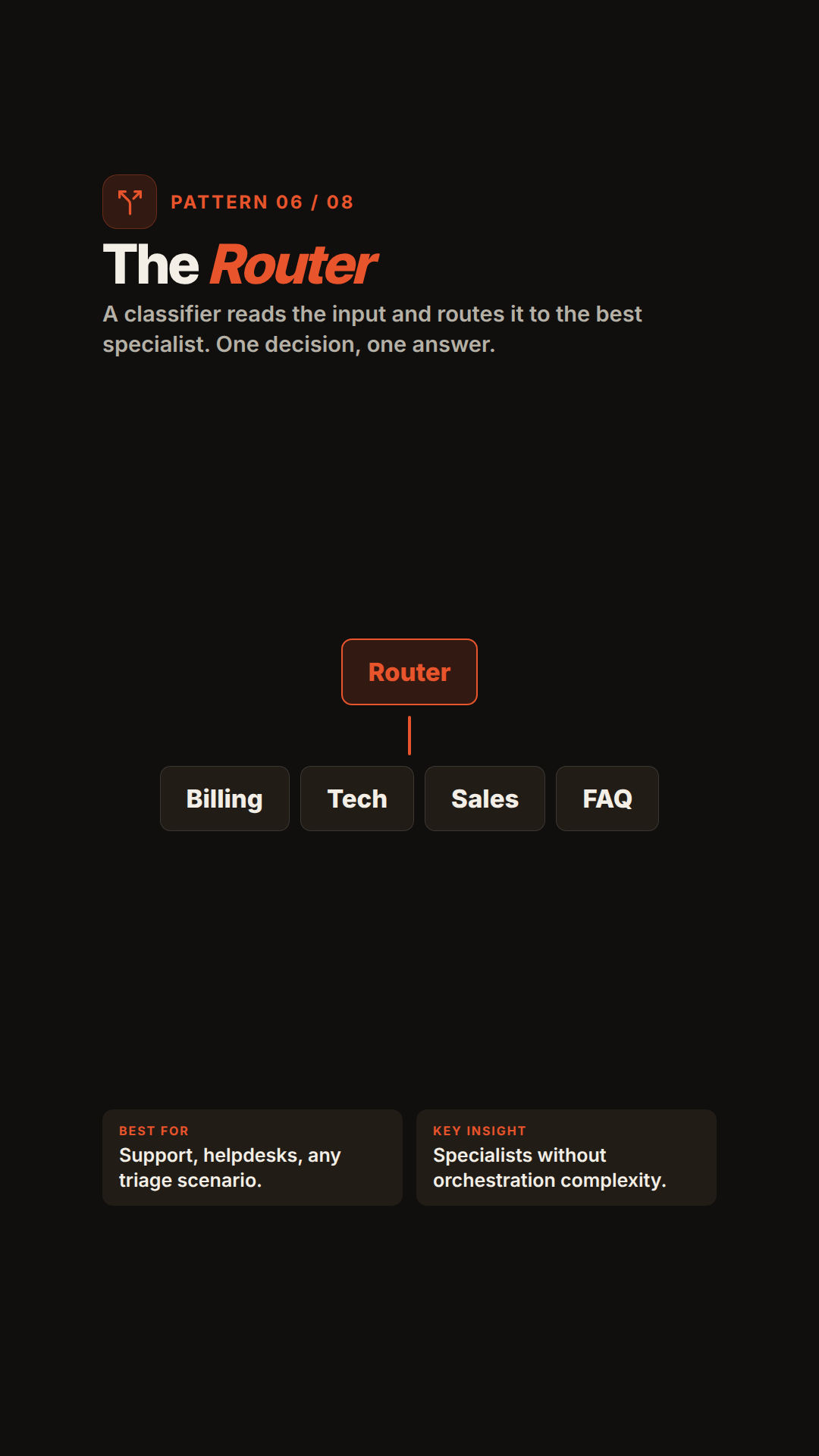
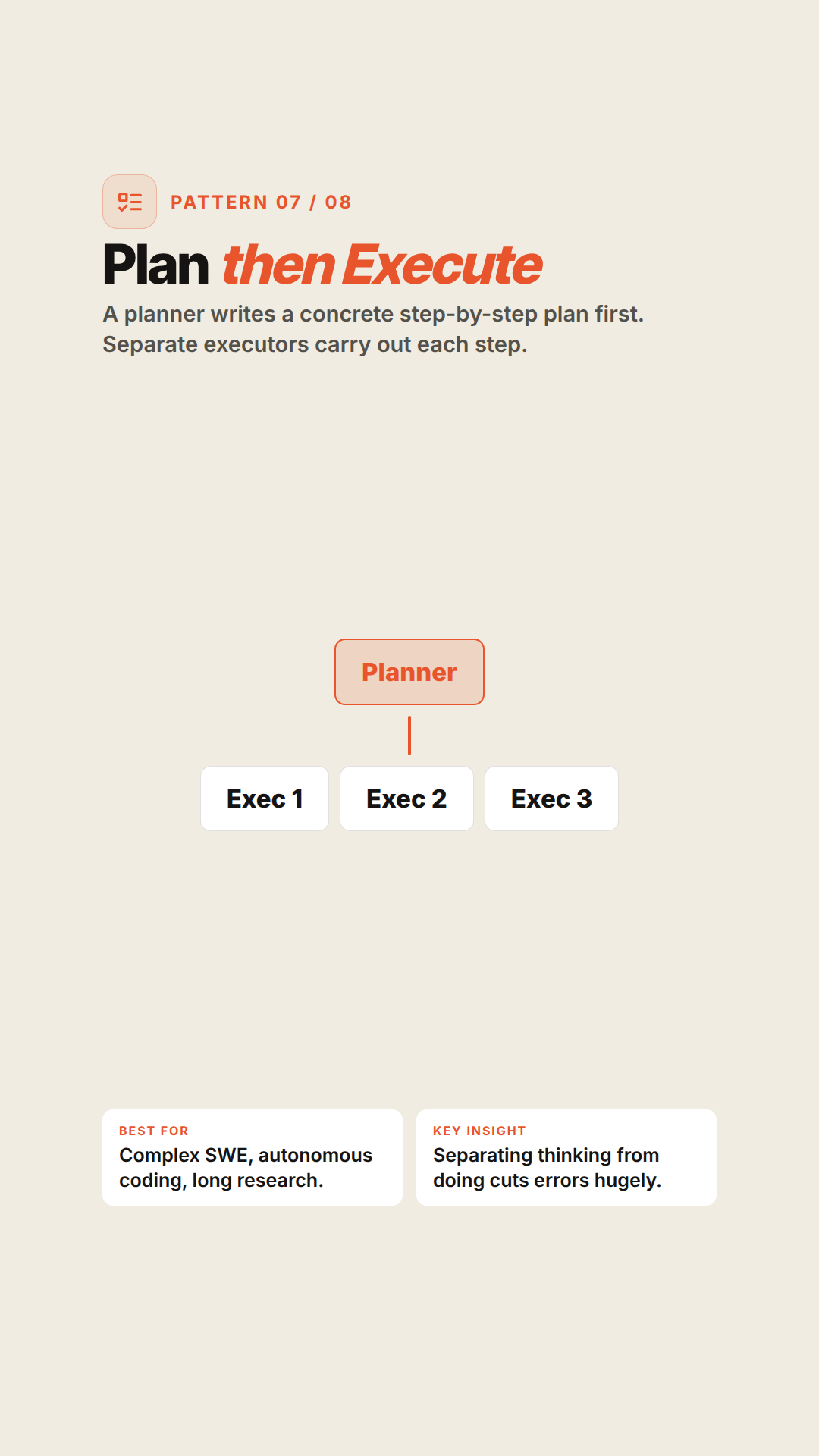
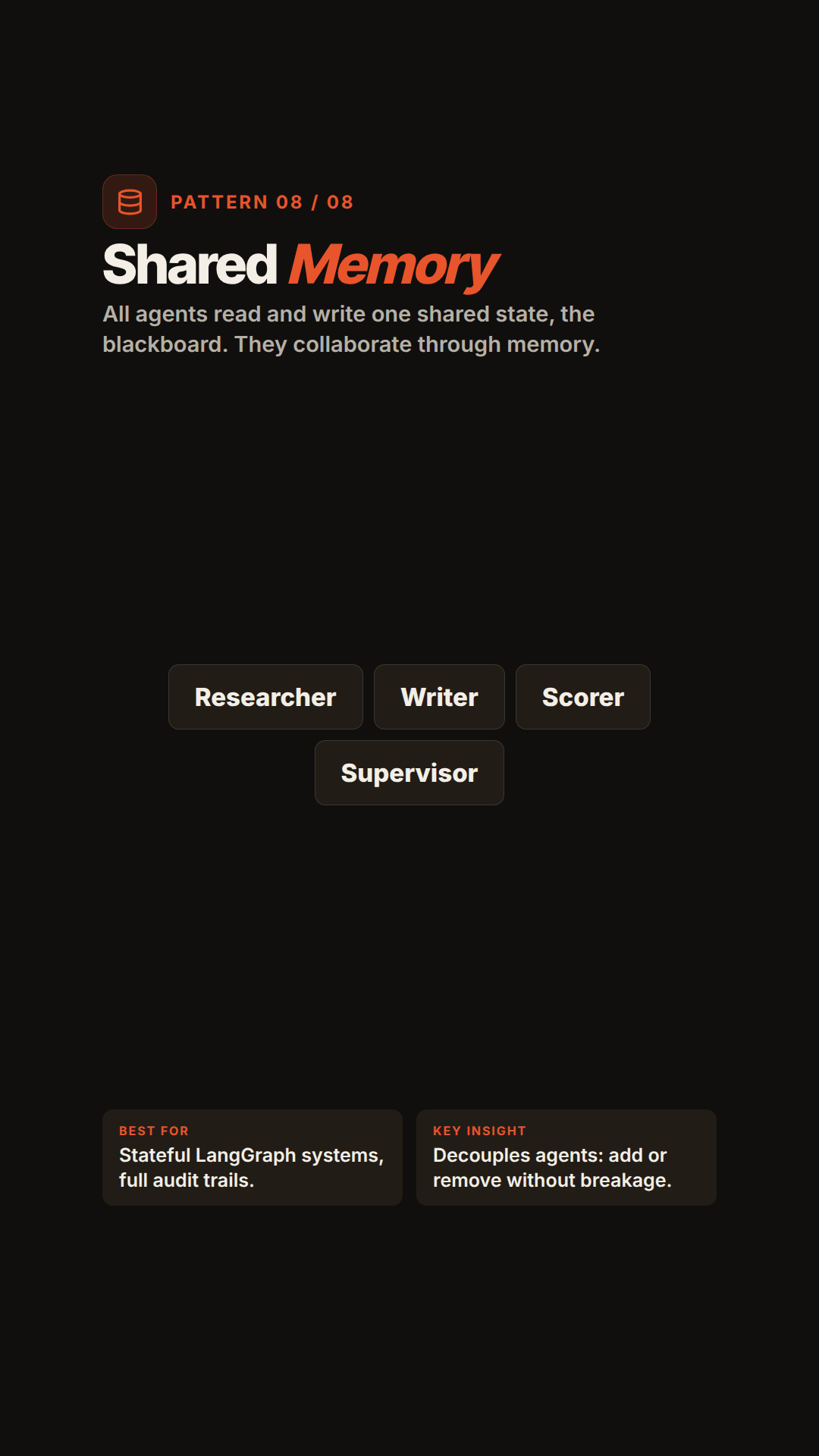
A supervisor that routes work to specialists. A pipeline where each agent enriches the last. Parallel agents that split a job and merge. A generator and a critic looping until it passes. A planner that thinks, executors that do.

Each one fits a different problem. Pick on purpose and the system holds instead of collapsing into noise.

Comment AGENTS and I will send the eight patterns, with when to use each and the code.
Build a second brain
01
02
03
04
05
06
07
08

09
Caption
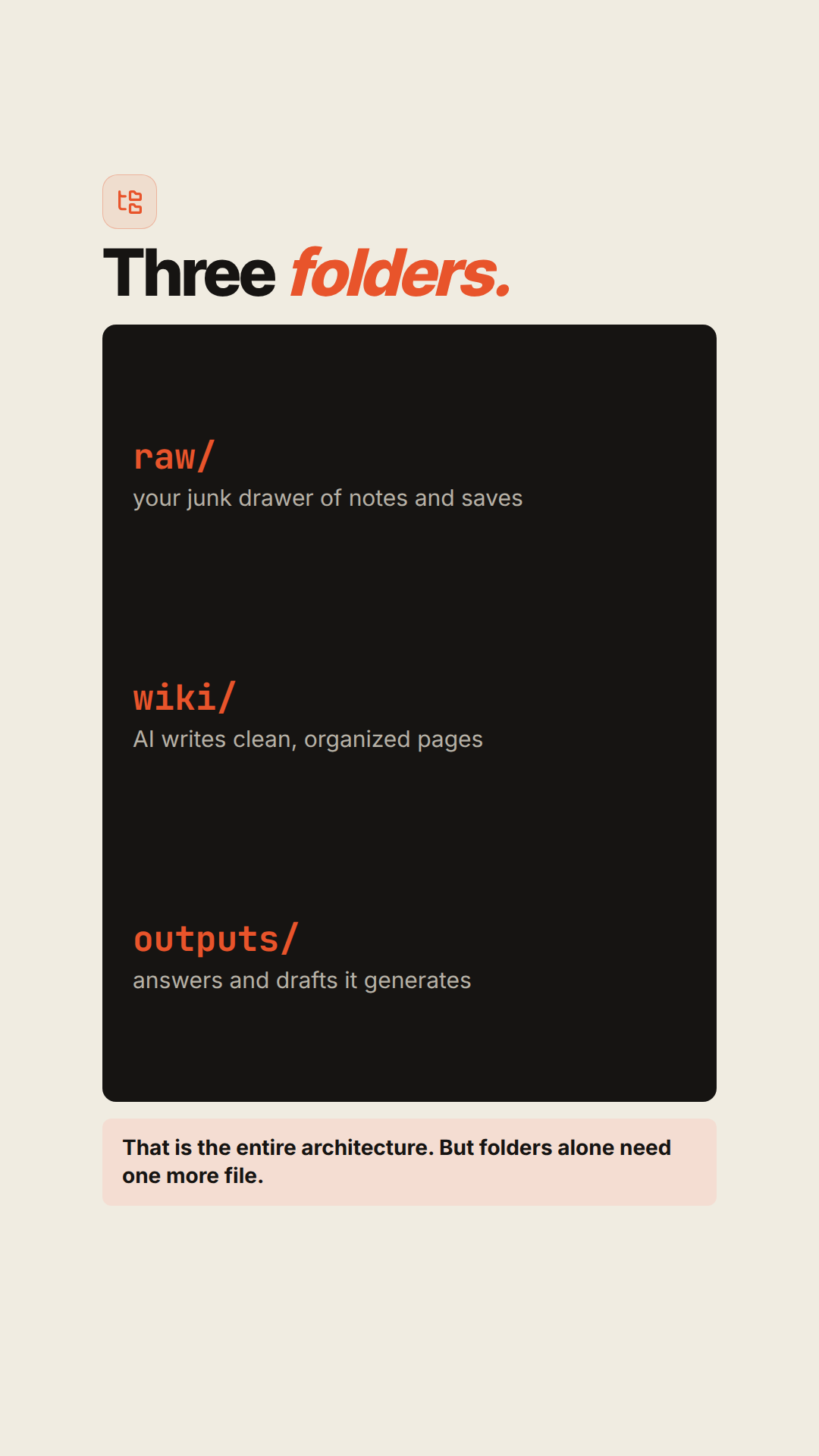
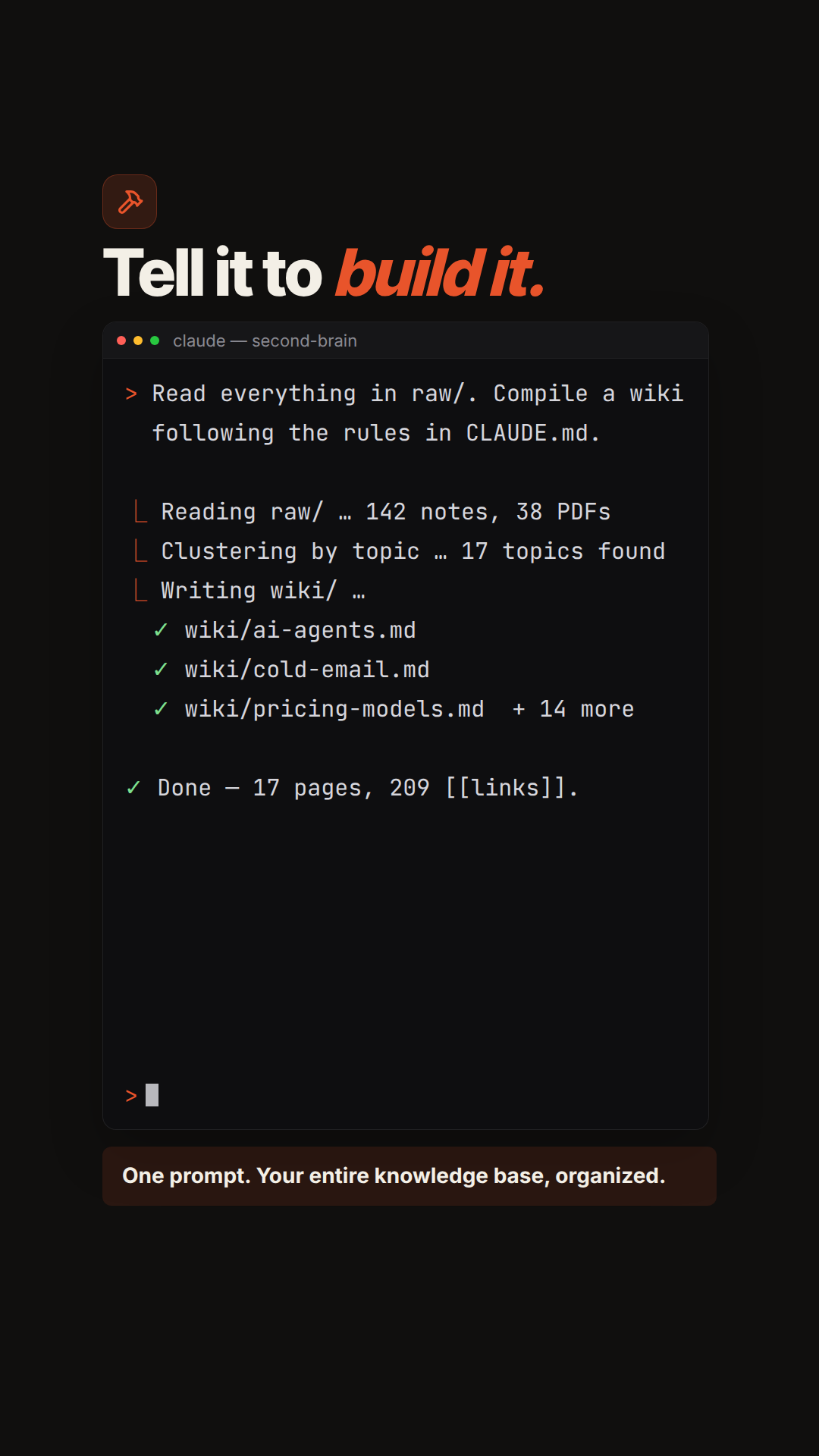
I built a second brain out of three folders and one prompt. No app, no plugin.

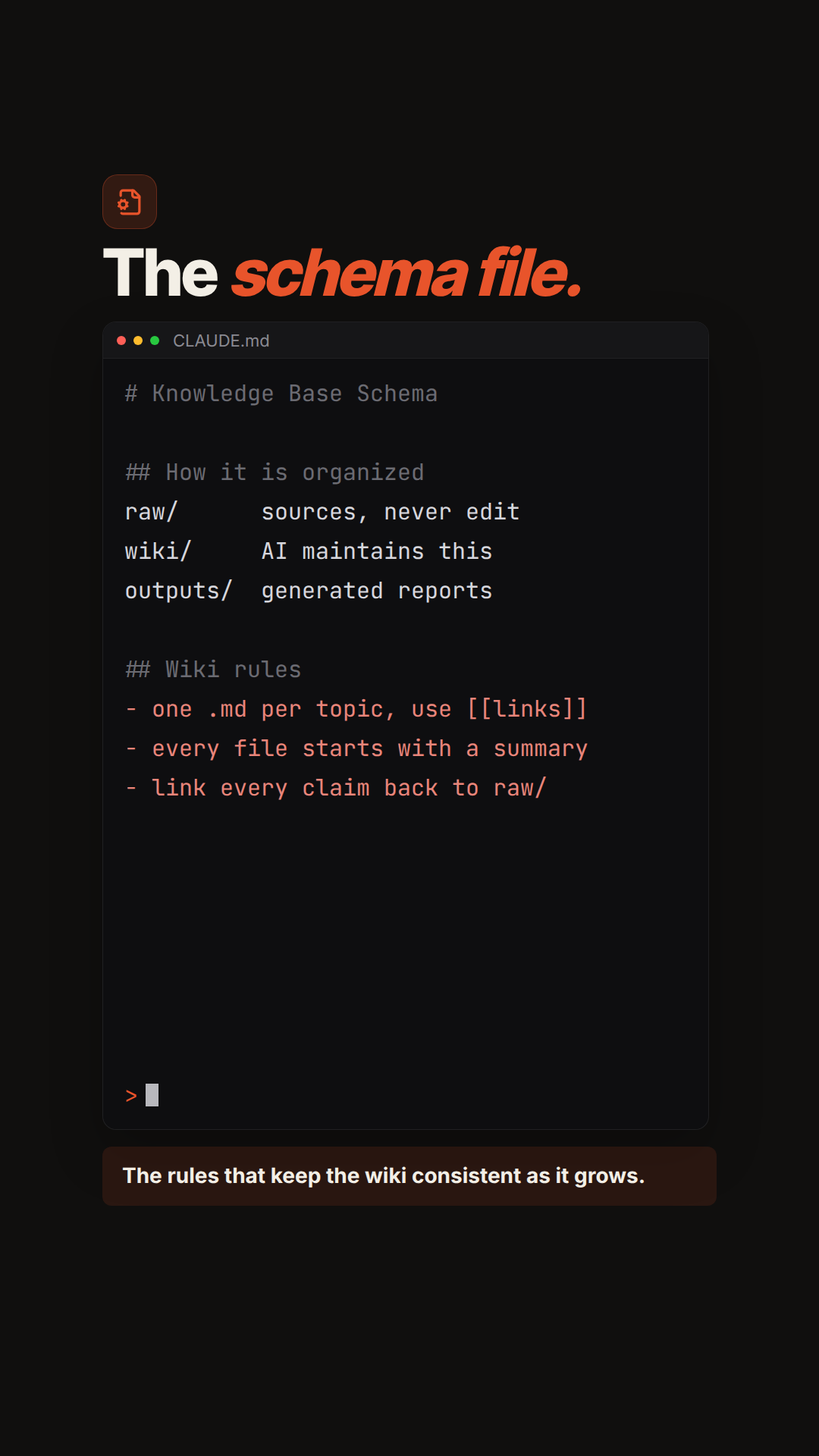
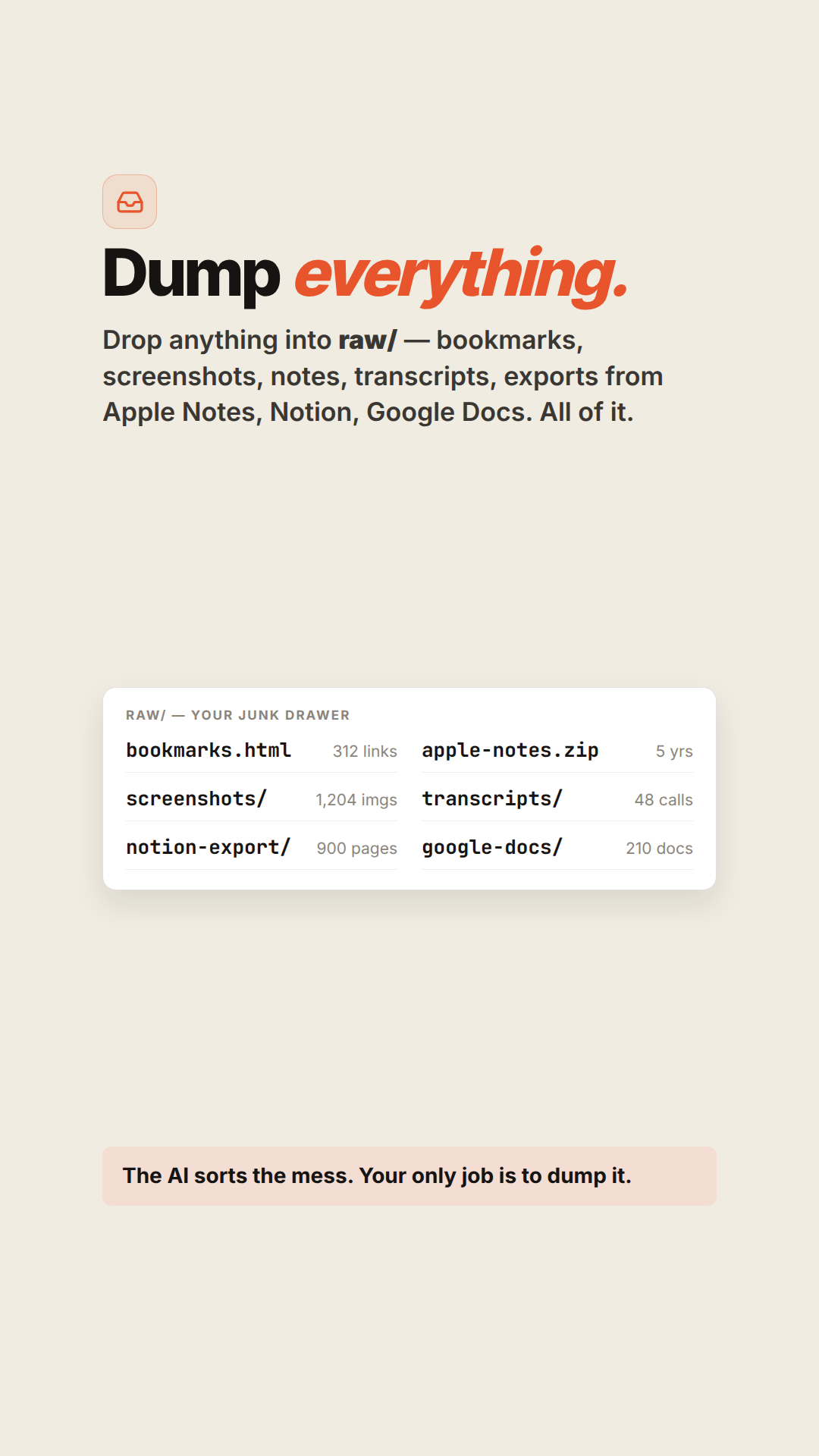
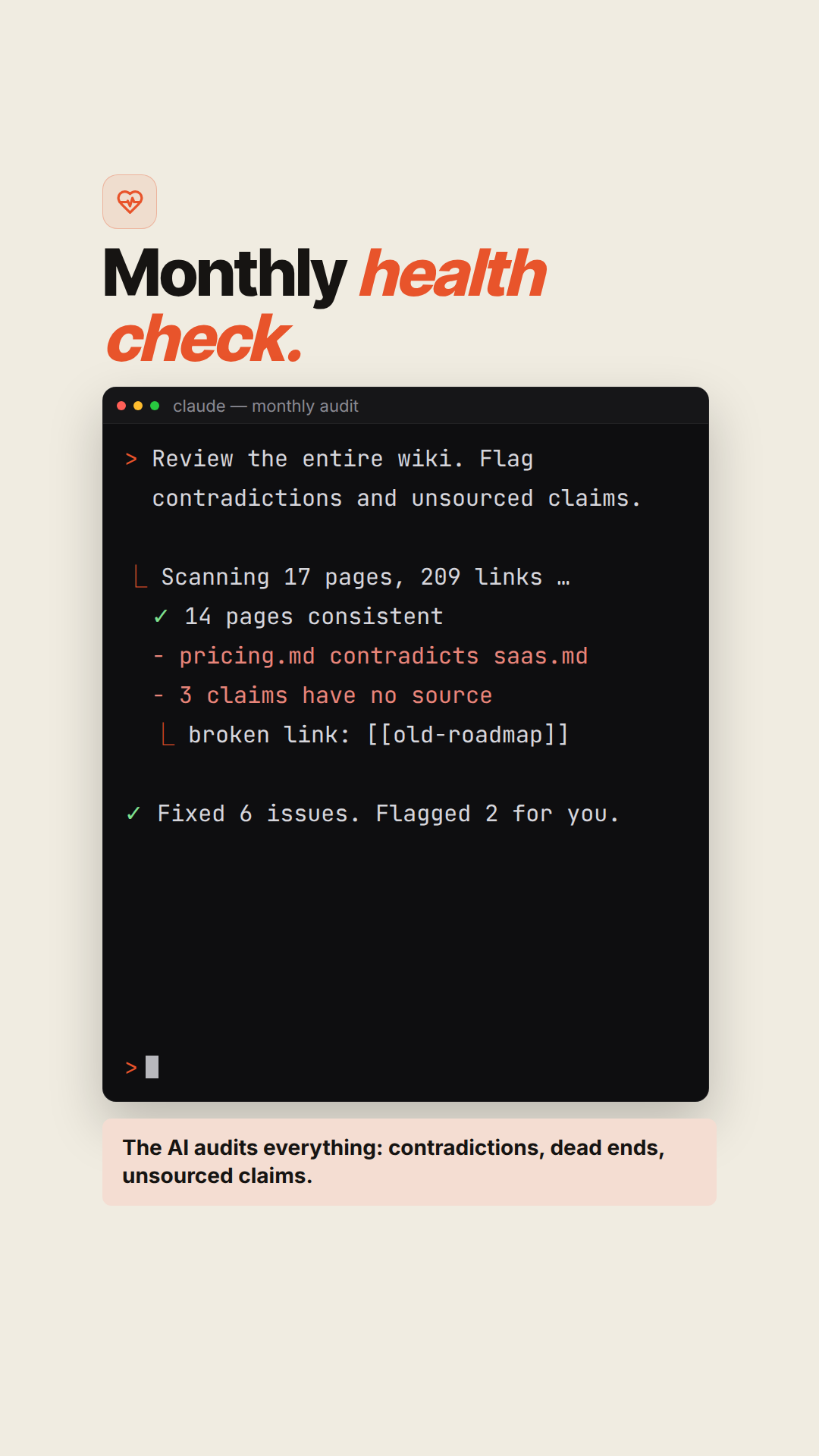
Everything you save lands in raw. The AI sorts the mess into a clean wiki. Anything it generates goes to outputs. One schema file keeps the wiki consistent as it grows.

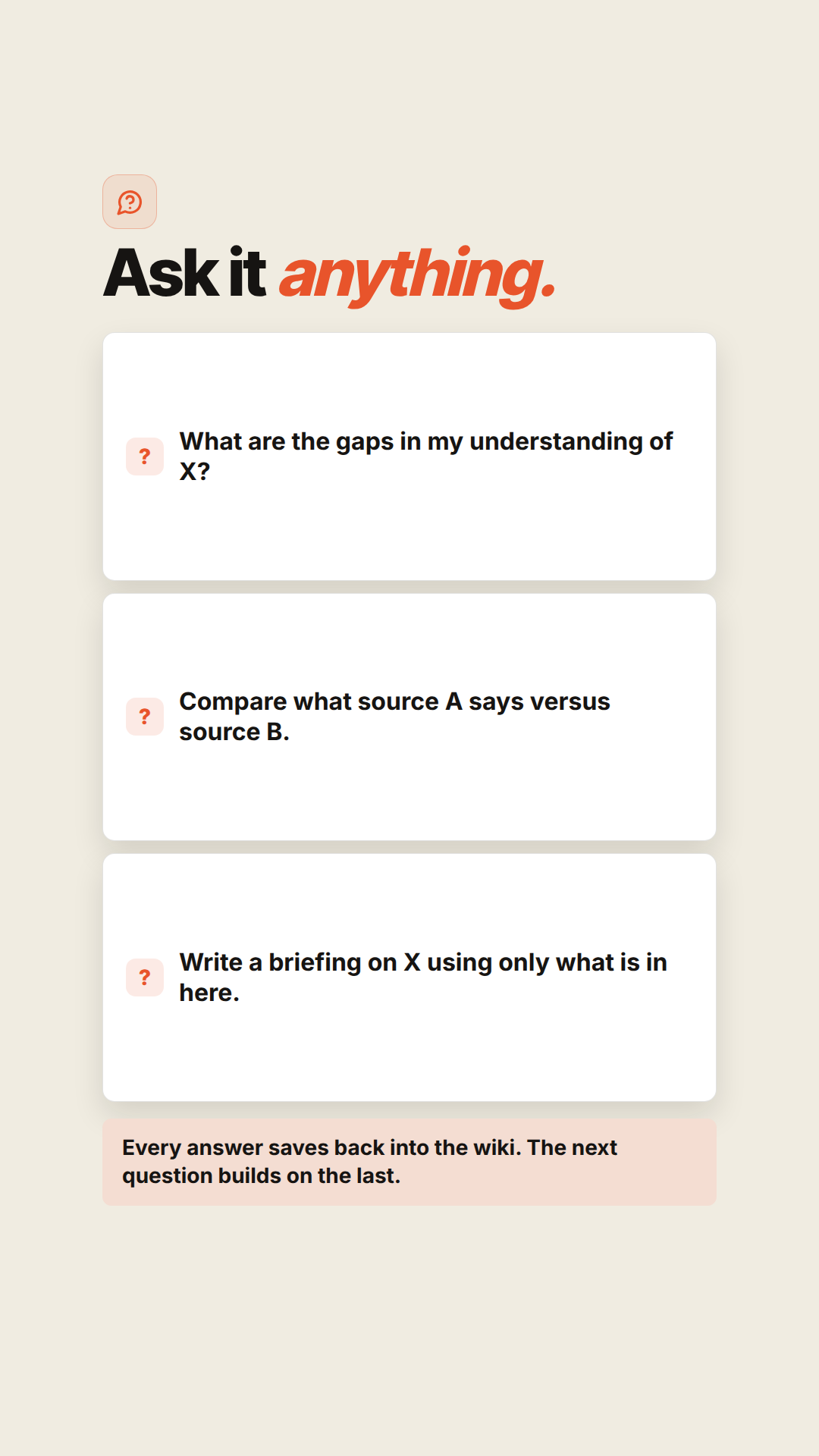
Then you just ask it things. What are the gaps in what I know here. Compare what these two sources say. Write me a briefing from only what is in here. Every answer saves back, so the next question builds on the last.

A brain that gets sharper the more you feed it.

Comment BRAIN and I will send the folder structure, the schema file, and the build prompt.
Give Claude memory
01
02
03
04
05

06
07
Caption
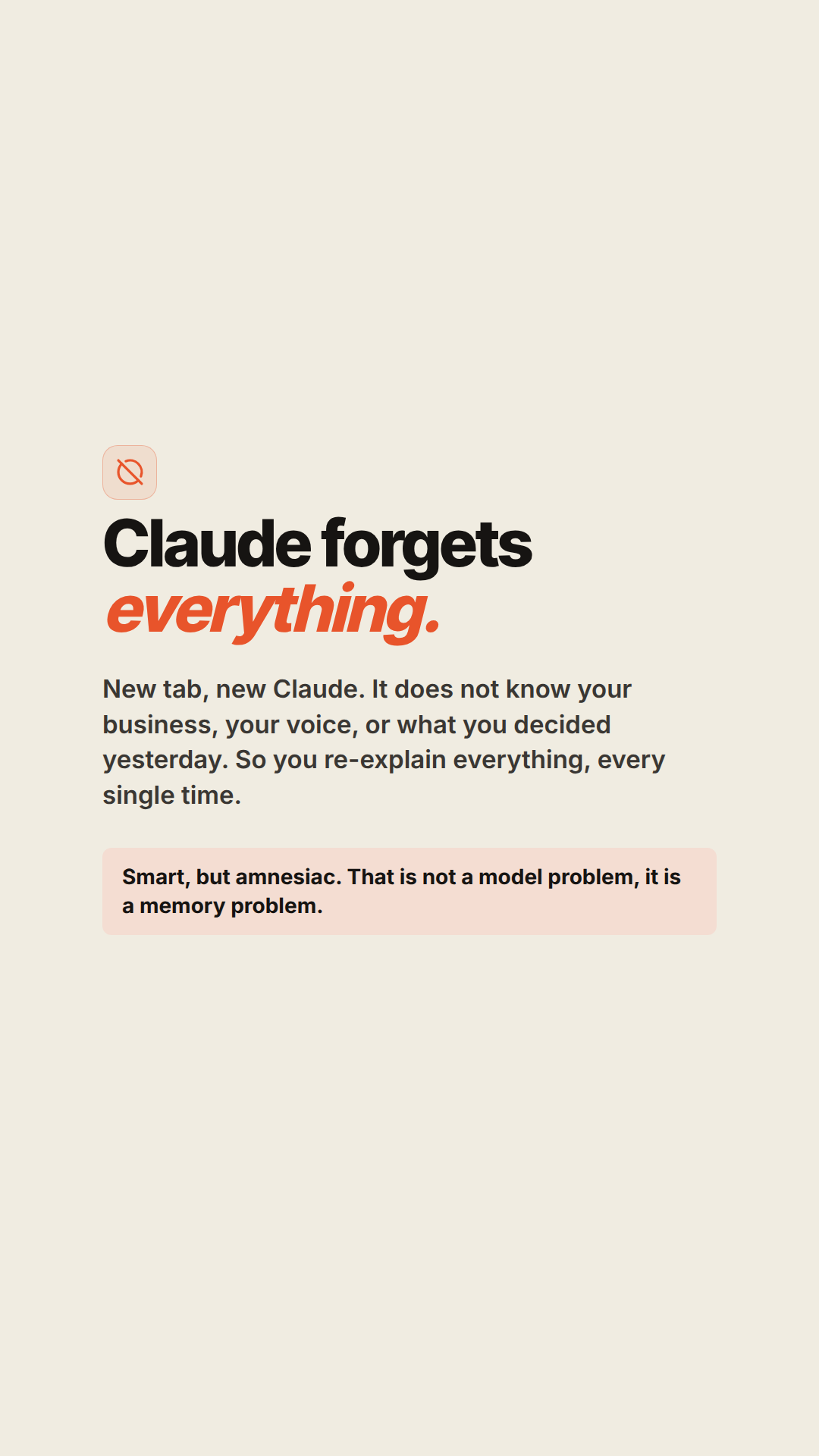
The most annoying thing about AI is re-explaining your project every single session. It does not have to be that way.

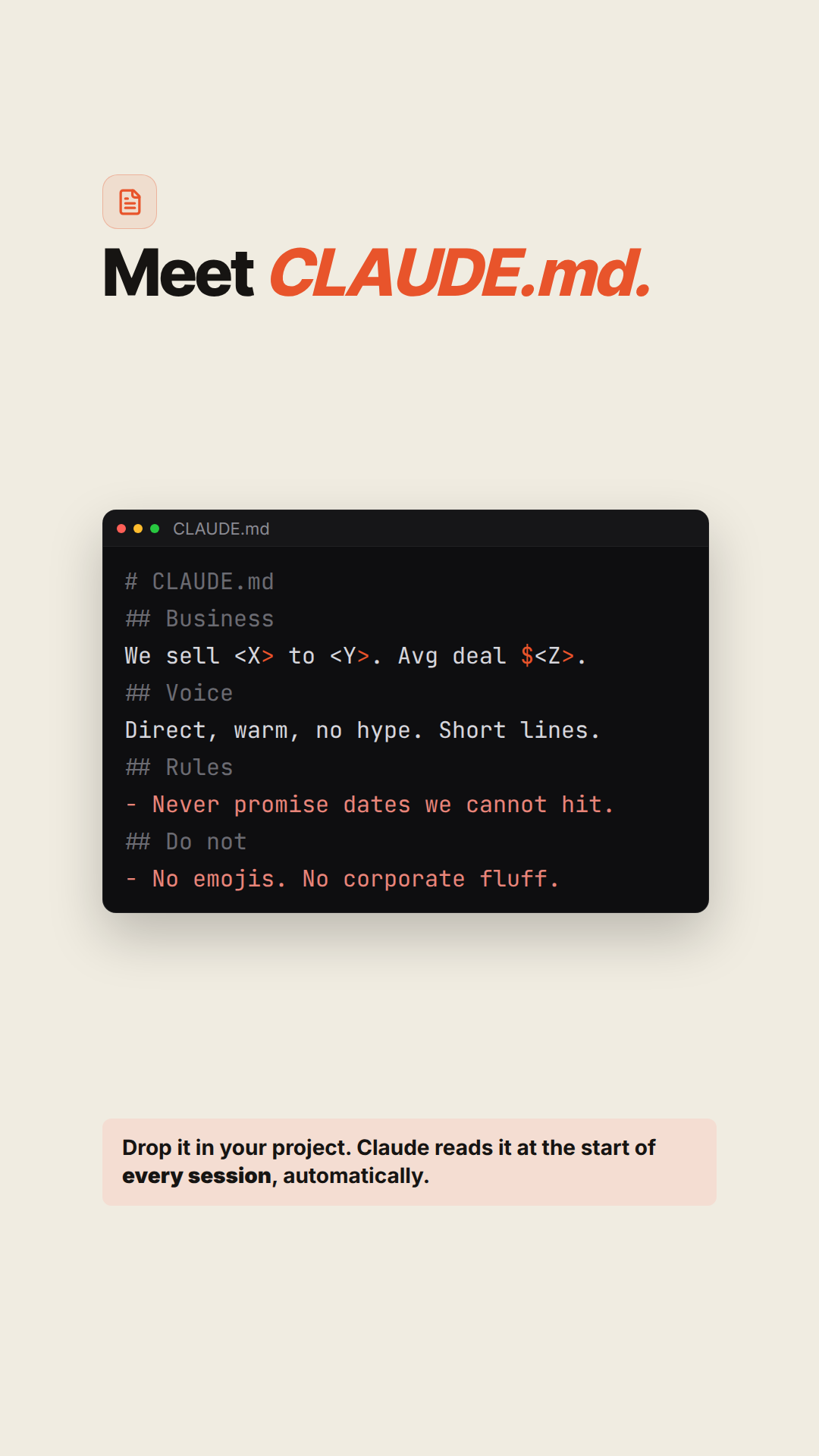
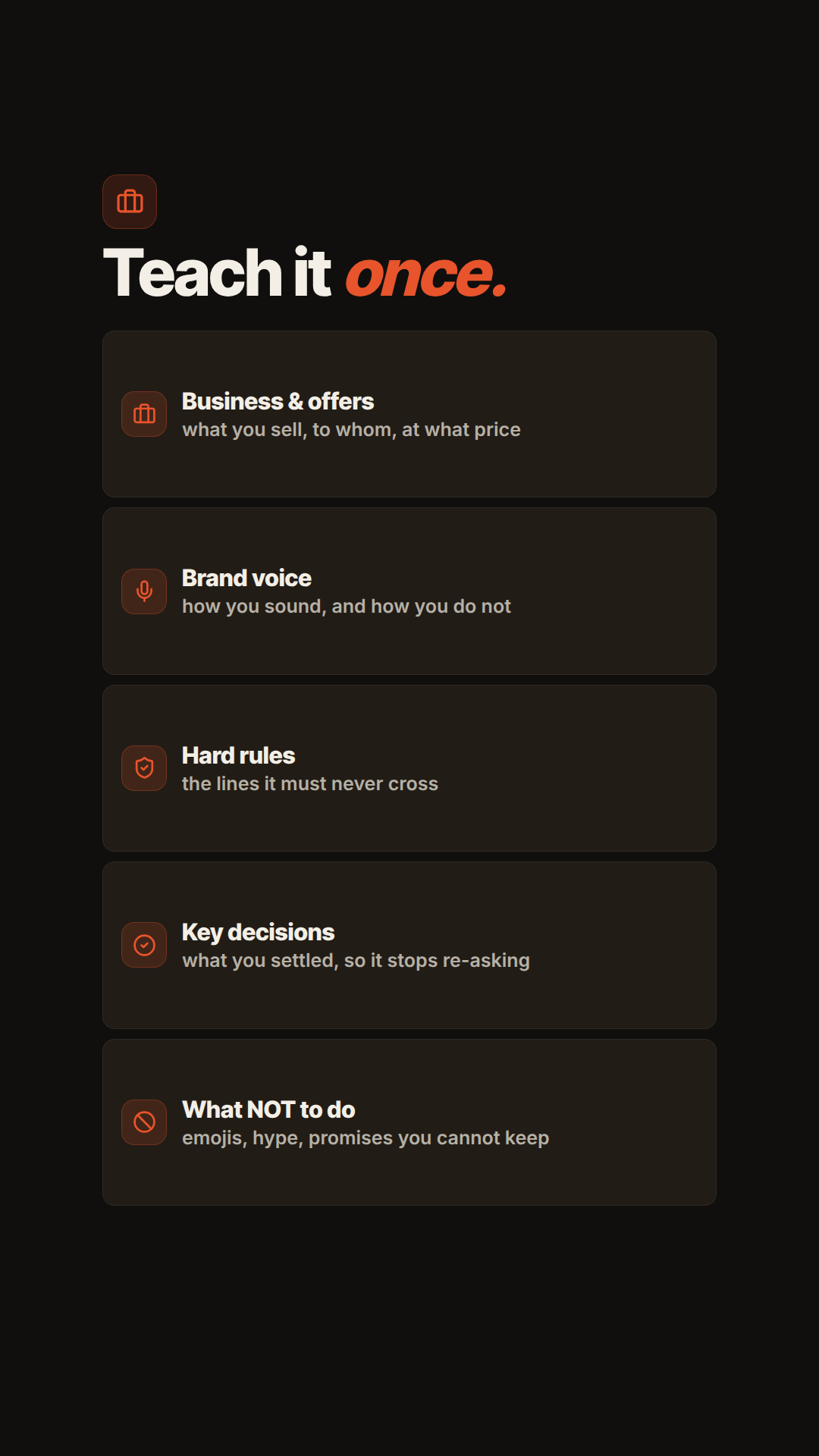
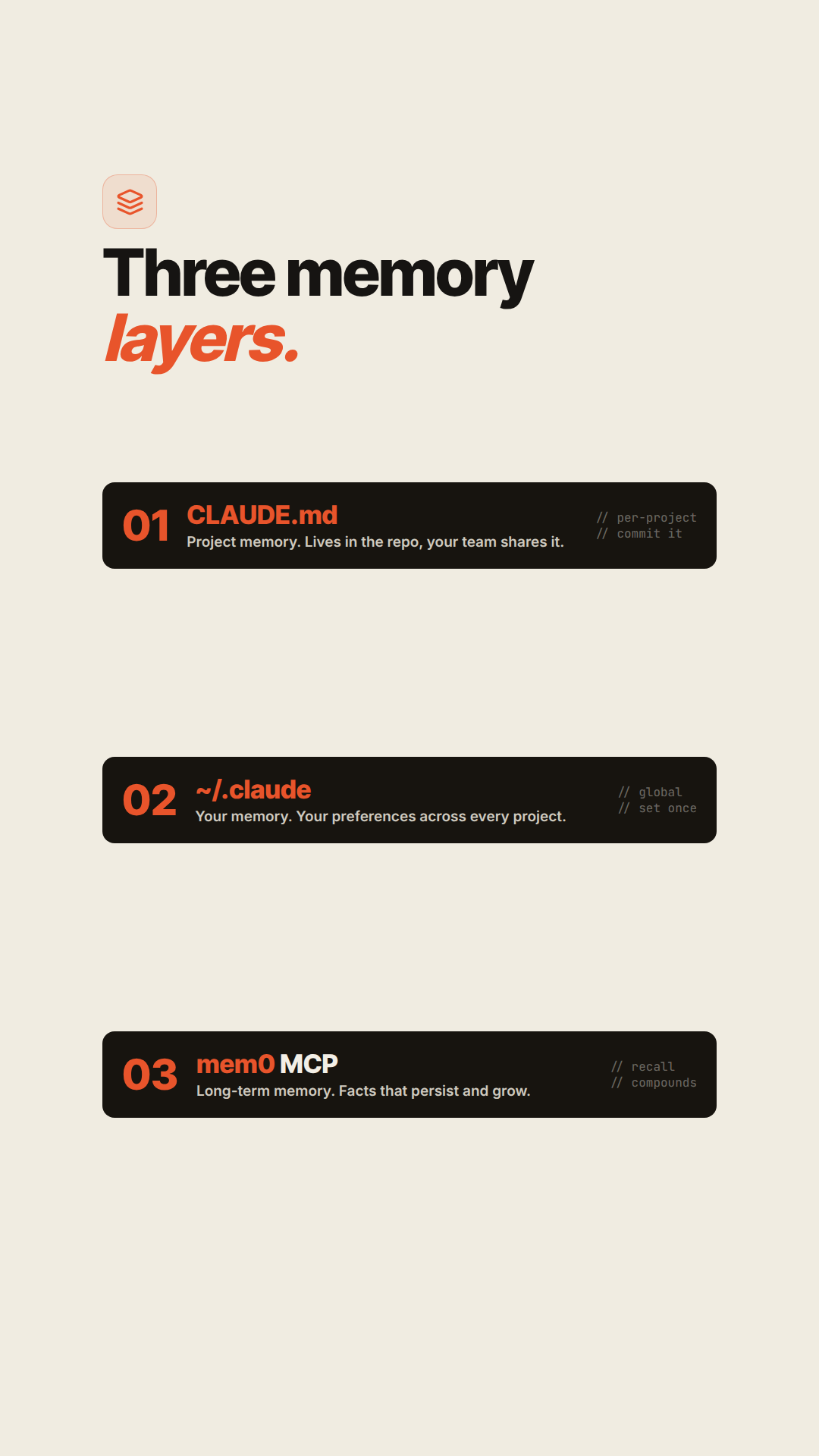
Give Claude real memory. The decisions, the context, the rules get stored and loaded at the start of every session, so it picks up where you left off instead of resetting to a stranger.

The trick is structure, so the memory stays accurate, plus a cleanup so it never rots.

Comment MEMORY and I will send the setup and the session routine.
Make Claude sound human
01
02
03
04
05

06
Caption
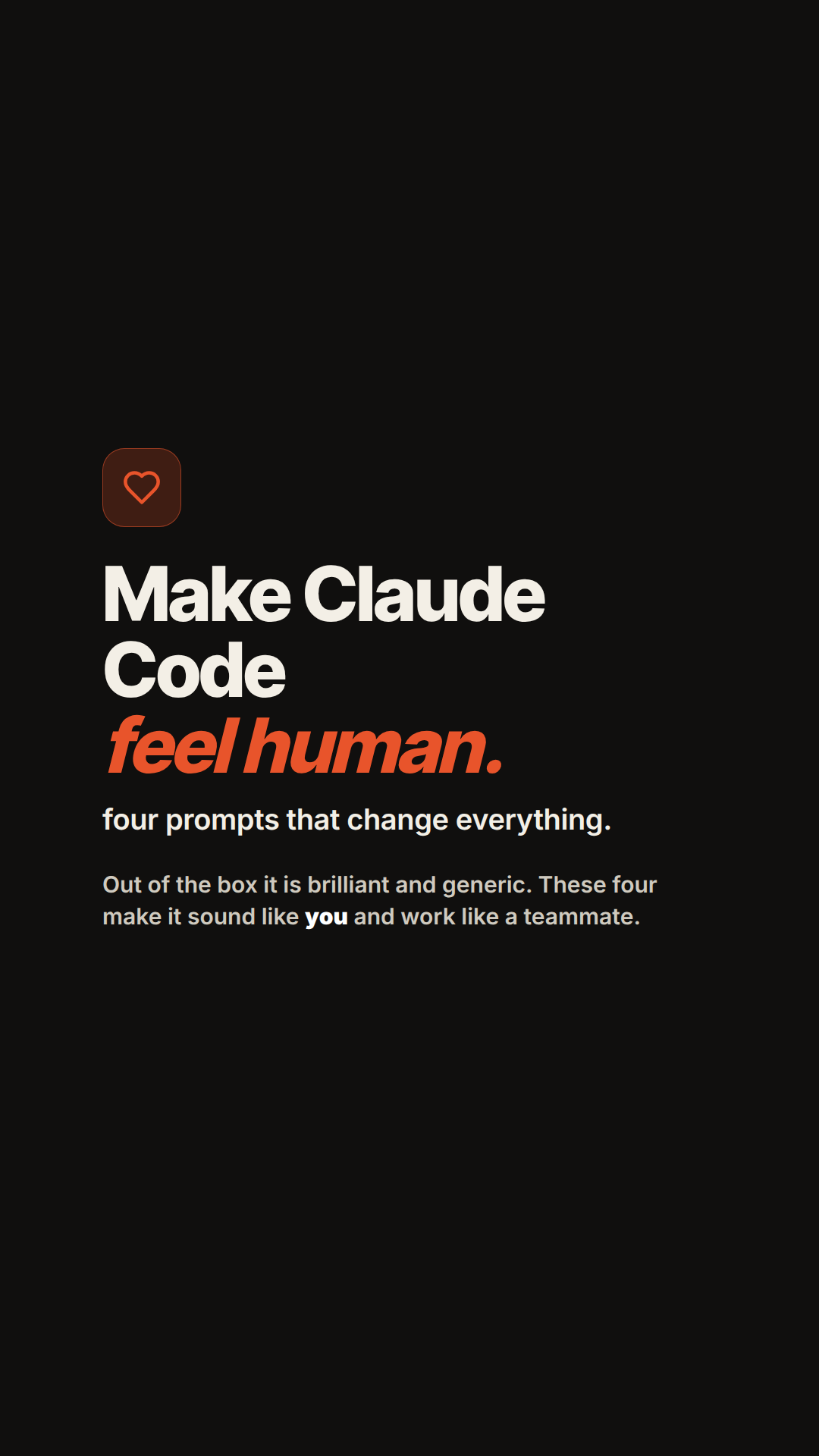
Out of the box Claude is brilliant and completely generic. Four prompts fix that.

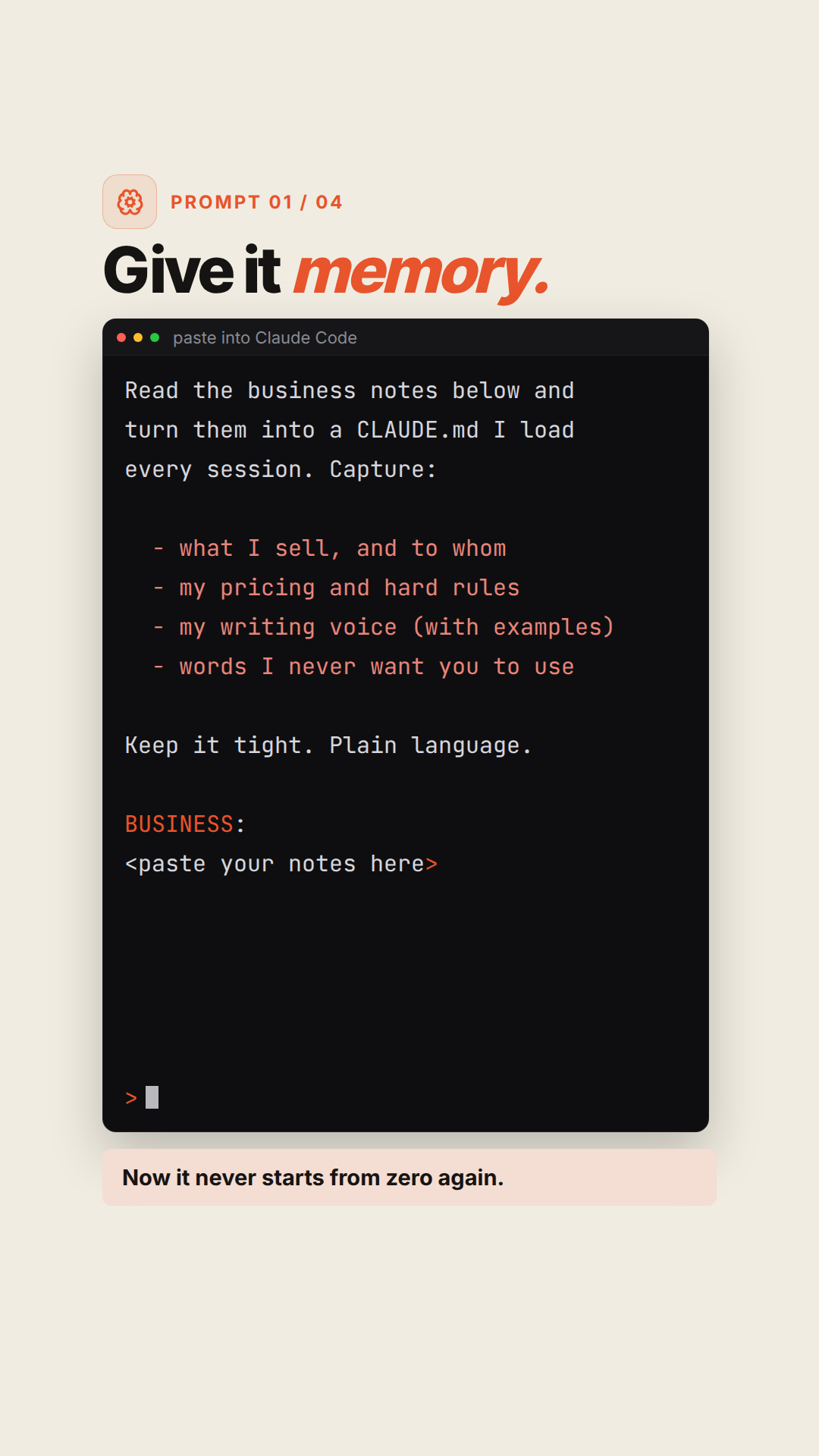
The first gives it memory of your business, so it never starts from zero.
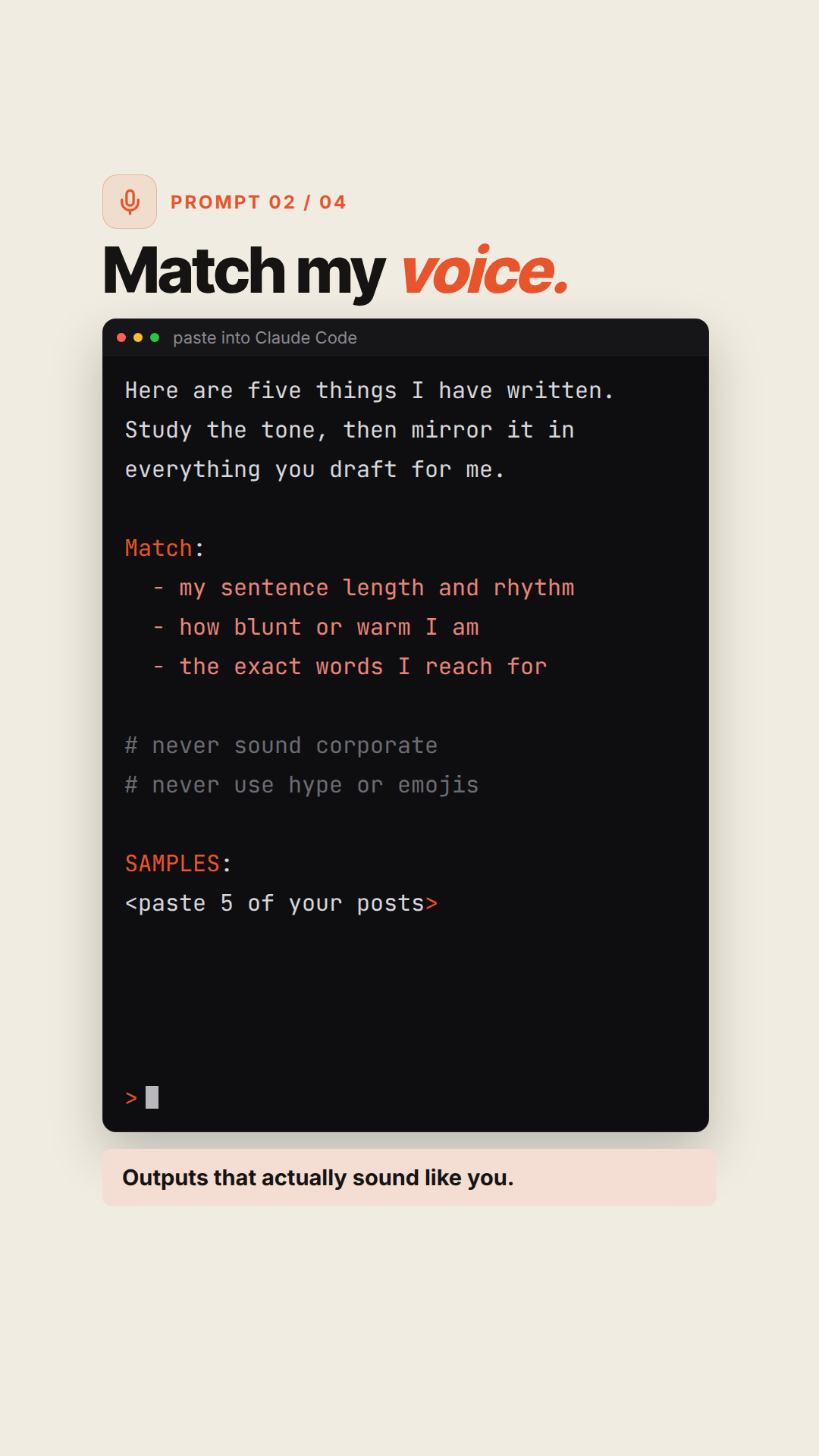
The second studies how you write and mirrors your voice, so drafts sound like you wrote them.
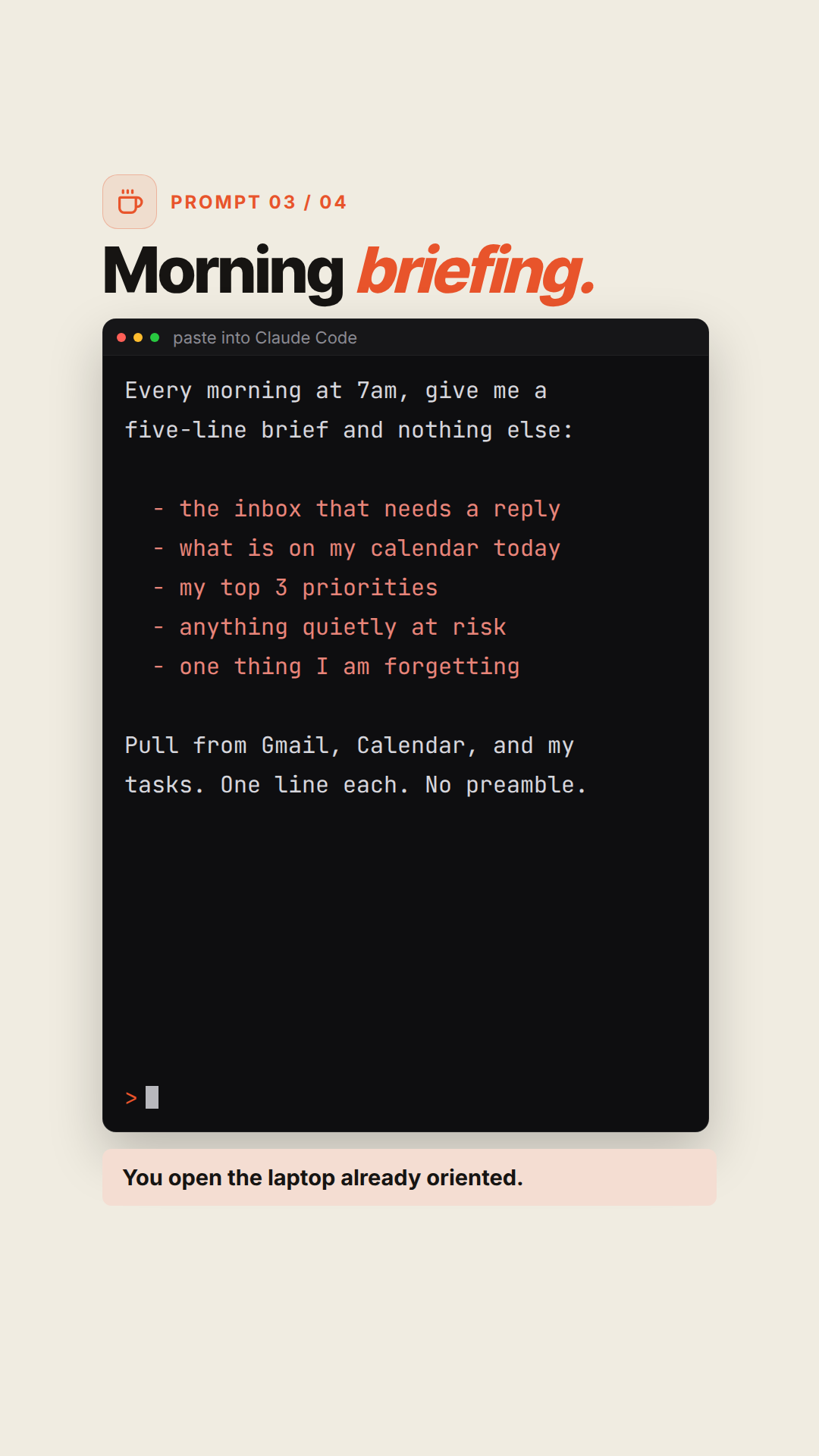
The third hands you a five line morning brief, so you open the laptop already oriented.
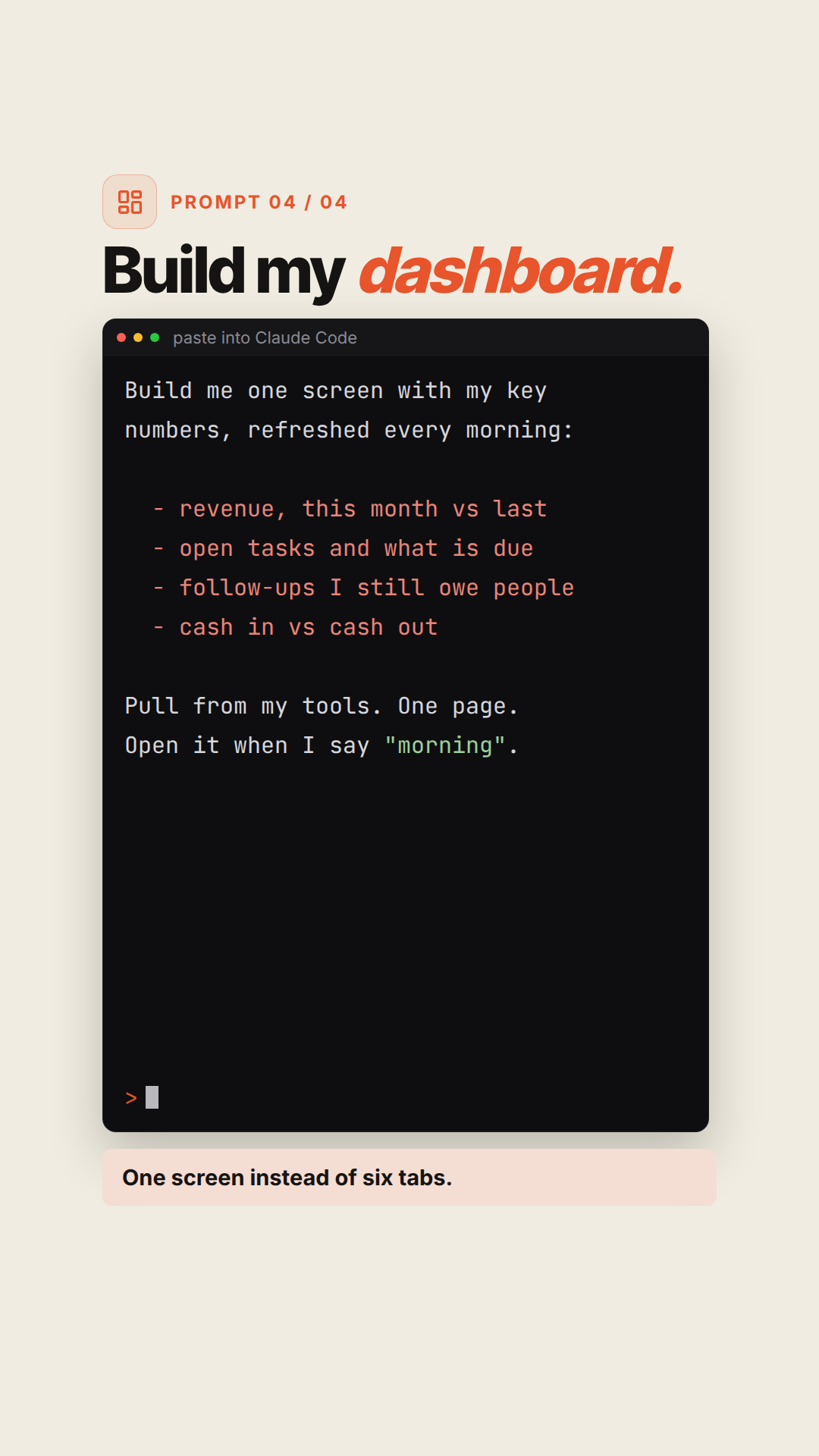
The fourth builds you one dashboard instead of six tabs.

Four prompts and it stops being an assistant and starts being a teammate.

Comment HUMAN and I will send all four, ready to paste.
Top 50 Claude prompts
01
02
03
04
05
06

07
Caption
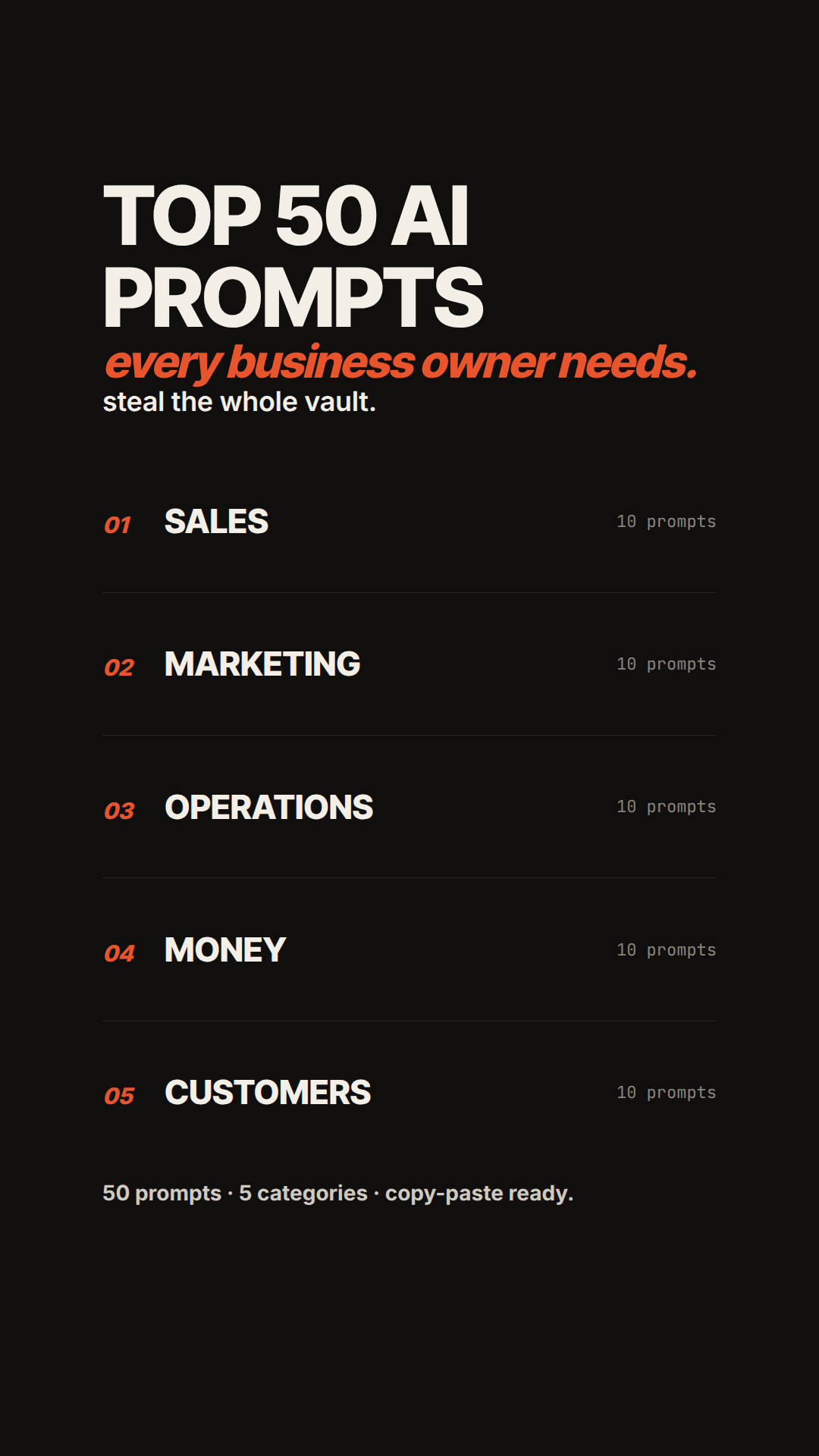
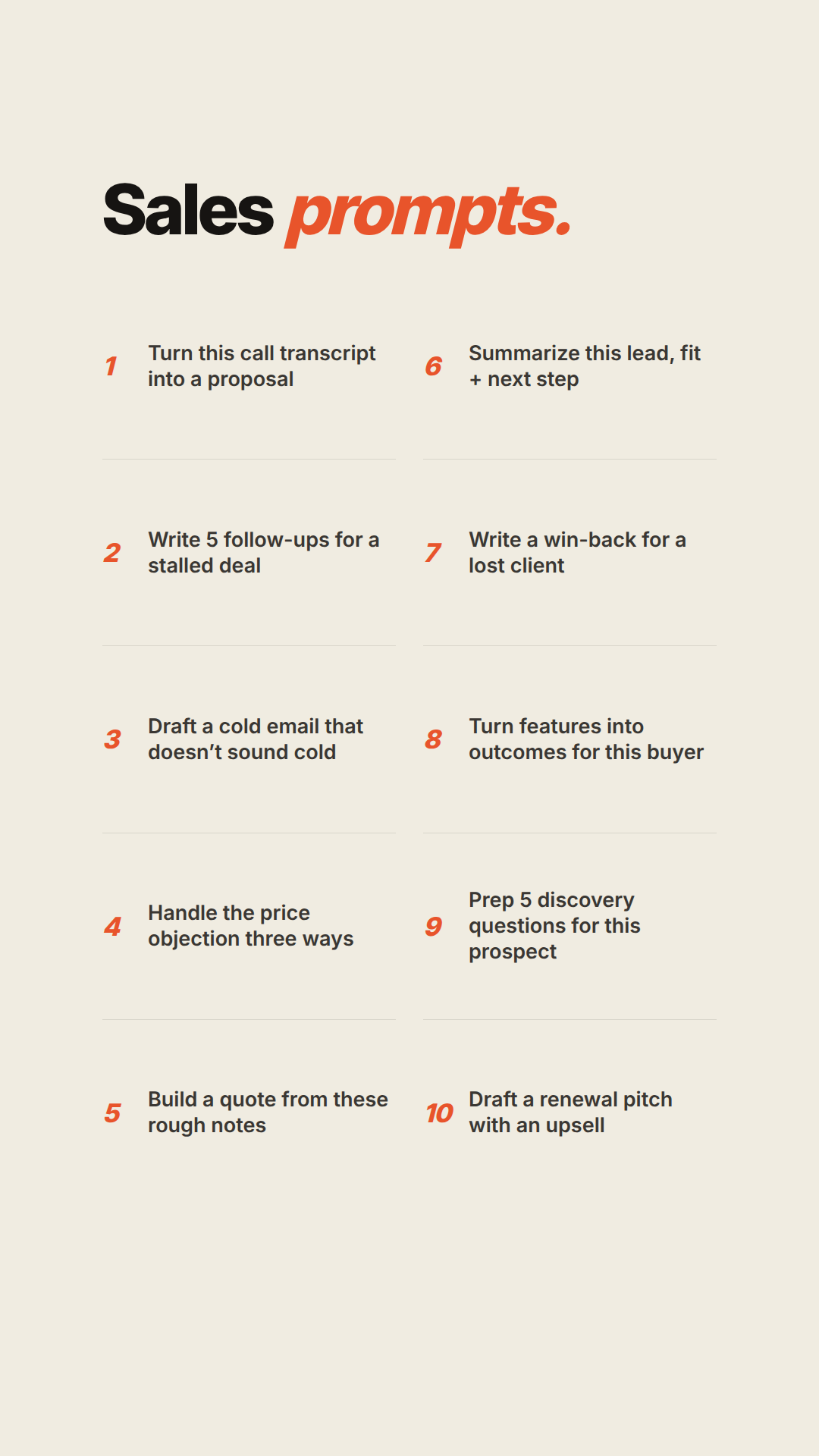
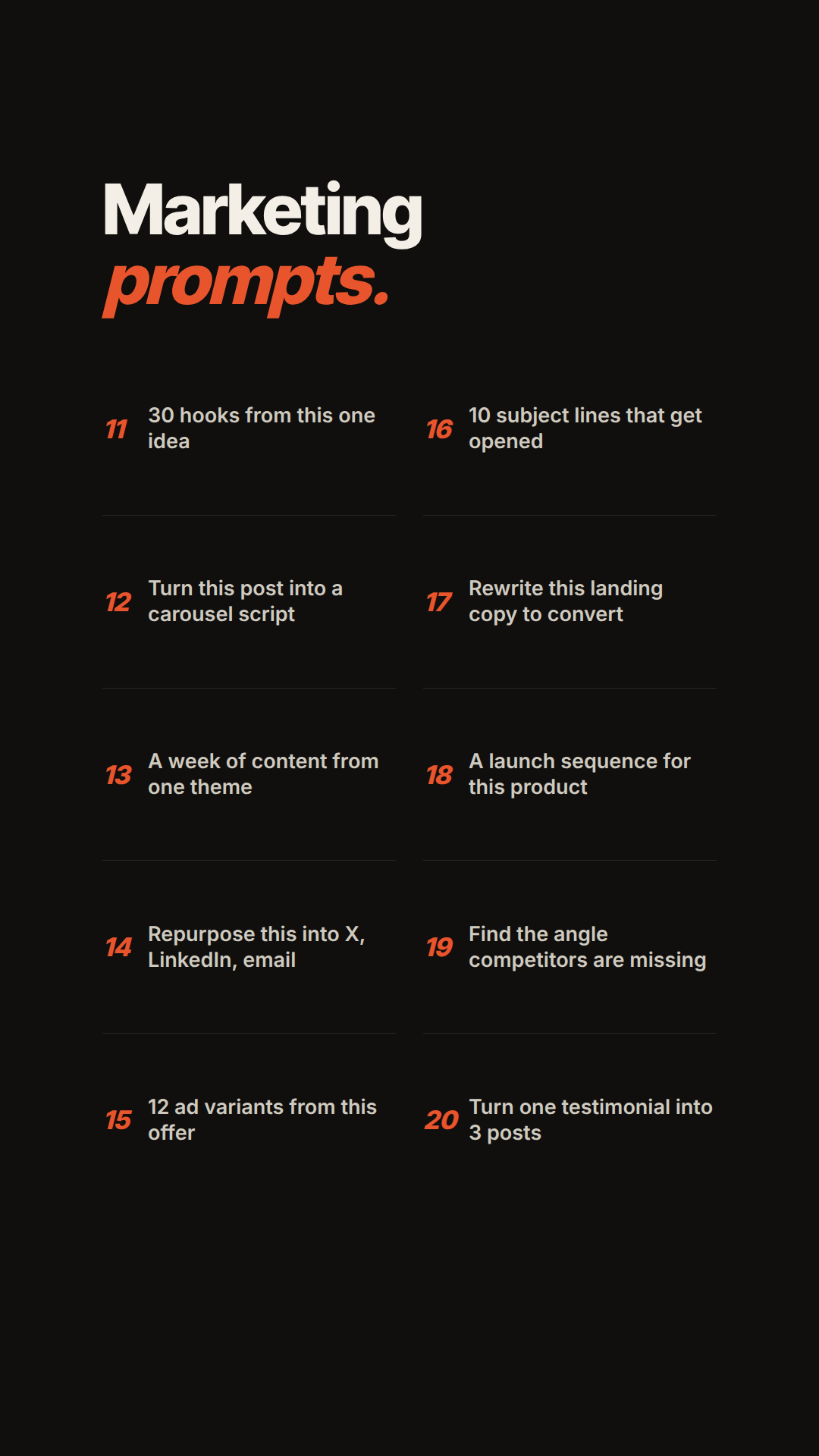
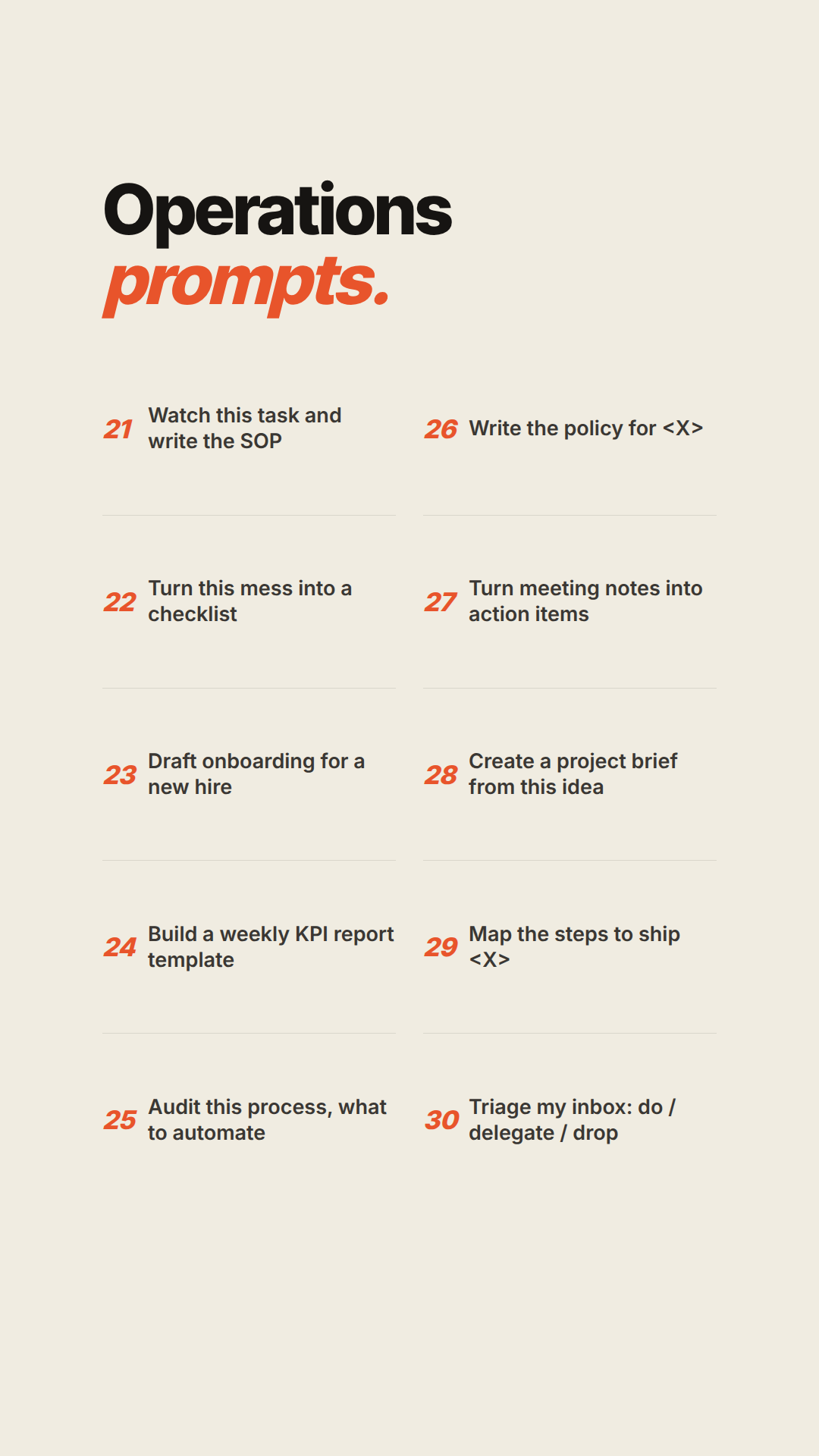
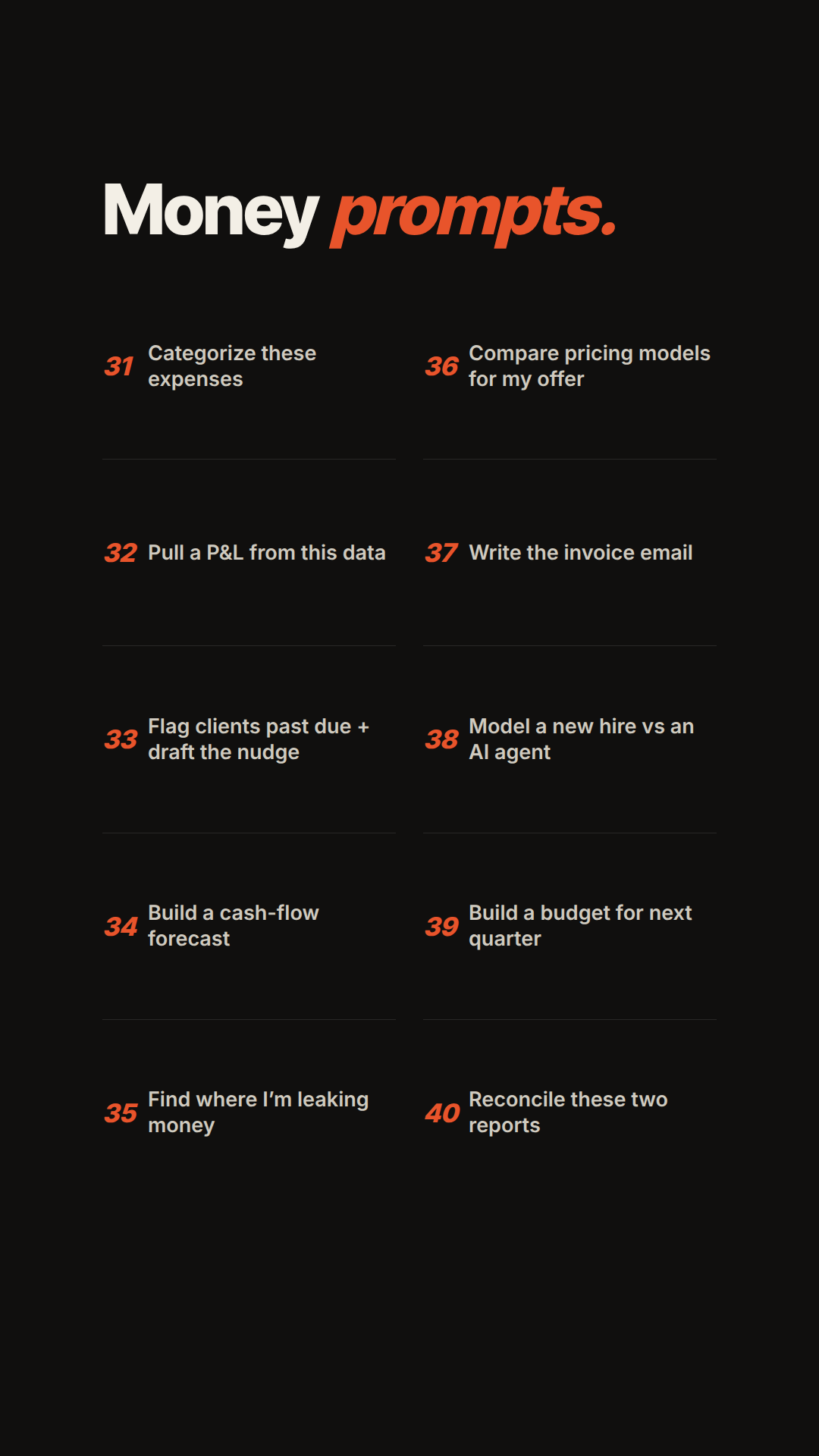
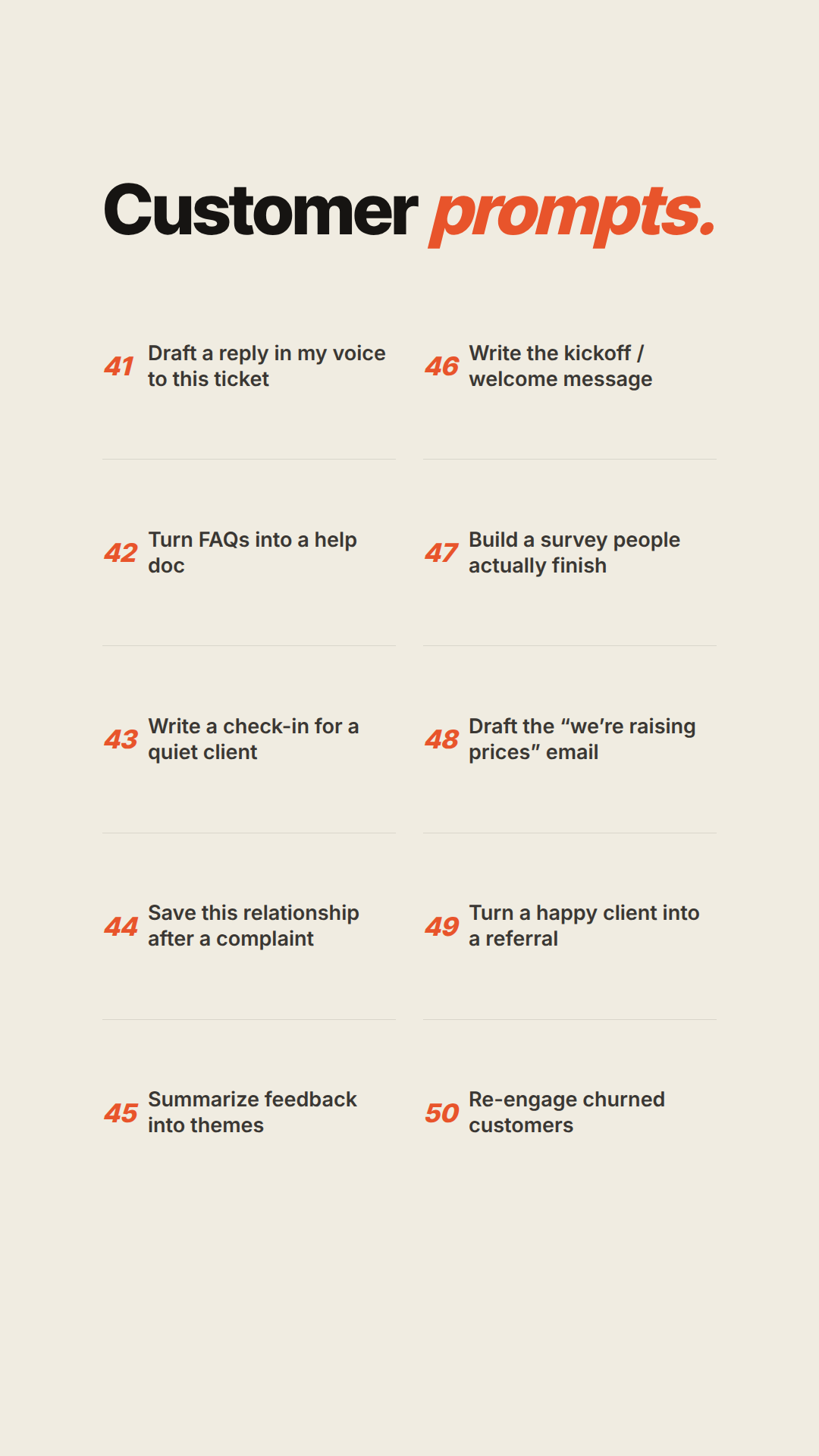
Fifty prompts every business owner should have saved, sorted into the five jobs you actually do.

Sales: a call into a proposal, the follow up that lands, the objection handled three ways.
Marketing: thirty hooks from one idea, a week of content from one theme.
Operations: the SOP, the checklist, the process audit.
Money: the P and L, the leak finder, the forecast.
Customers: the reply in your voice, the win back, the referral ask.

Stop reinventing the same request daily. Run your week on a set you trust.

Comment 50 and I will send the full fifty, copy and paste, by category.
Meta ads with Claude
01
02
03
04
05
06
07
08
Caption
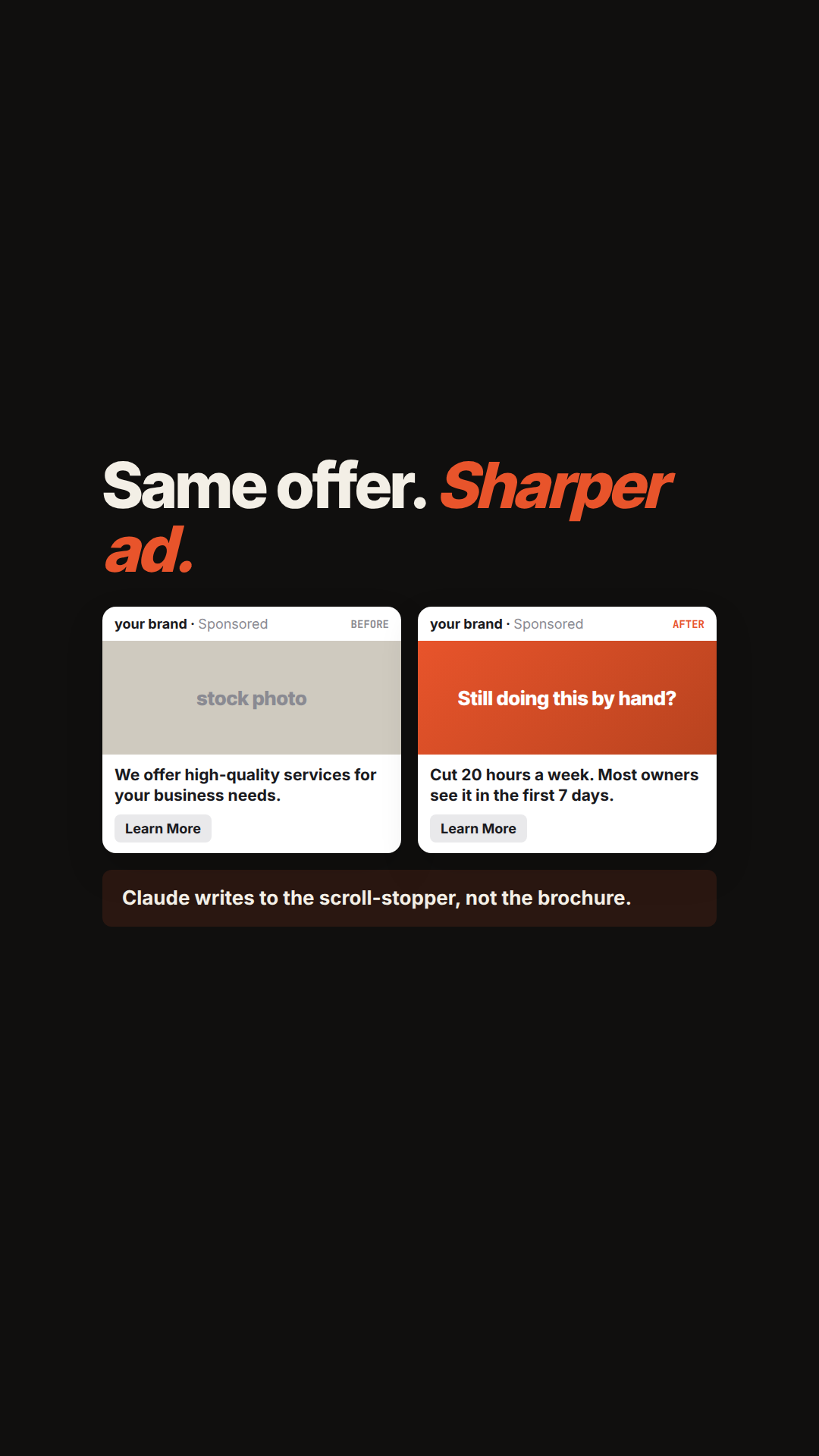
Staring at a blank ads manager is where most ad budgets quietly die. Here is how I fill it with Claude.

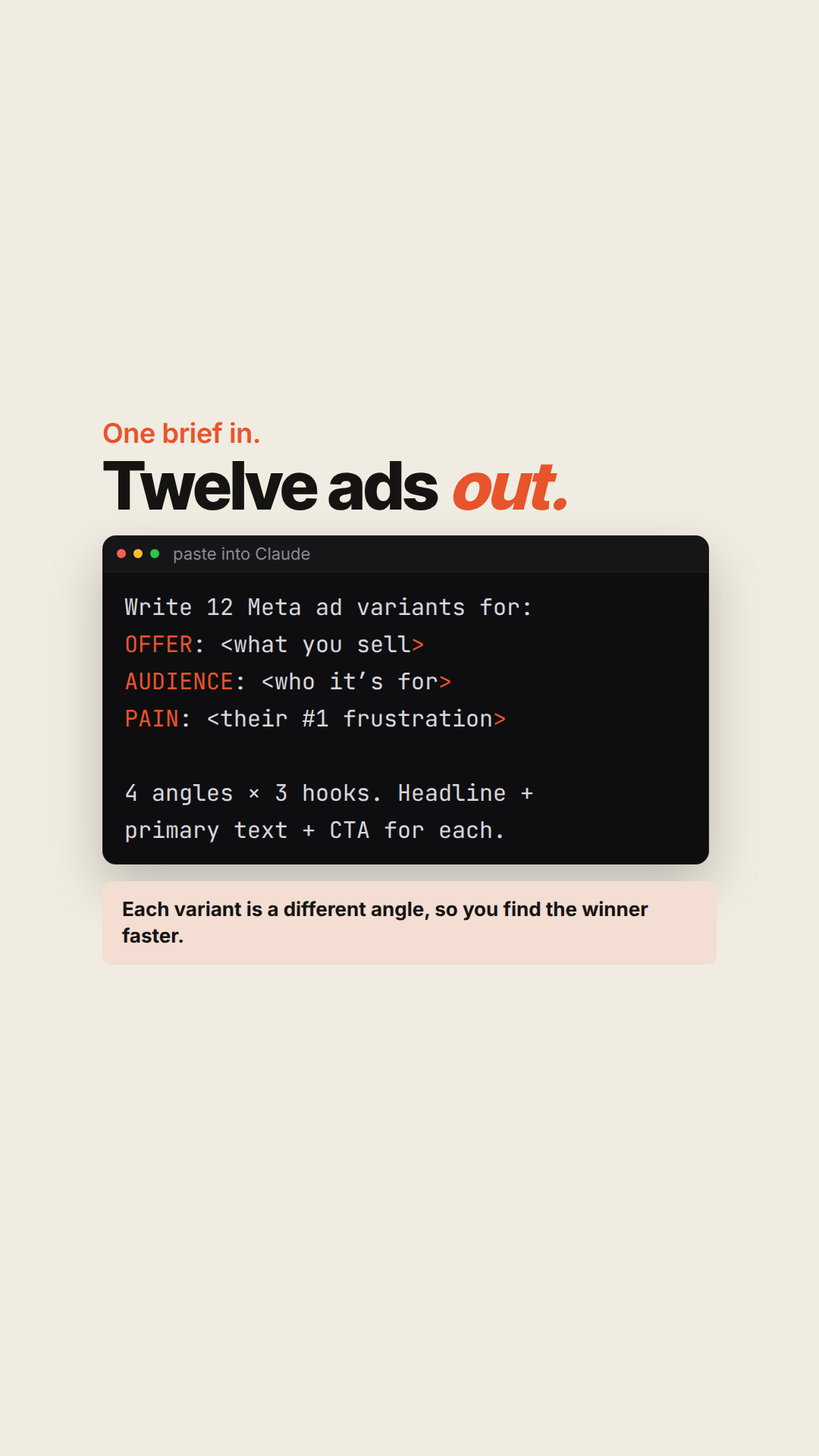
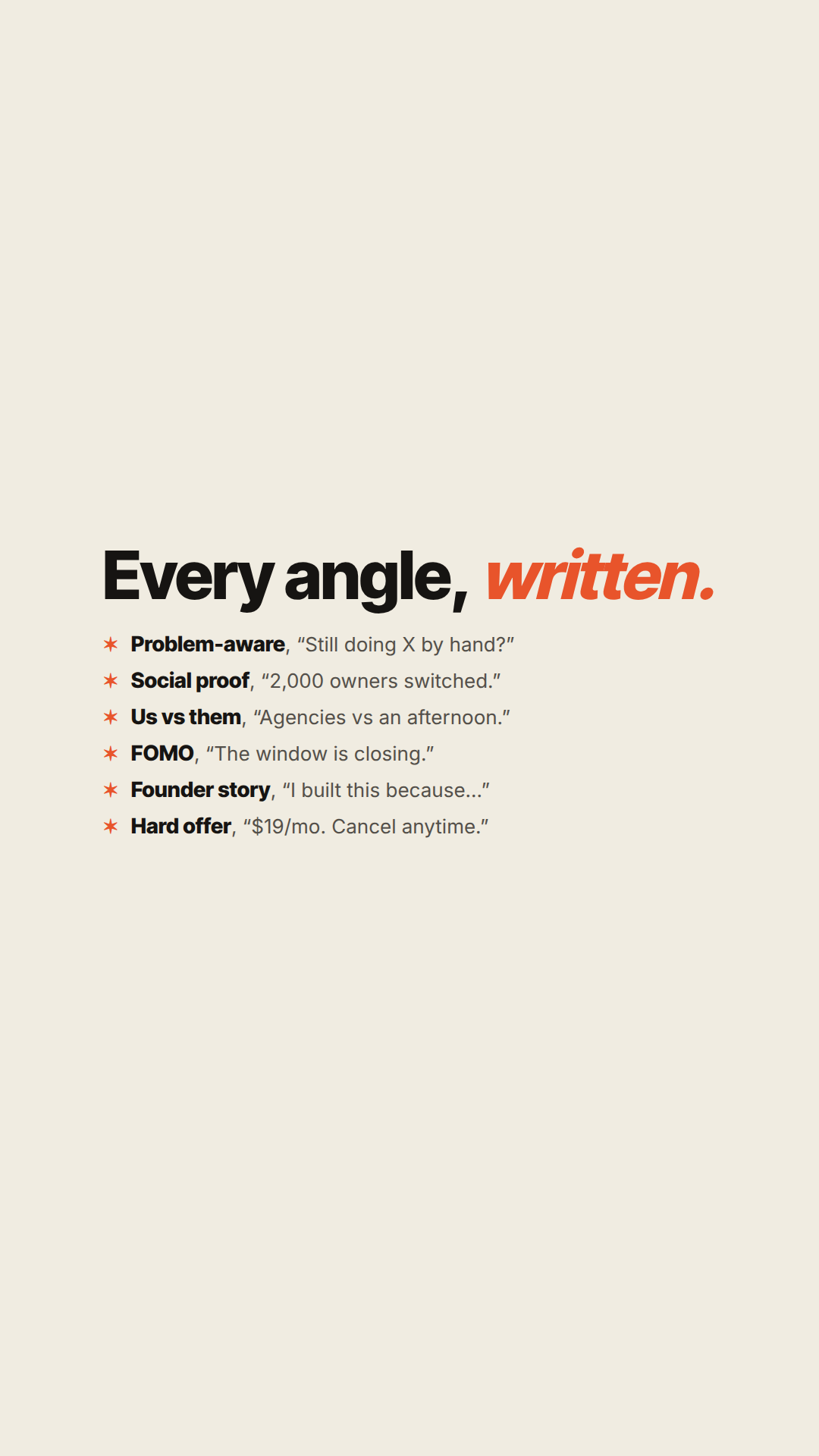
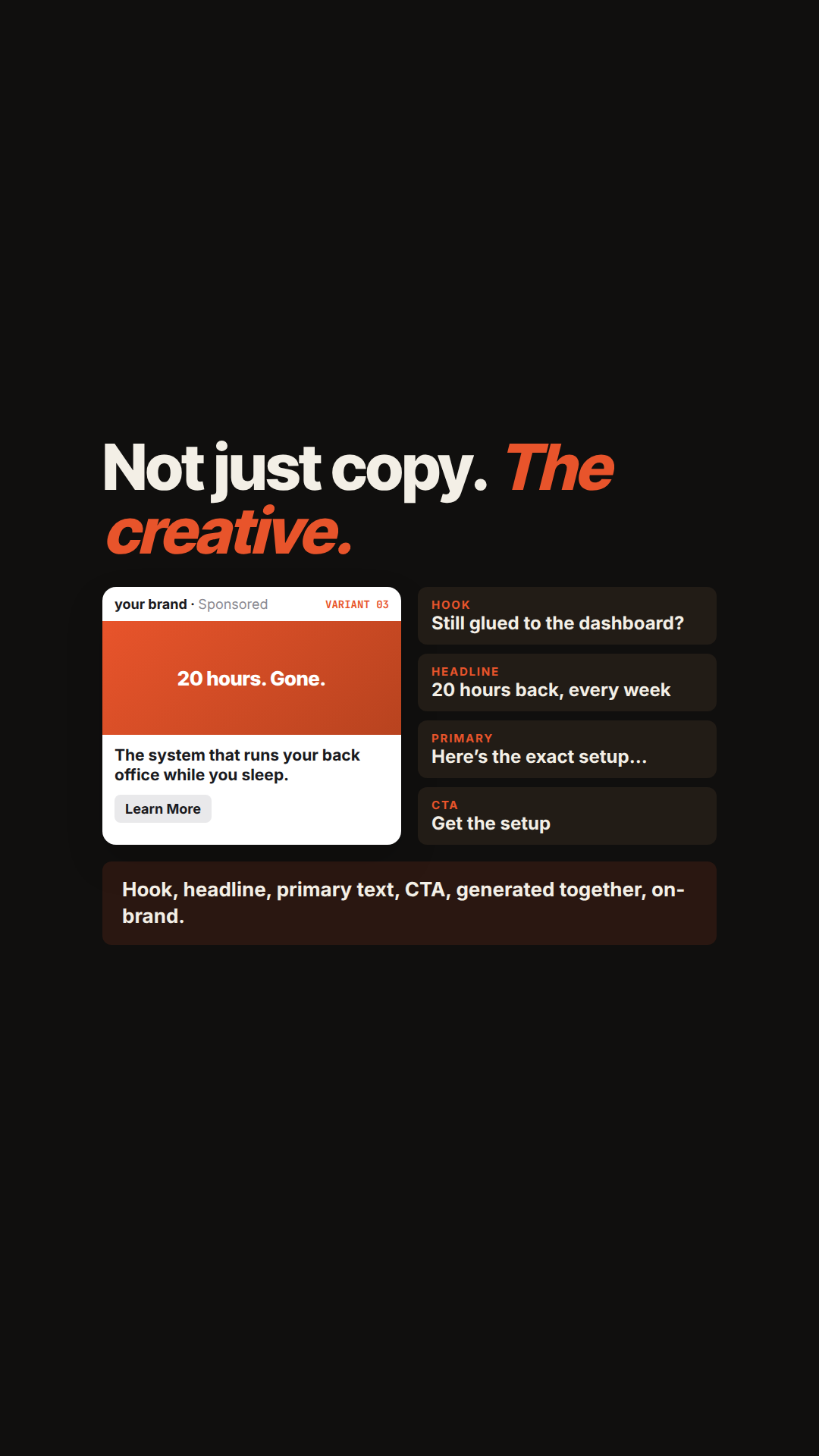
It writes the angles first. The actual reasons someone stops scrolling, not just clever lines. Then a batch of hooks and variations to test. Then the structure of a creative that converts, not one that only looks nice.

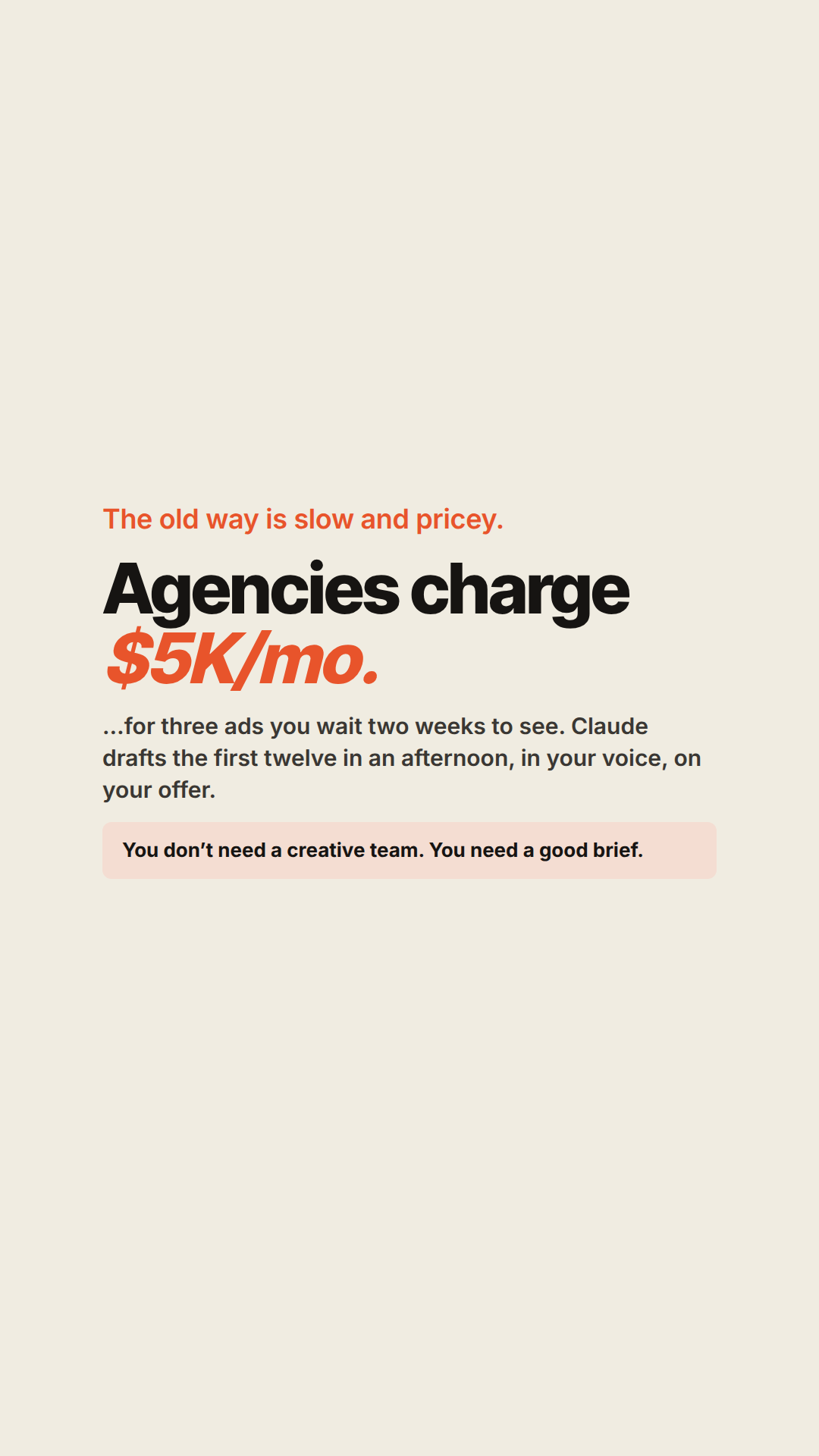
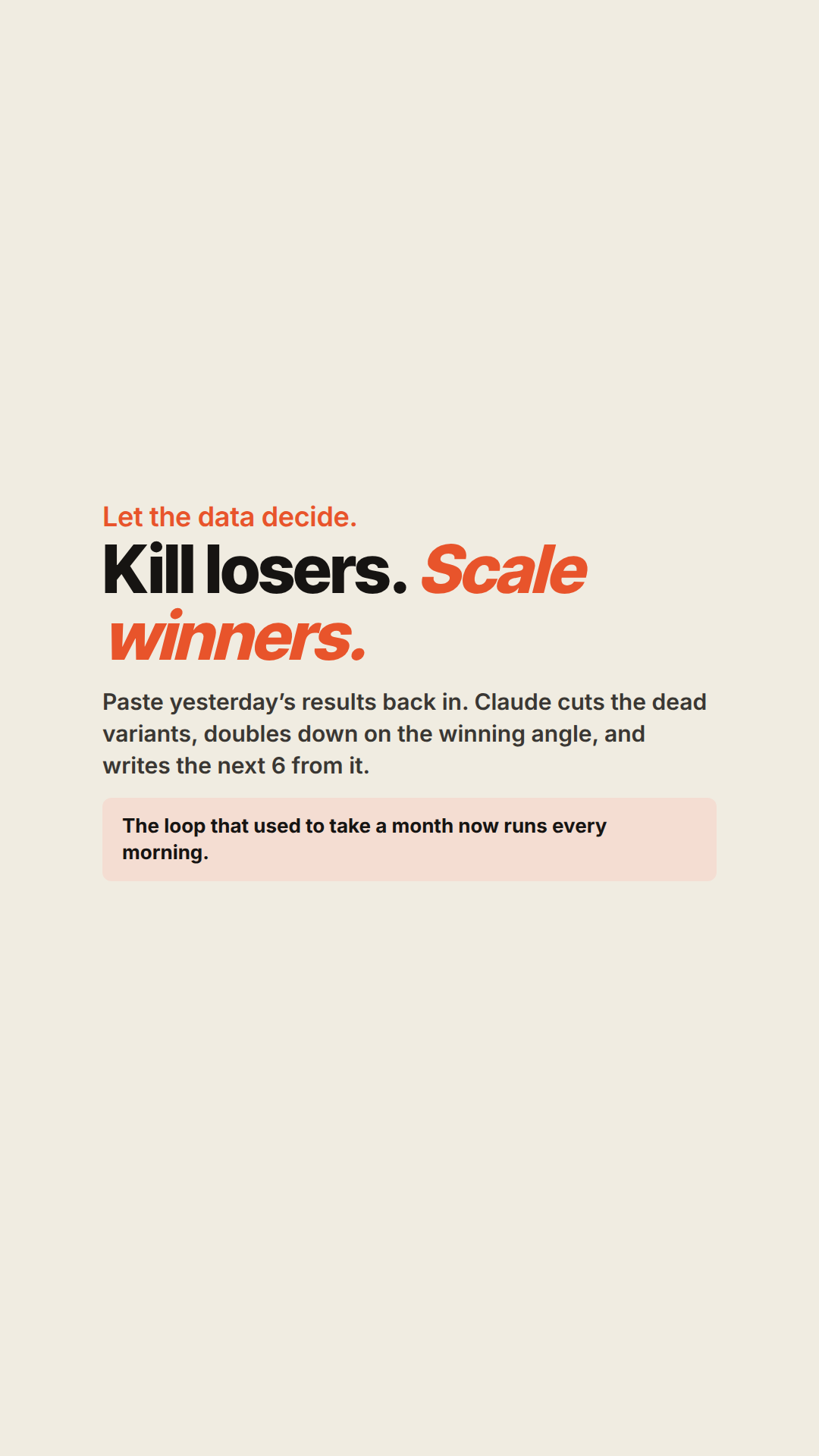
You ship a batch in one sitting, test, and let the winners tell you where to scale. No agency, no media buyer to start.

Comment ADS and I will send the ad prompt pack and the testing routine.
Stop paying for software II

01
02

03
04
05

06
Caption
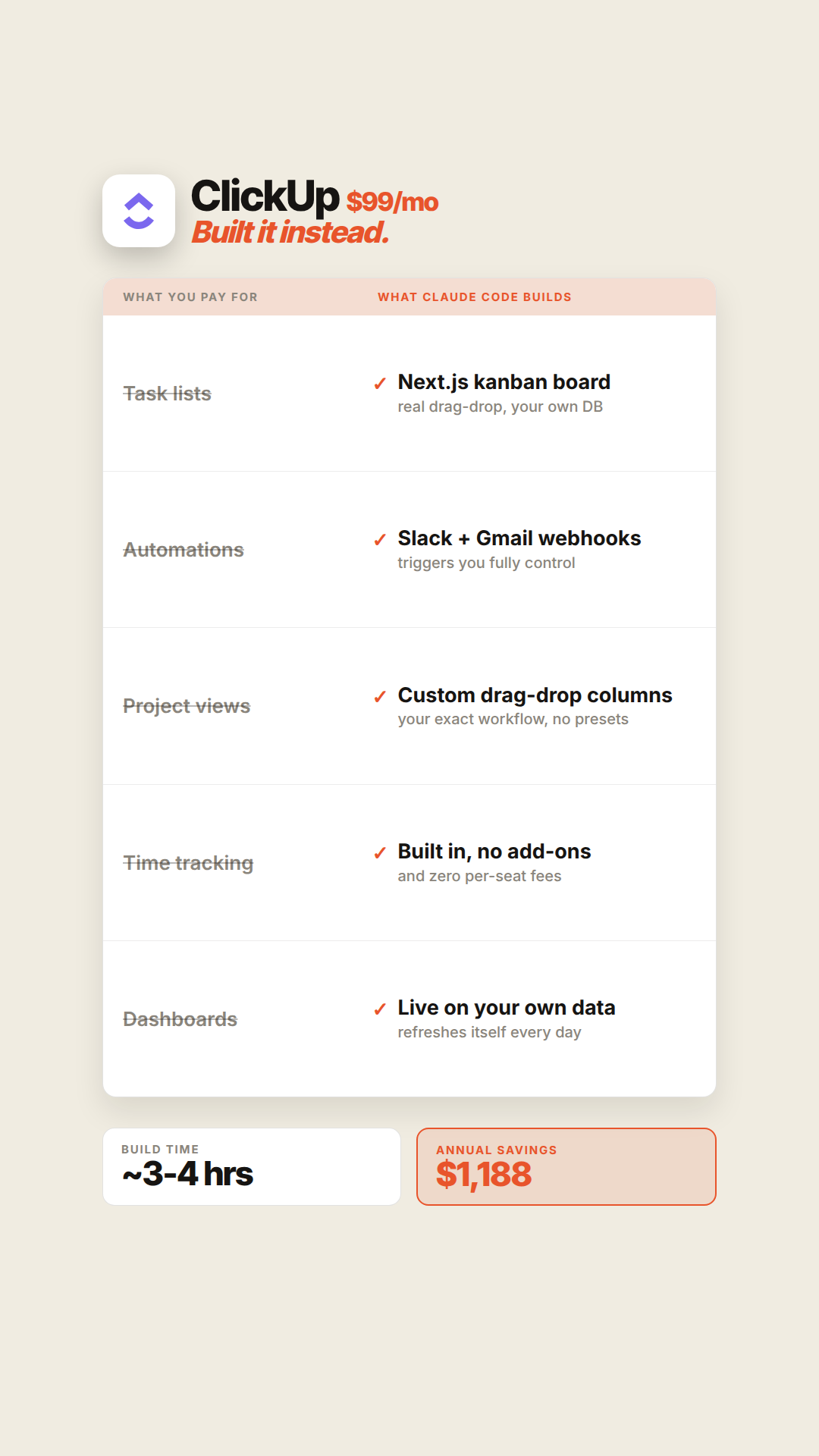
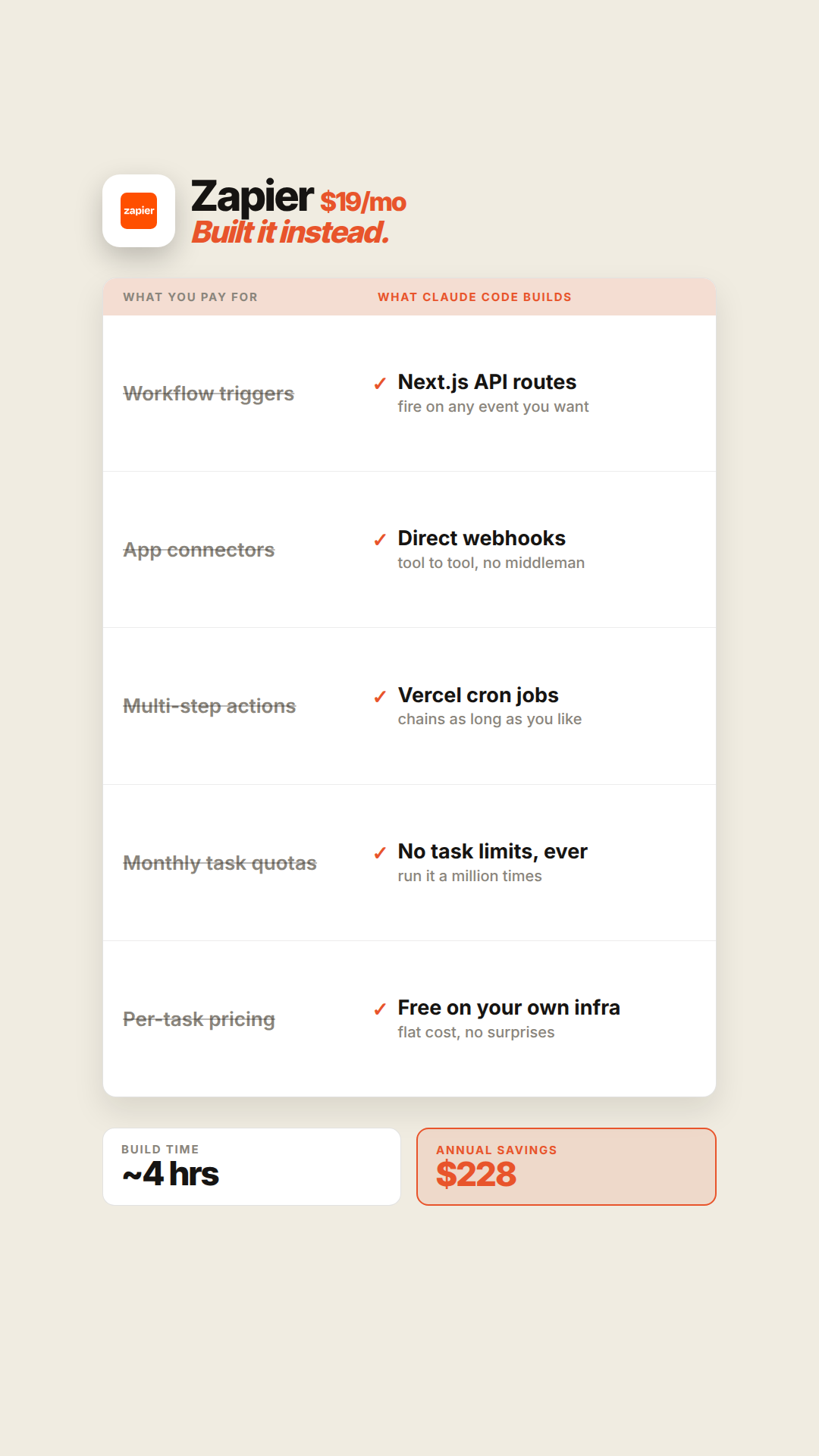
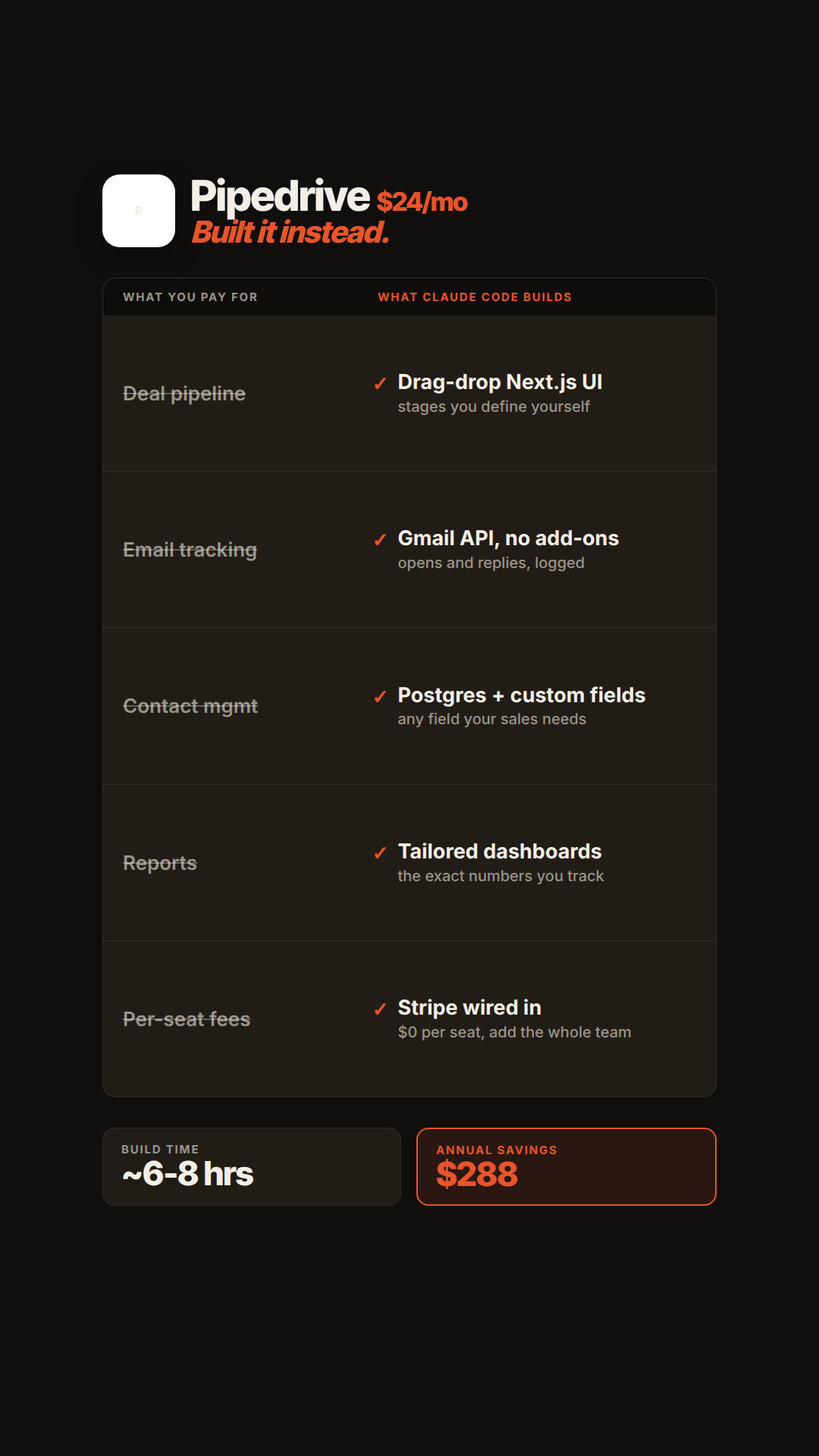
Four more subscriptions you pay for every month, and what it actually takes to build them instead.

ClickUp becomes a Next.js board on Supabase in an afternoon.
Mailchimp becomes Resend and a Postgres list, with no contact caps.
Zapier becomes a few API routes and a cron job, with no task limits.
Pipedrive becomes a pipeline you own, with no per seat fees.

Each one is a few hours of build against a bill you pay forever. The math is not close.

Comment BUILD and I will send the stack and the prompts for each.
Stop paying for software
01
02
03
04
05
06

07
08
Caption
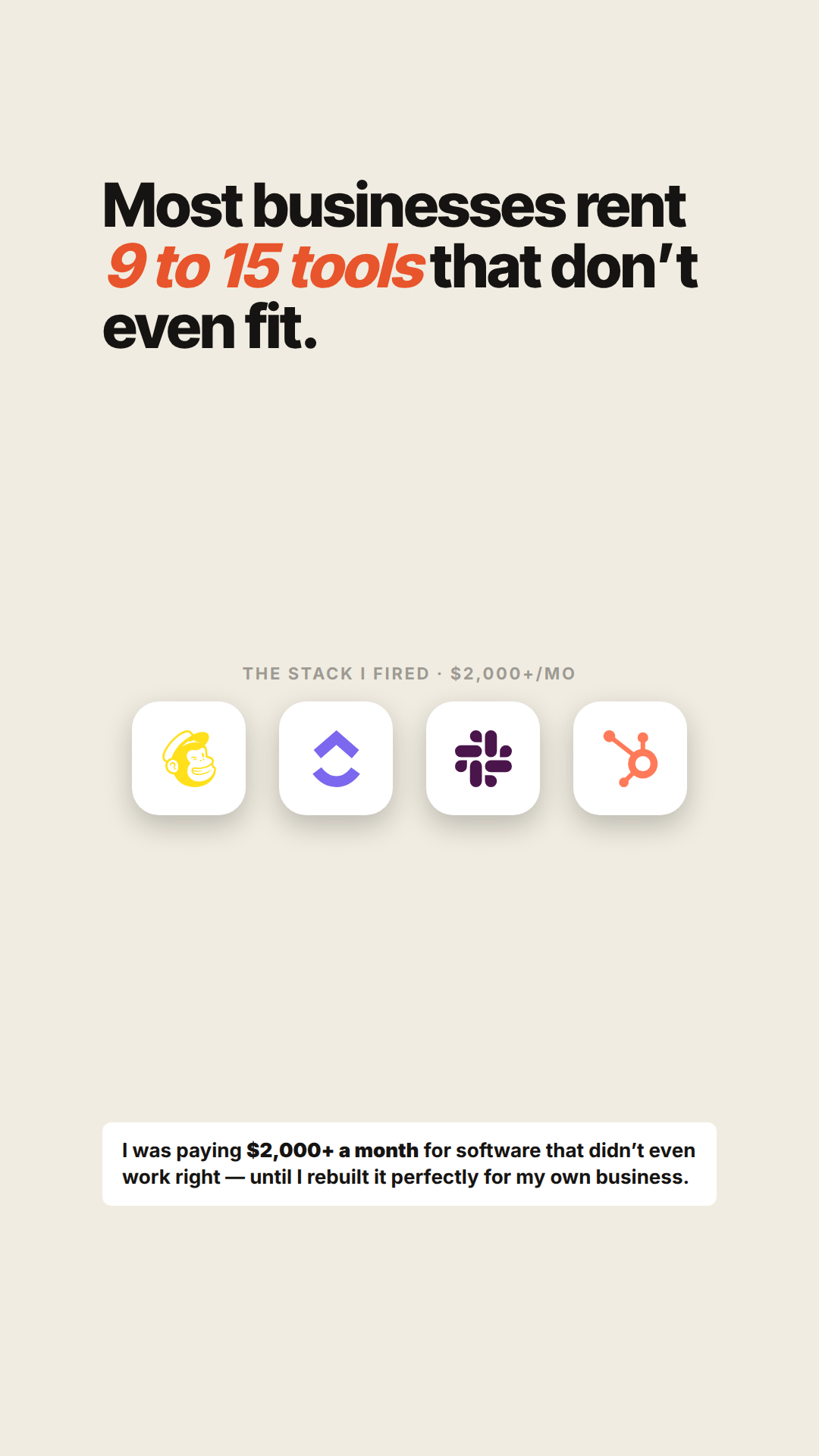
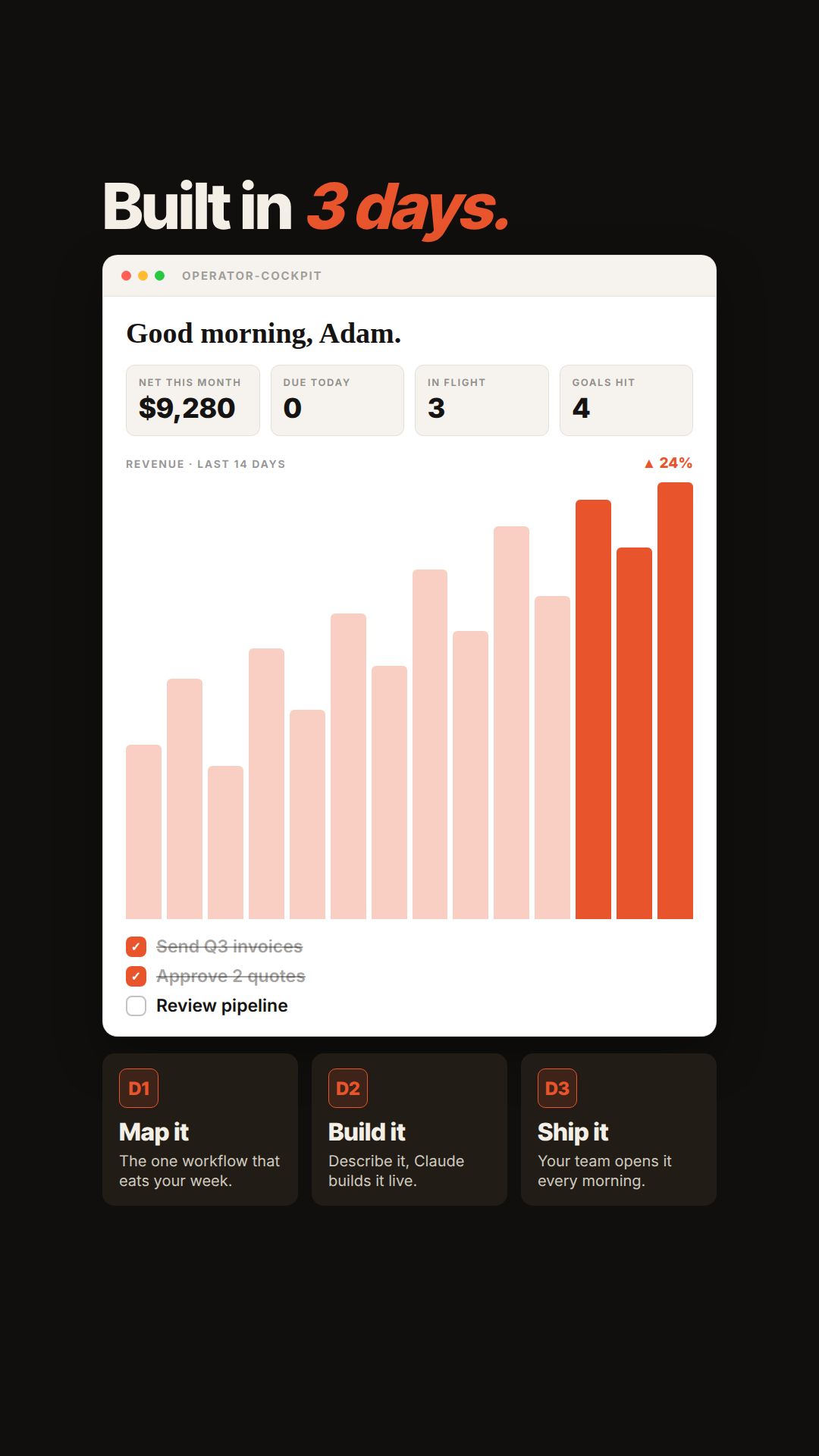
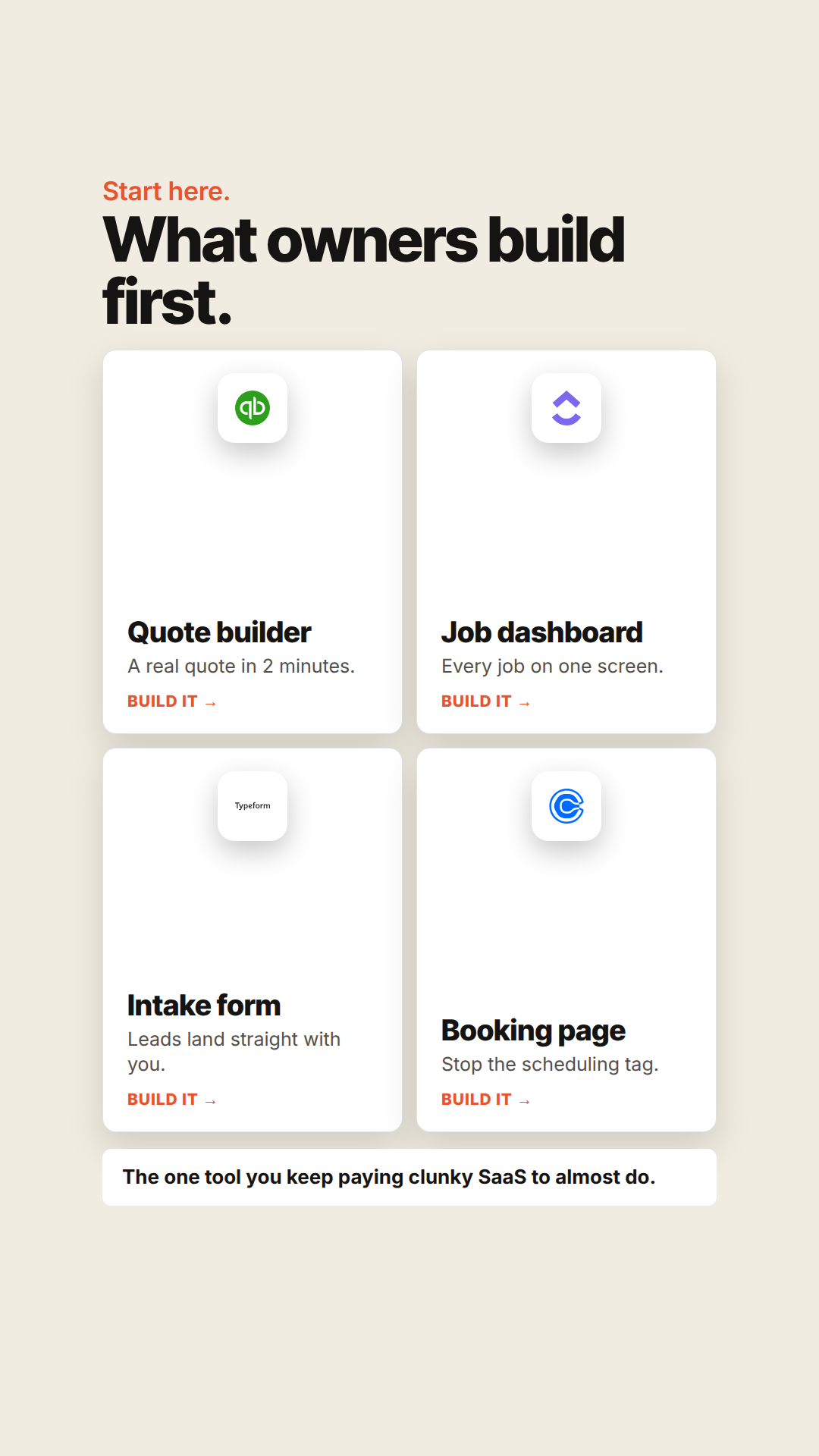
You are renting nine to fifteen tools that do not quite fit, and paying for it every month forever.

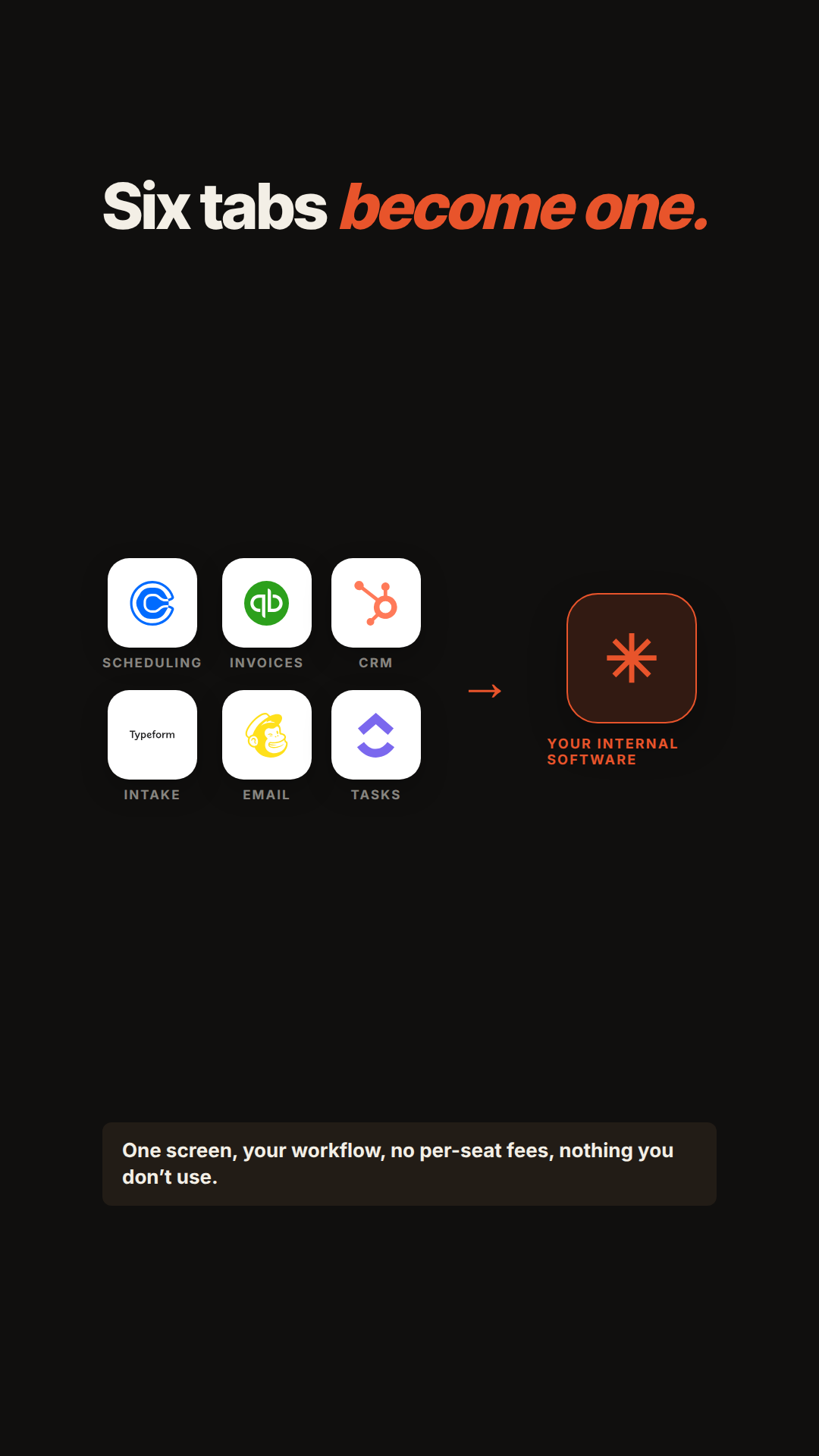
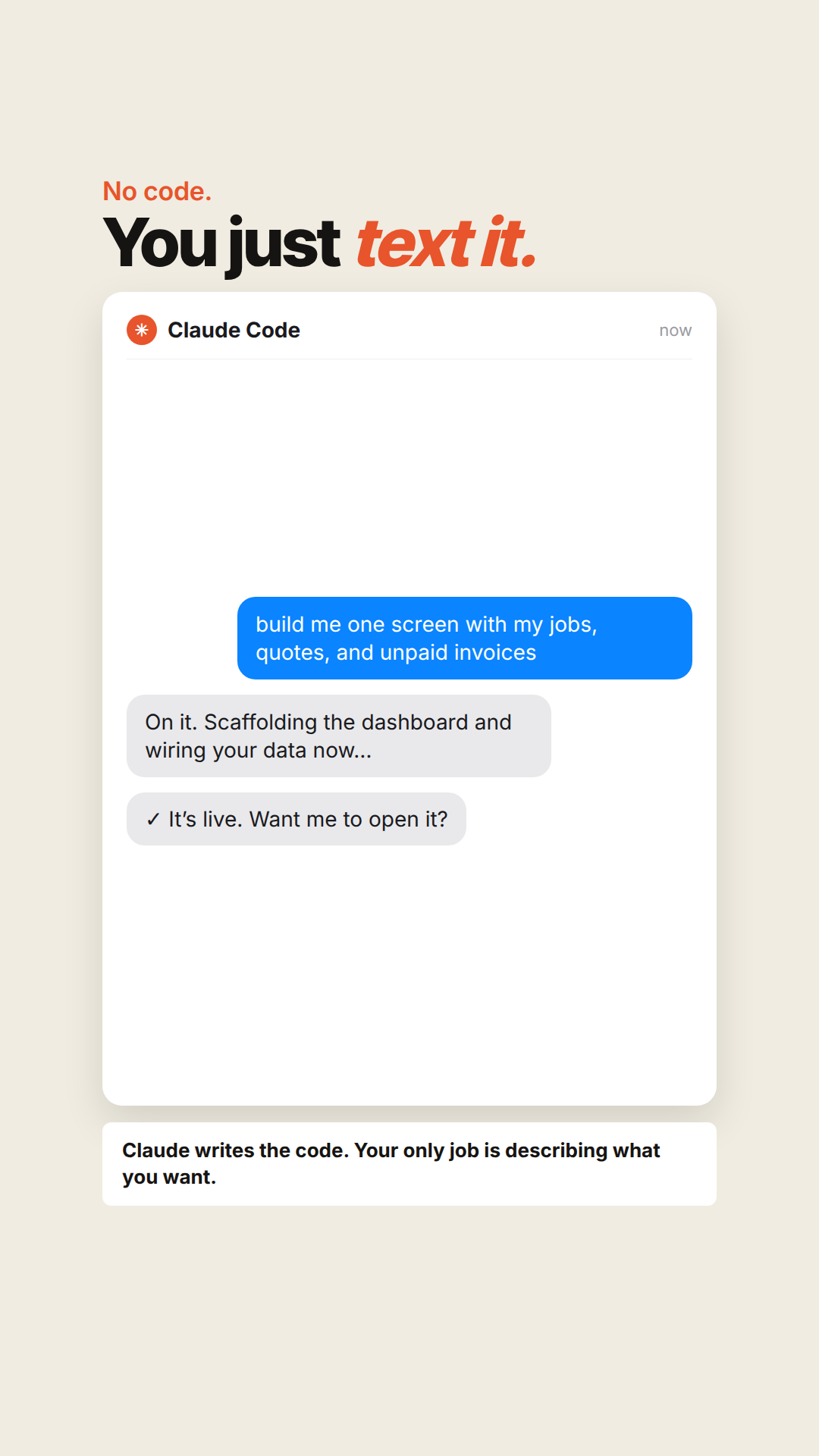
The alternative used to need a dev team. Now you describe what you want and Claude builds it. One screen, your workflow, no per seat fees, nothing you do not use.

I went from a stack of subscriptions to internal software I own, built in days, not months. And no, you do not have to be technical. If you can explain your business to a new hire, you can build this.

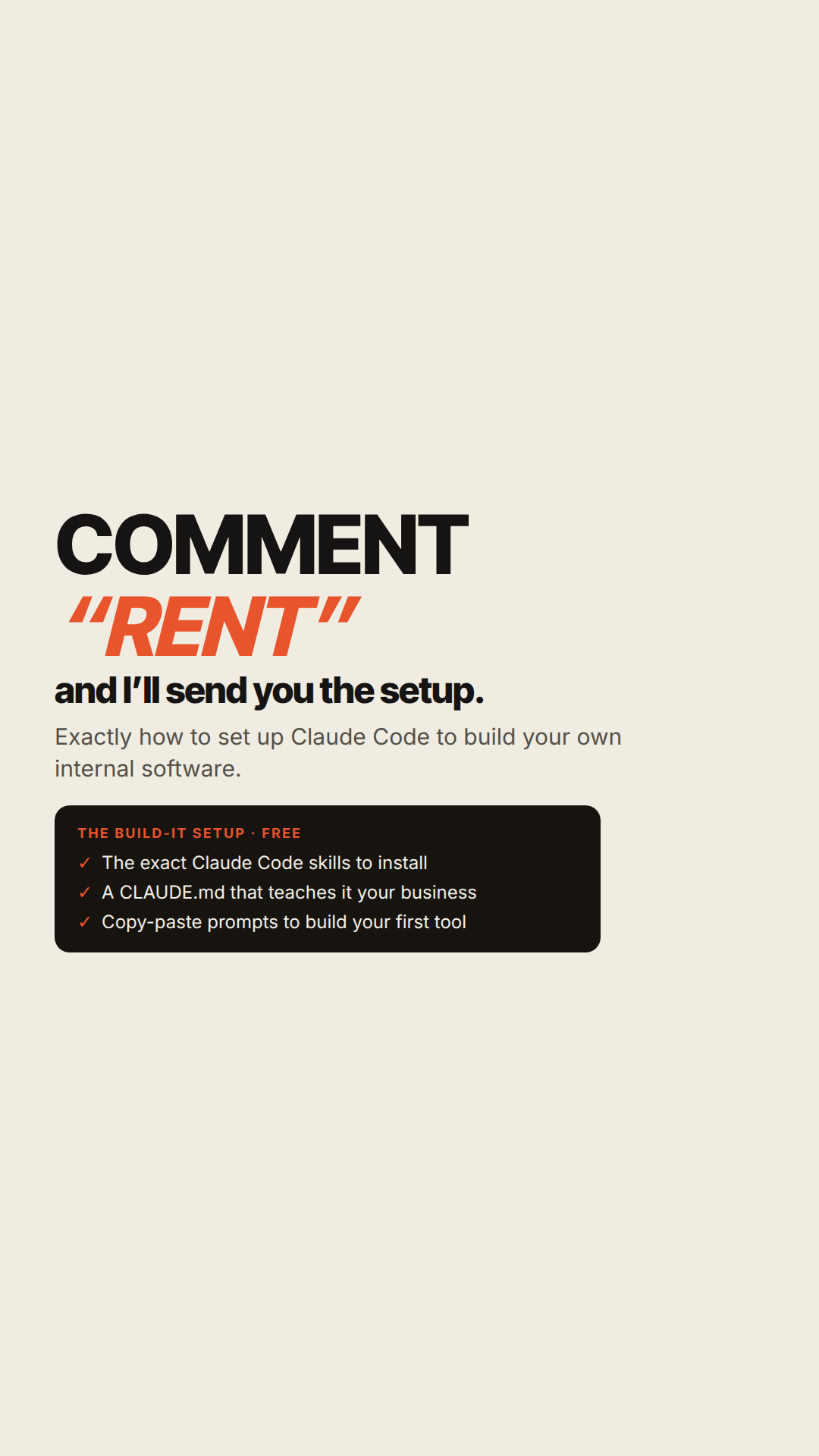
Comment RENT and I will send the setup, a CLAUDE.md that teaches it your business, and the first build.
The AI adoption map
01
02
03
04
05
06
Caption
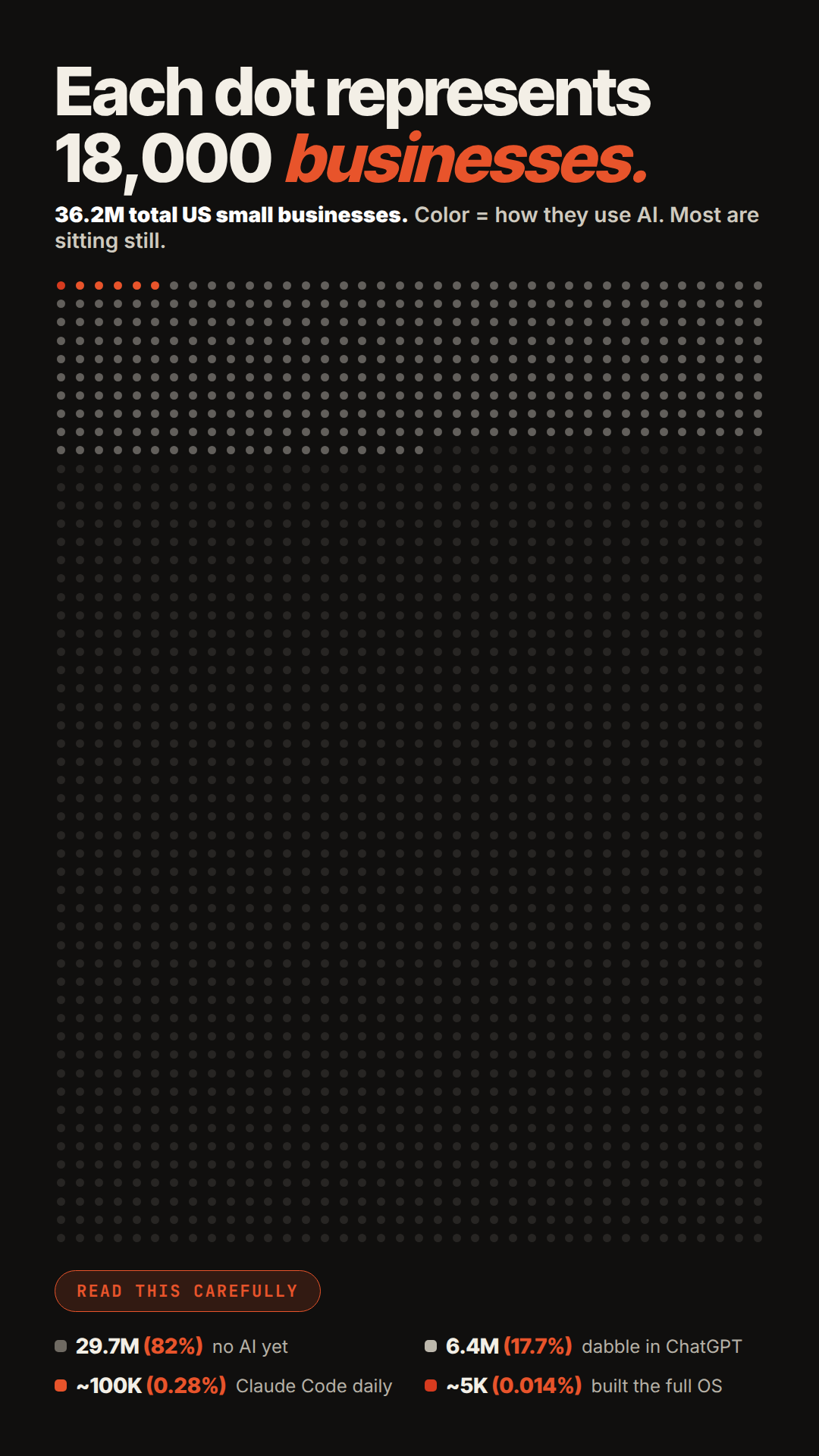
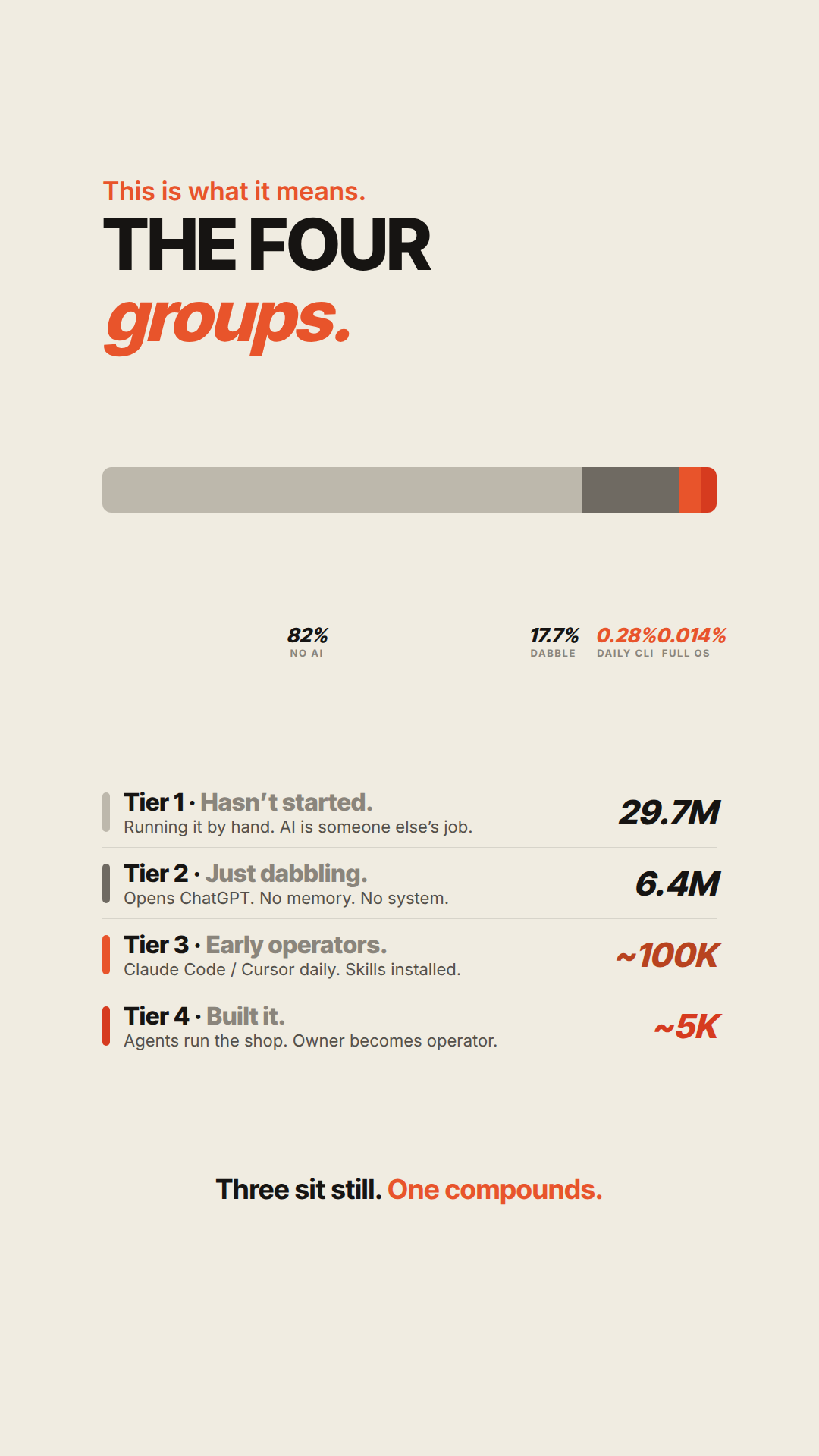
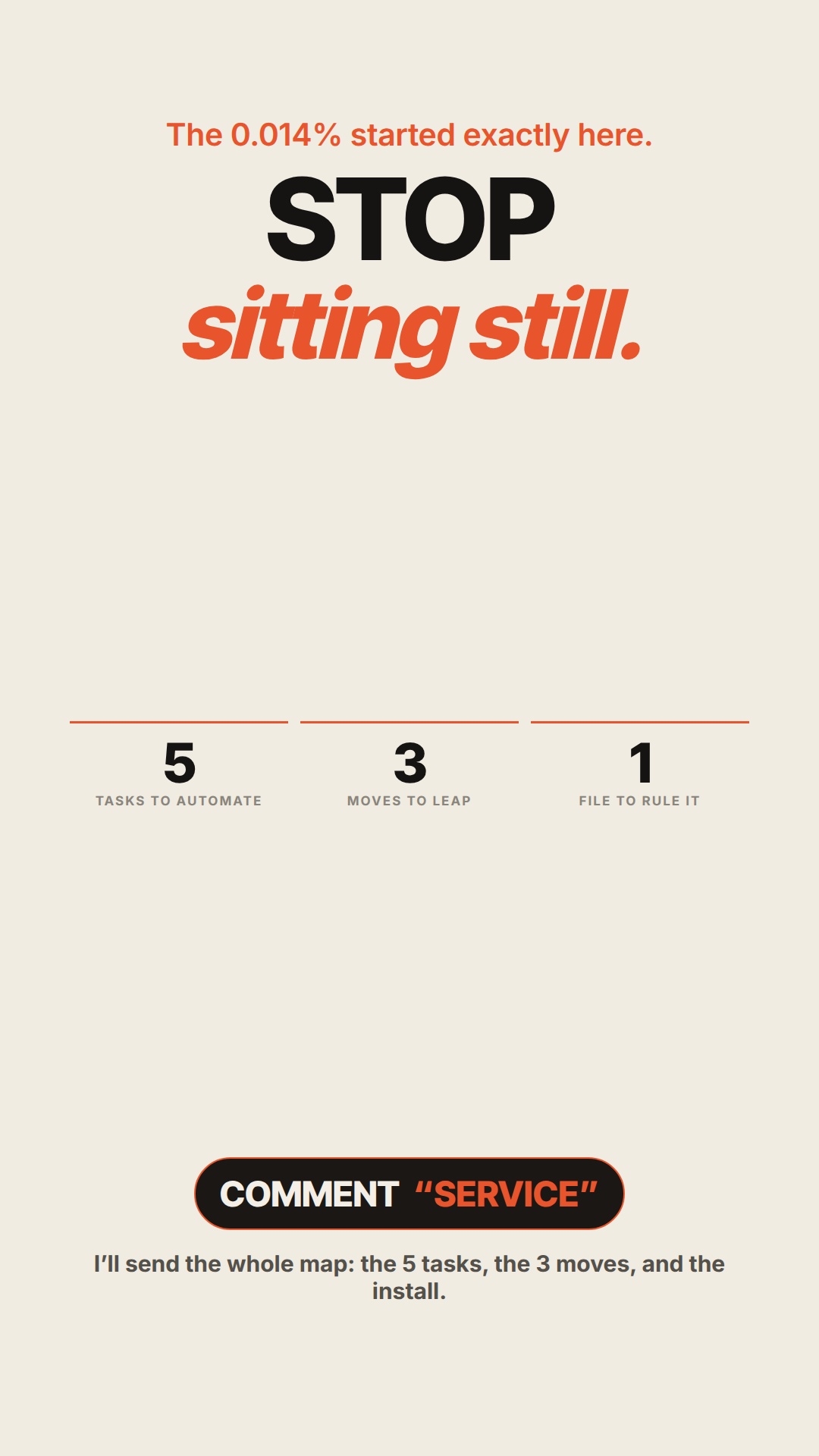
There are about thirty six million small businesses. Almost all of them are sitting still on AI while a tiny fraction quietly pull away.

Tier one has not started. Tier two opens ChatGPT now and then with no system. Tier three runs Claude Code daily. Tier four built the whole operation on it and the owner just operates.

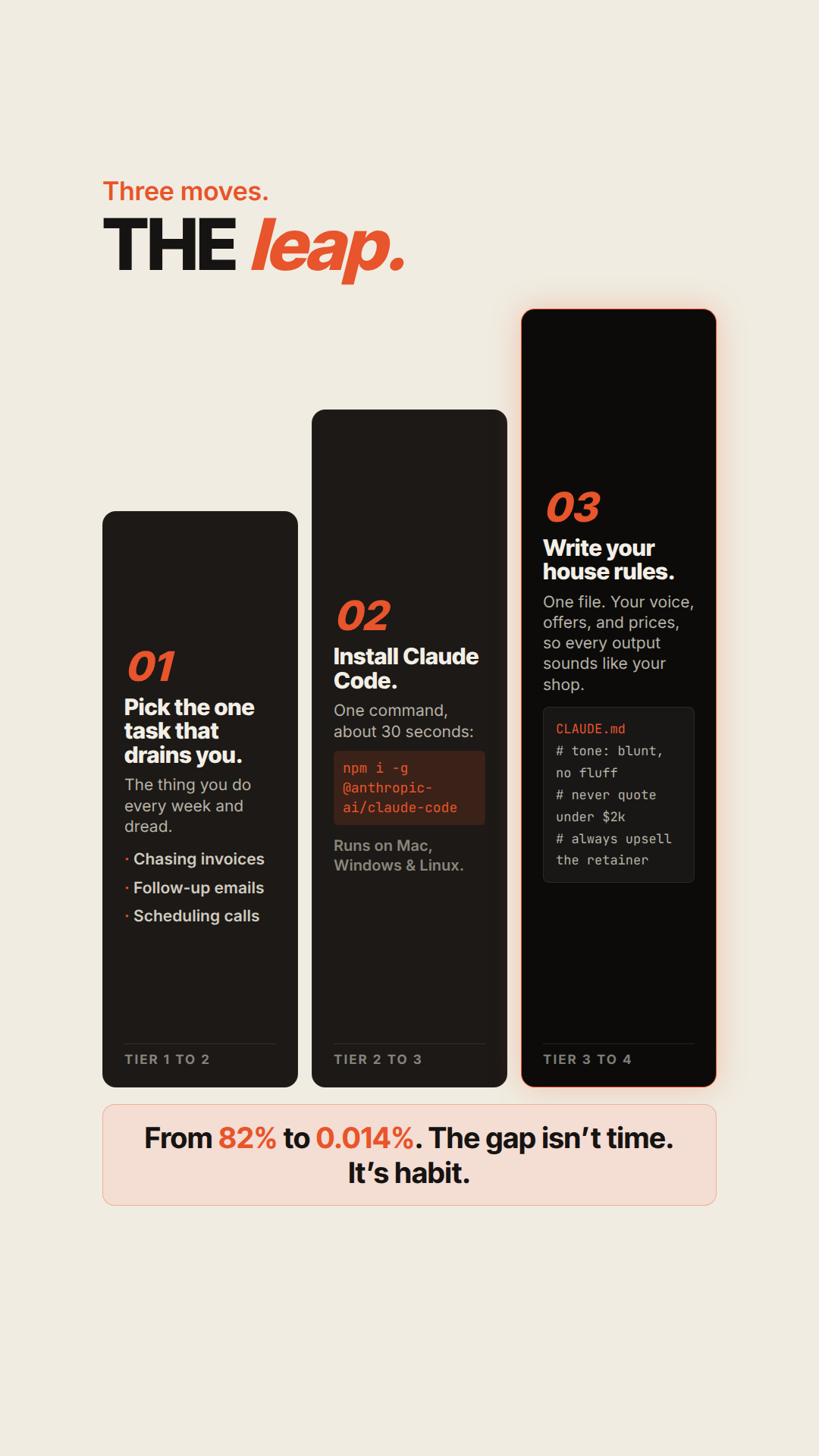
Three tiers sit still. One compounds. The gap between them is not money and it is not time. It is a handful of moves most people never make.

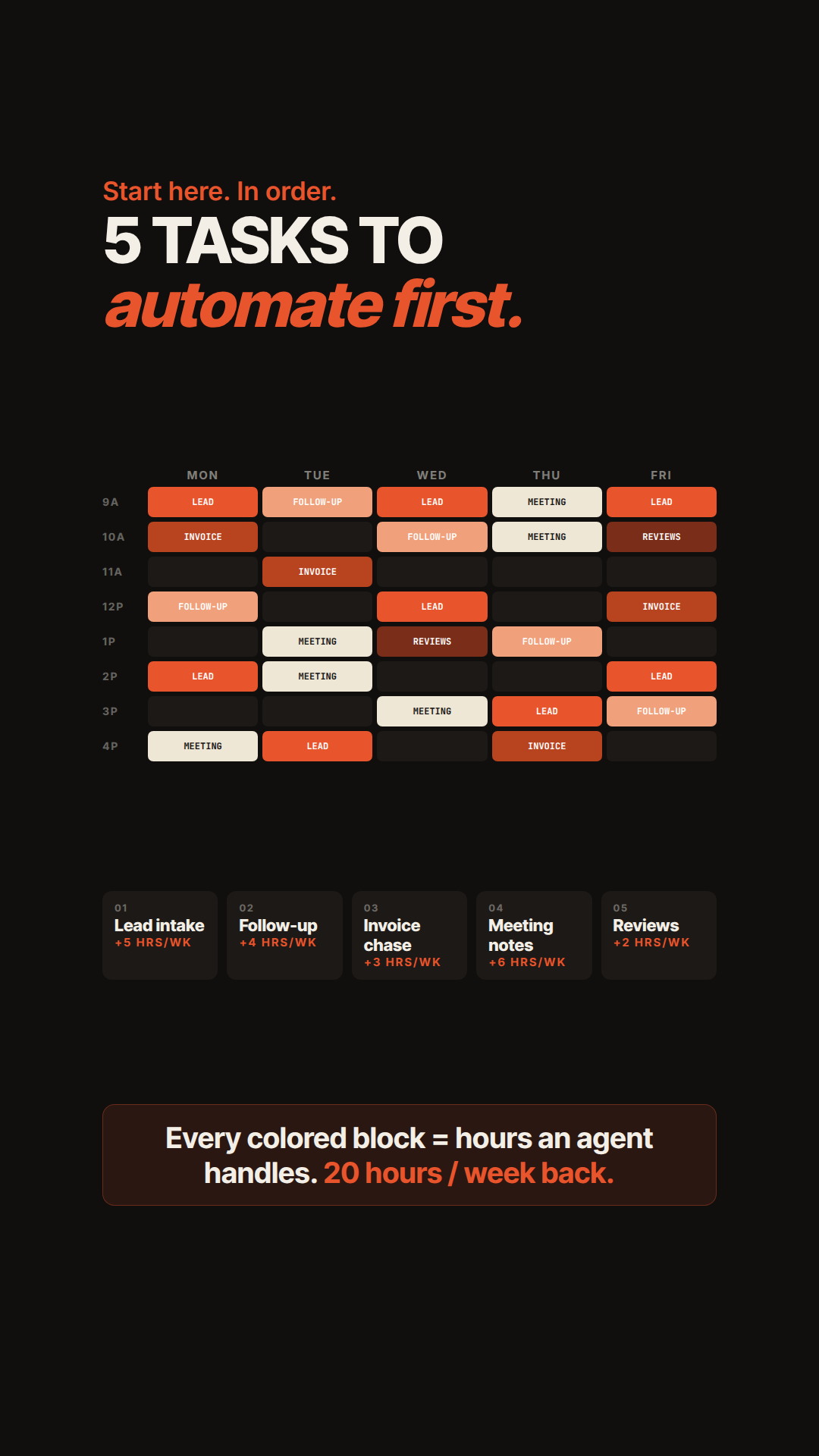
Comment SERVICE and I will send the tier map, the first tasks to automate, and the moves that jump you up.
Sequoia: the AI opportunity

01
02
03
04
05
06
07
08
Caption
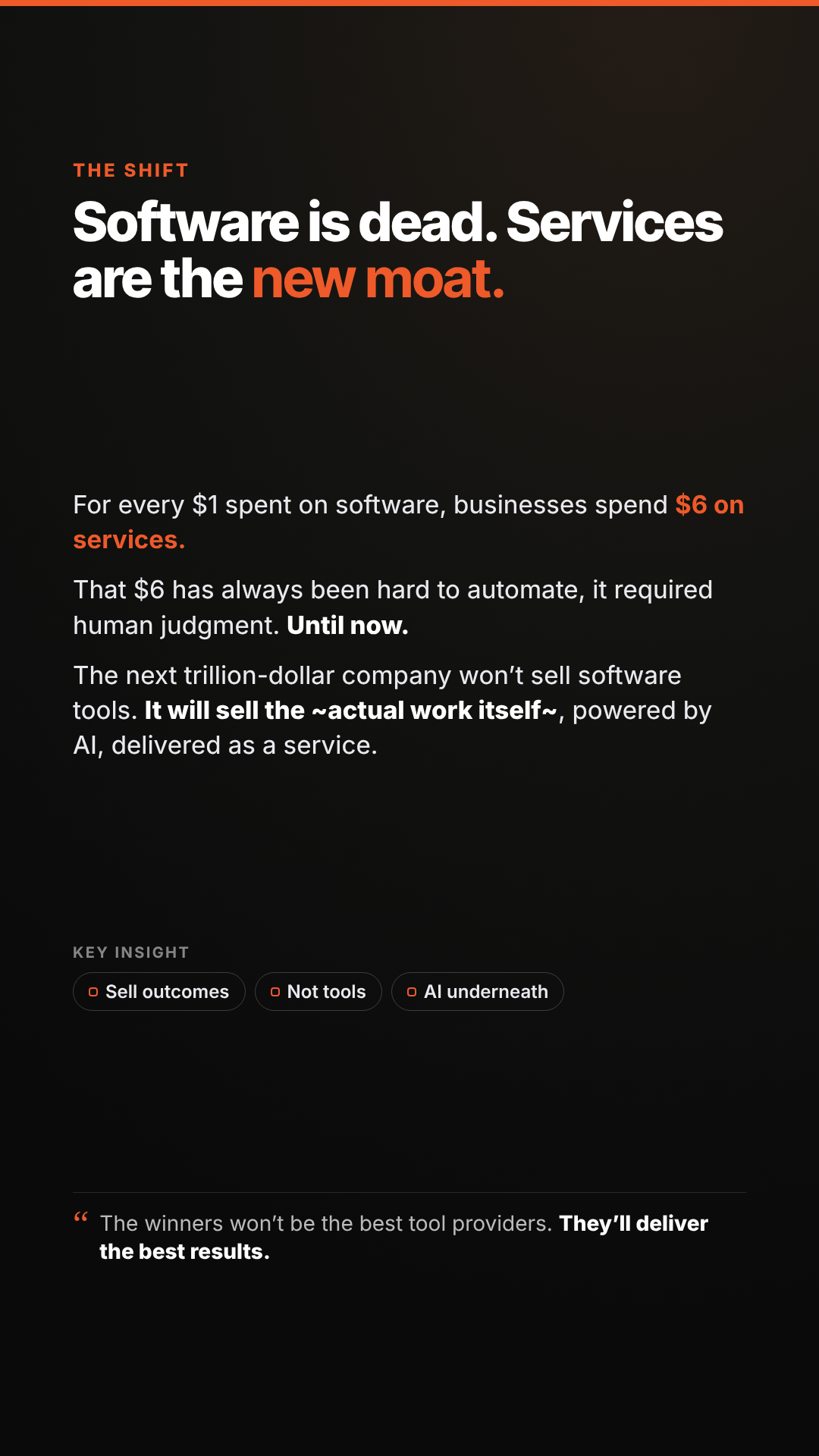
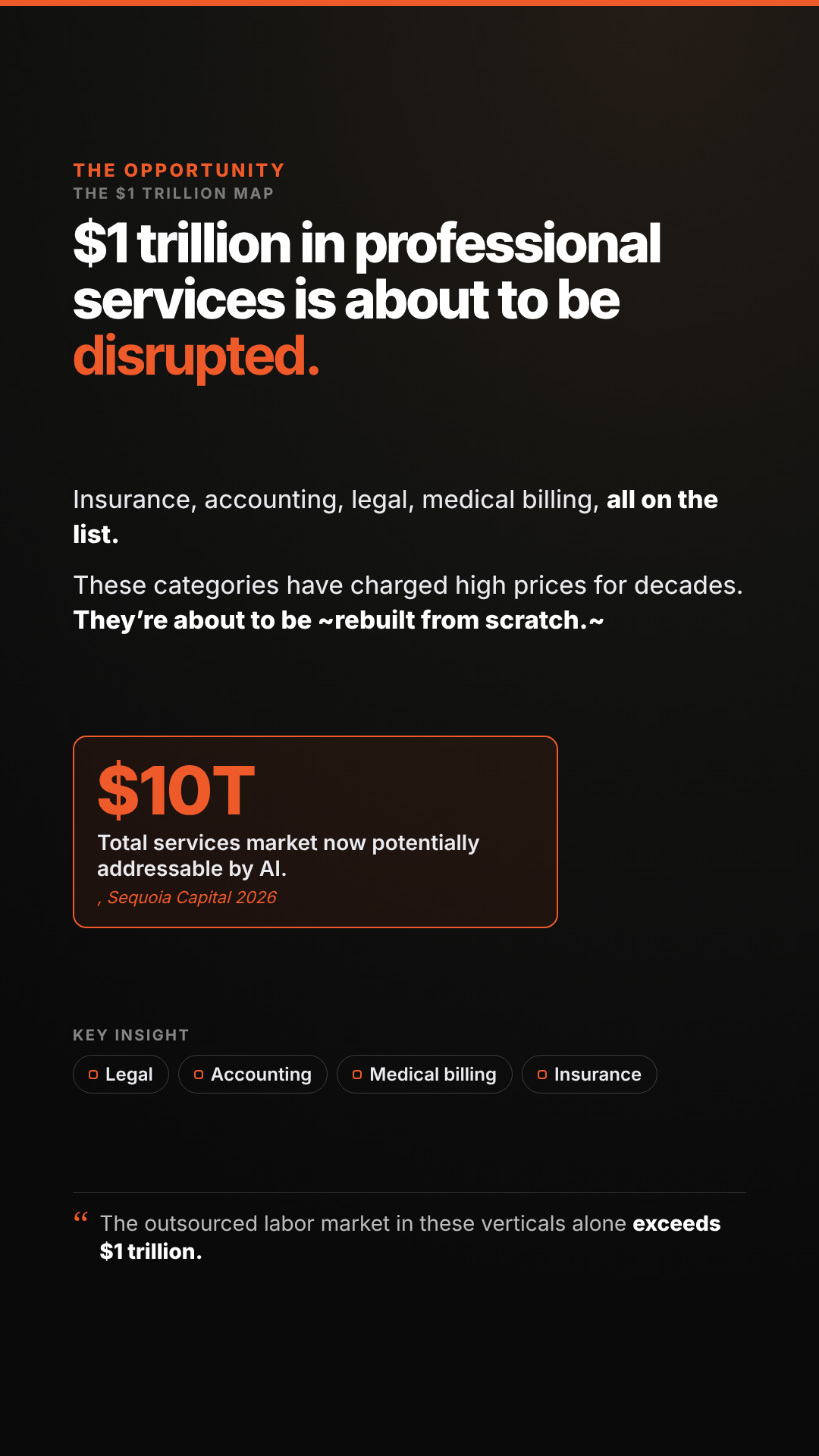
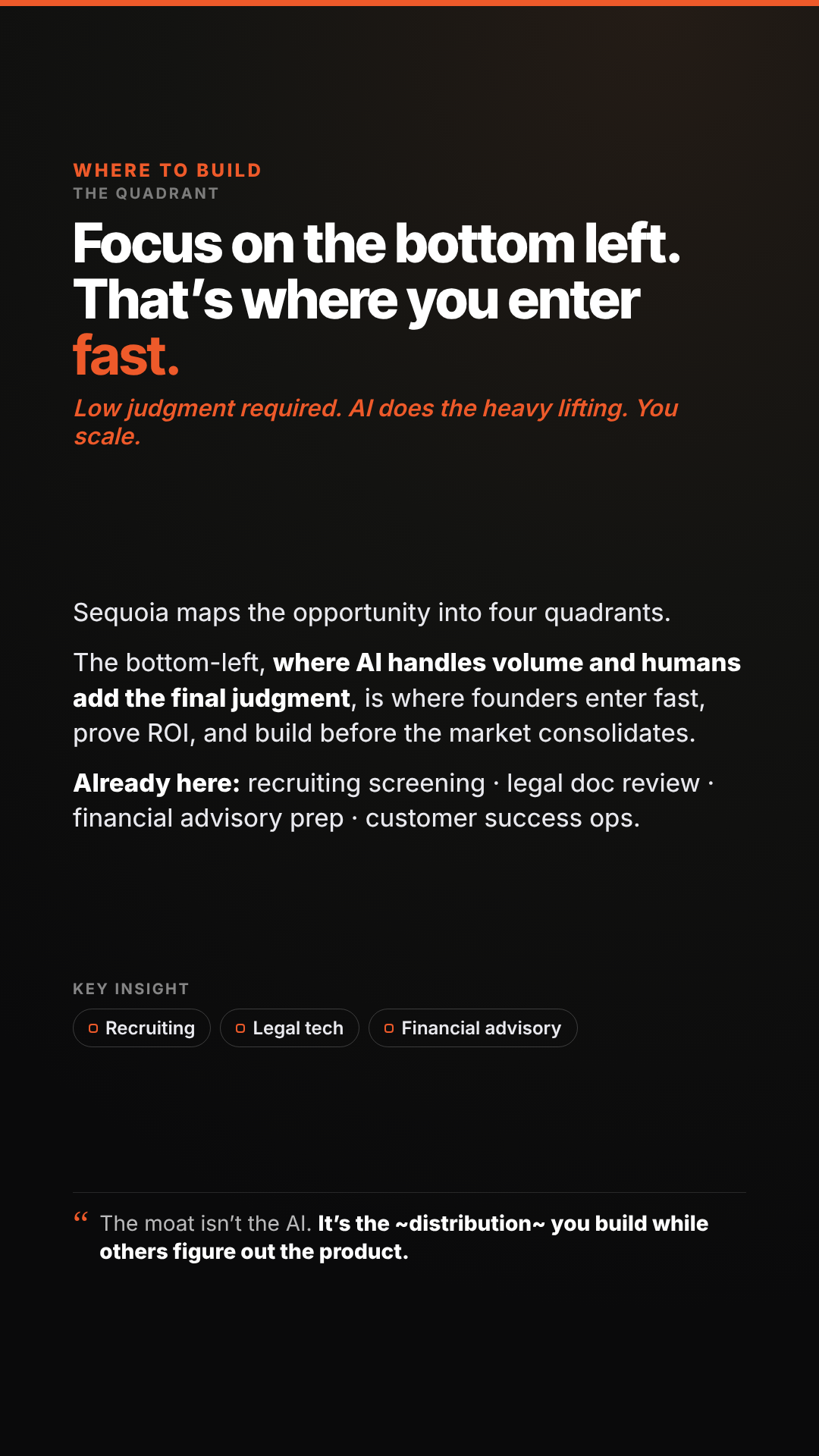
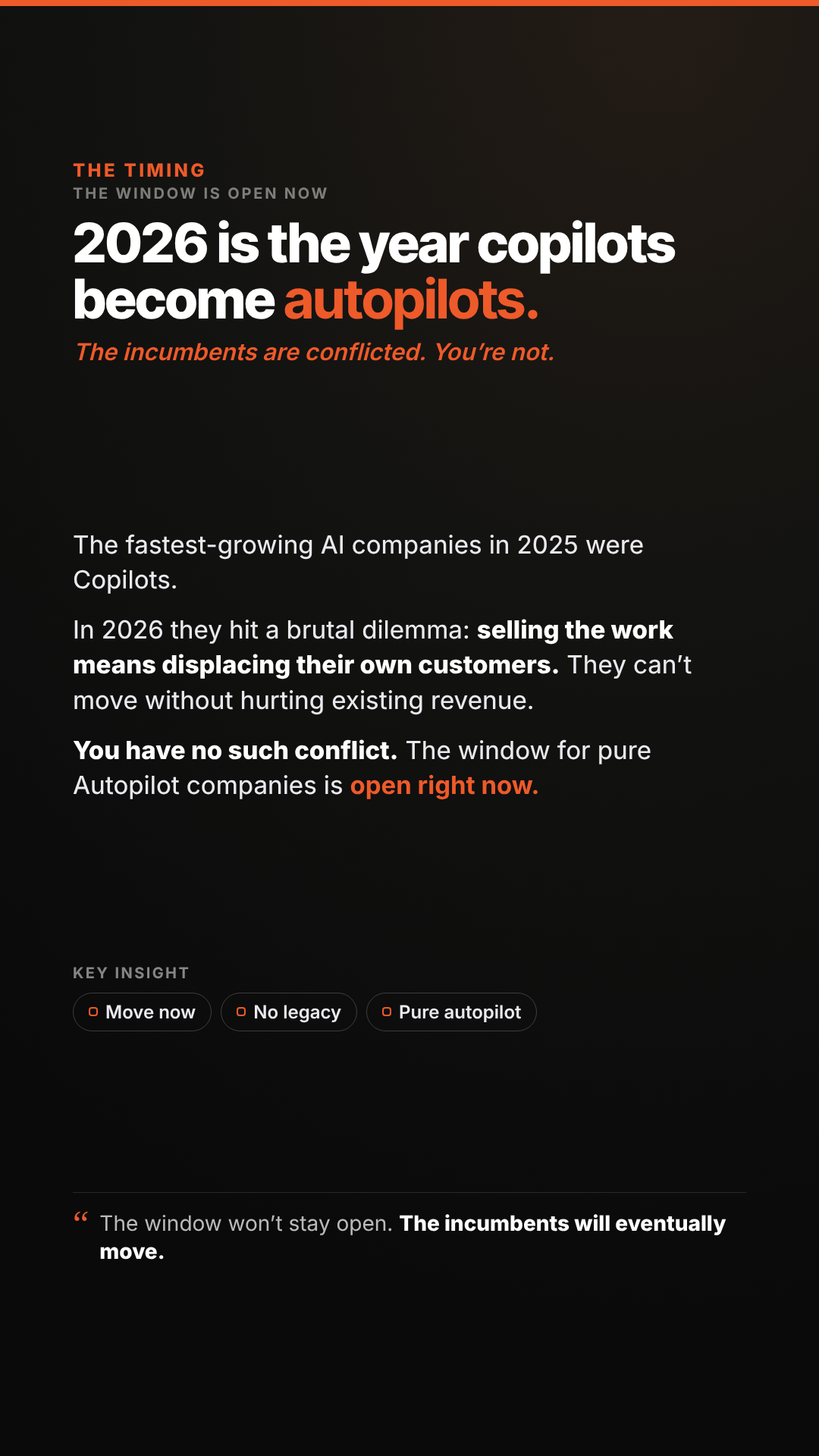
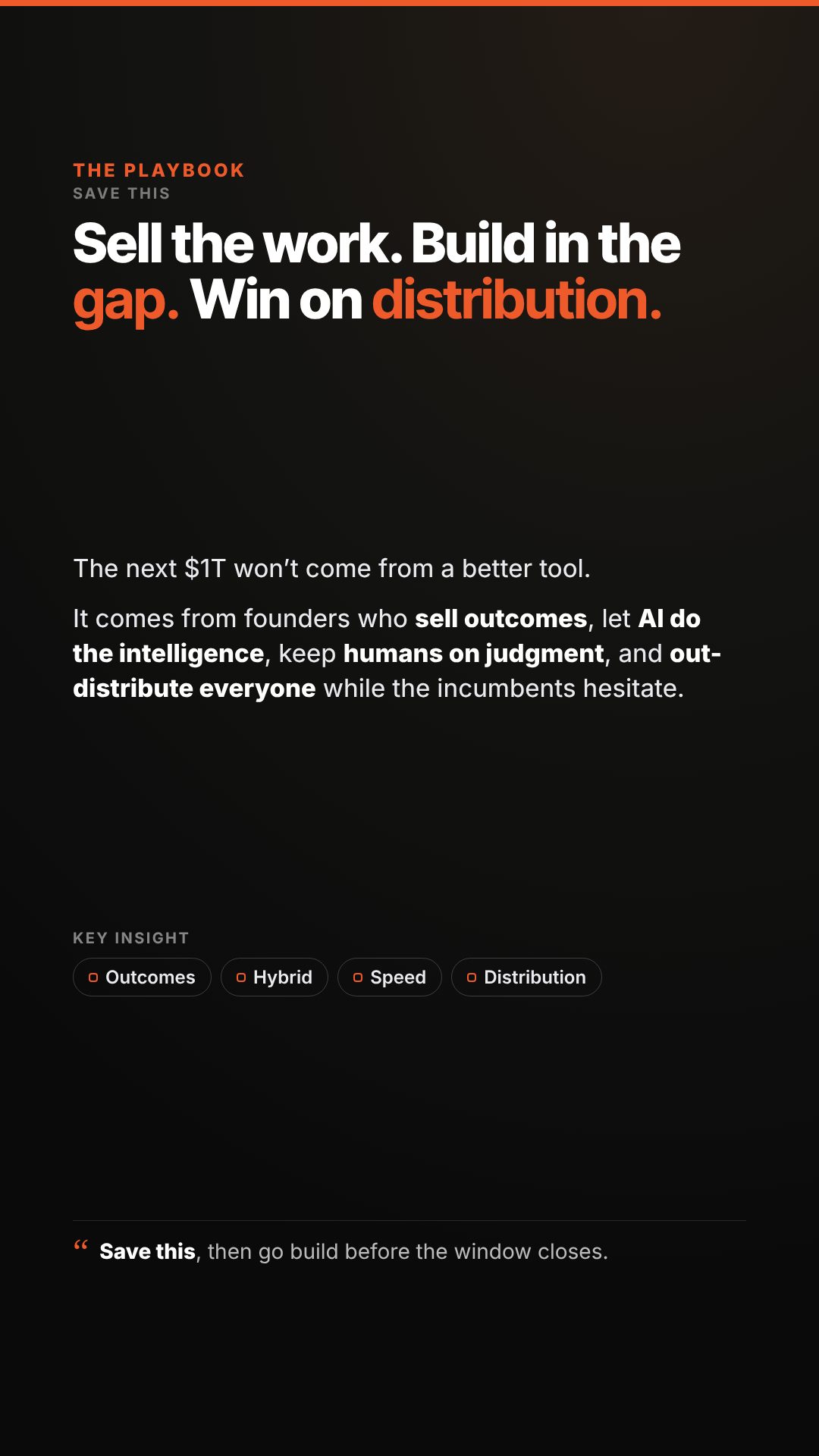
Sequoia basically said the quiet part out loud. The money is moving from selling software to selling the work itself.

For every dollar spent on software, businesses spend six on the services around it. That six was always too human to automate. That just changed.

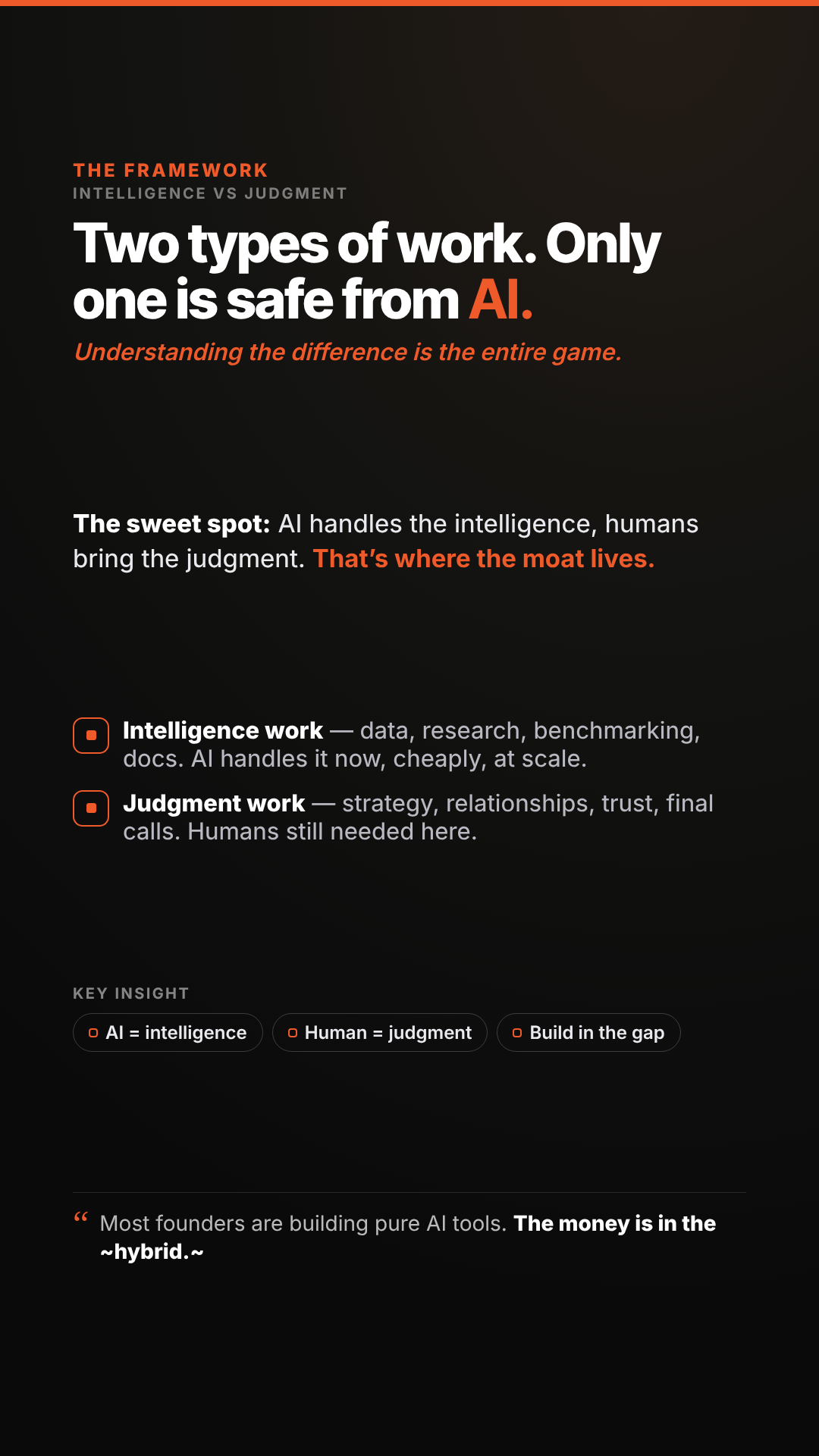
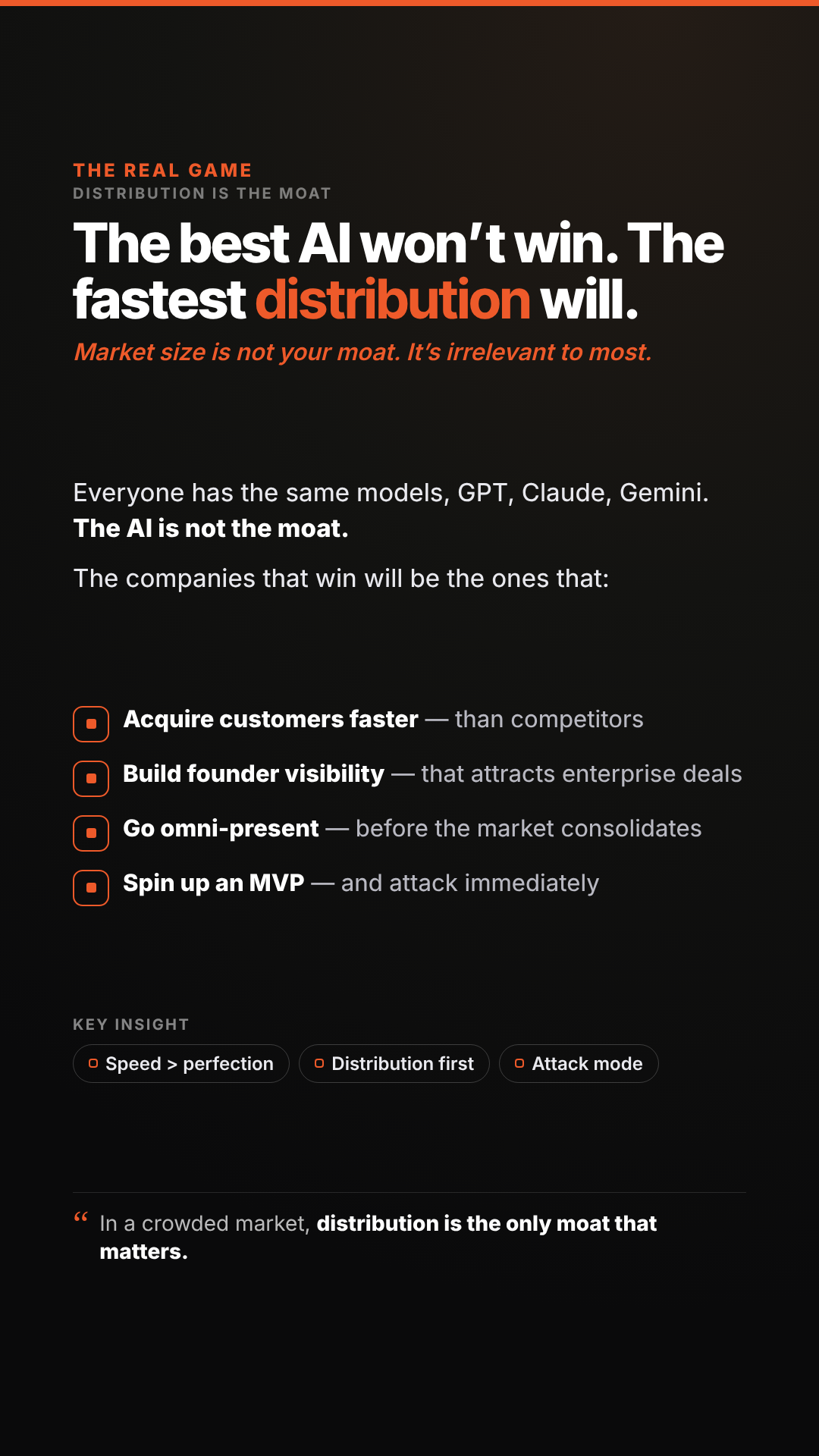
The winners will not be the best tool. They will deliver the best outcome, with AI doing the intelligence and humans keeping the judgment. And the moat is not the model everyone has. It is the distribution you build while others polish the product.

Comment SEQUOIA and I will send the whole thesis broken into moves you can act on.
The founder doc stack
01
02

03
04
05
06
07

08
09

10
11
12
13
14
15

16
17
18
19
Caption
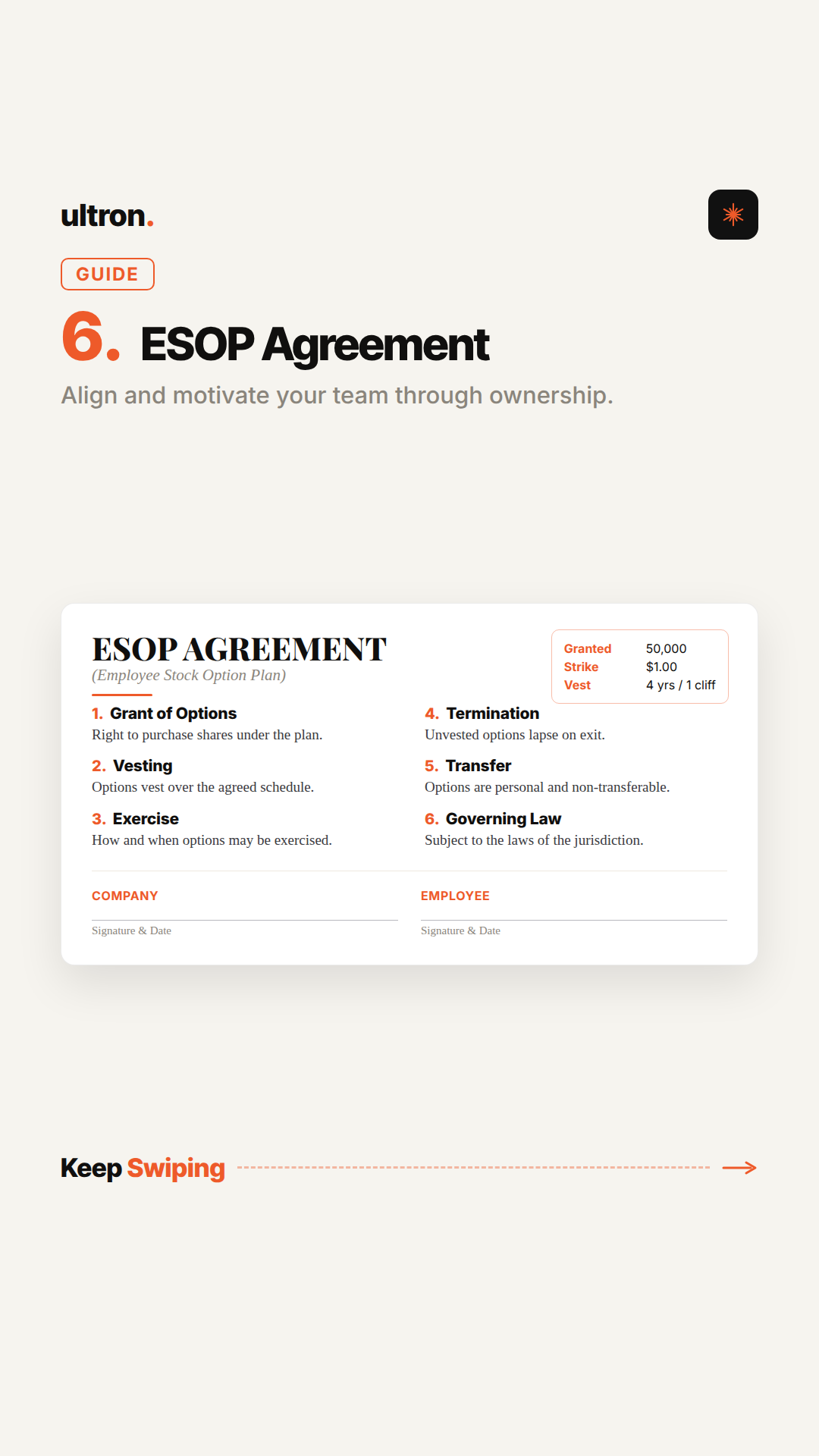
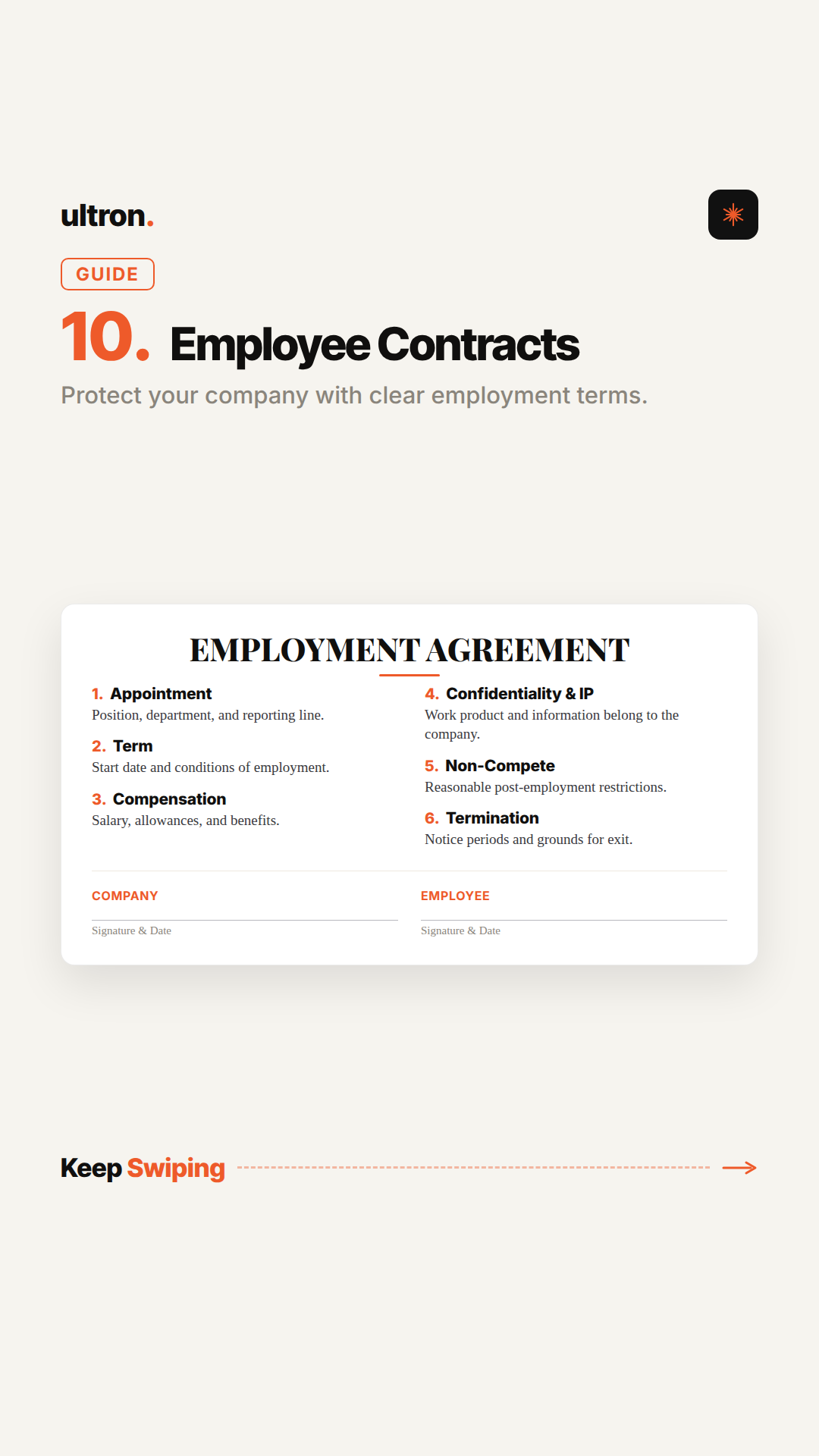
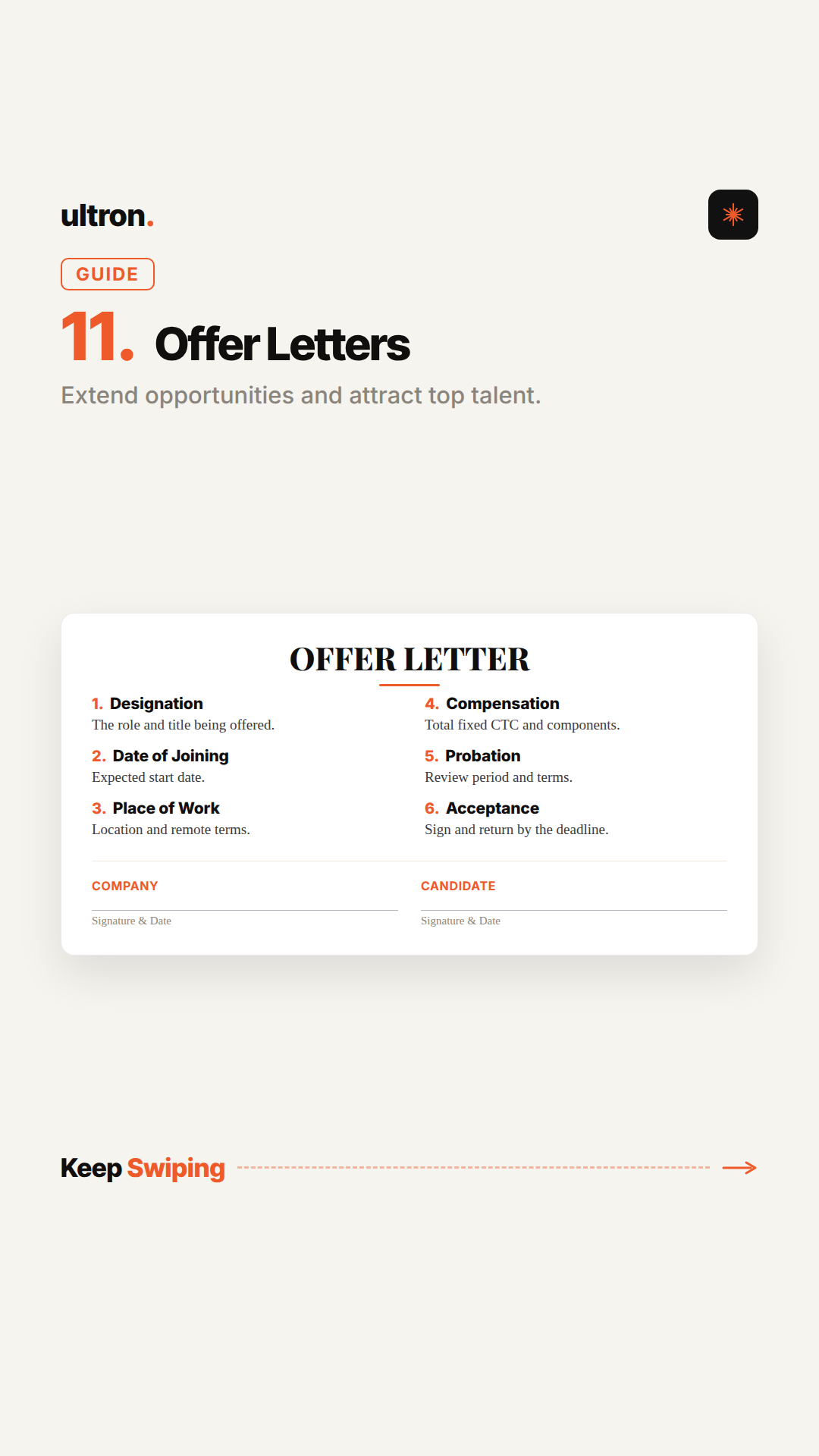
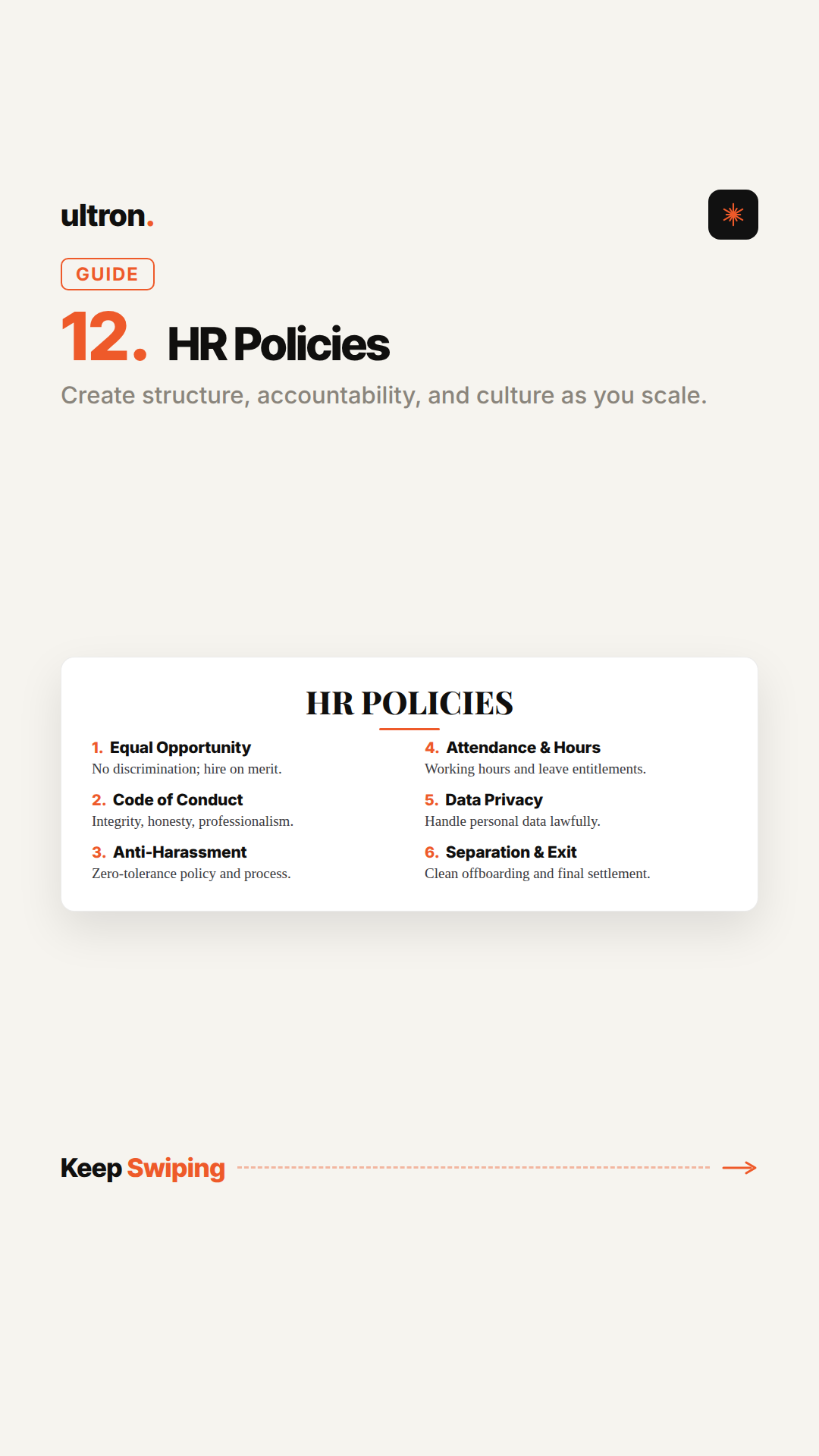
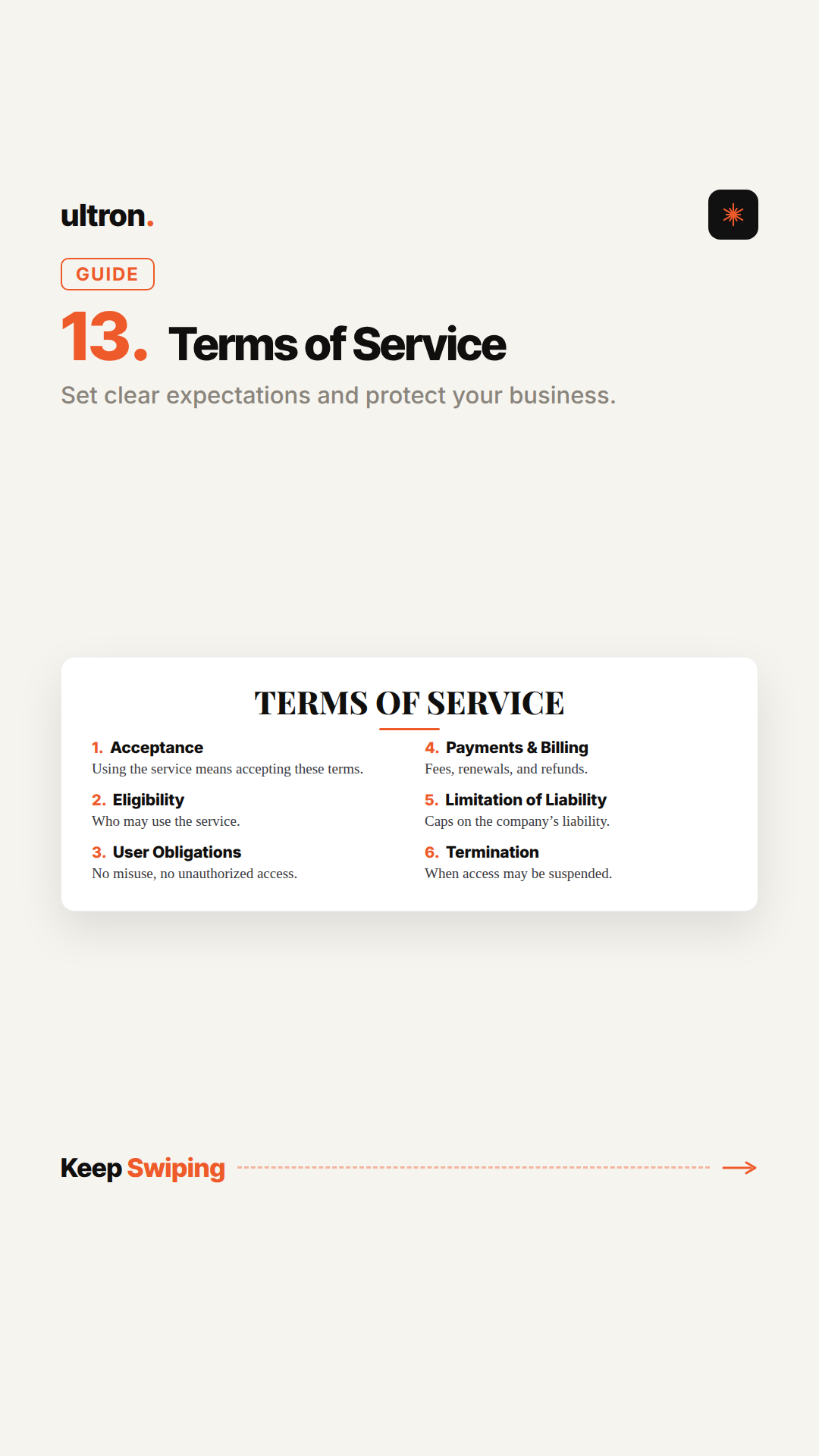
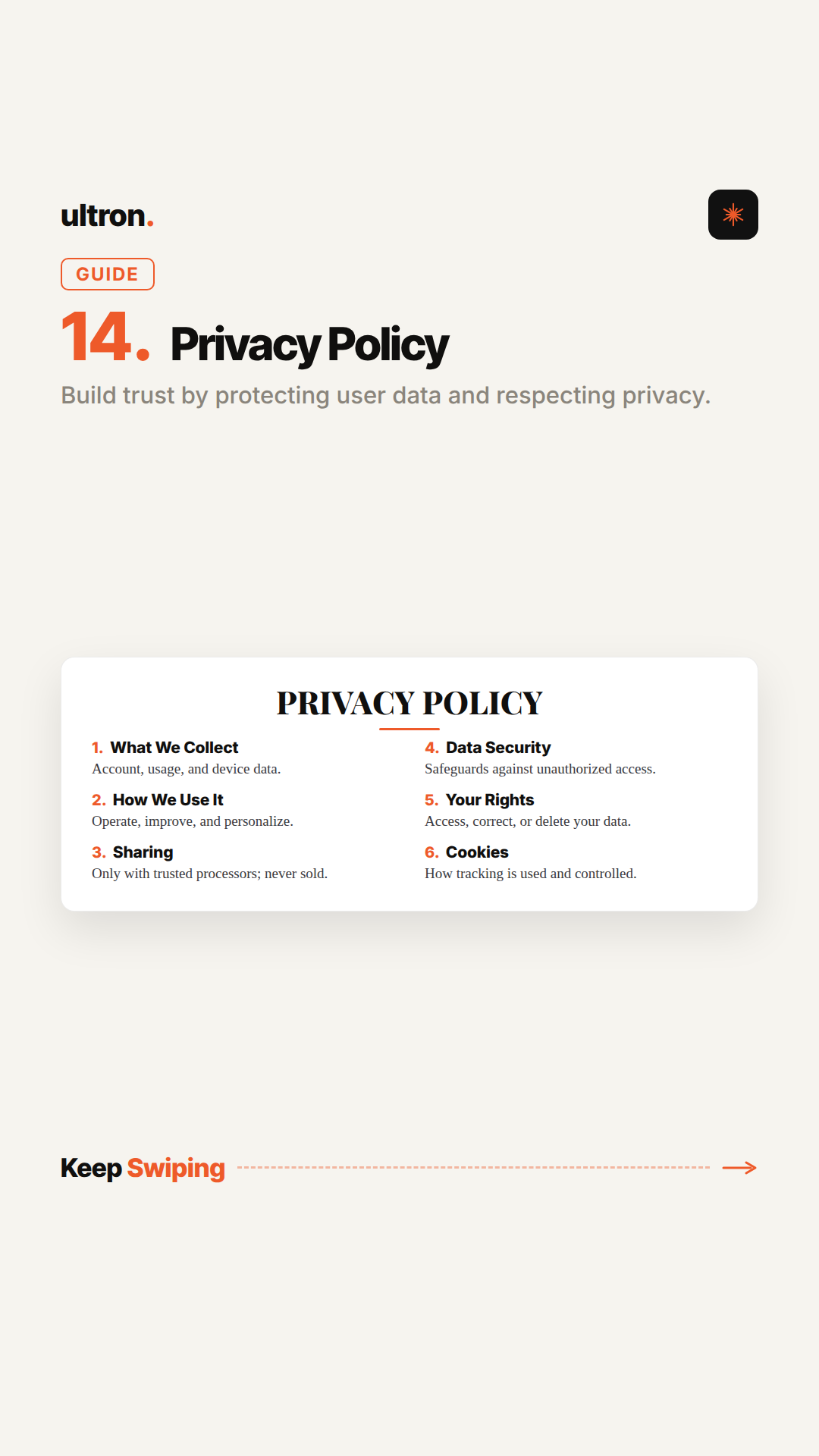
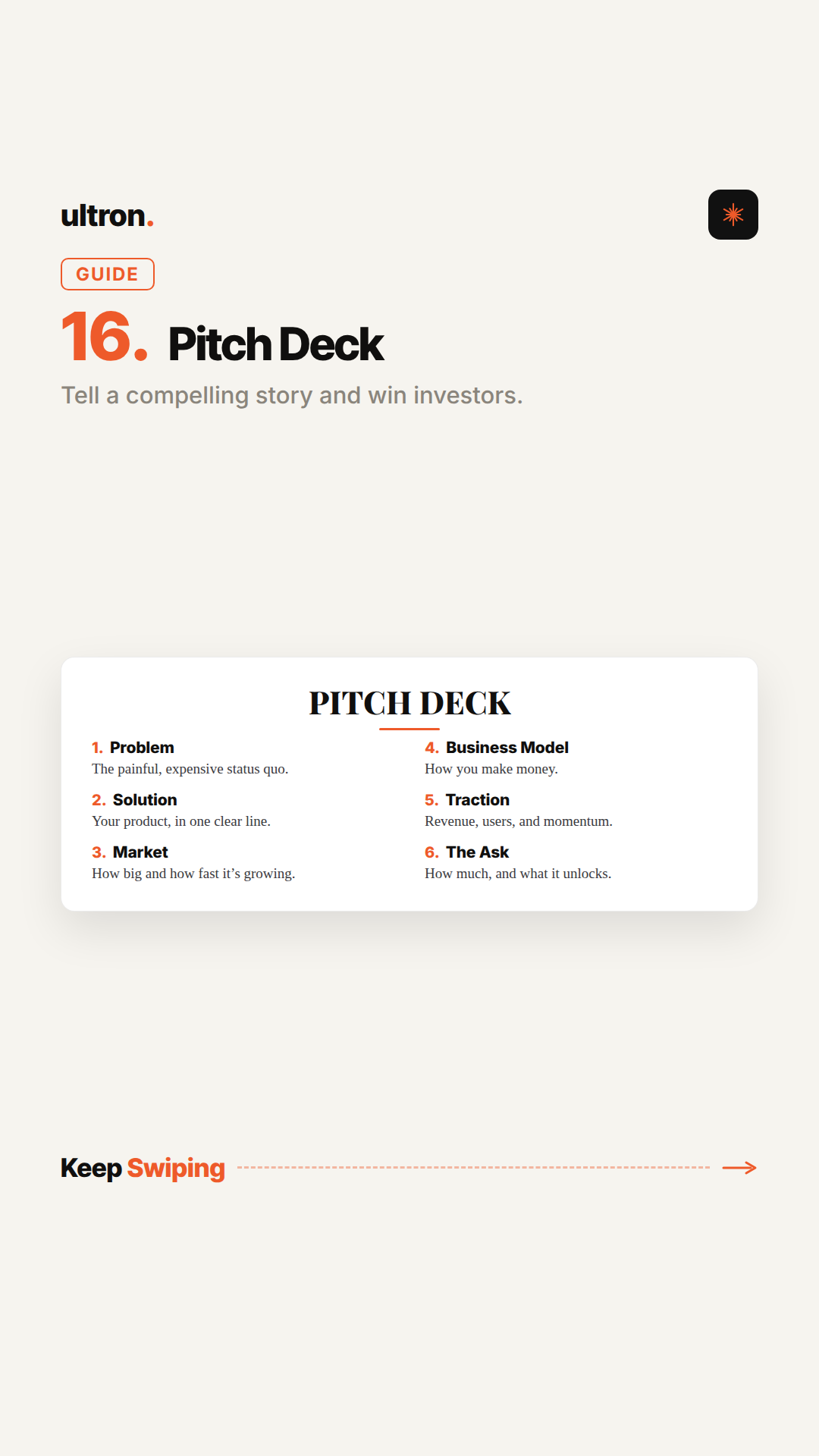
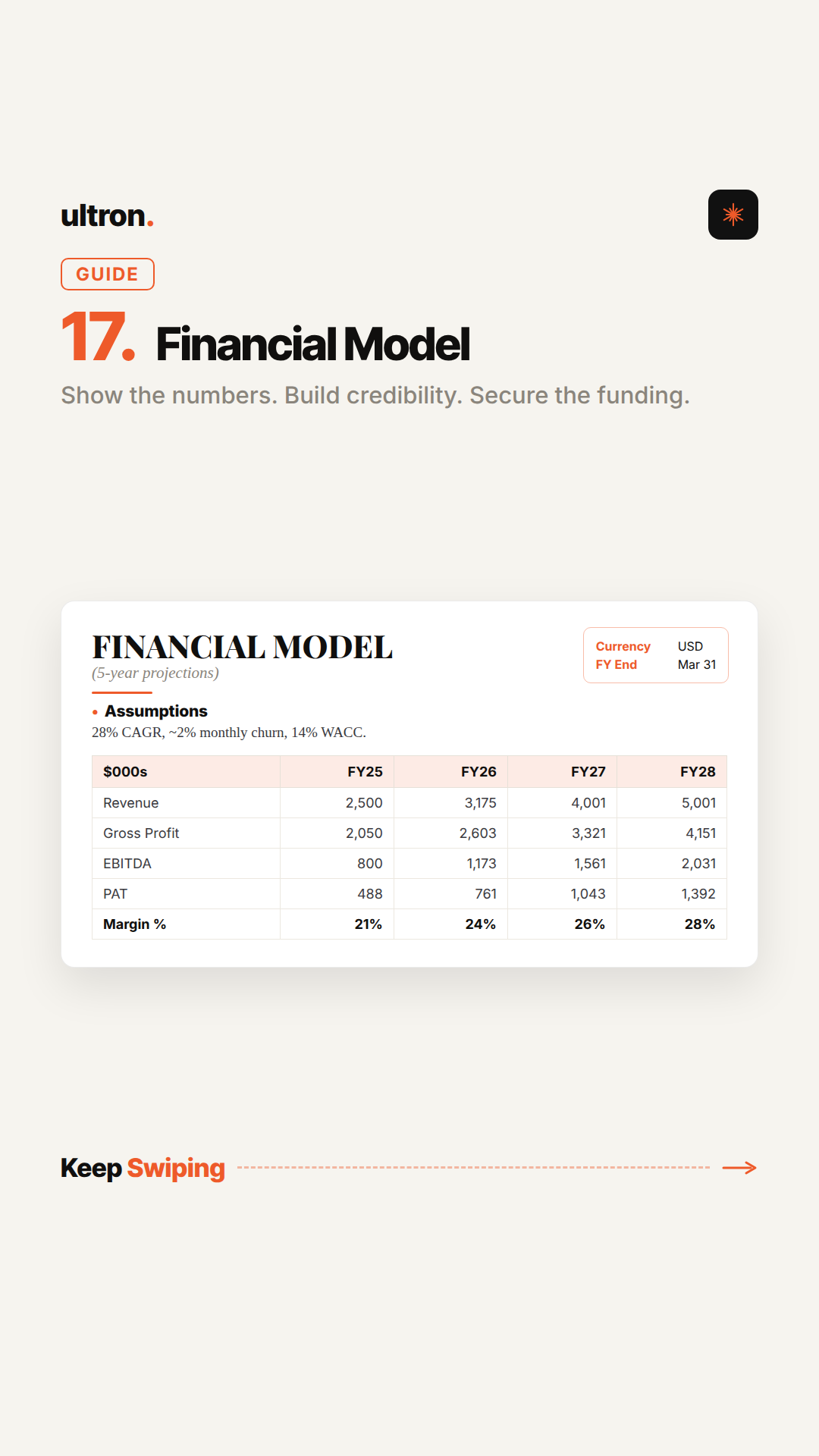
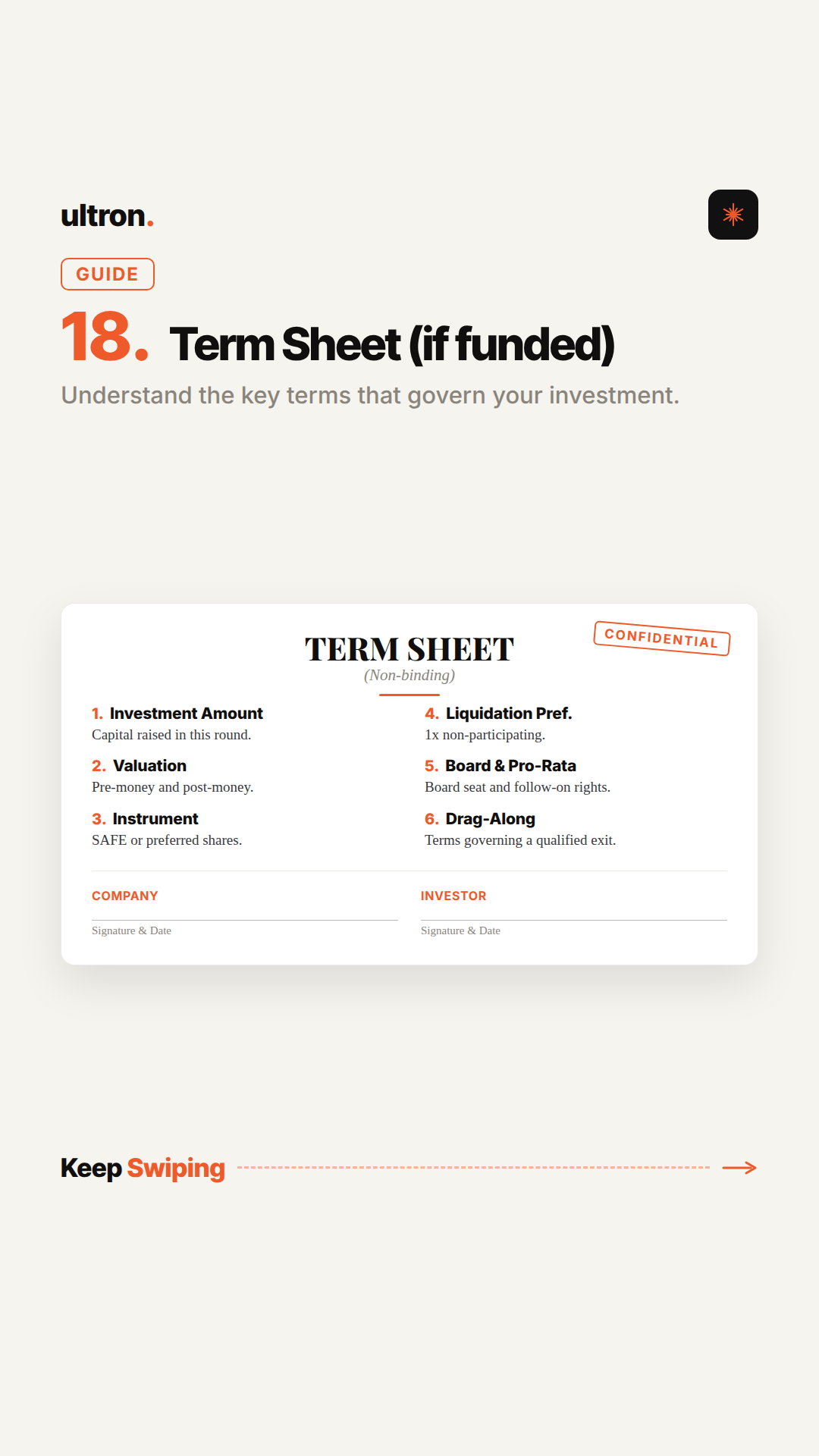
Eighteen documents separate a real startup from a handshake and a hope. Most founders learn which ones the hard way.

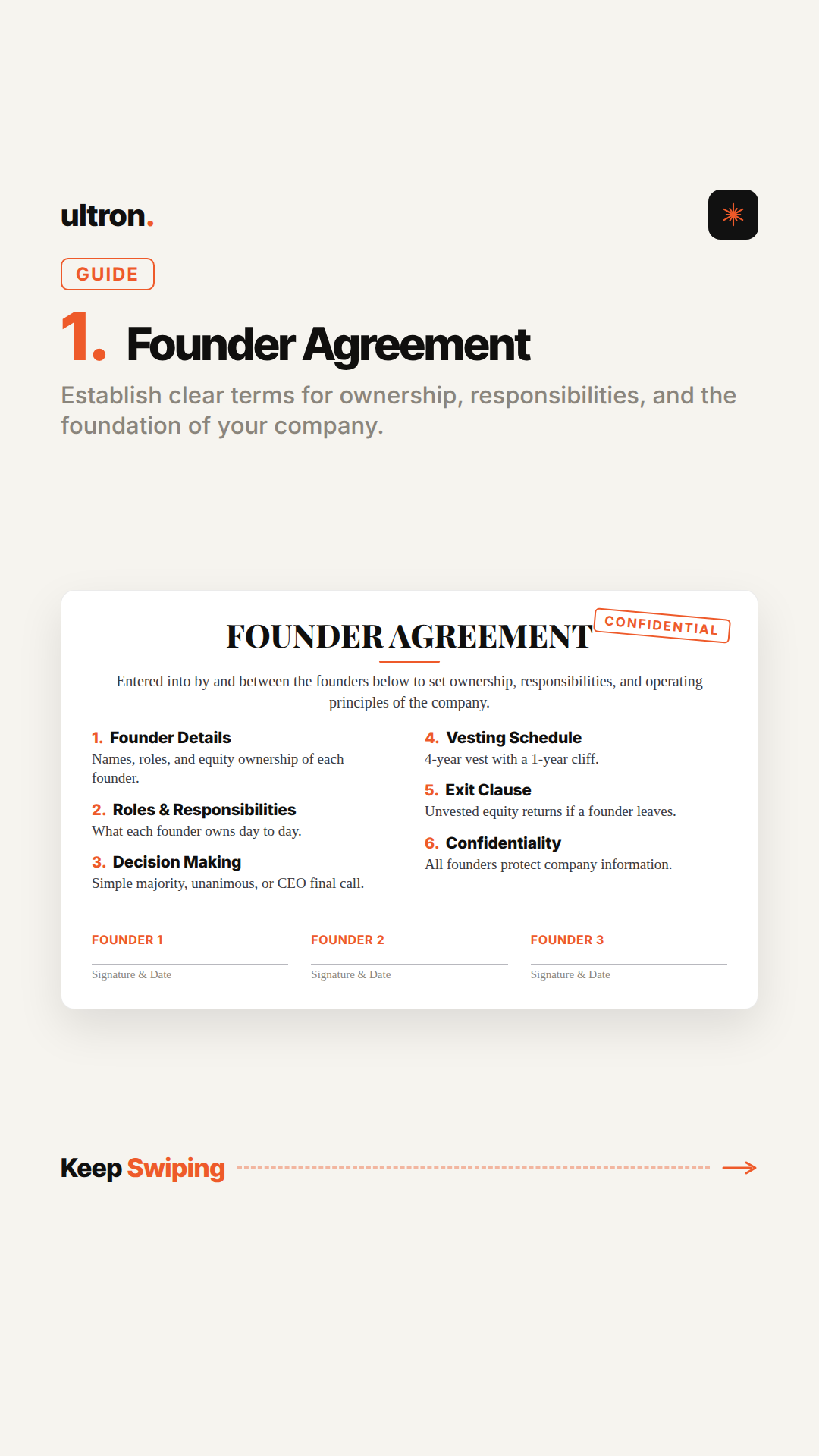
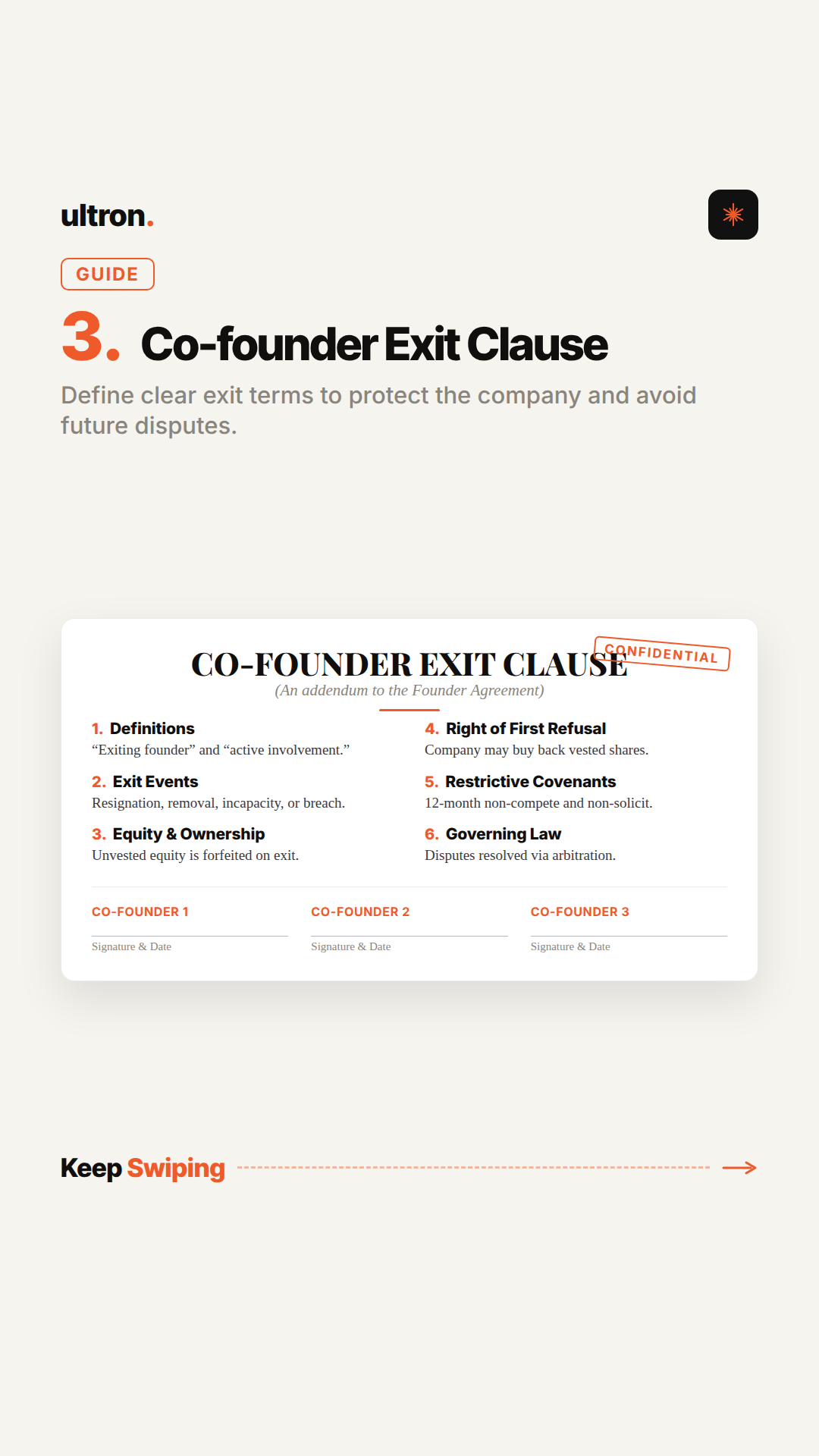
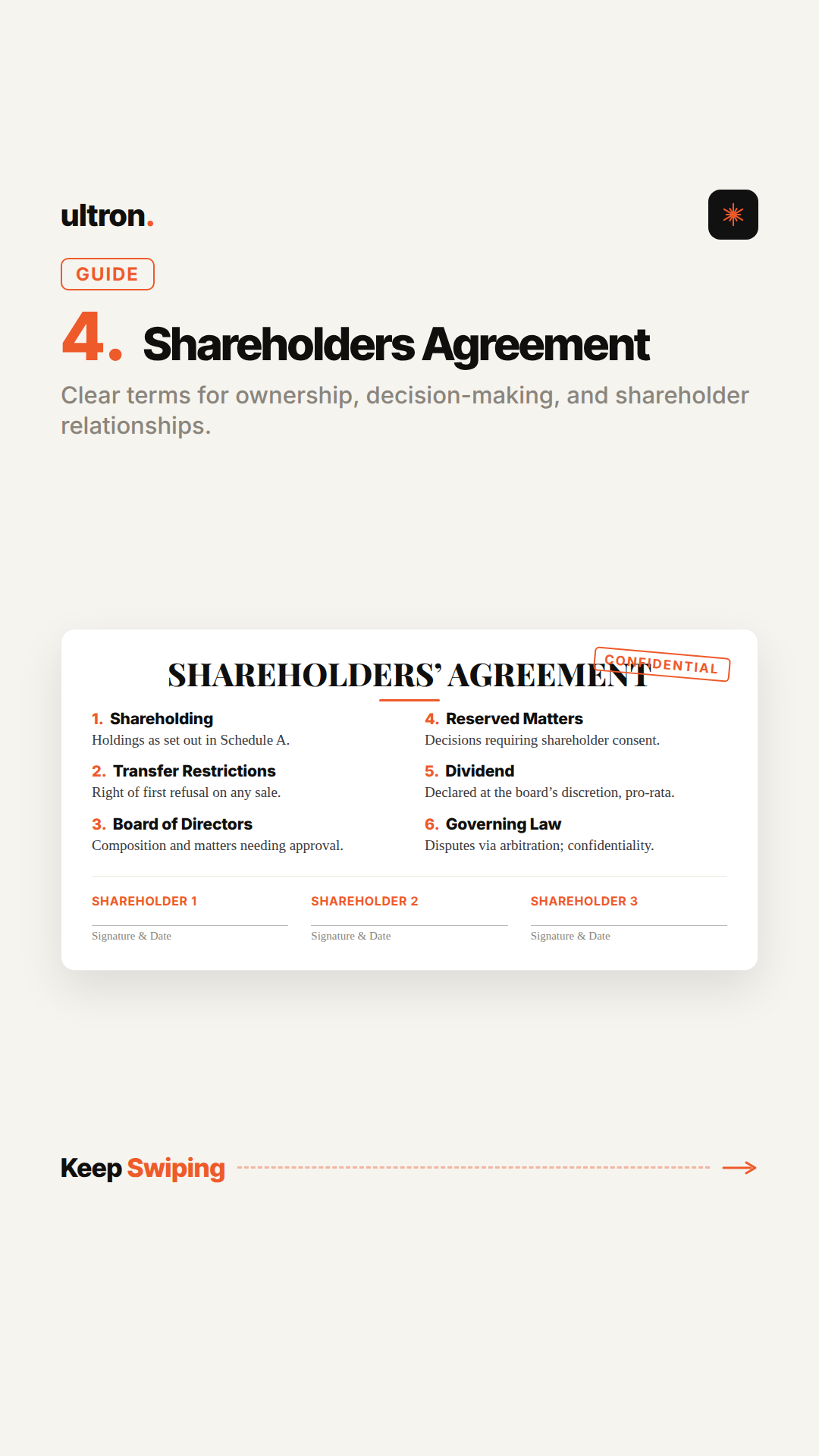
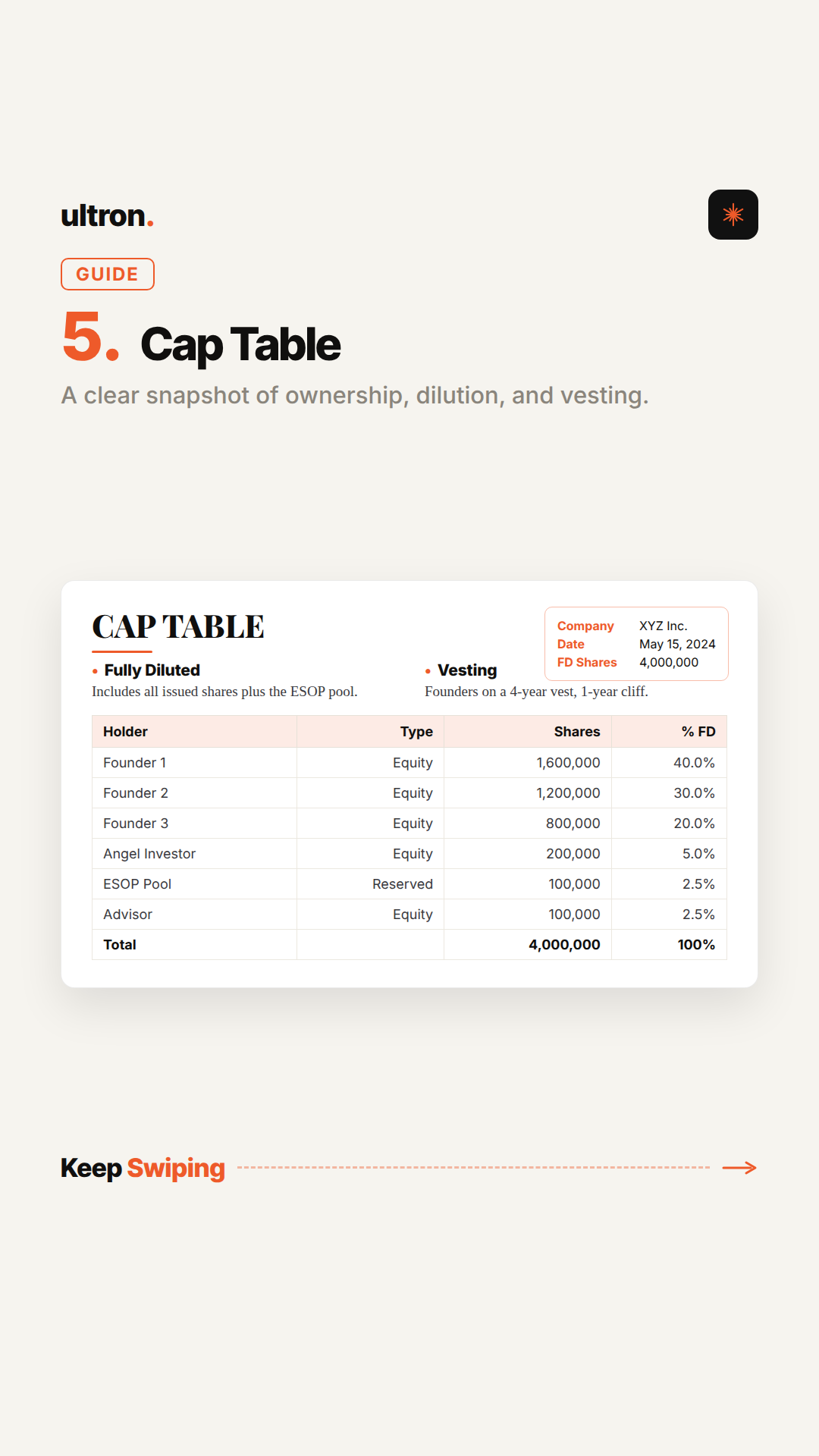
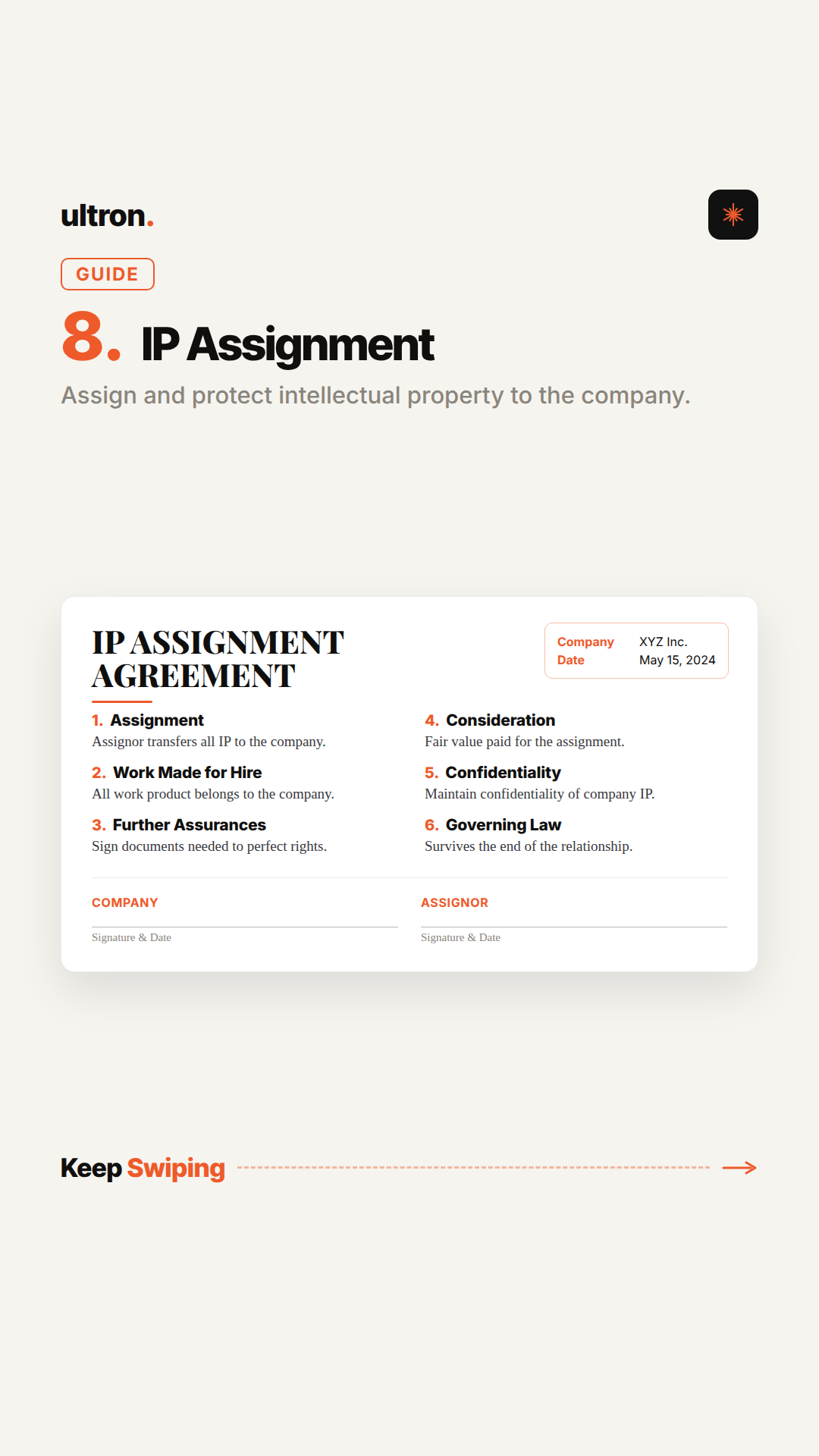
The founder agreement, before equity gets awkward. The incorporation papers. The IP assignment, so the company actually owns what you build. The cap table. The co-founder exit terms nobody wants to think about until the day they need them.

Boring until one of them saves you. Then it is the only thing that matters.

Comment DOCS and I will send all eighteen, what each one protects, and the order to put them in place.
Claude Code commands
01
02
03
04
05
06
07
08
09
10
11
12
13
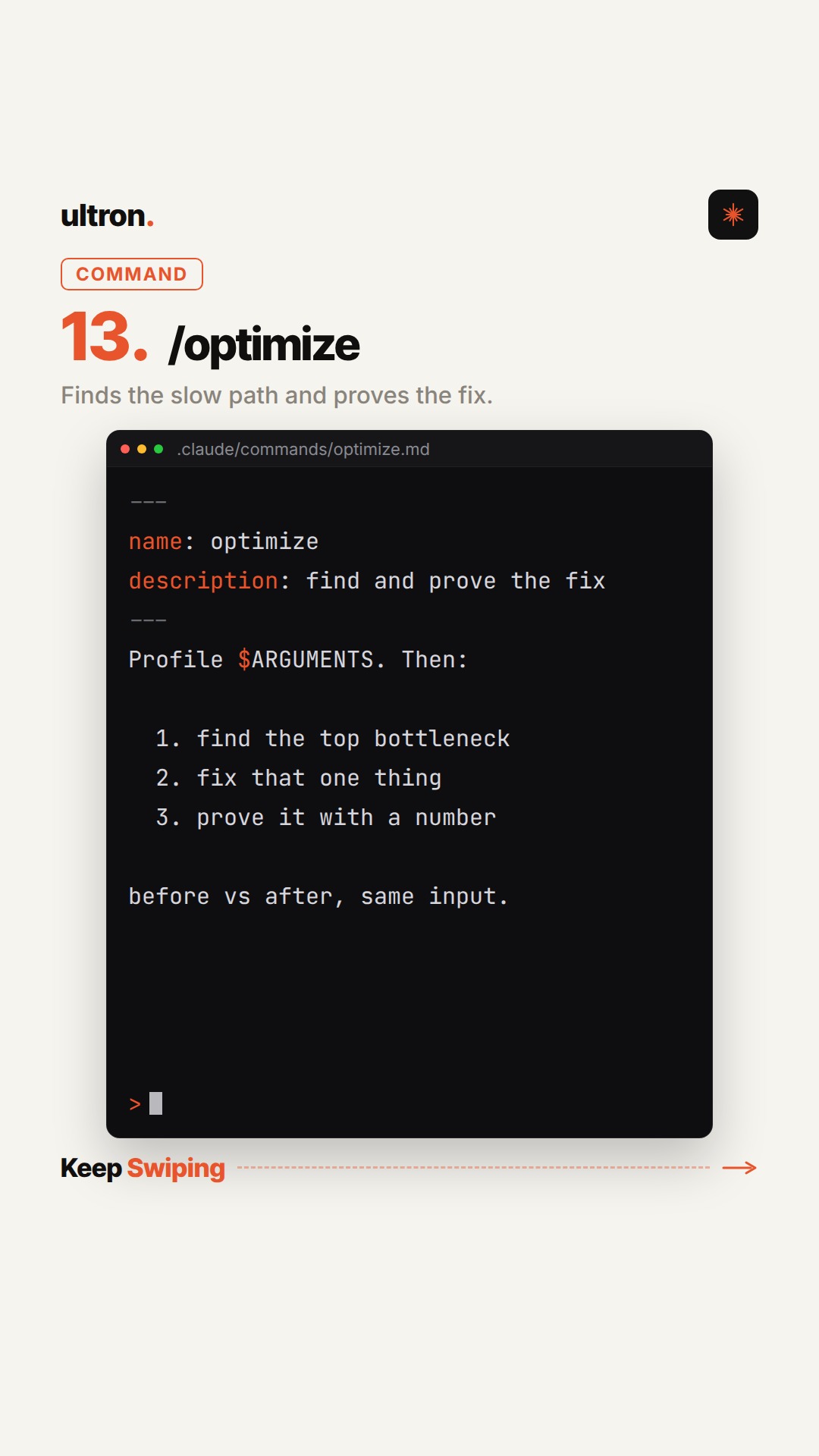
14
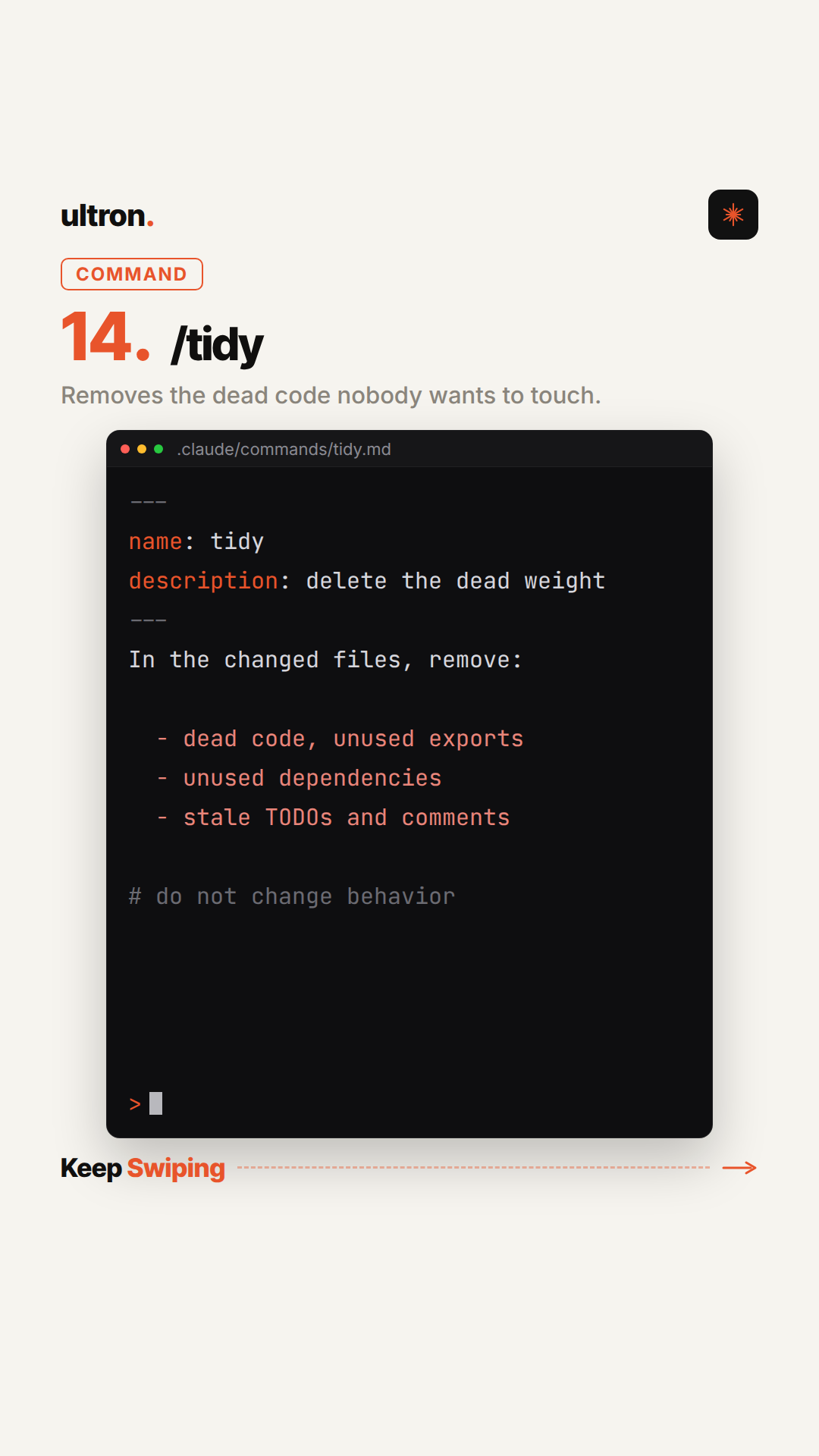
15
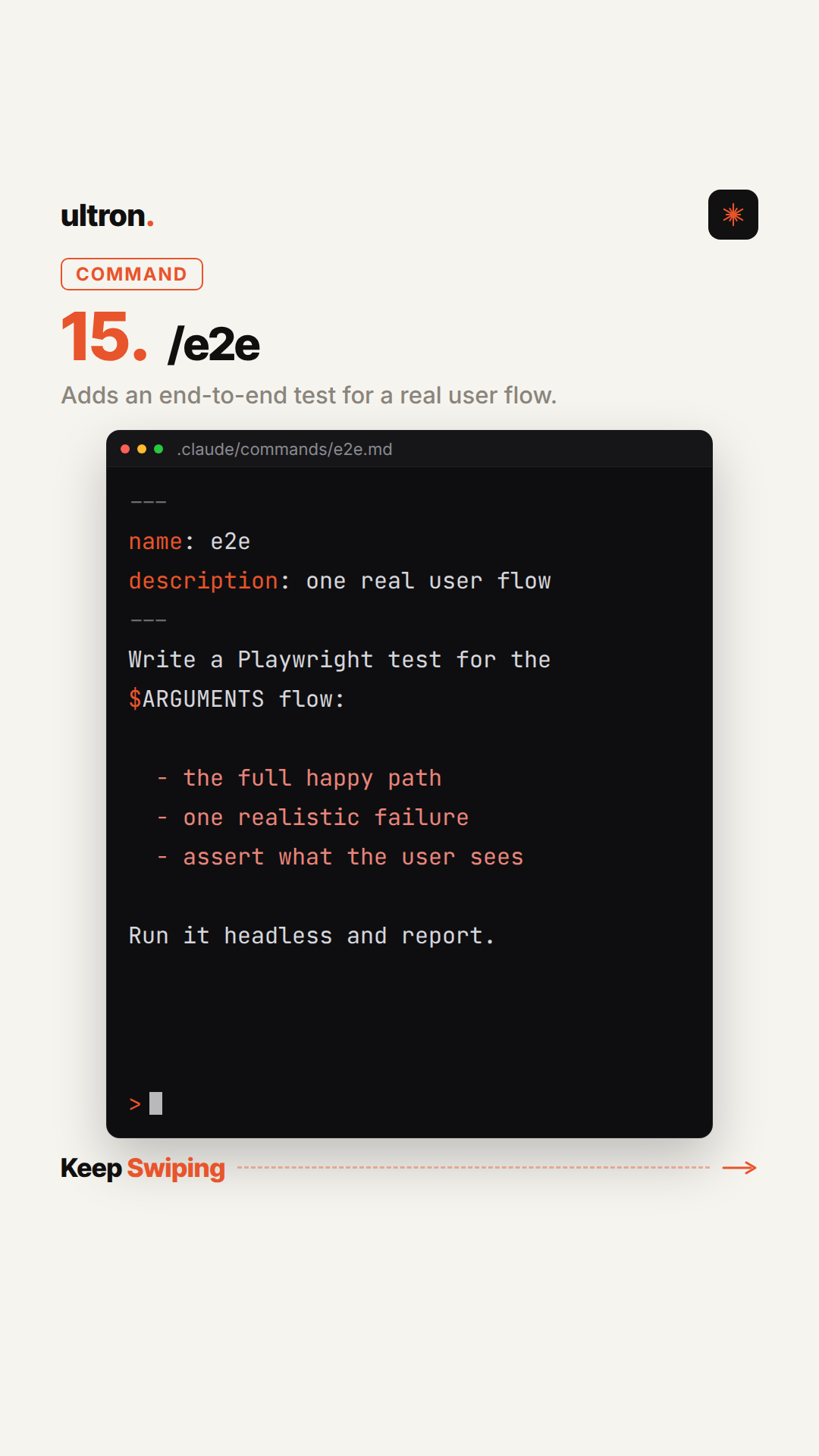
16
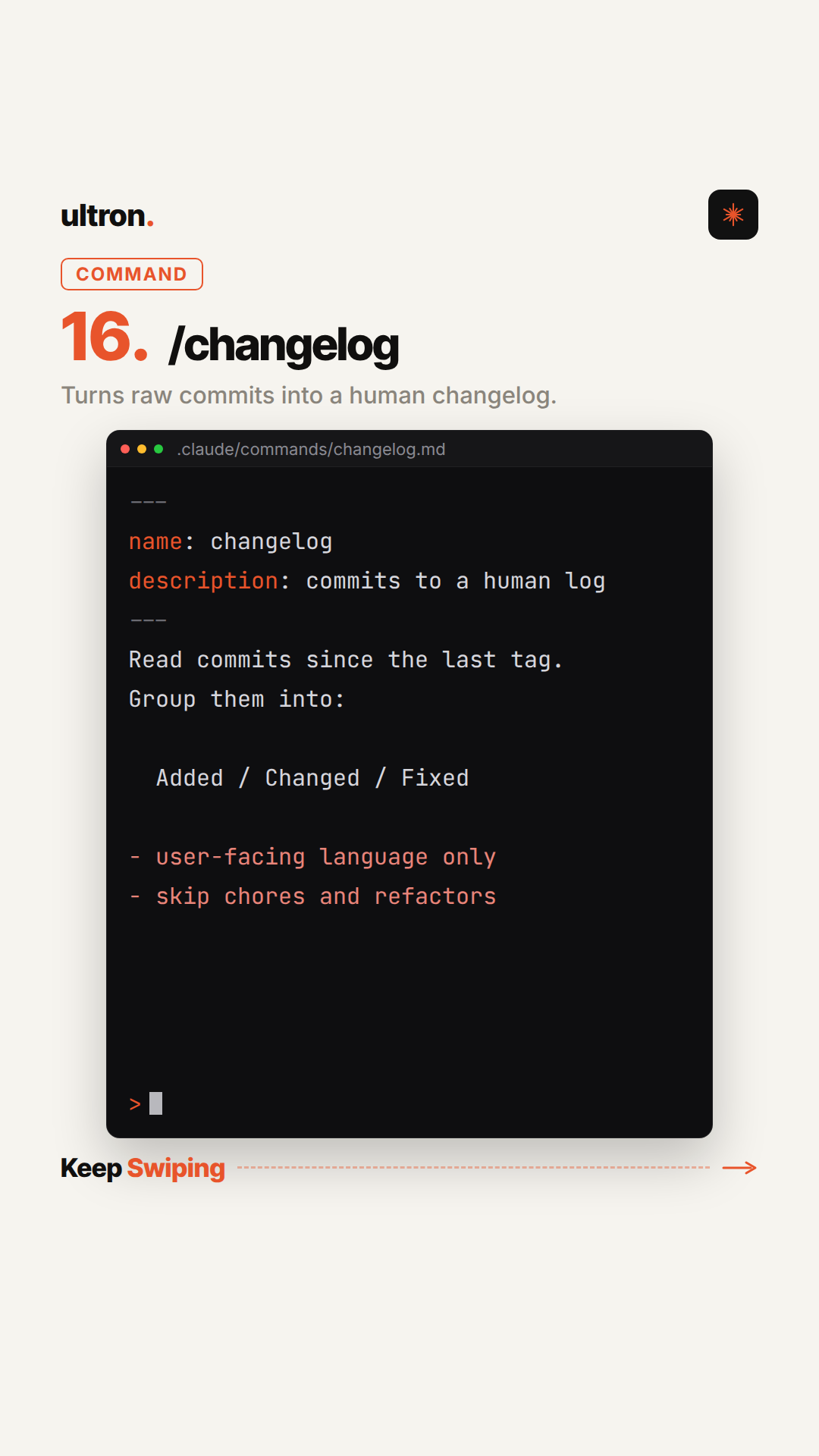
17
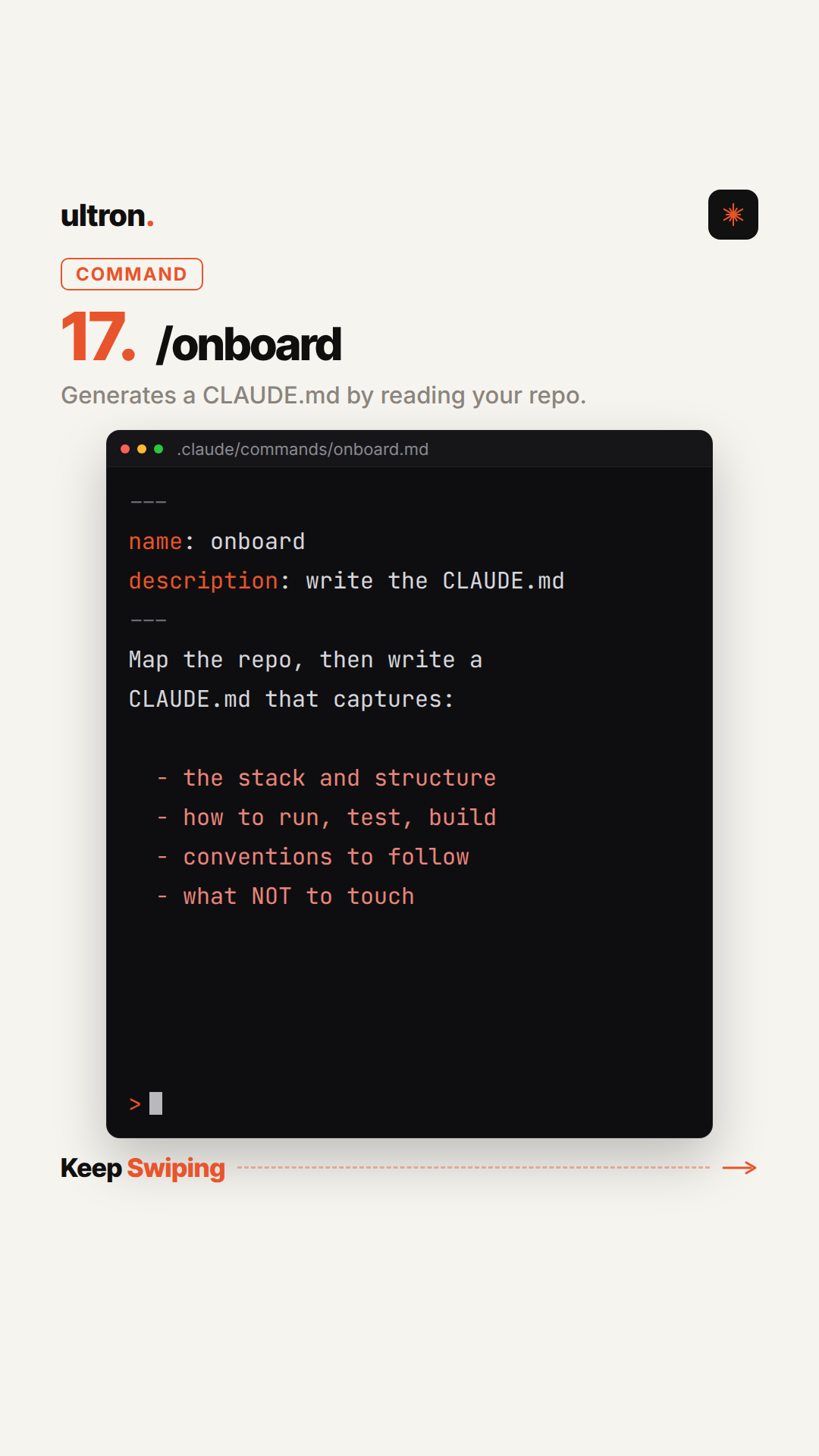
18
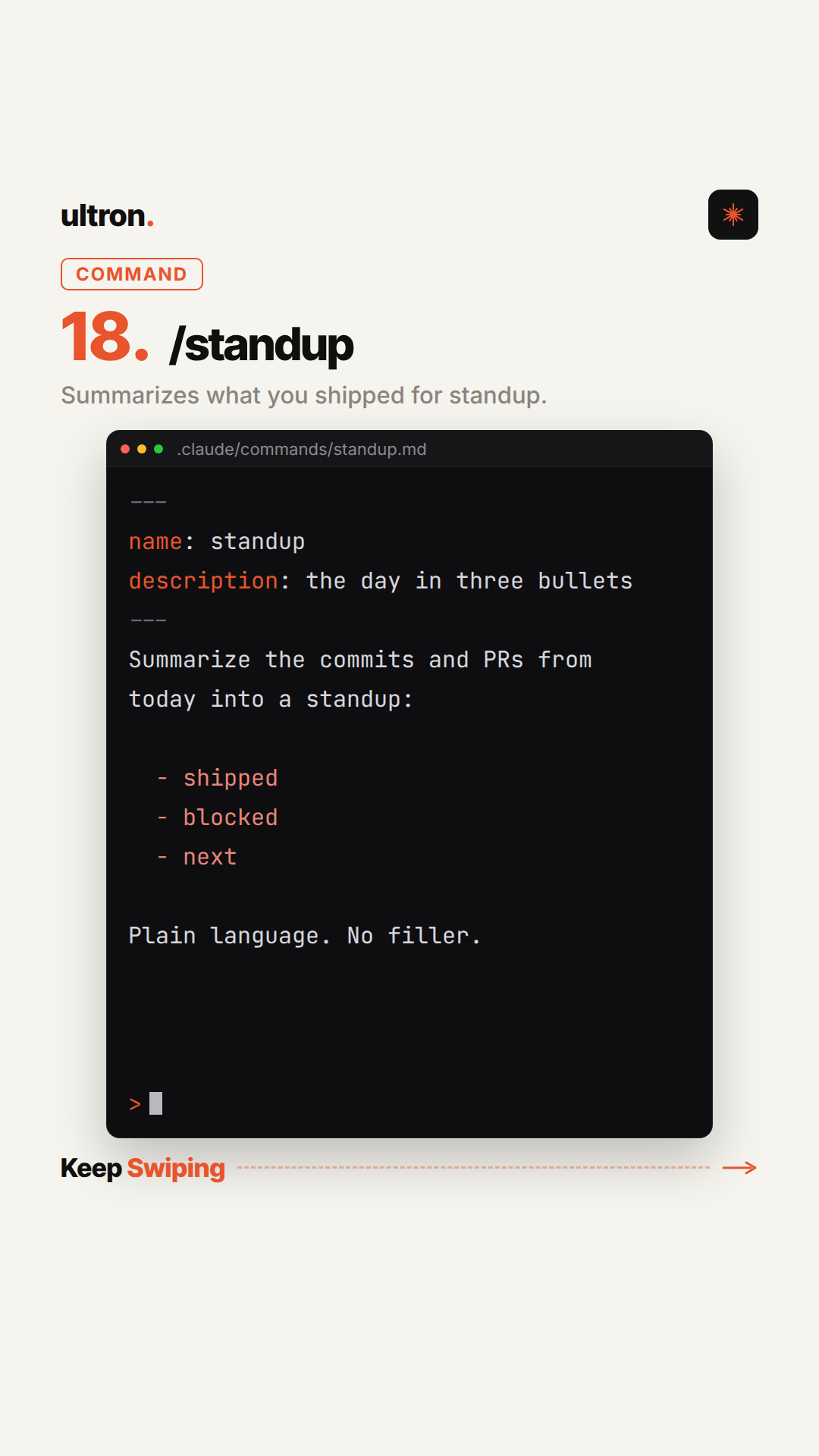
19
Caption
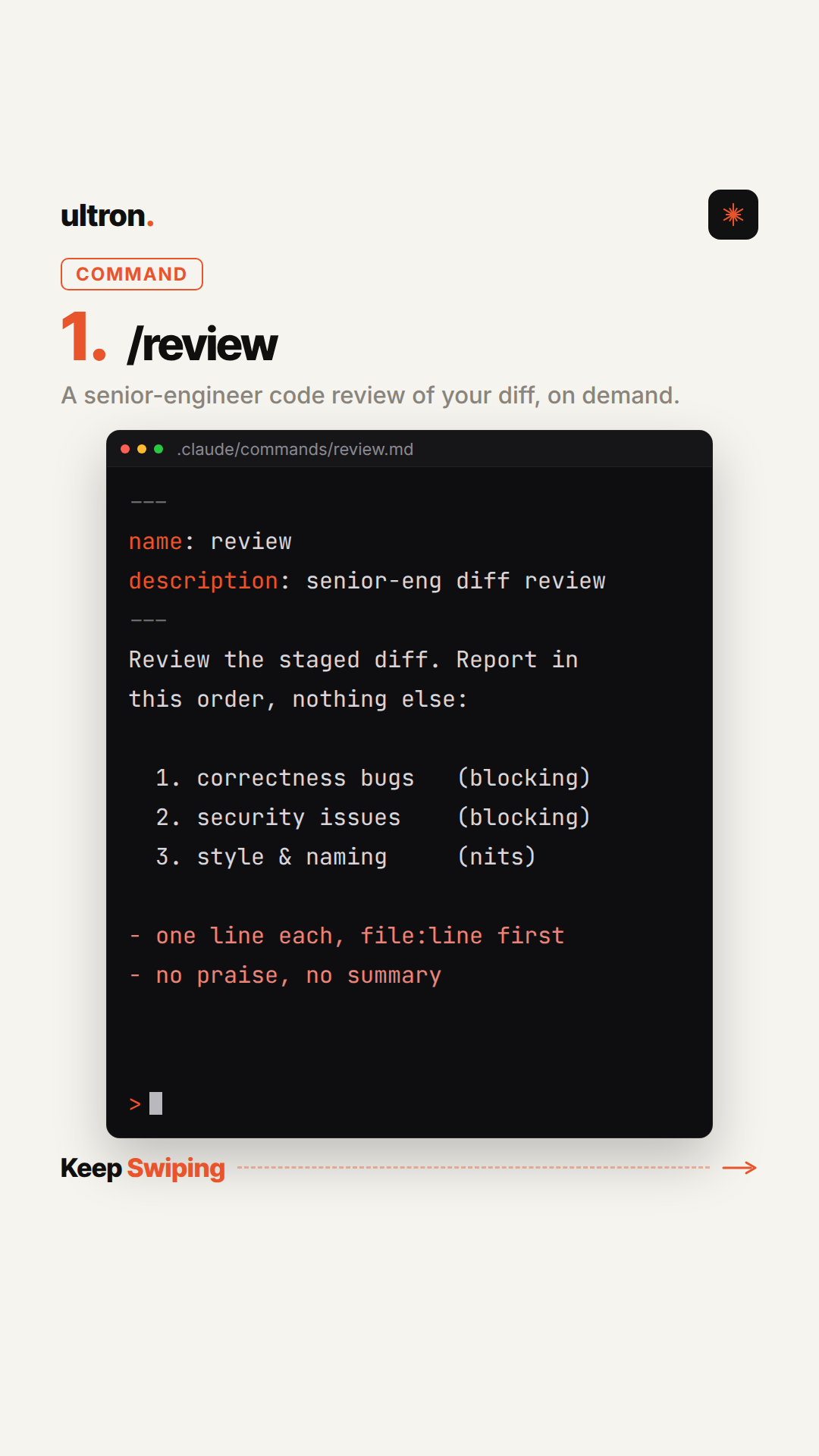
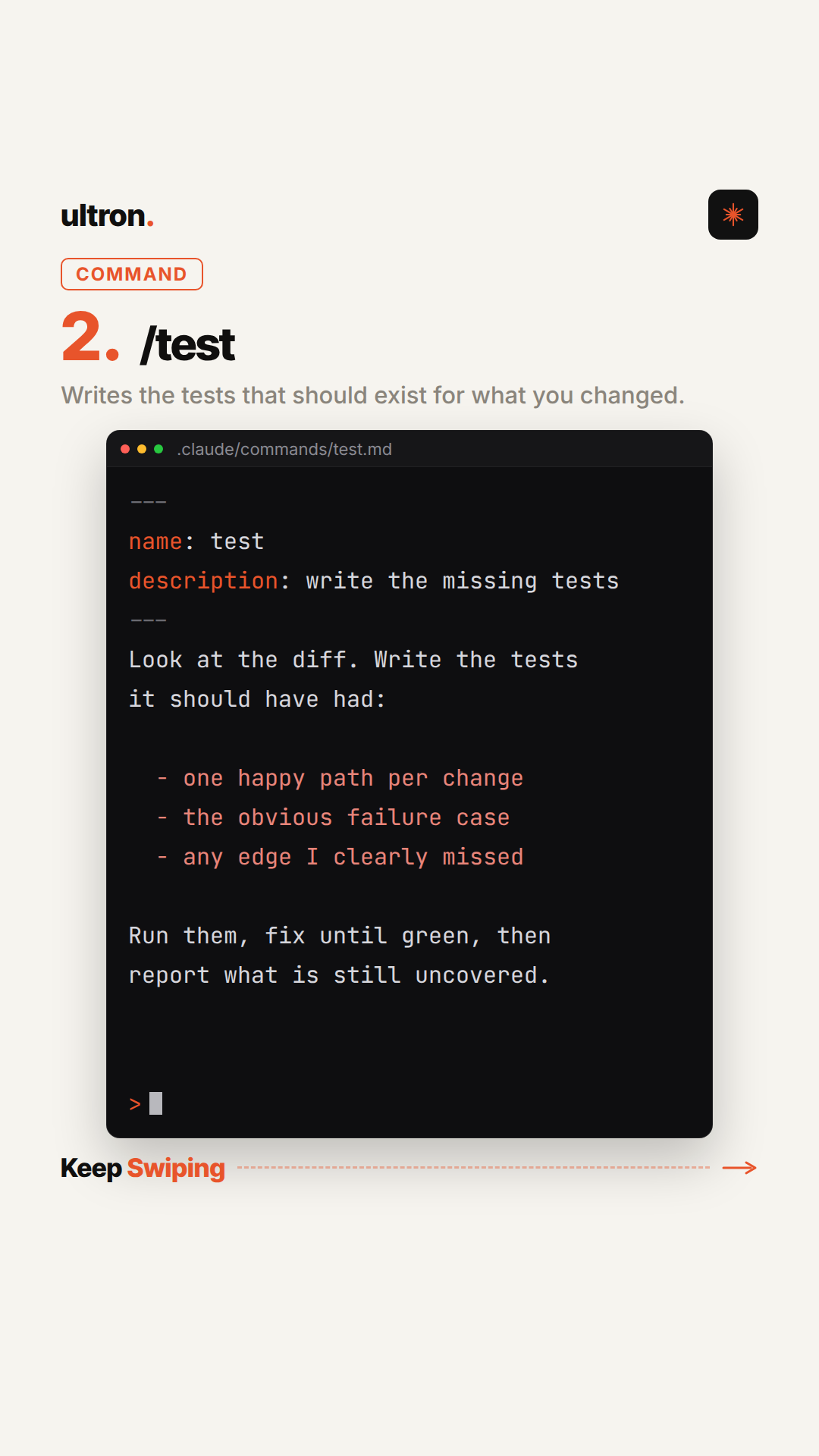
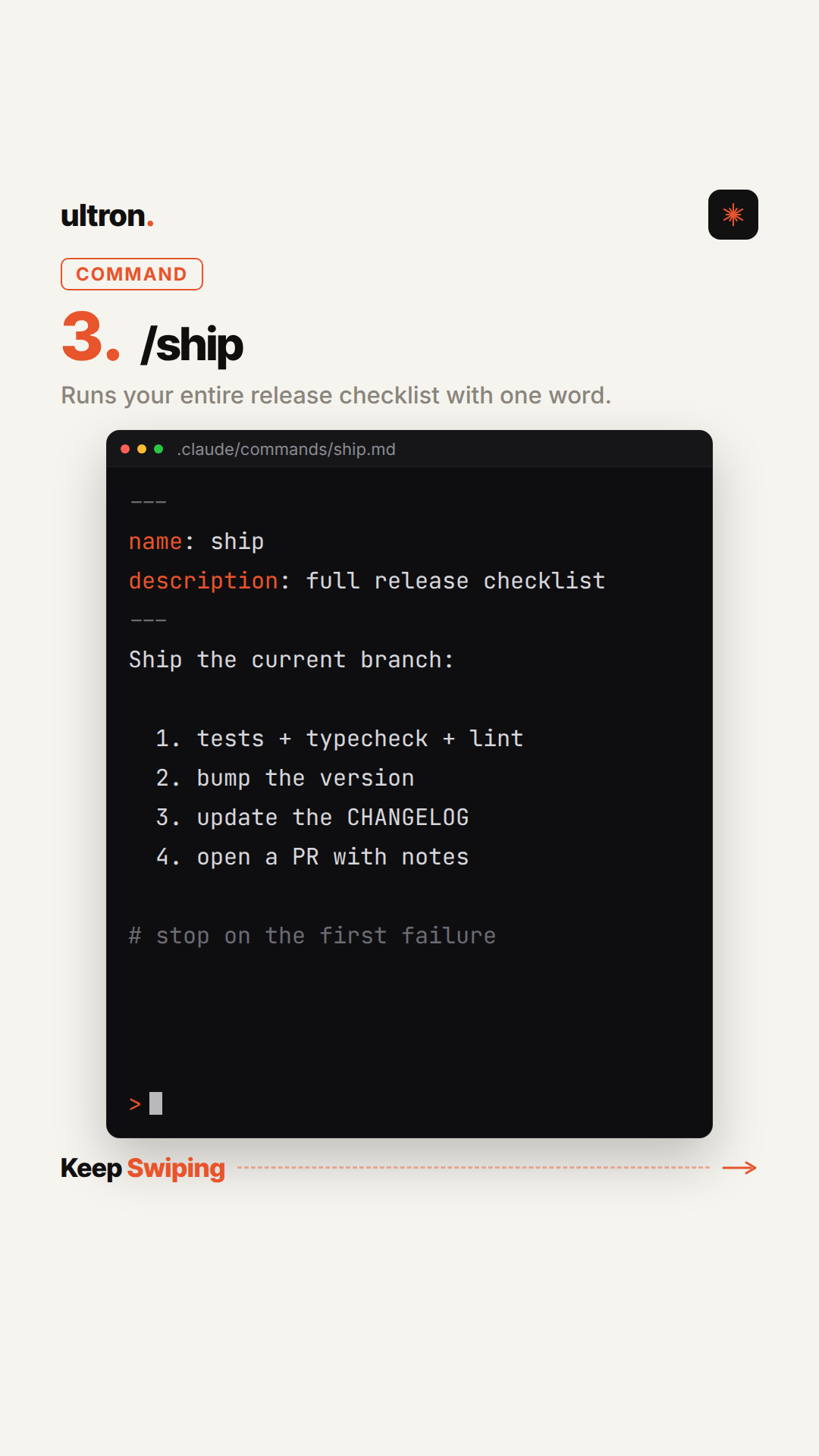
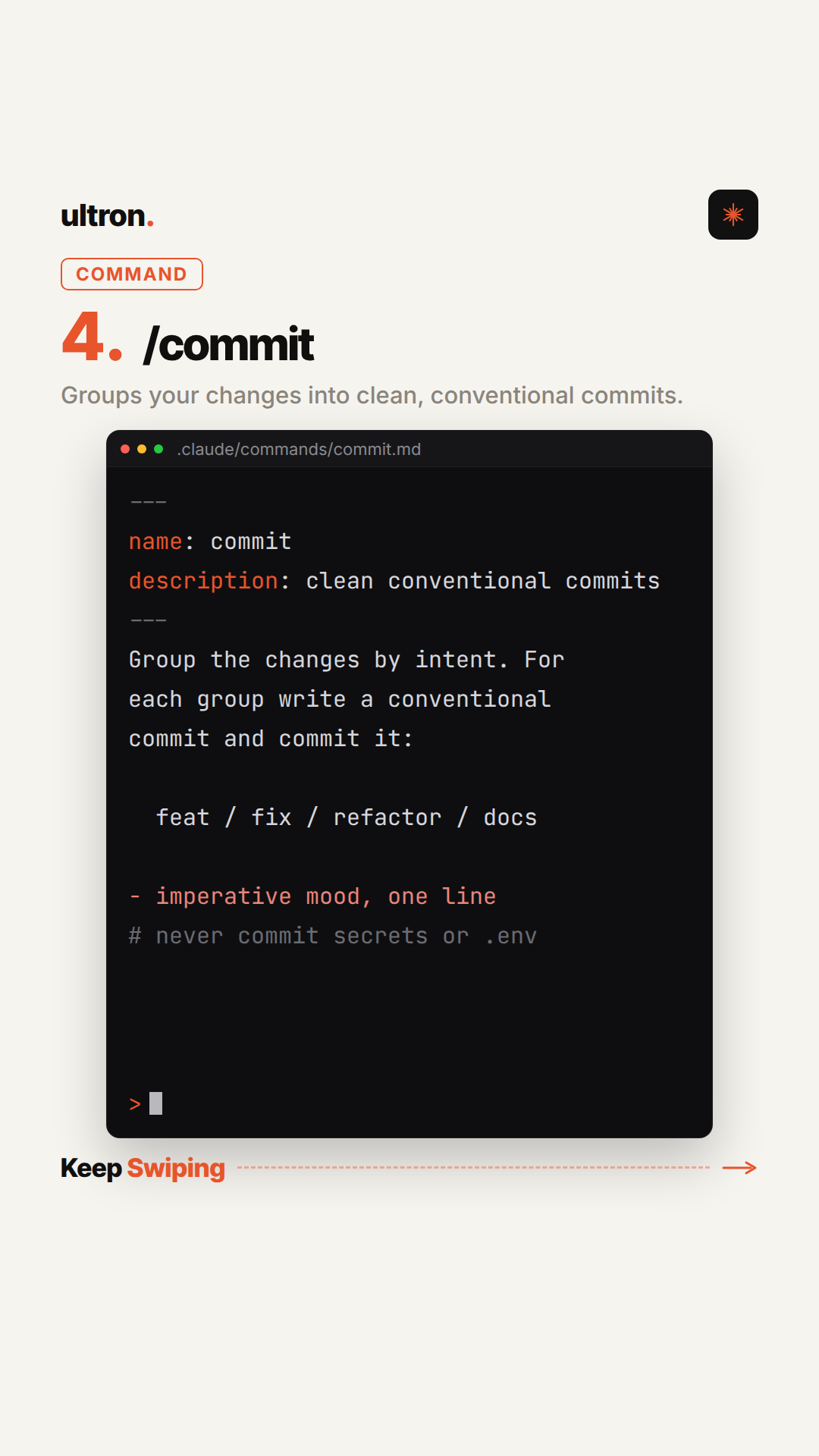
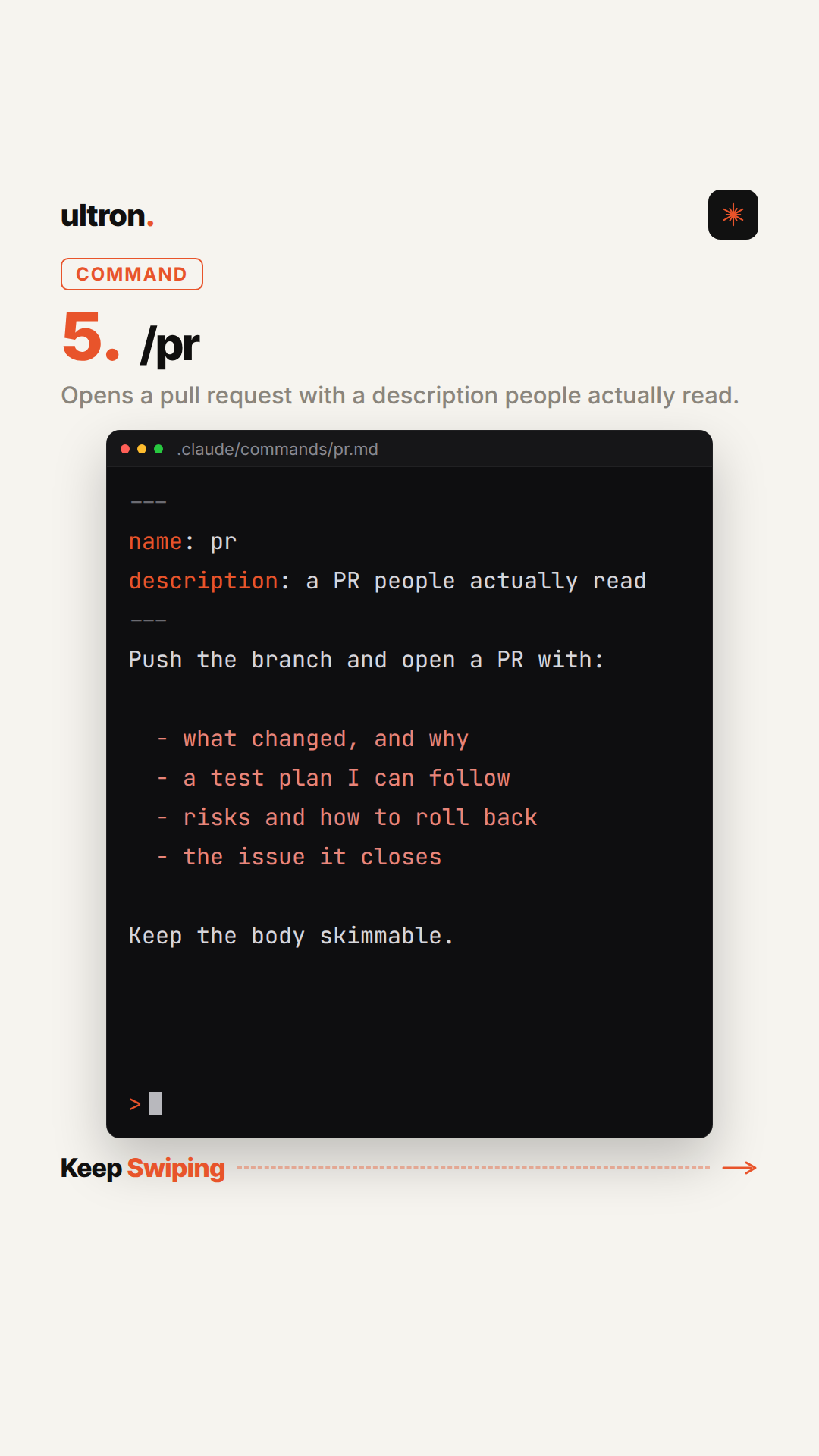
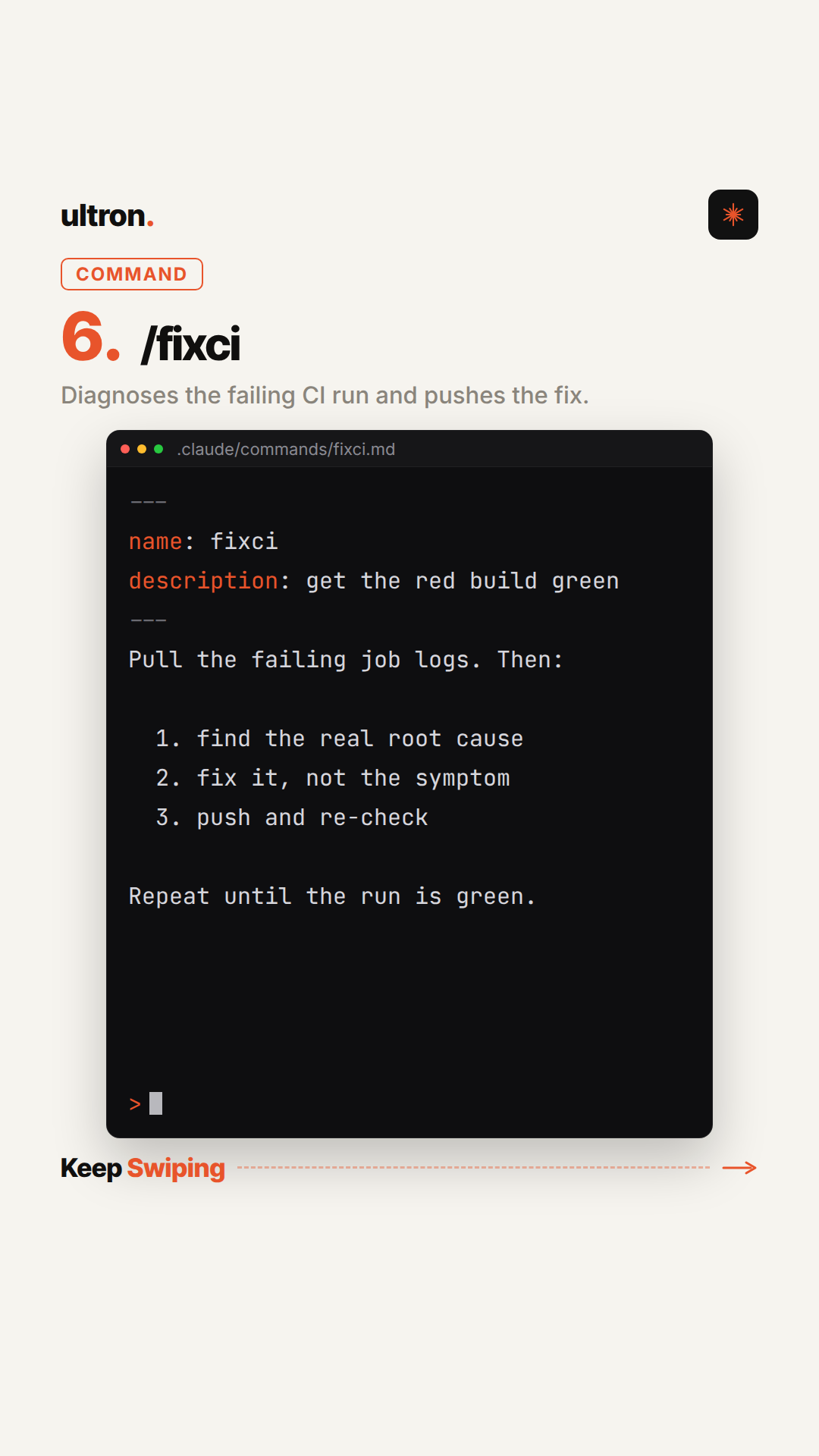
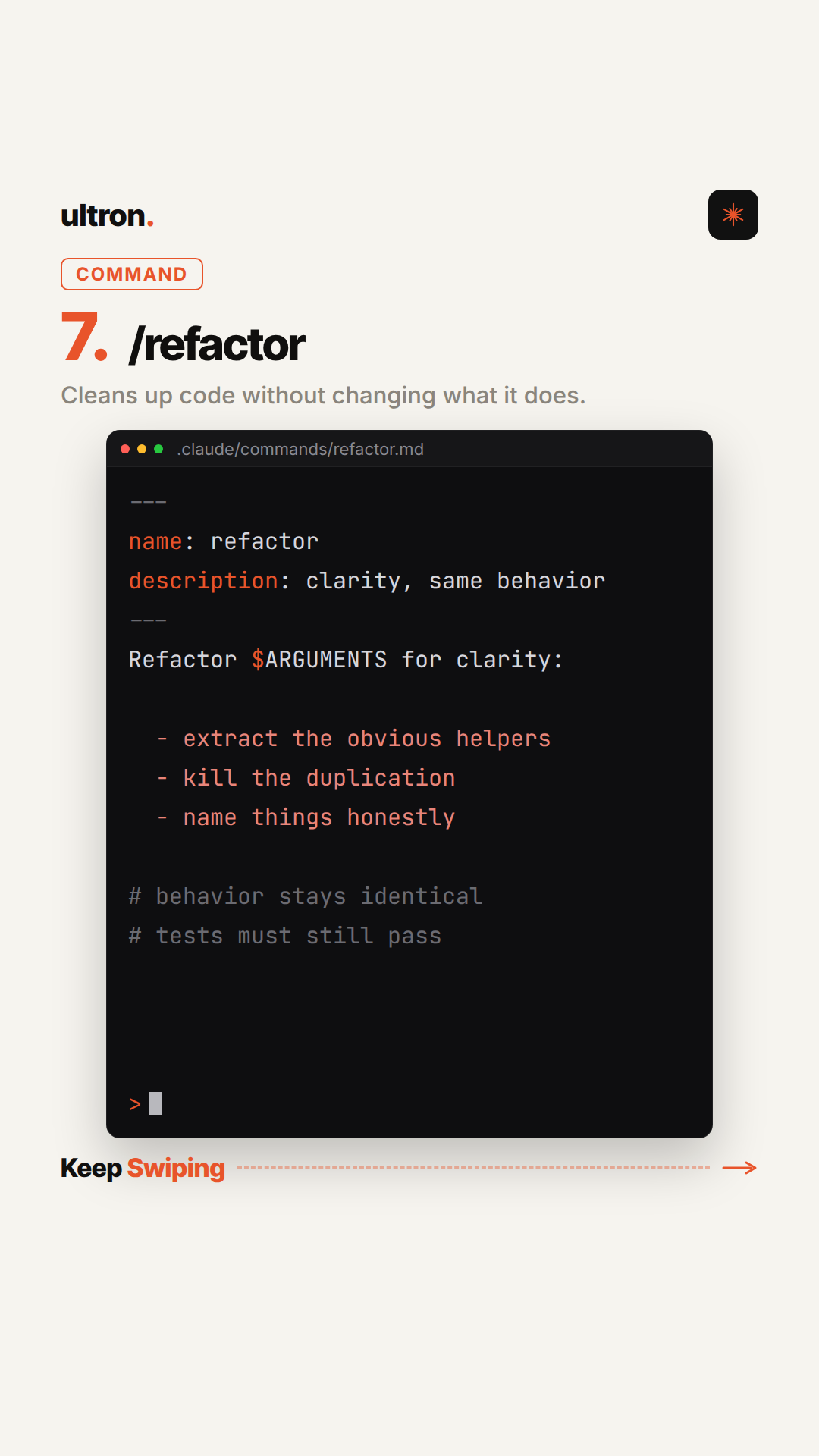
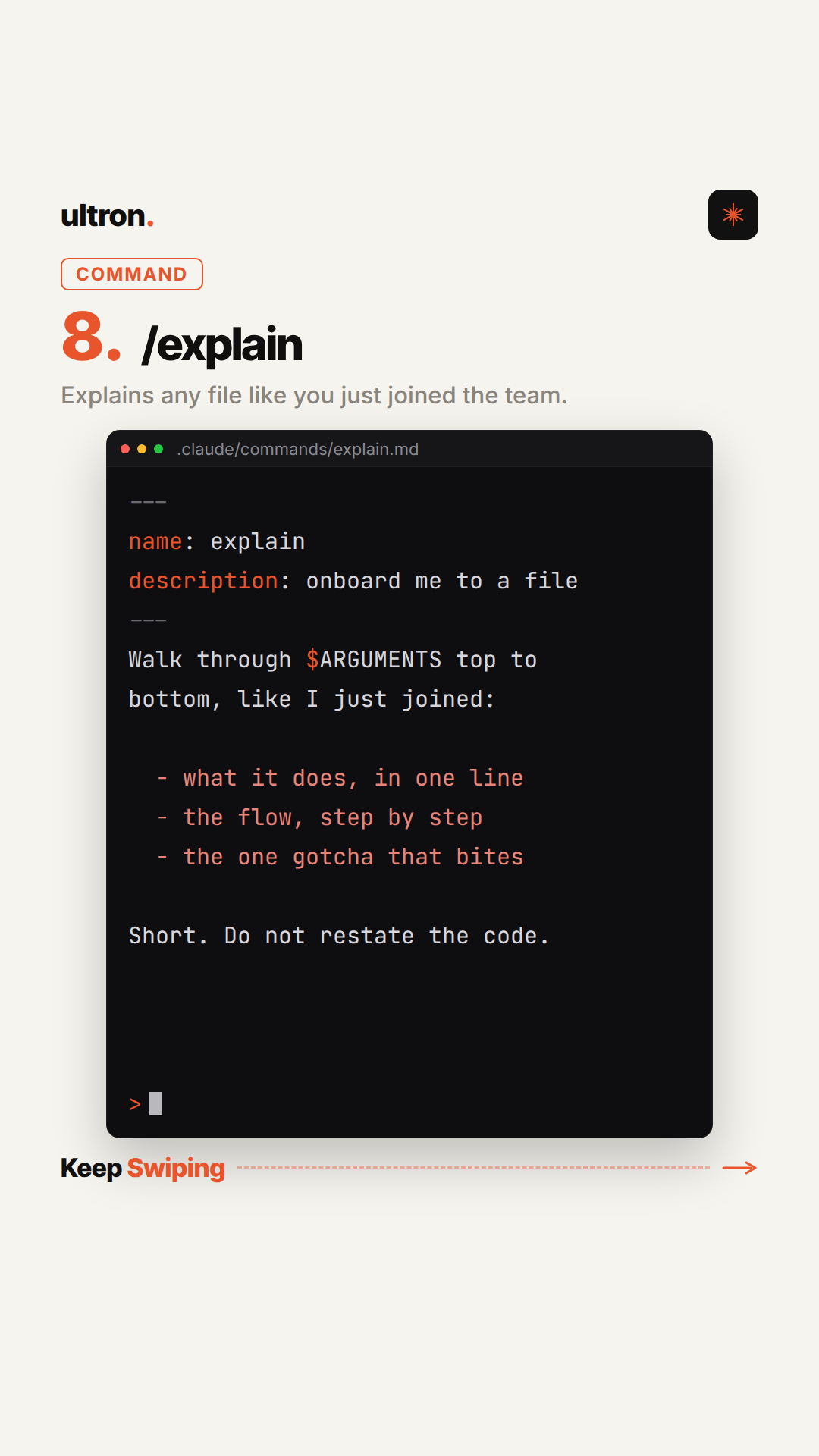
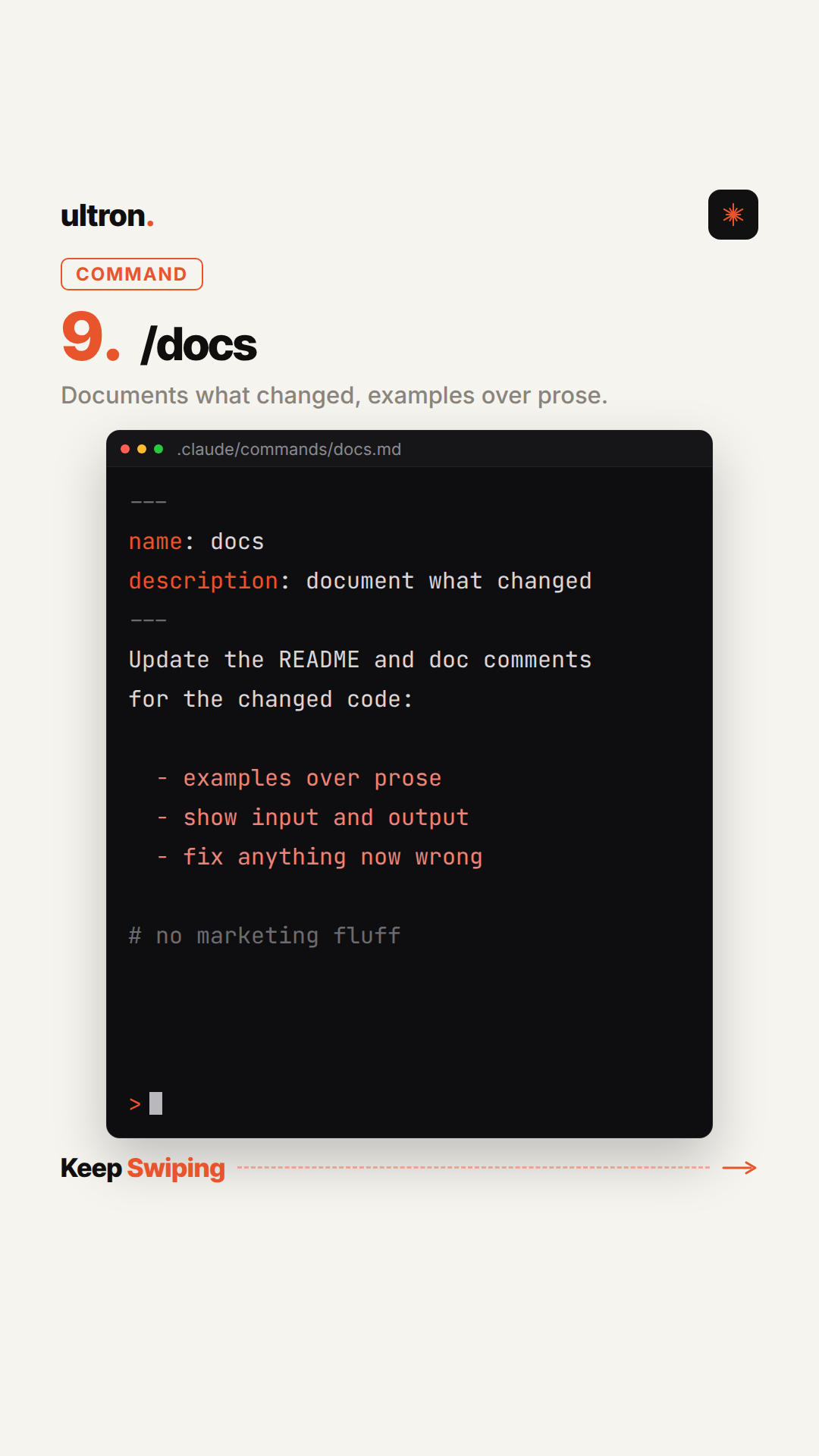
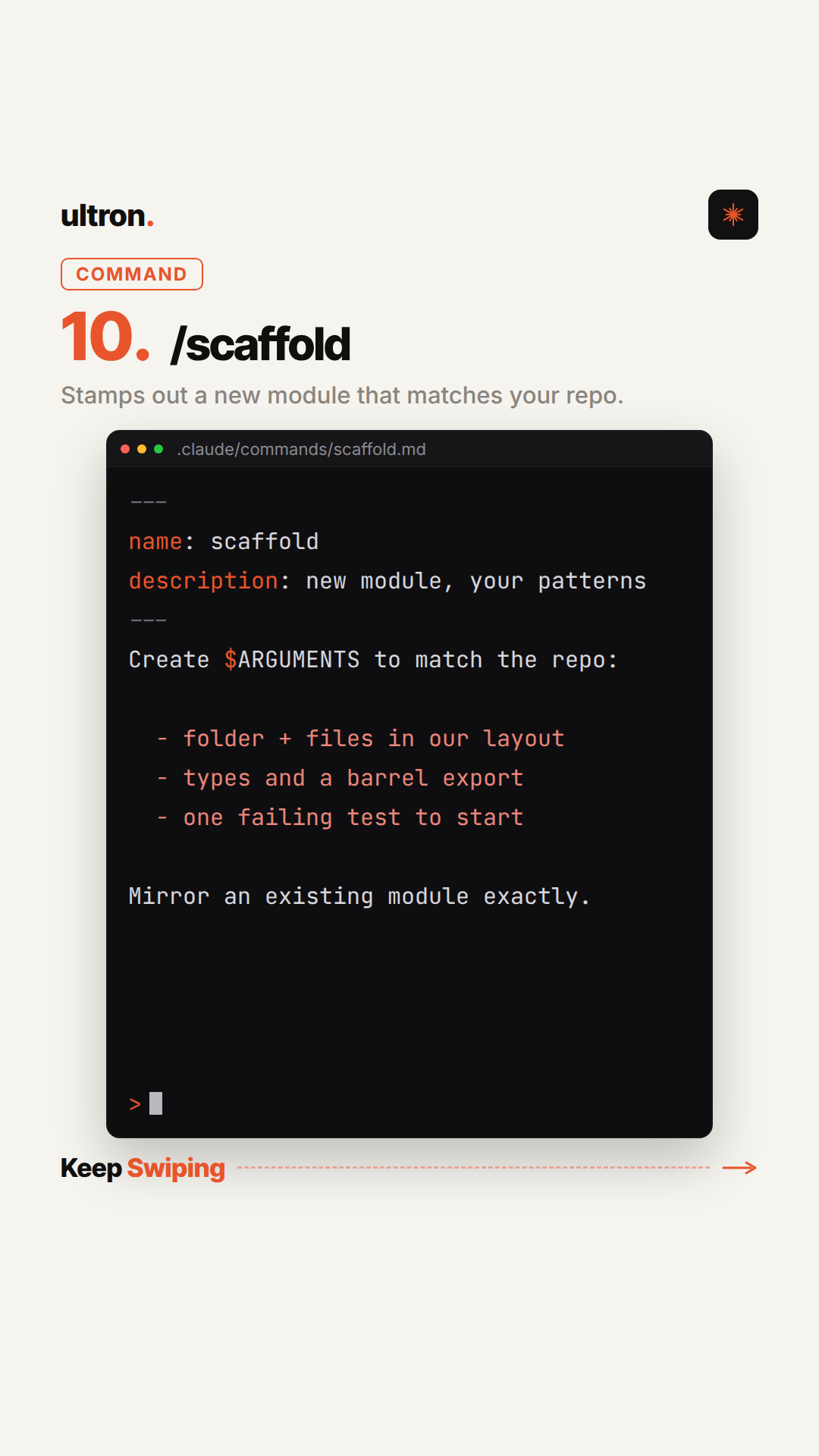
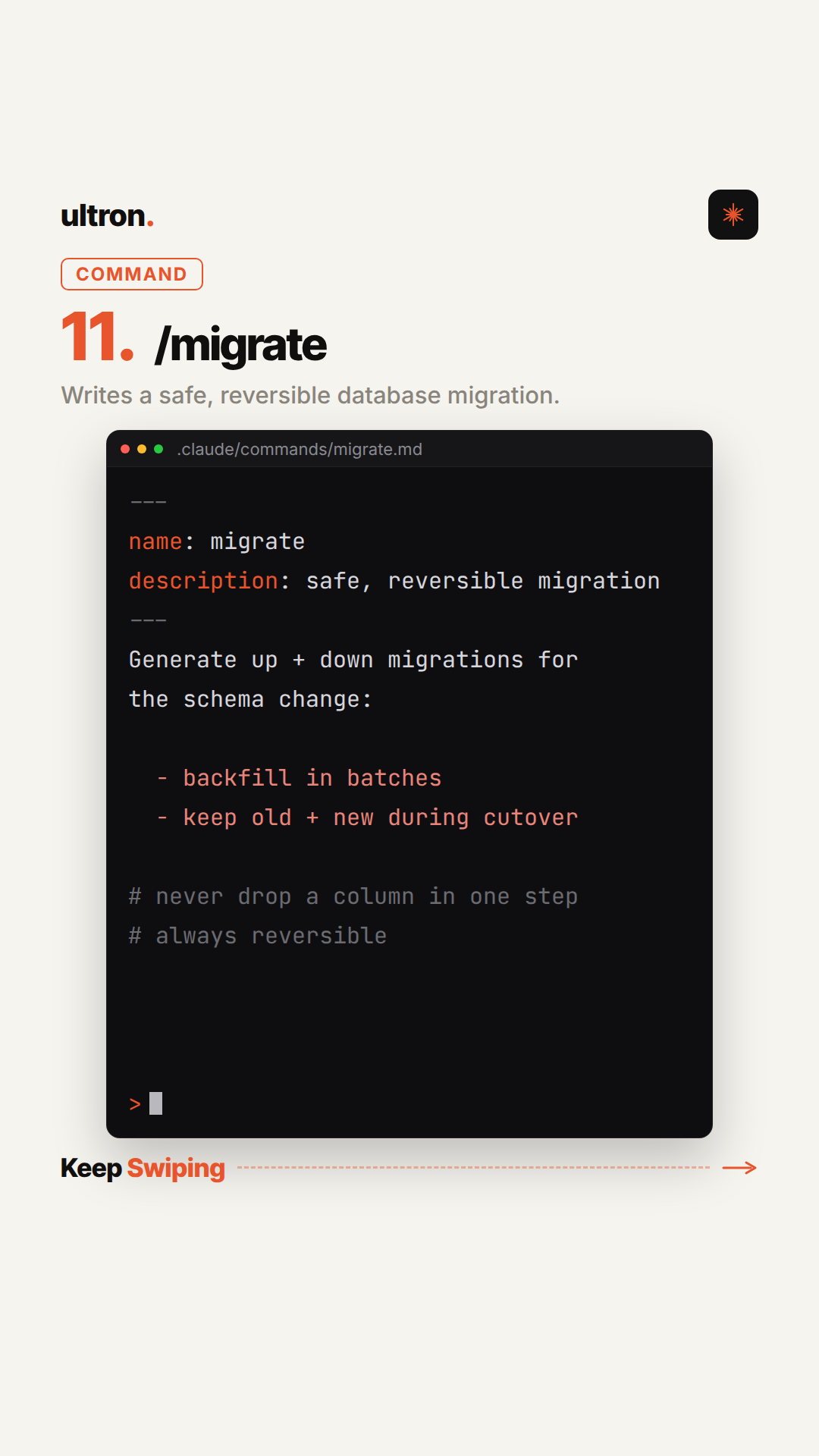
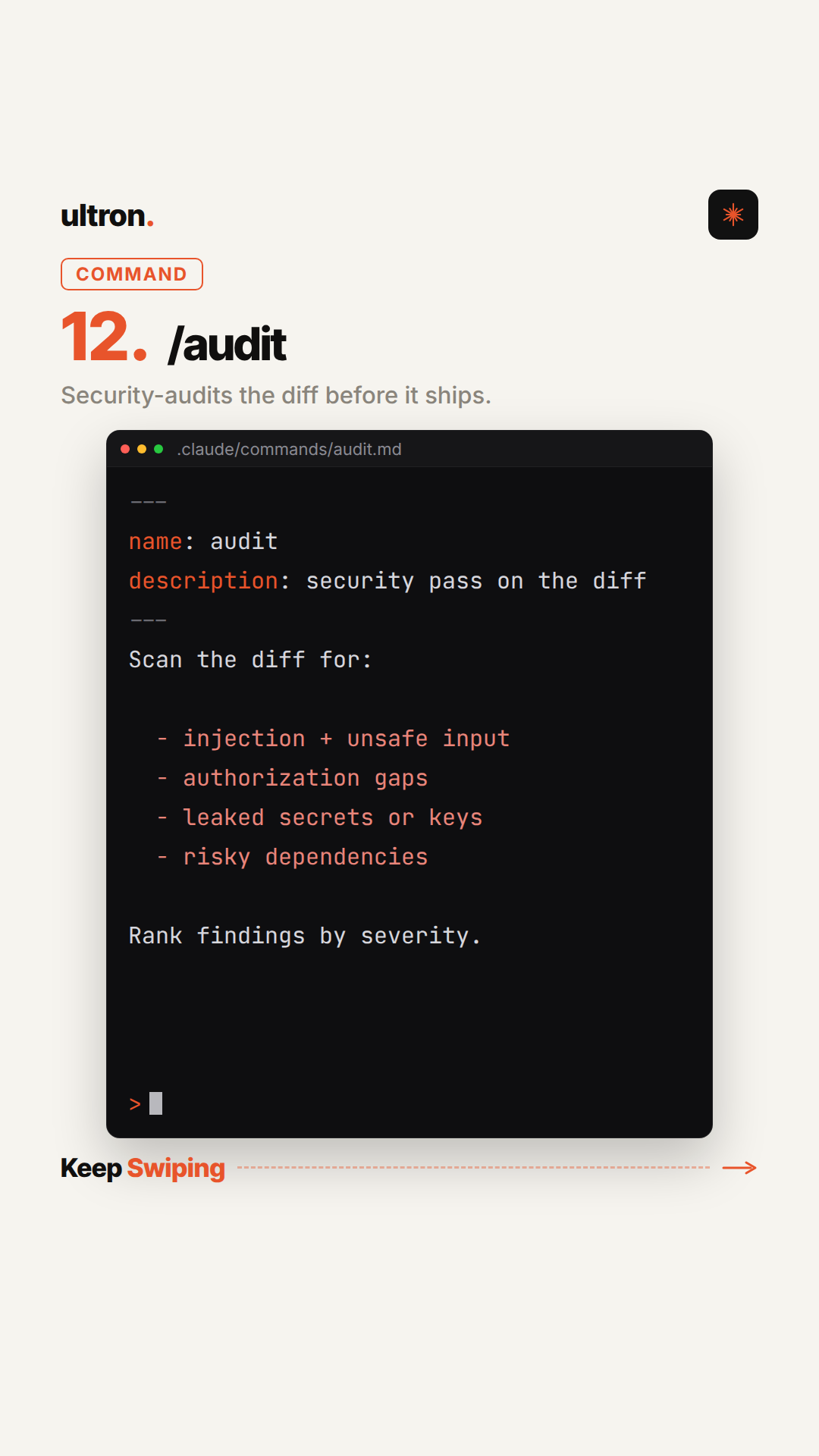
Eighteen Claude Code commands worth stealing, where one word runs a whole workflow.

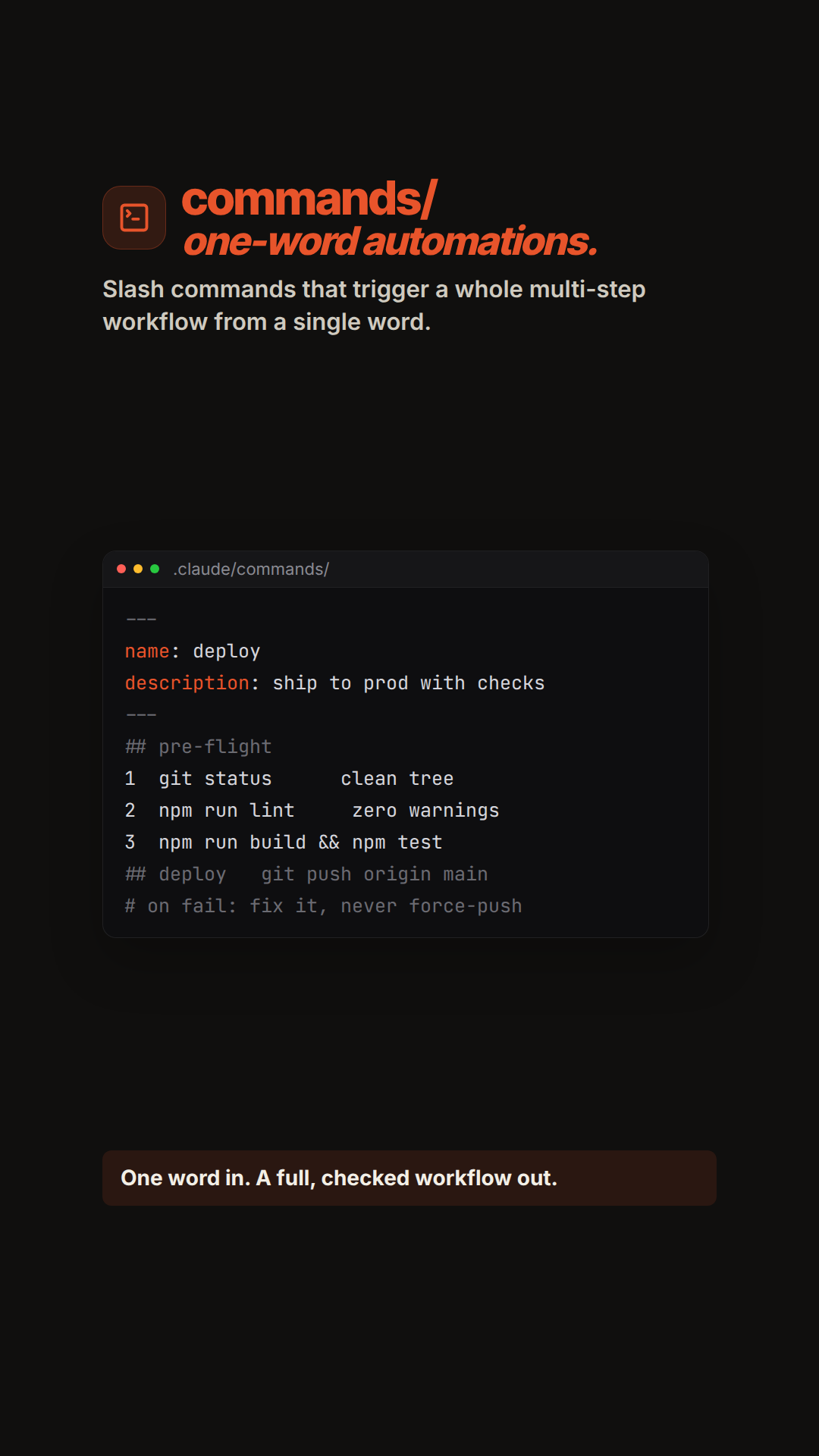
Slash review runs a senior code review of your diff. Slash test writes the tests that should exist and runs them. Slash ship runs the entire release checklist. Slash fixci pulls the failing logs and pushes the fix. Slash onboard reads your repo and writes the CLAUDE.md.

You stop retyping the same long prompts and start triggering them by name.

Comment COMMANDS and I will send all eighteen command files and where to drop them.
SaaS income with Claude
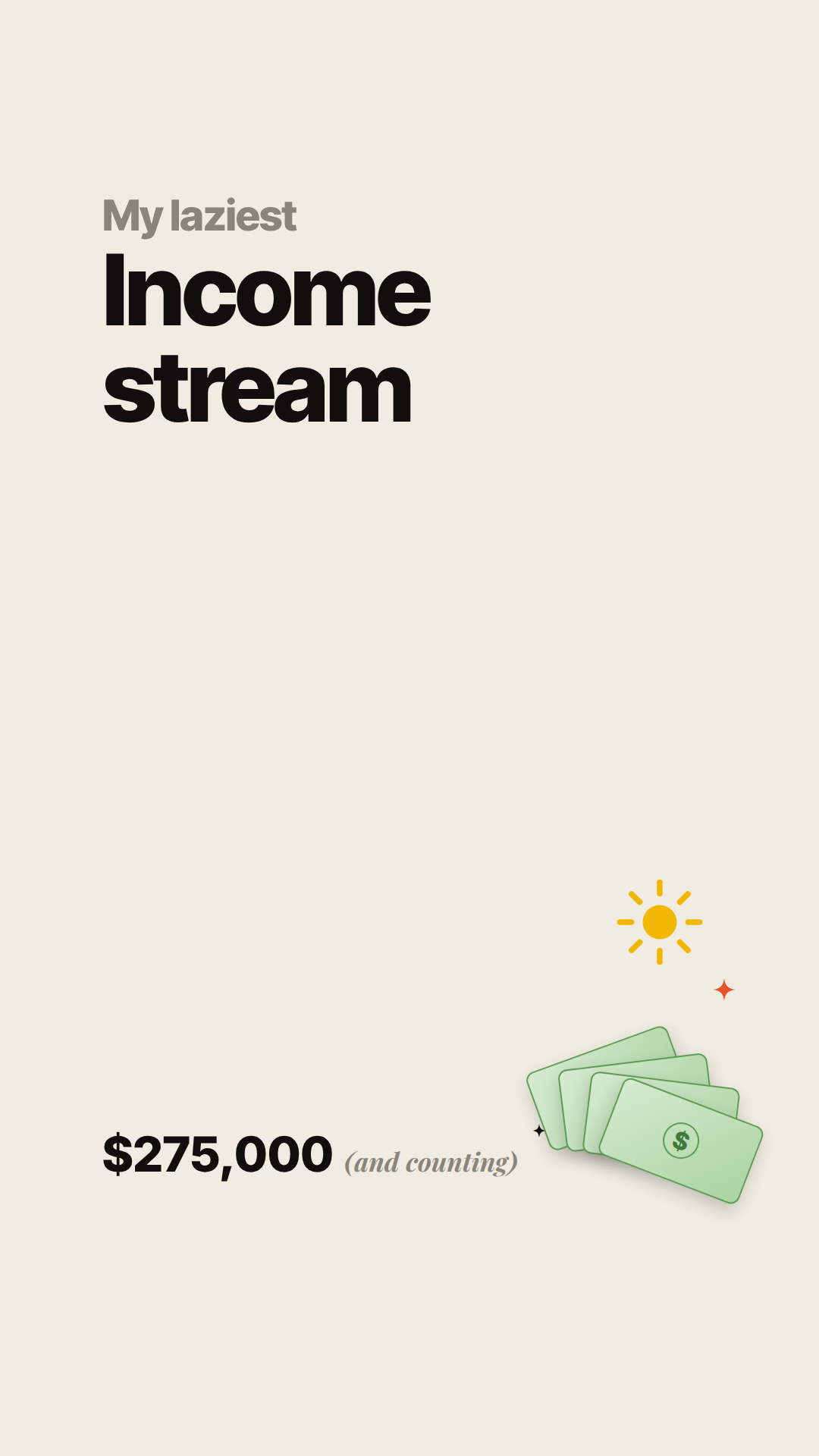
01

02
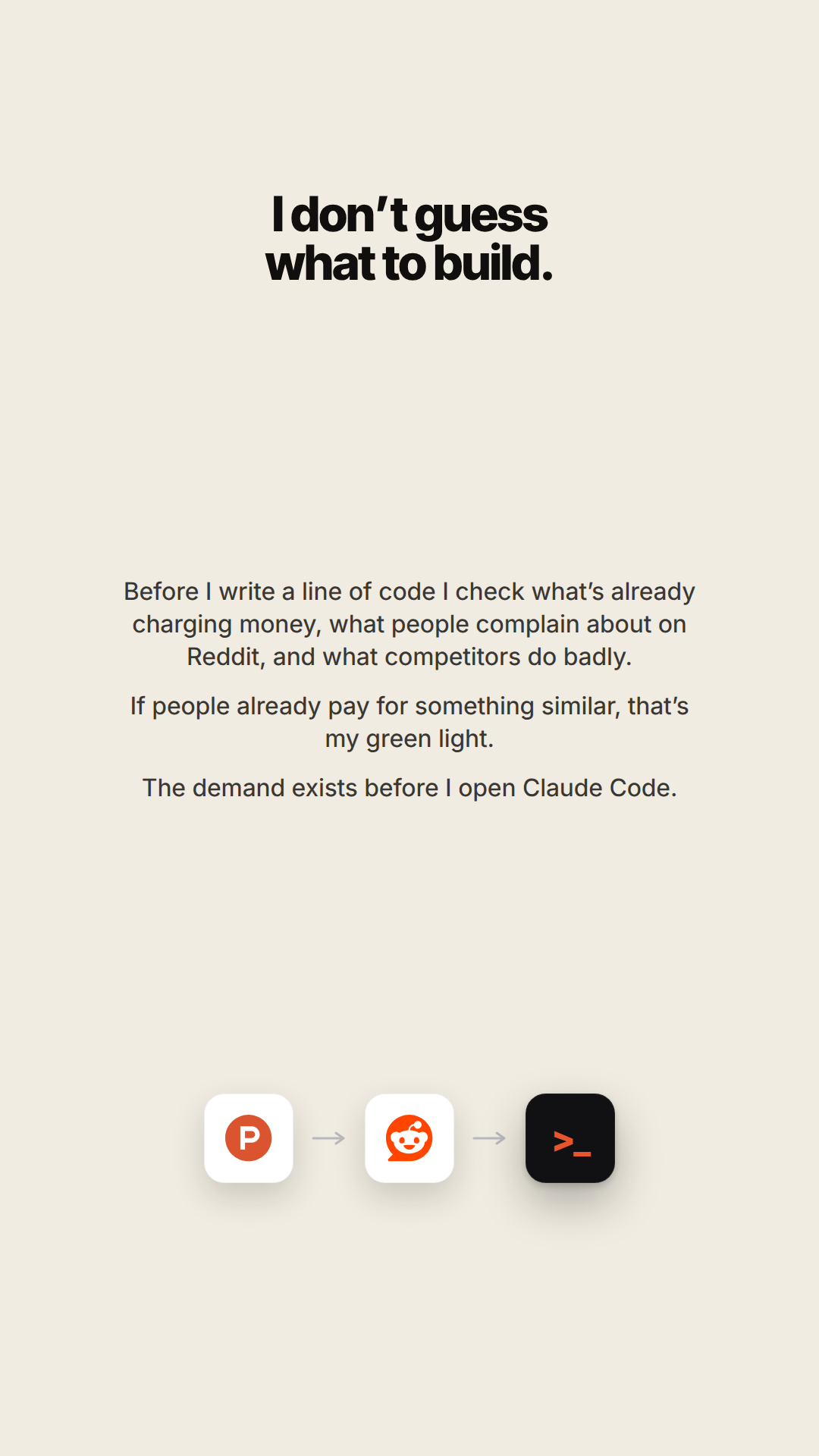
03
04
05
06
07
08
Caption
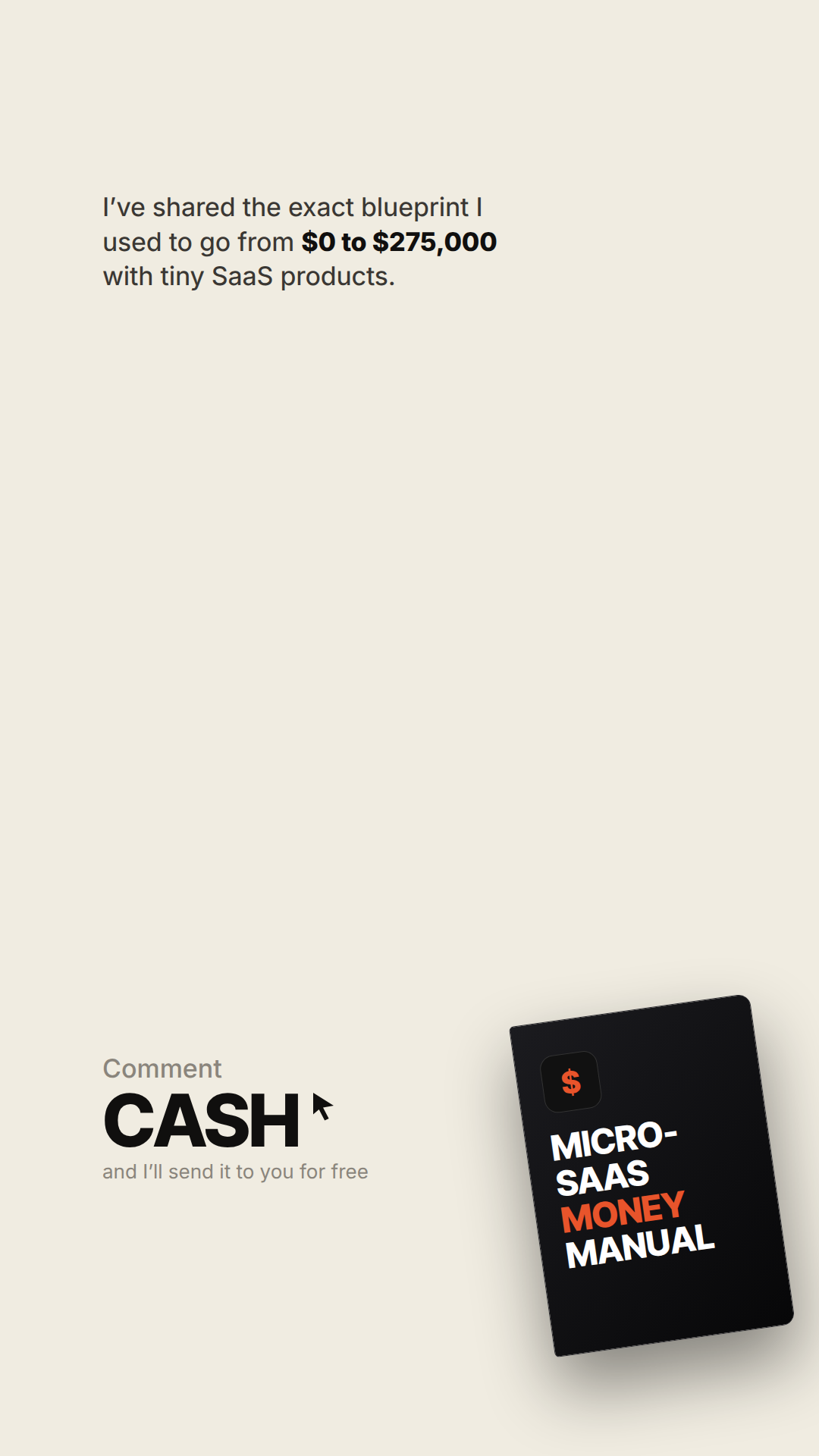
The laziest income I have is a handful of tiny SaaS products that bill every month while I do nothing.

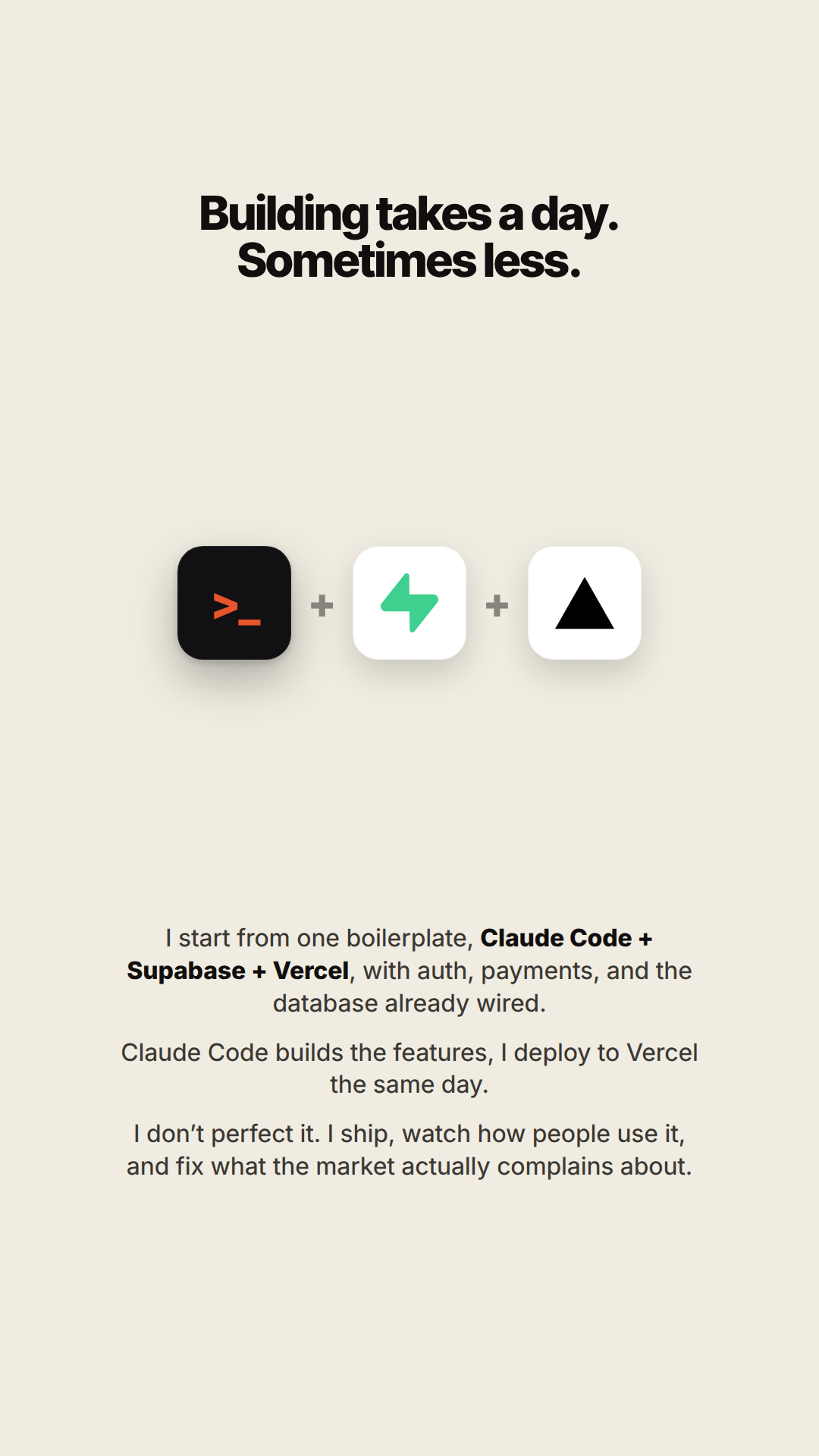
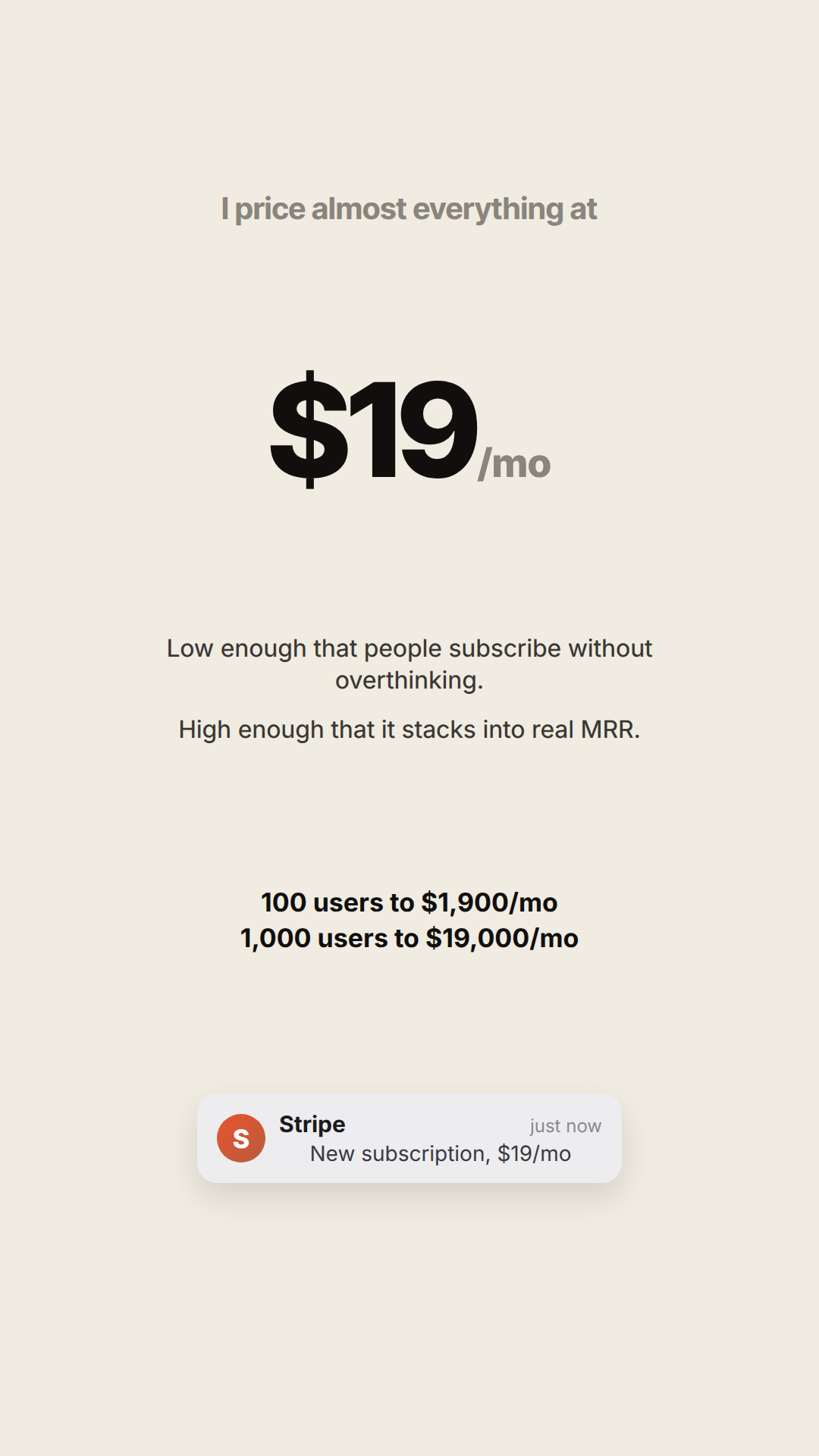
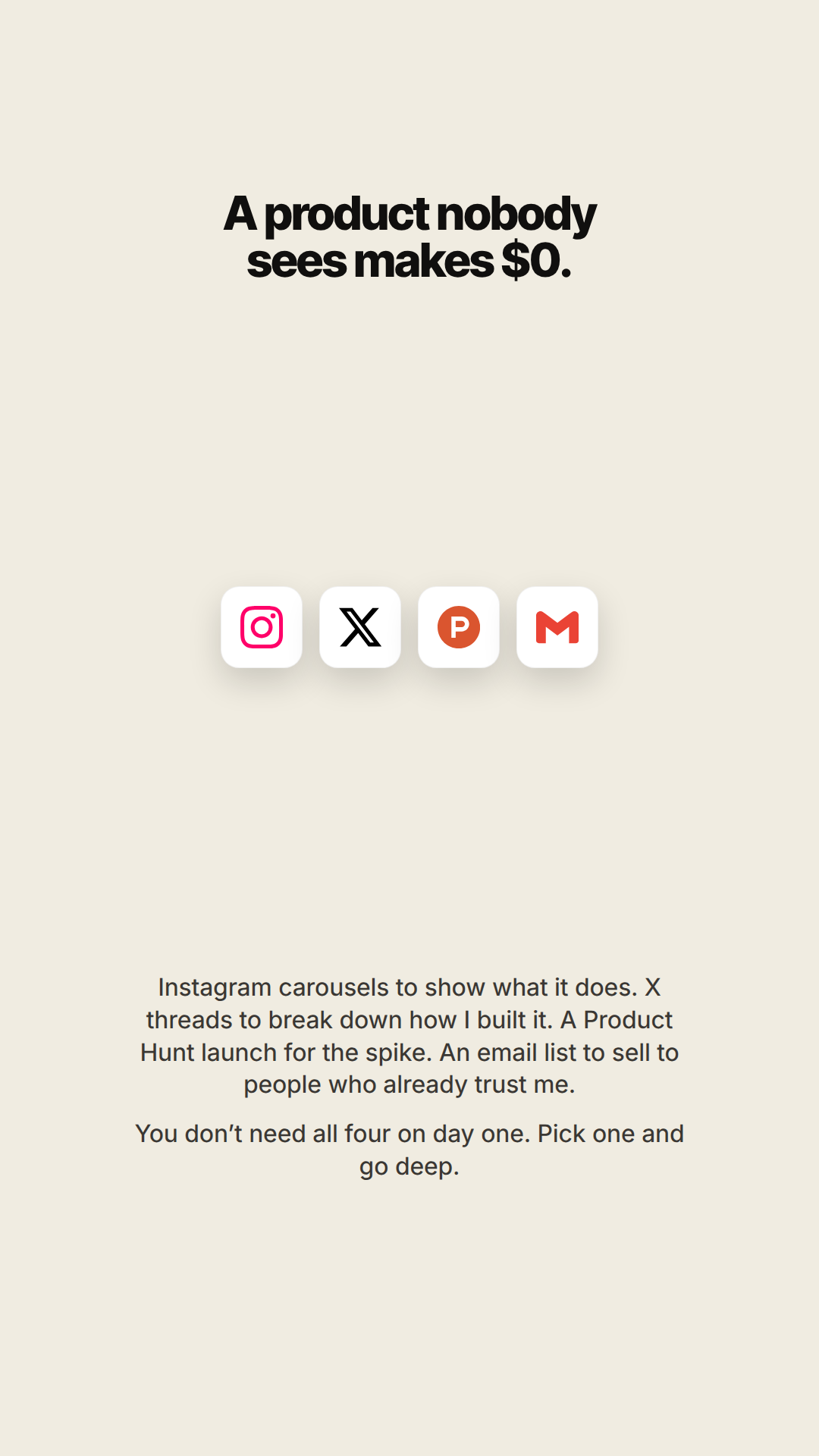
The trick is not a big app. It is small, narrow tools that solve one painful thing, shipped in a day on the same boilerplate. You validate the demand before you build, price it low enough that people subscribe without thinking, and let it stack.

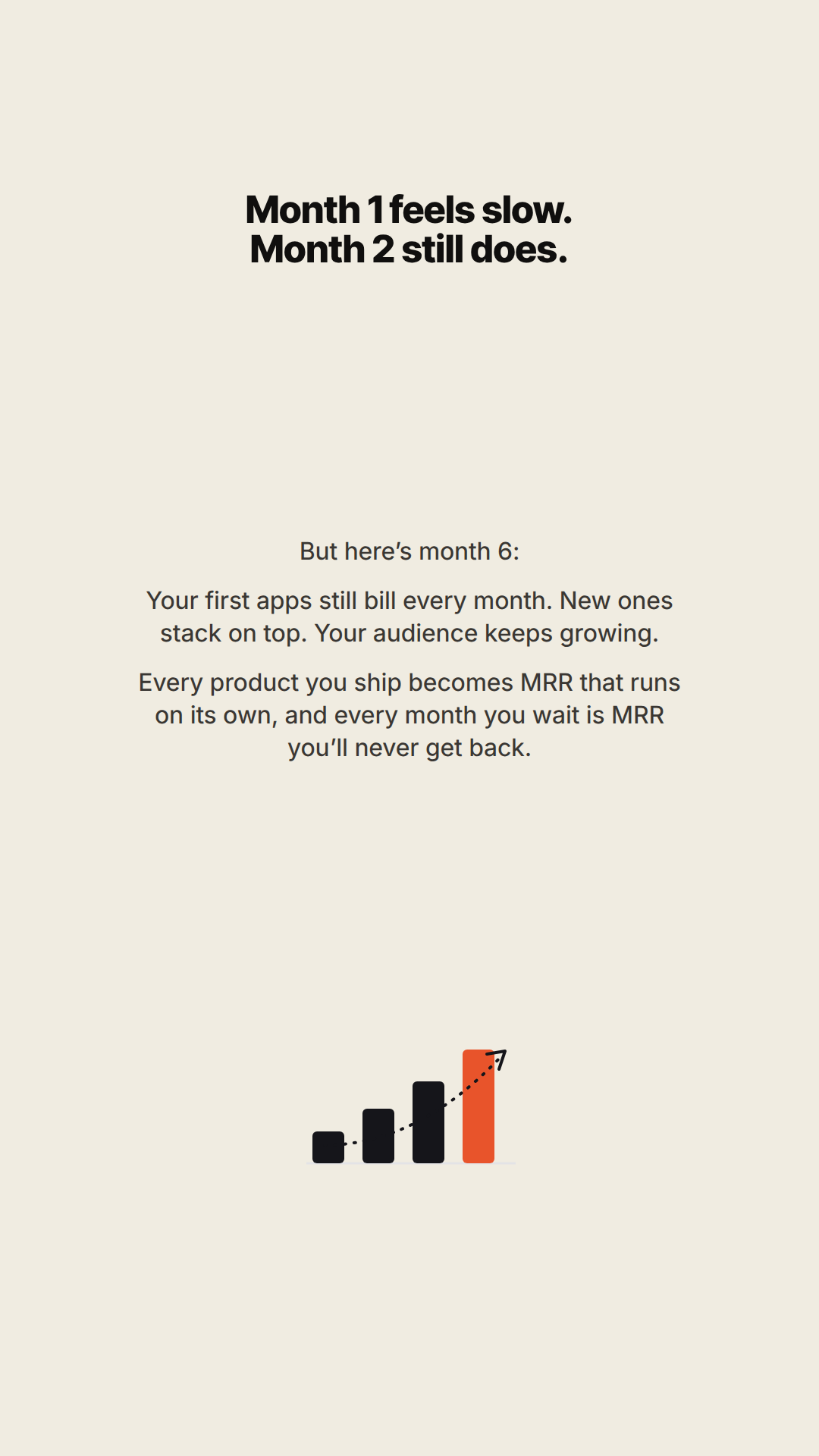
Someone subscribes at three in the morning and the recurring revenue is there when you wake up. Ship once, sell on repeat, stack the next one on top.

Comment CASH and I will send the stack, the validation routine, and the pricing.
5 moves to start
01
02
03
04
05
06
07
08
09
Caption
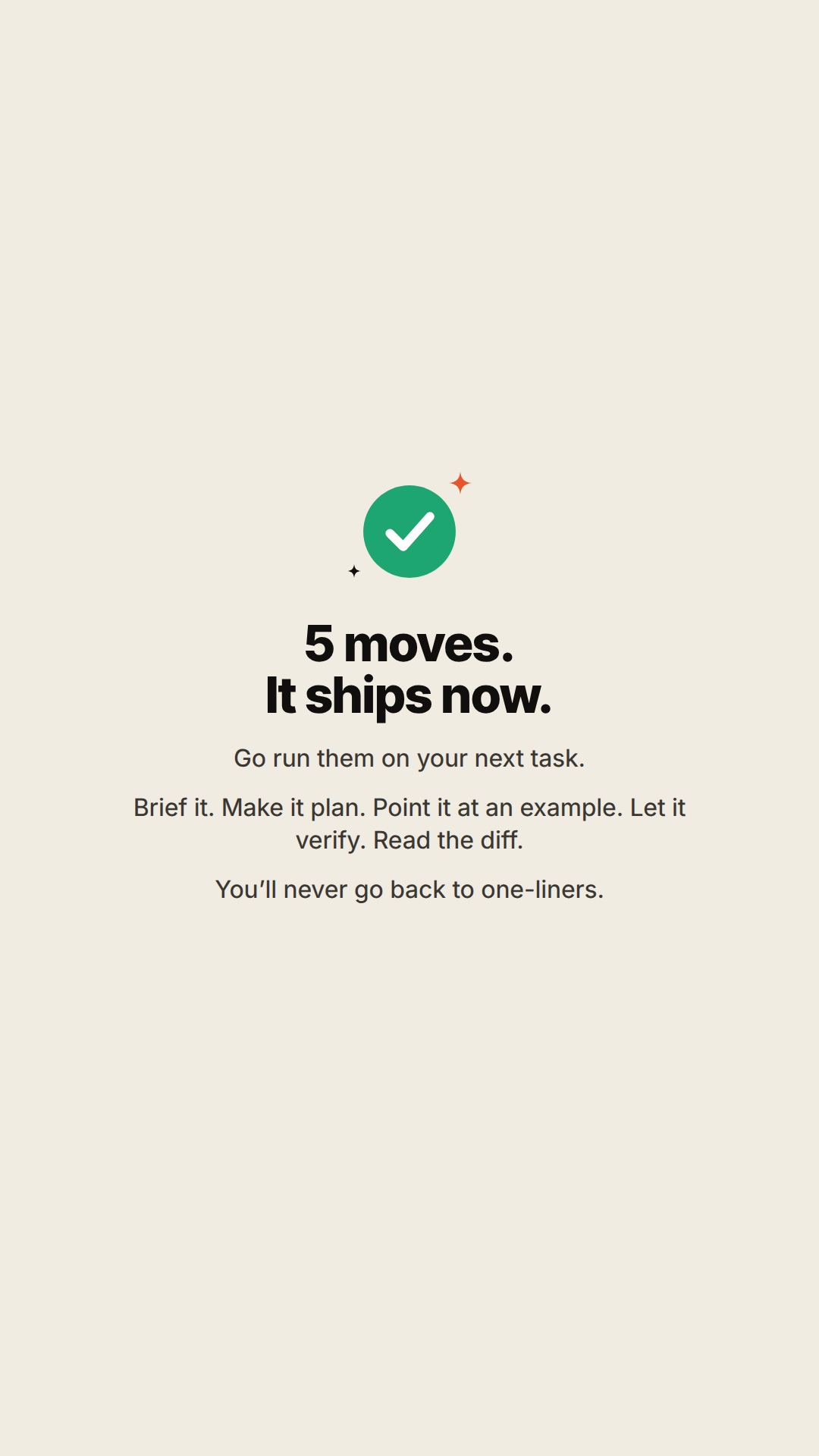
Five moves decide whether Claude Code ten times your output or wastes your afternoon.

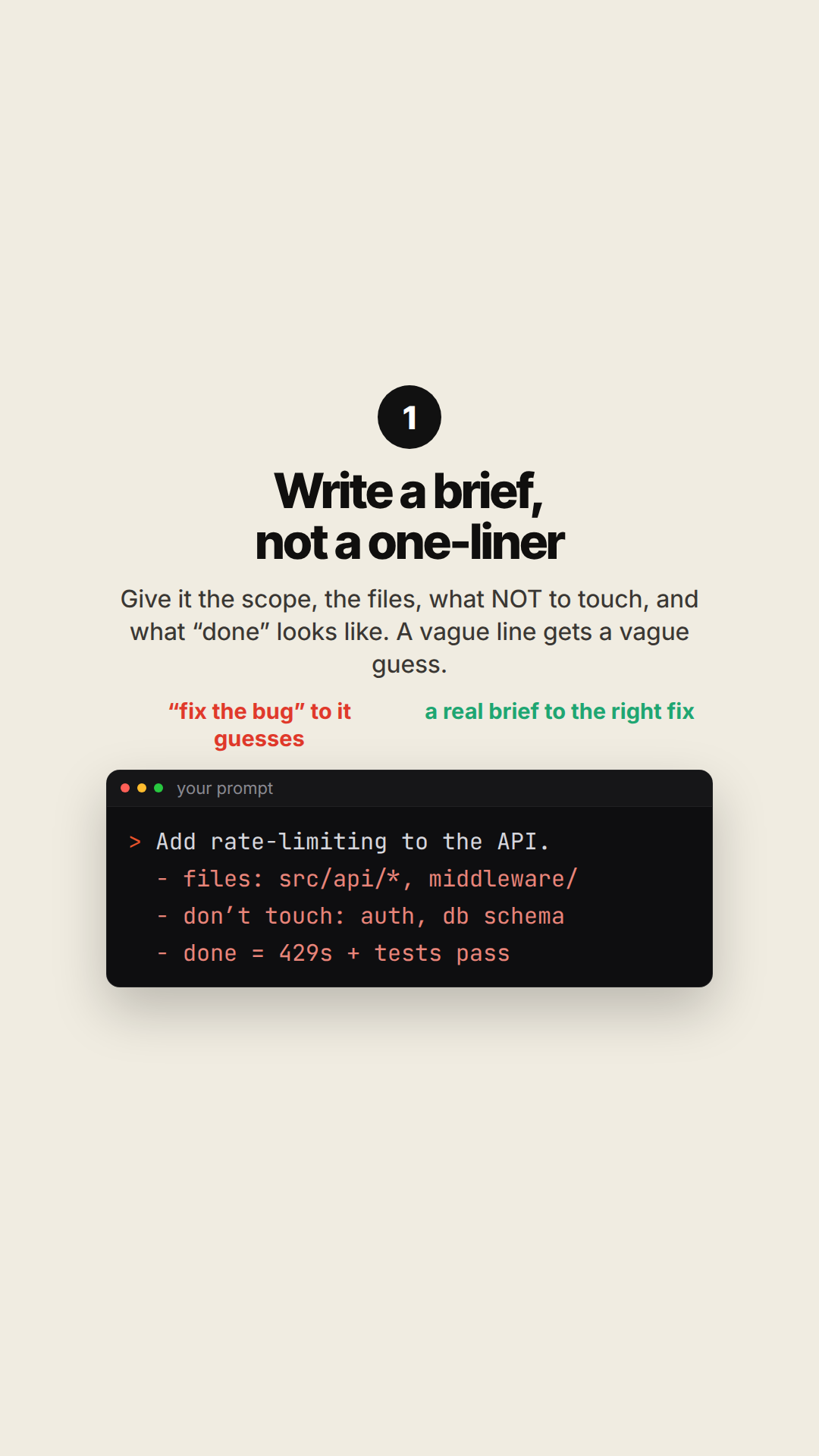
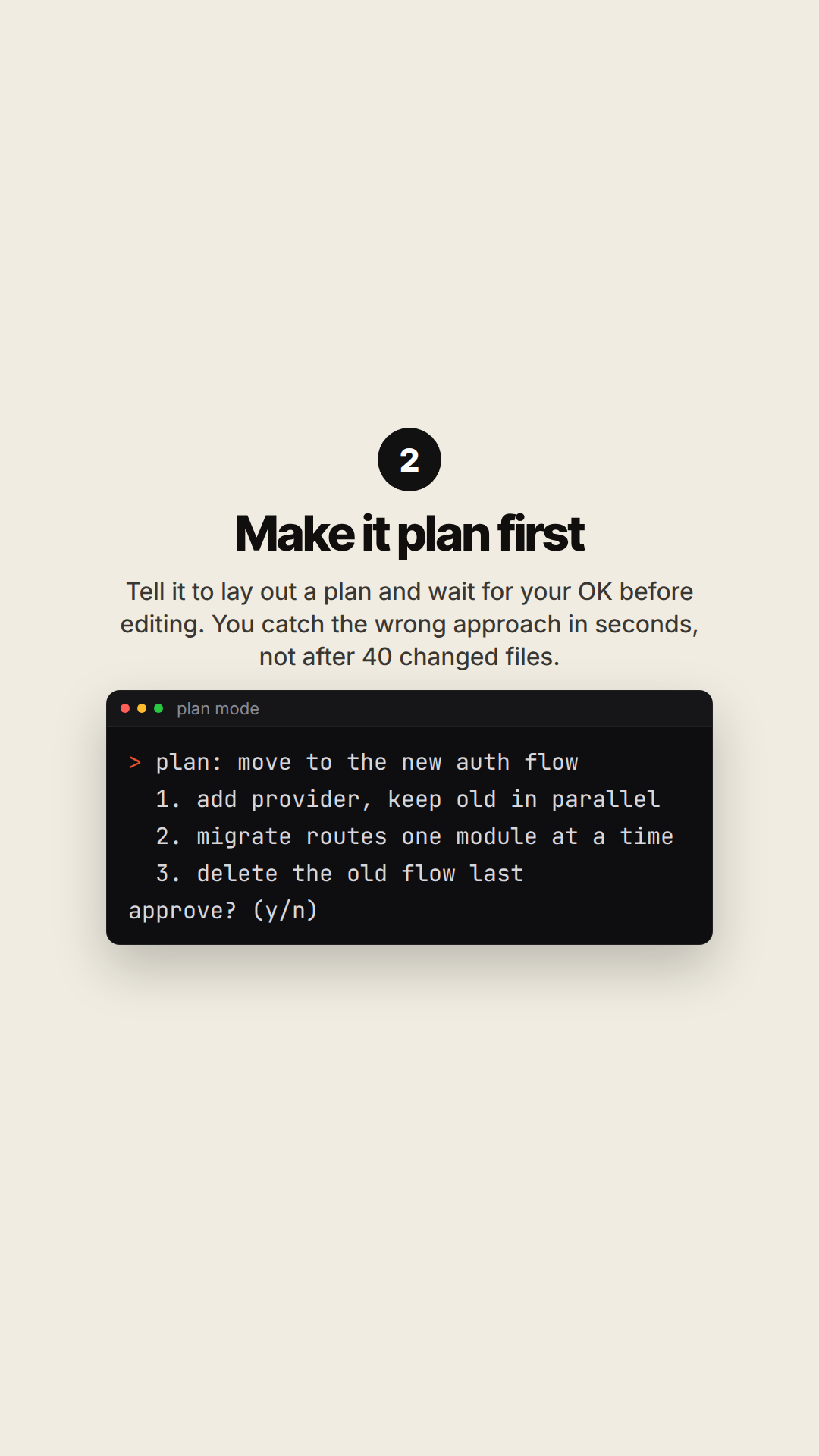
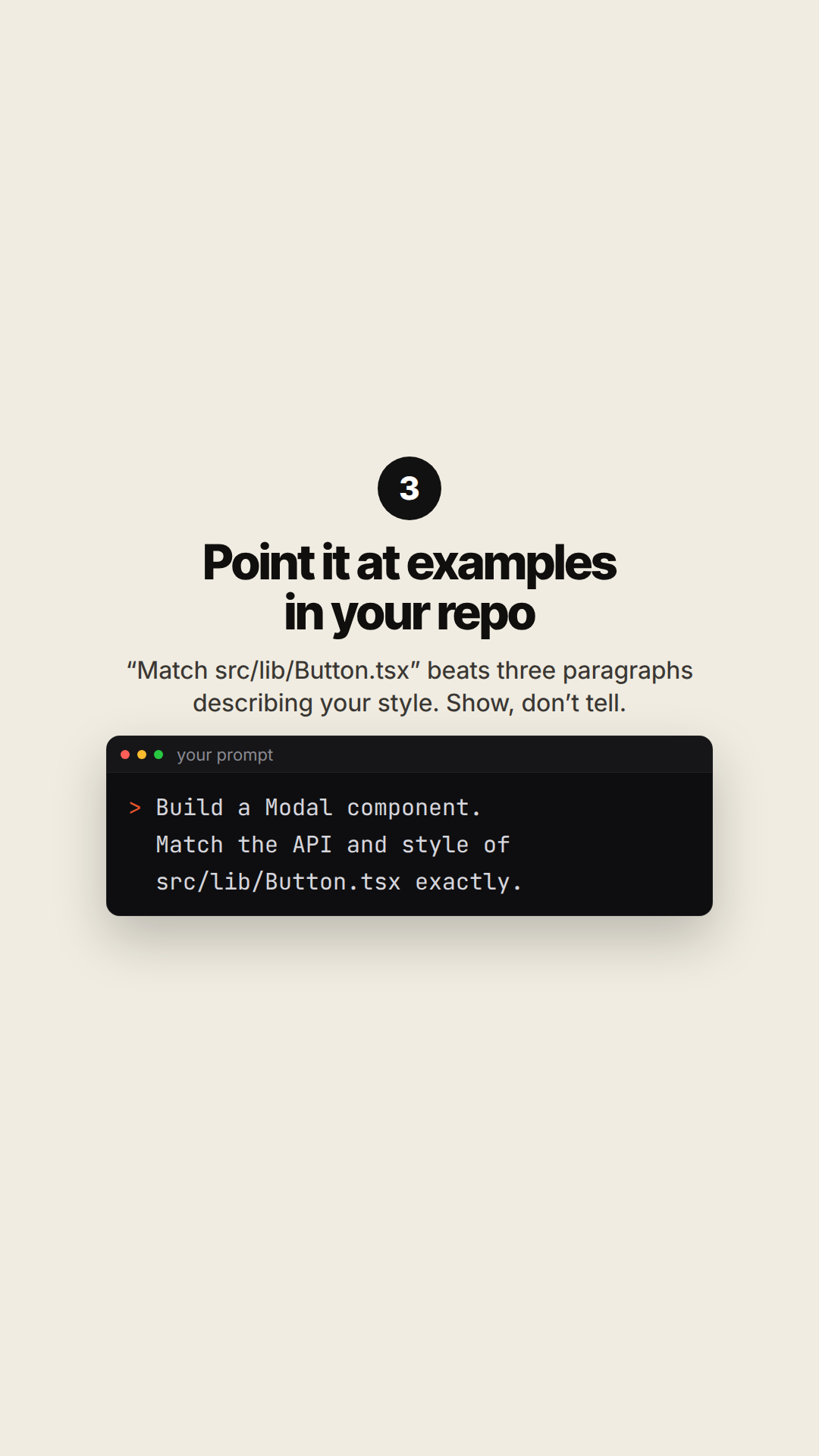
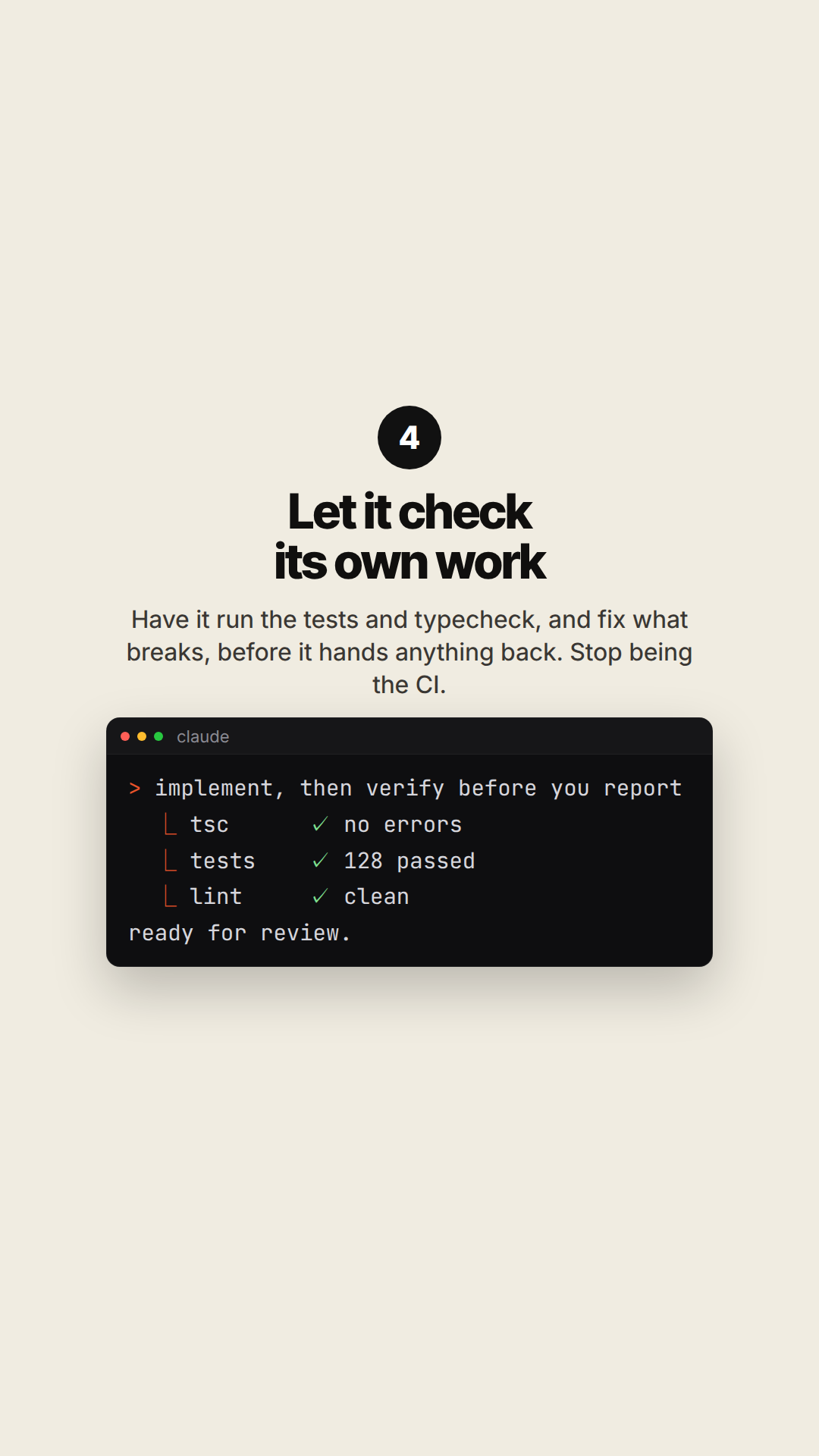
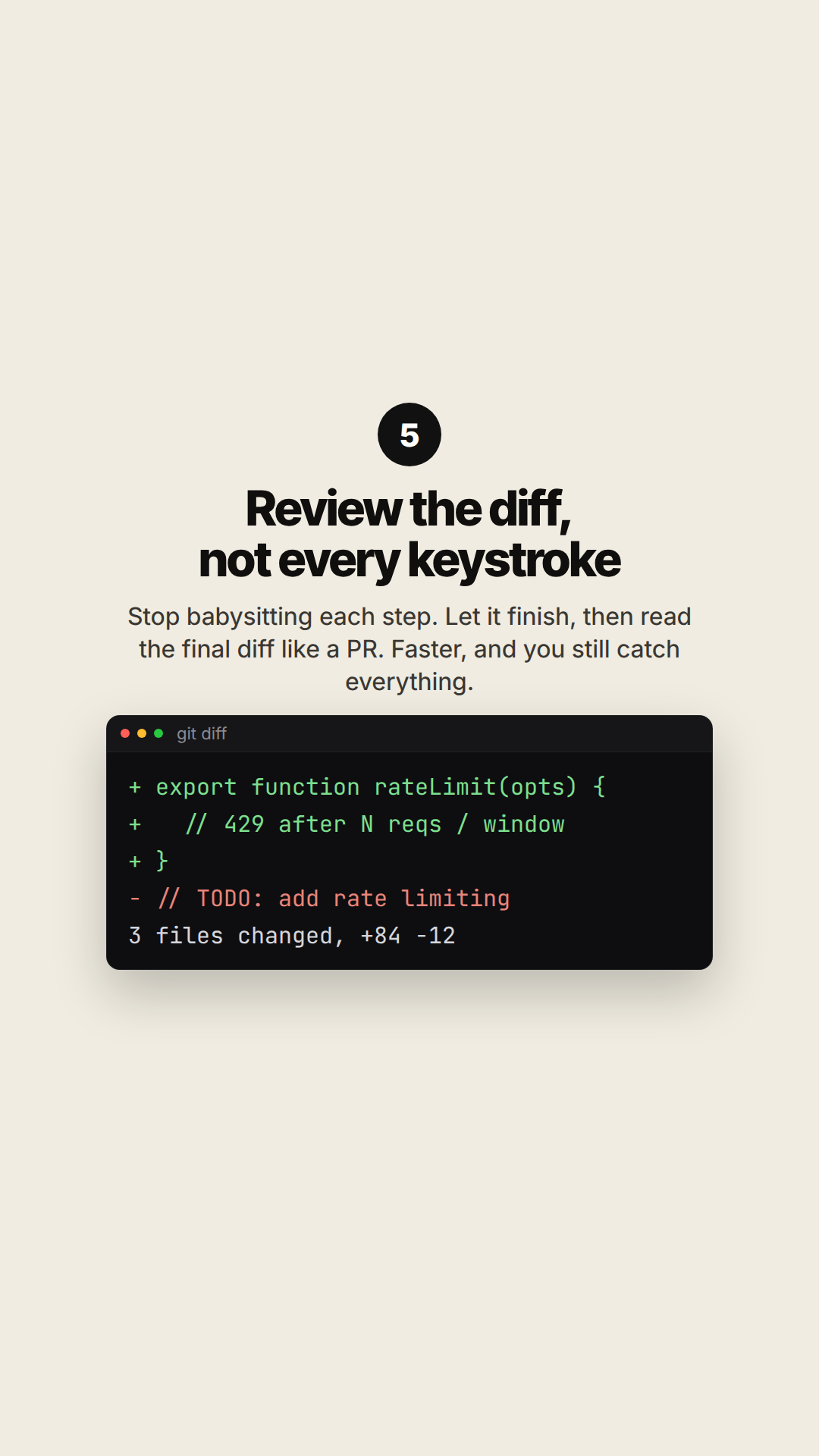
Write a brief, not a one liner. Make it plan before it edits, so you catch the wrong approach in seconds. Point it at an example in your repo instead of describing your style. Let it run the tests and fix what breaks before it hands anything back. Then review the final diff like a pull request, not every keystroke.

Same model, completely different results. The gap is the workflow.

Comment PLAYBOOK and I will send the five moves and the prompts behind them.
The AI pitch
01
02
03
04
05
06

07
08
Caption
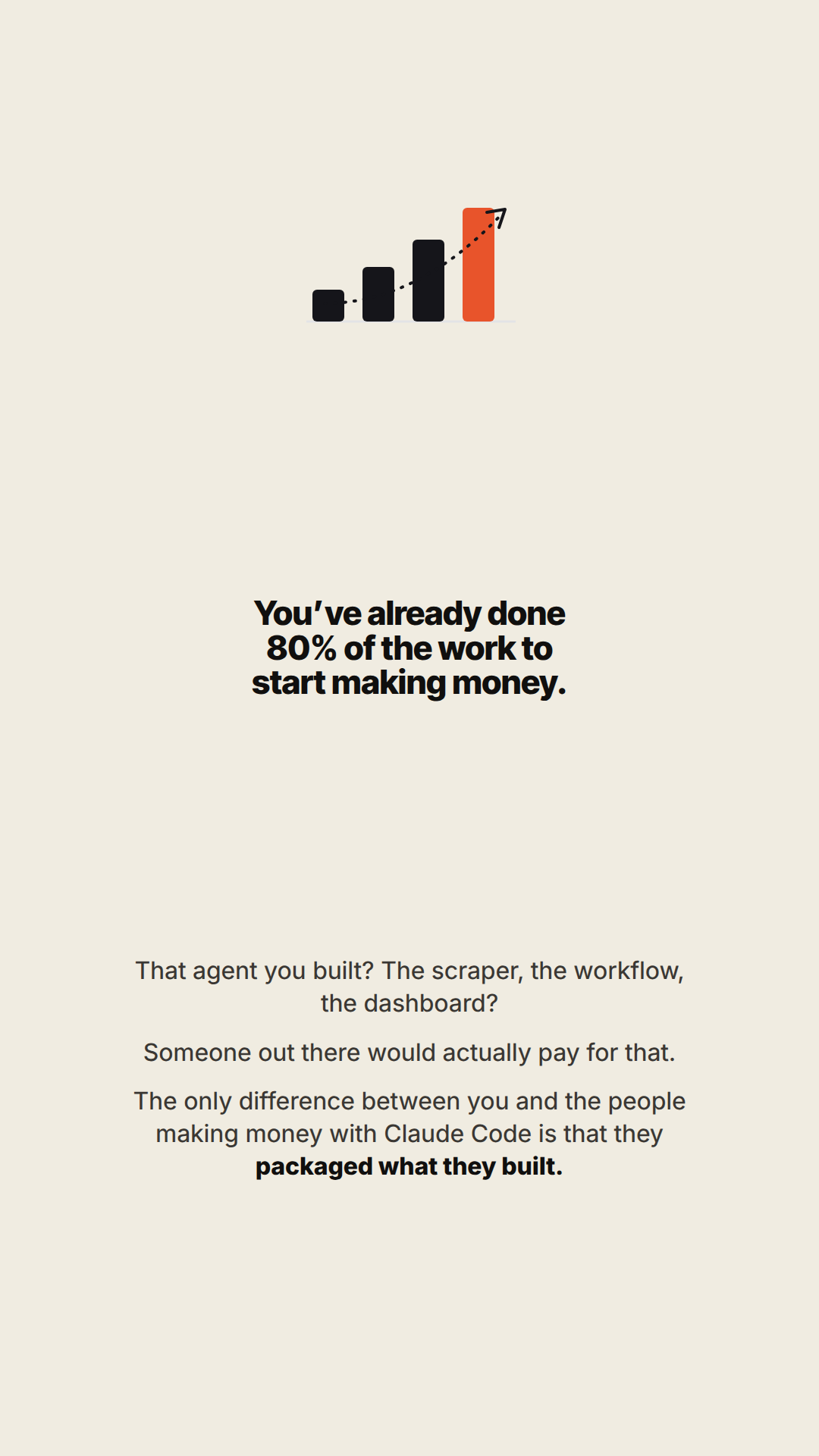
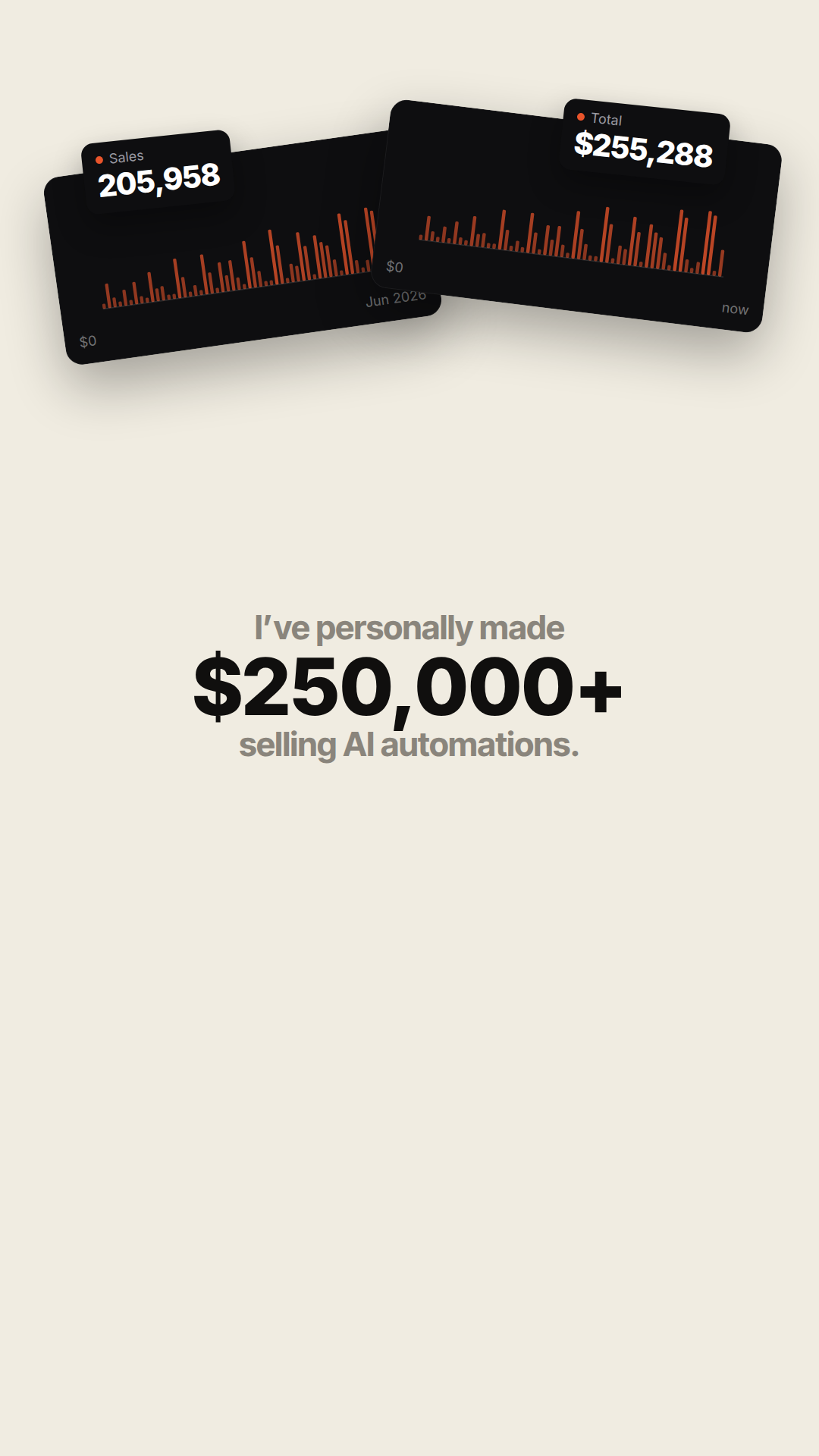
If you already build with Claude Code, you have done eighty percent of the work to start making money, and you do not even know it.

That agent you built. The scraper, the workflow, the dashboard. Someone out there would pay for that. The only difference between you and the people earning from it is that they packaged what they built.

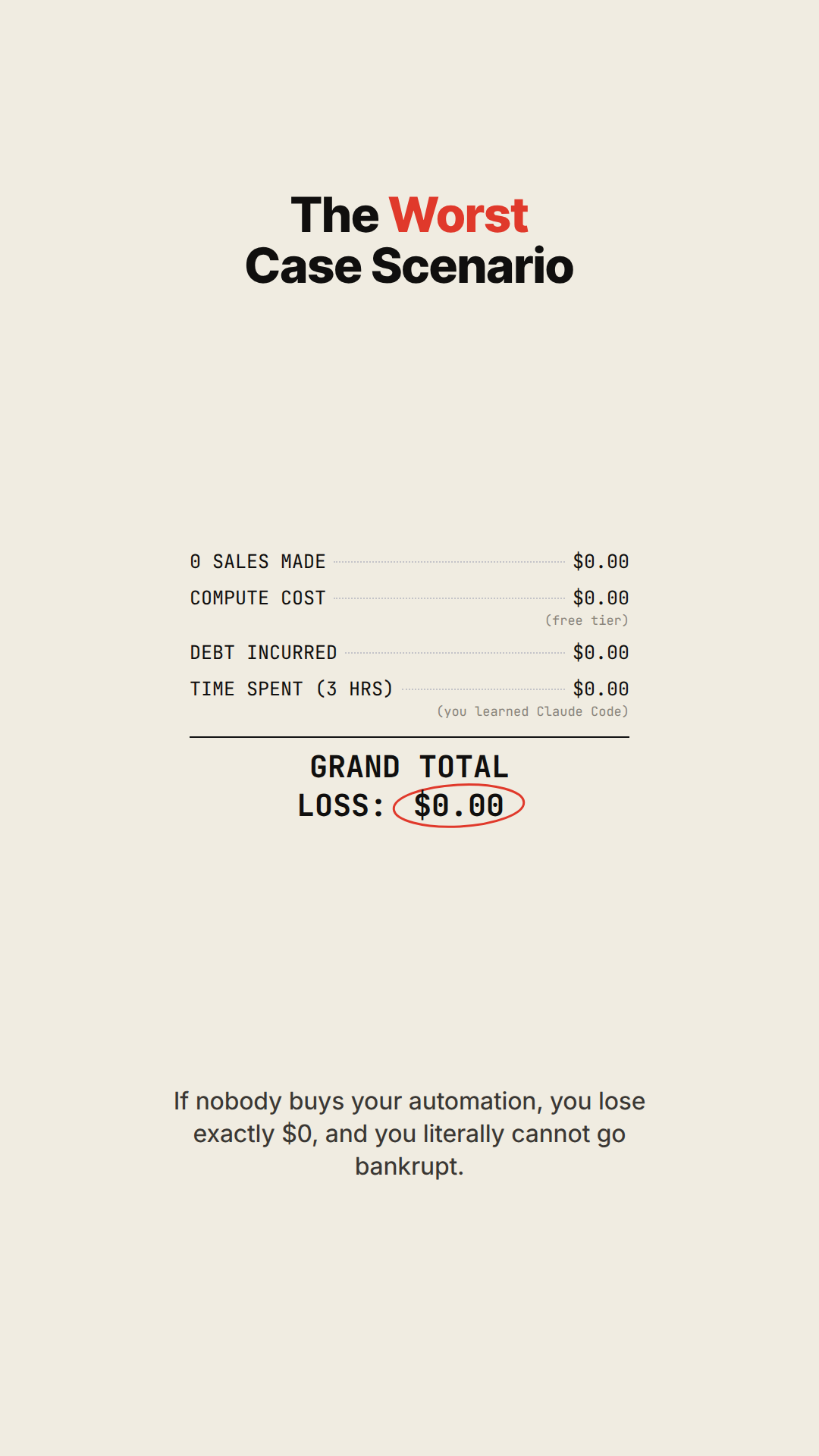
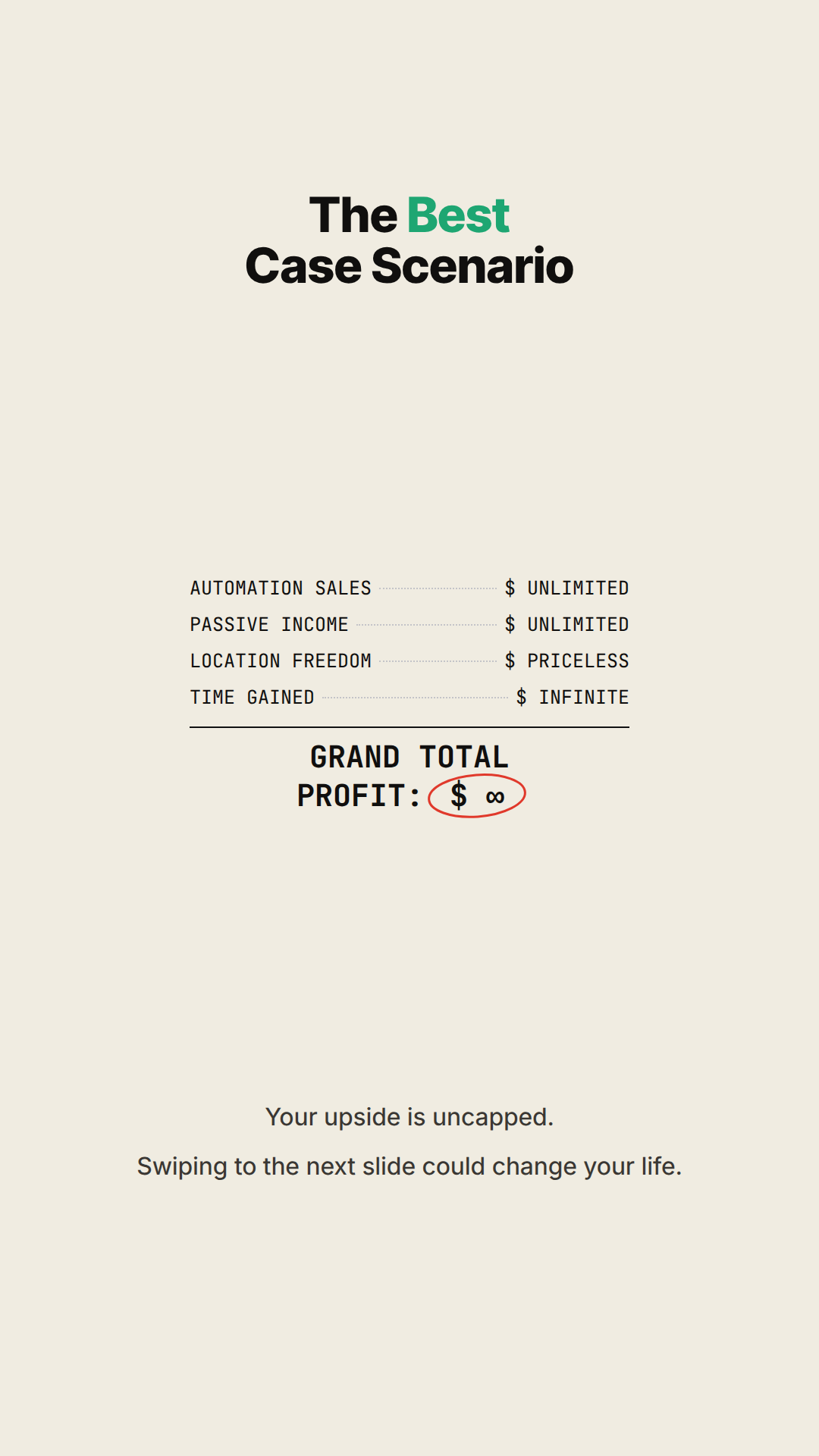
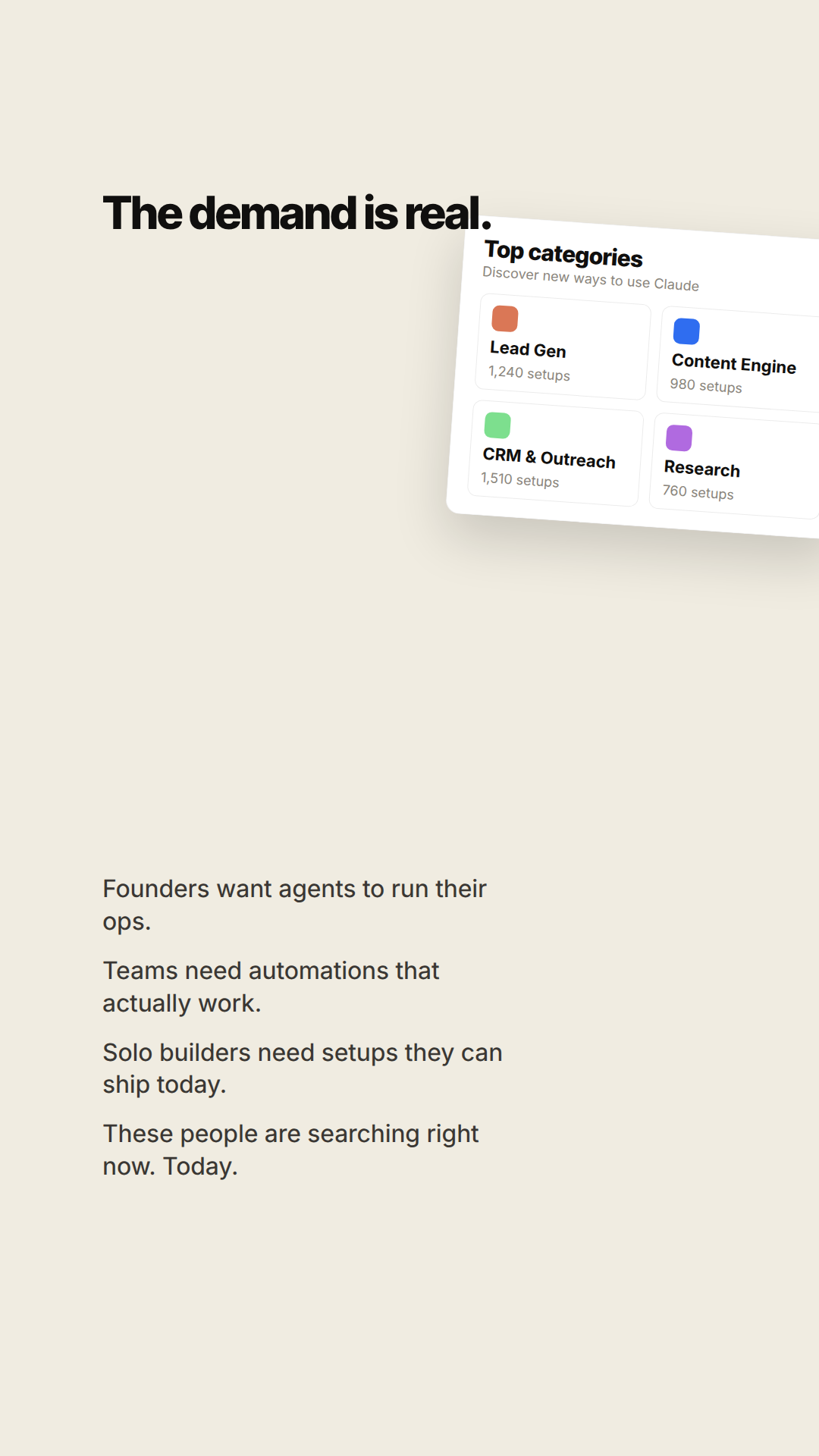
The worst case is nothing. You lose a few hours and you learned the tool. The upside is uncapped, and the demand is already there, founders hunting for AI that actually works.

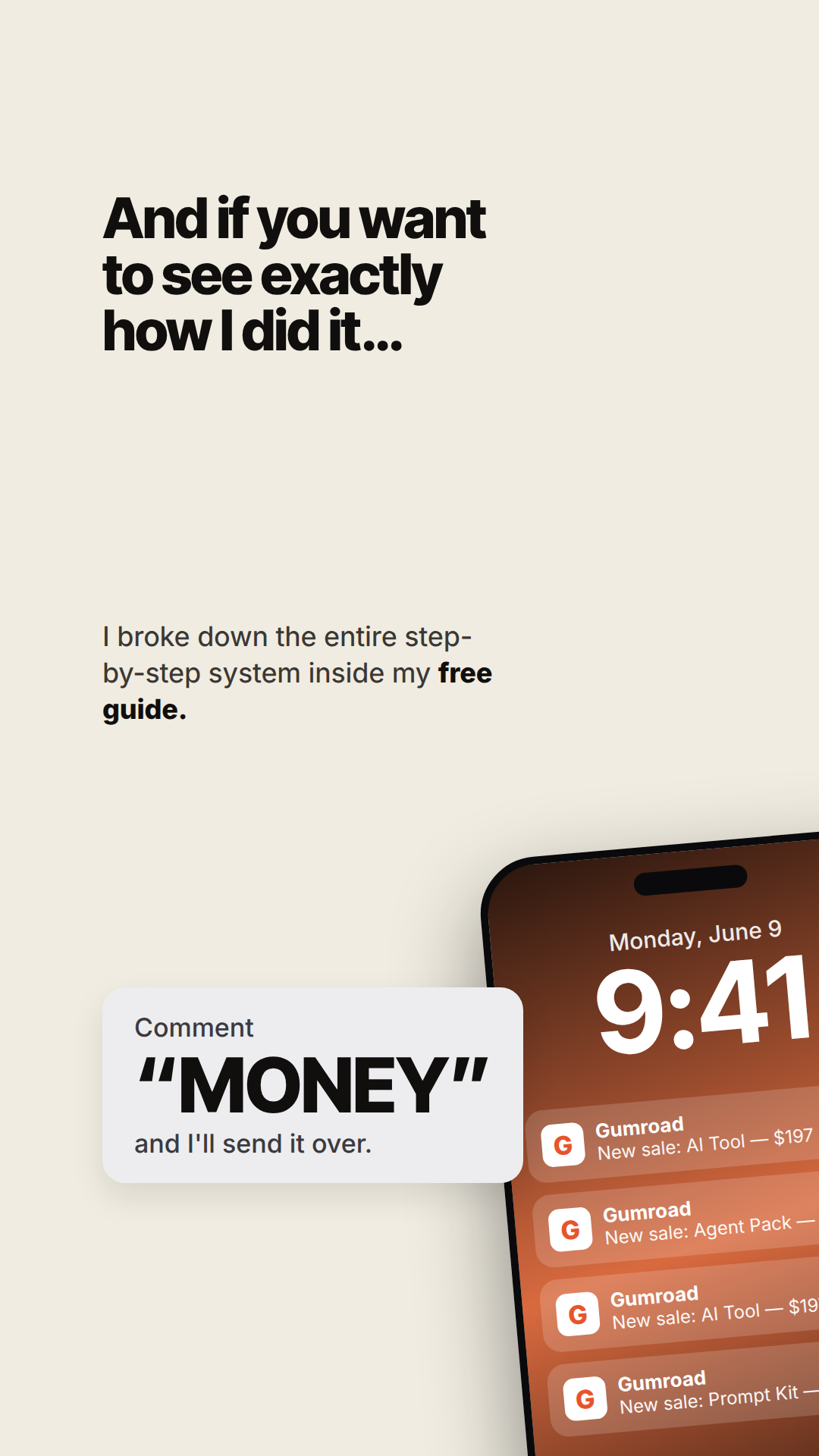
Comment MONEY and I will send the exact way to package and sell it.
Claude Code features
01
02
03
04
05
06
07
Caption
Five Claude Code features almost nobody uses, and each one changes how you work.

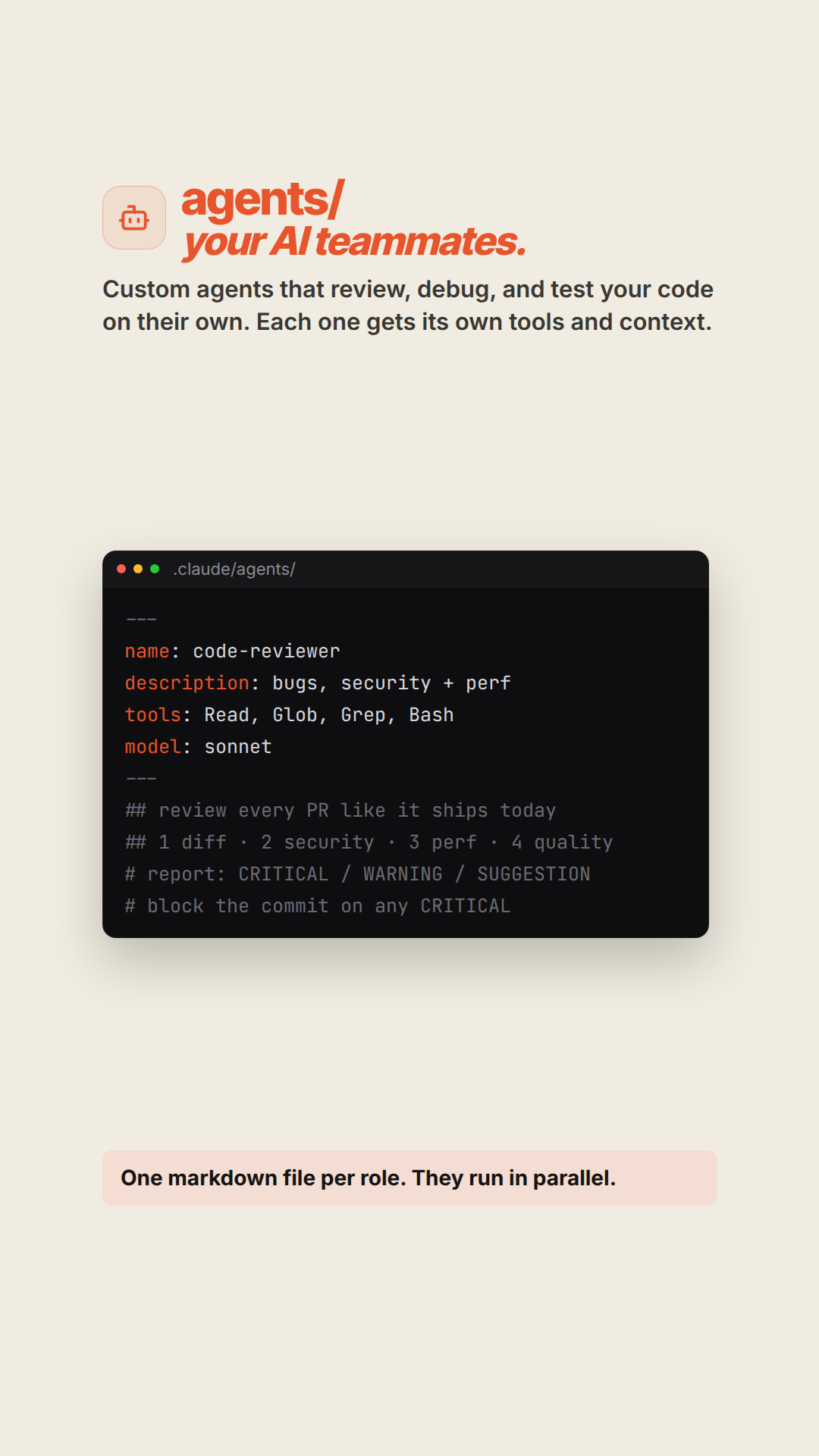
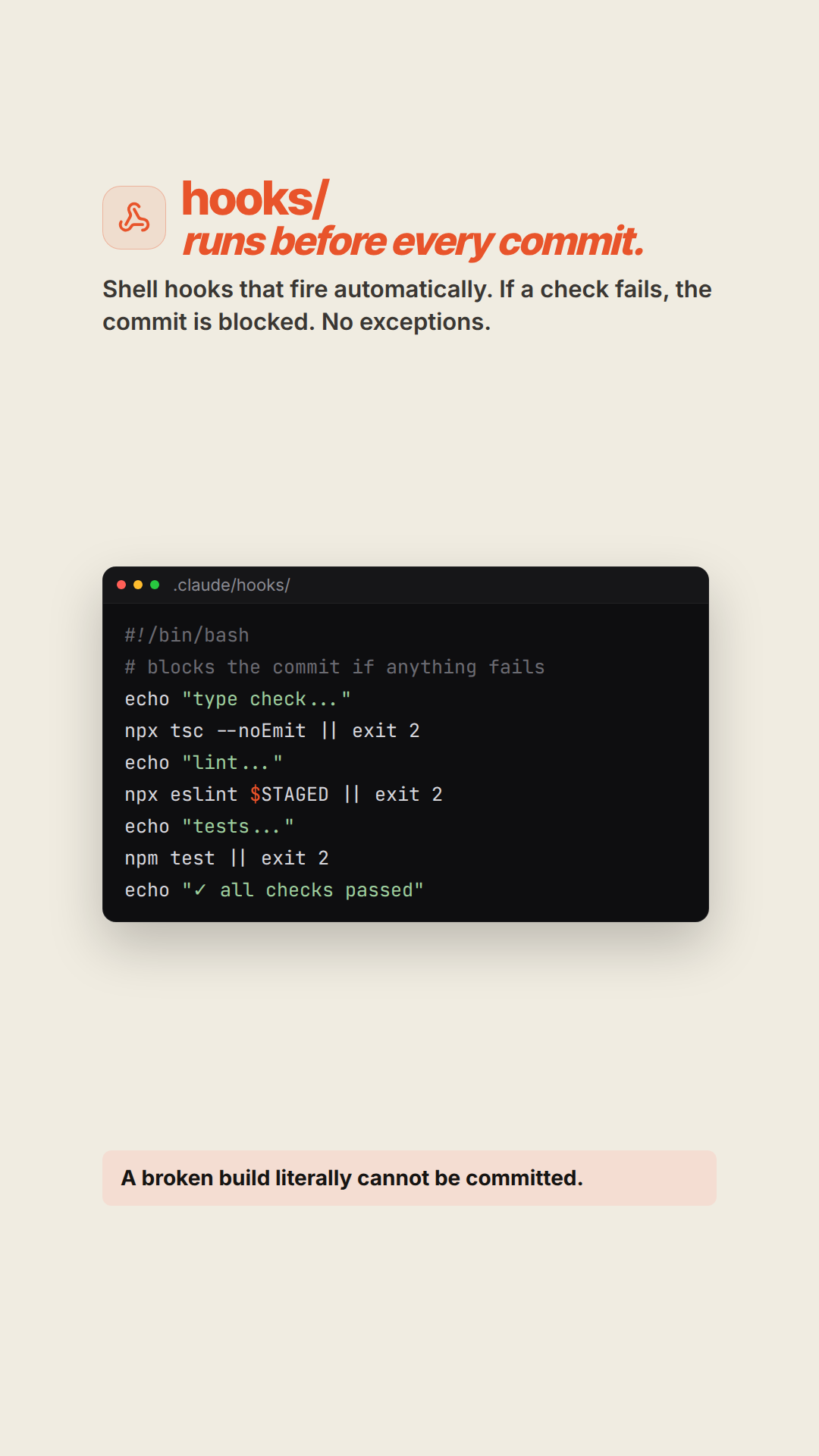
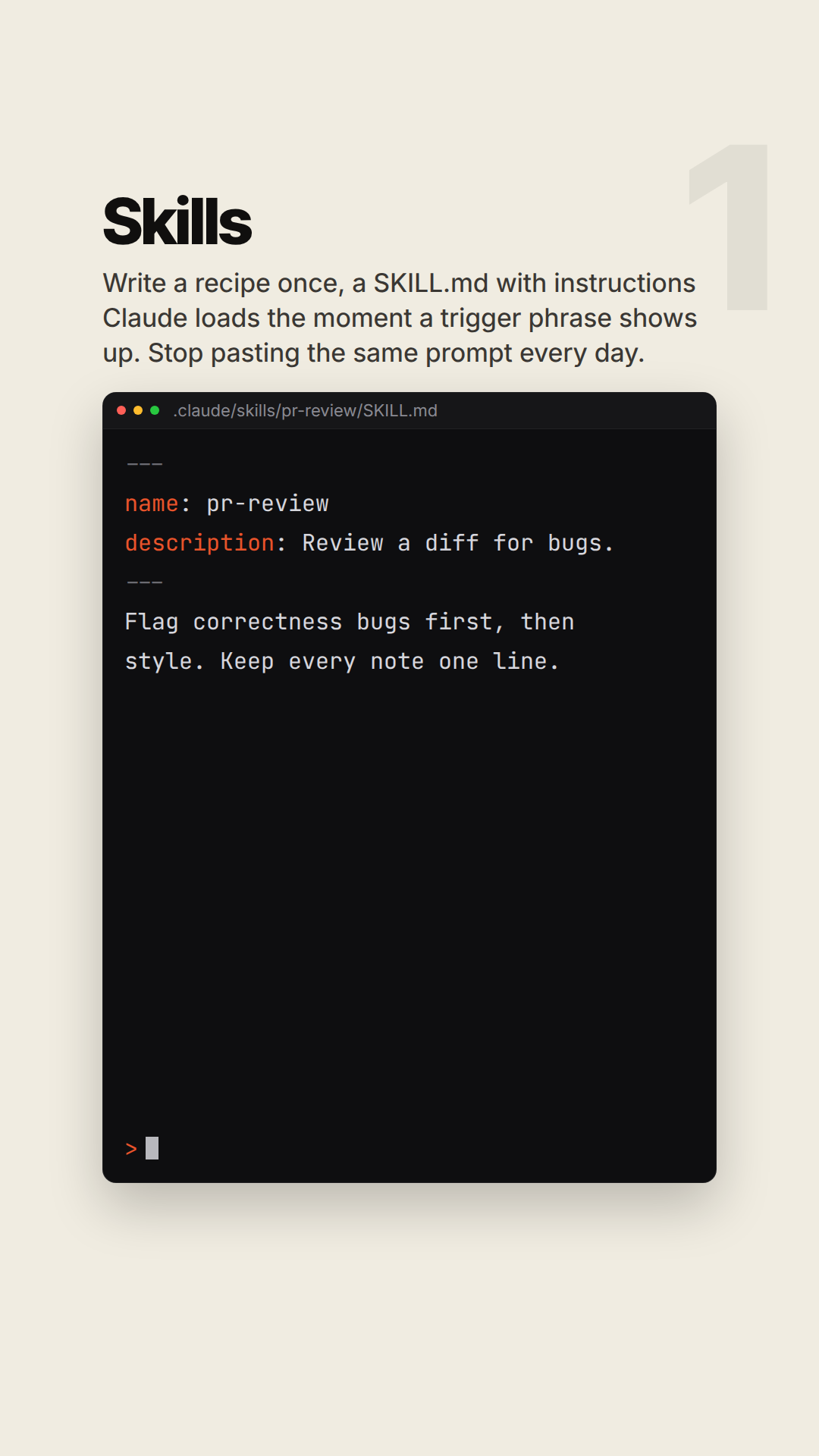
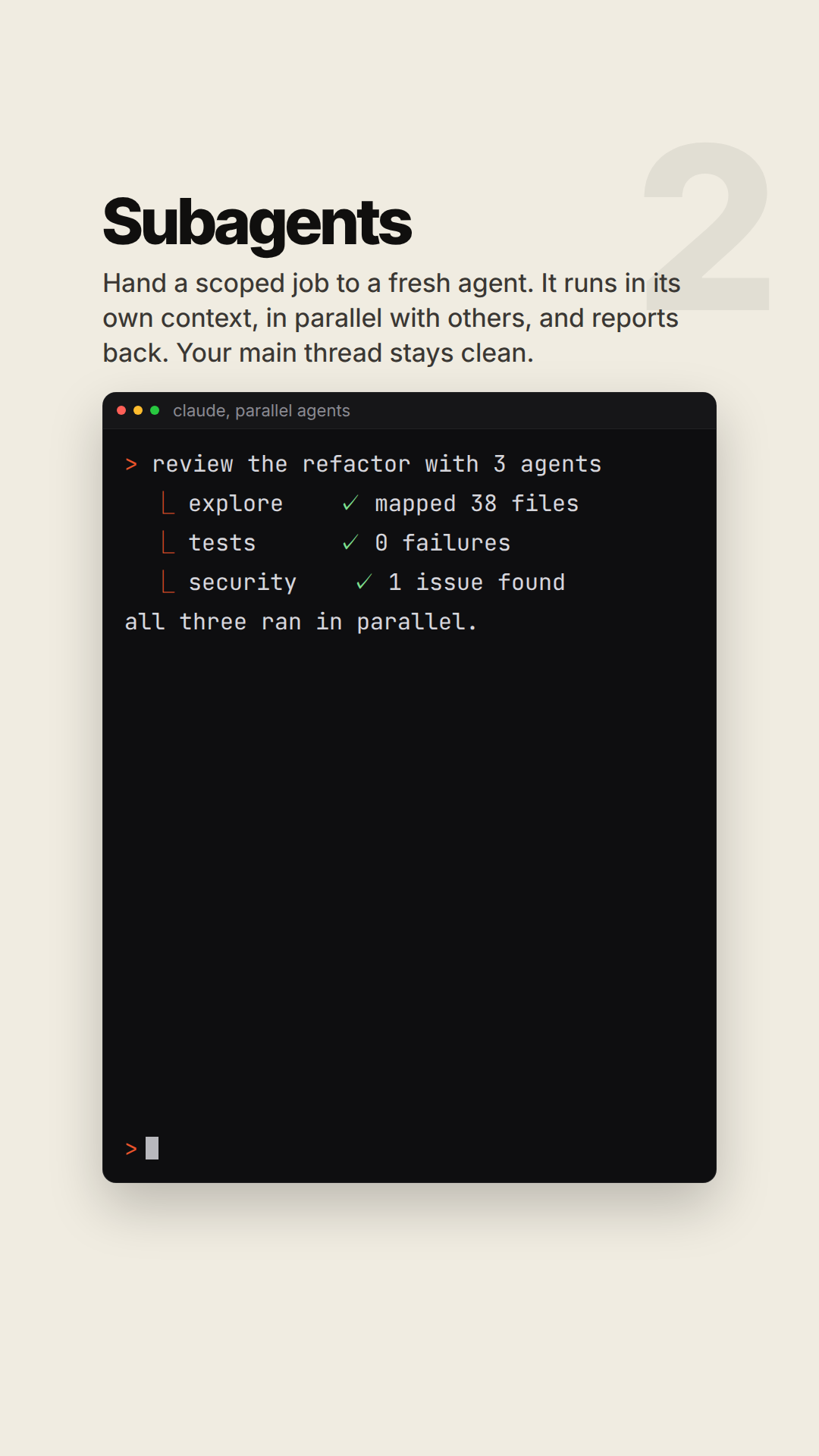
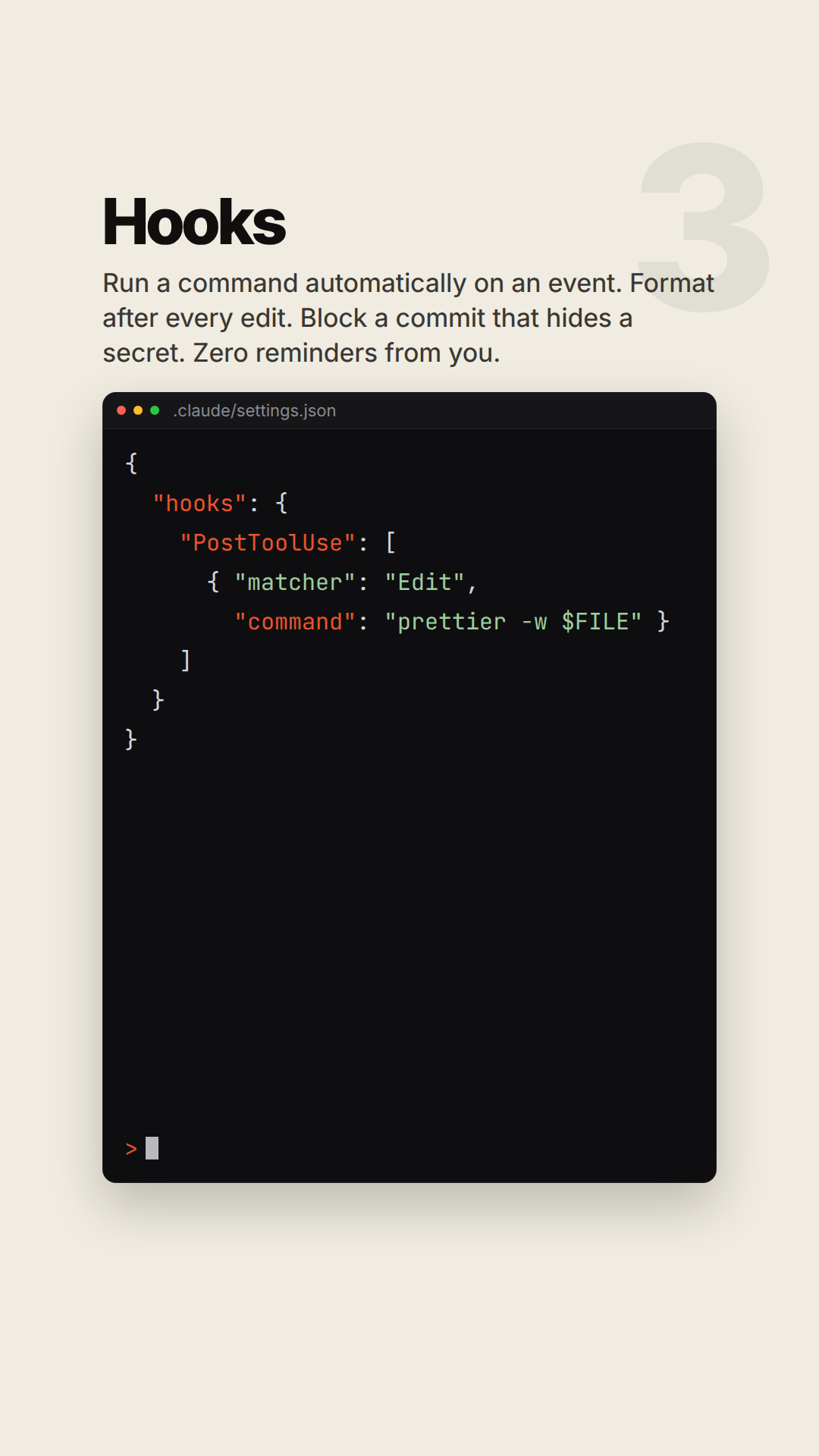
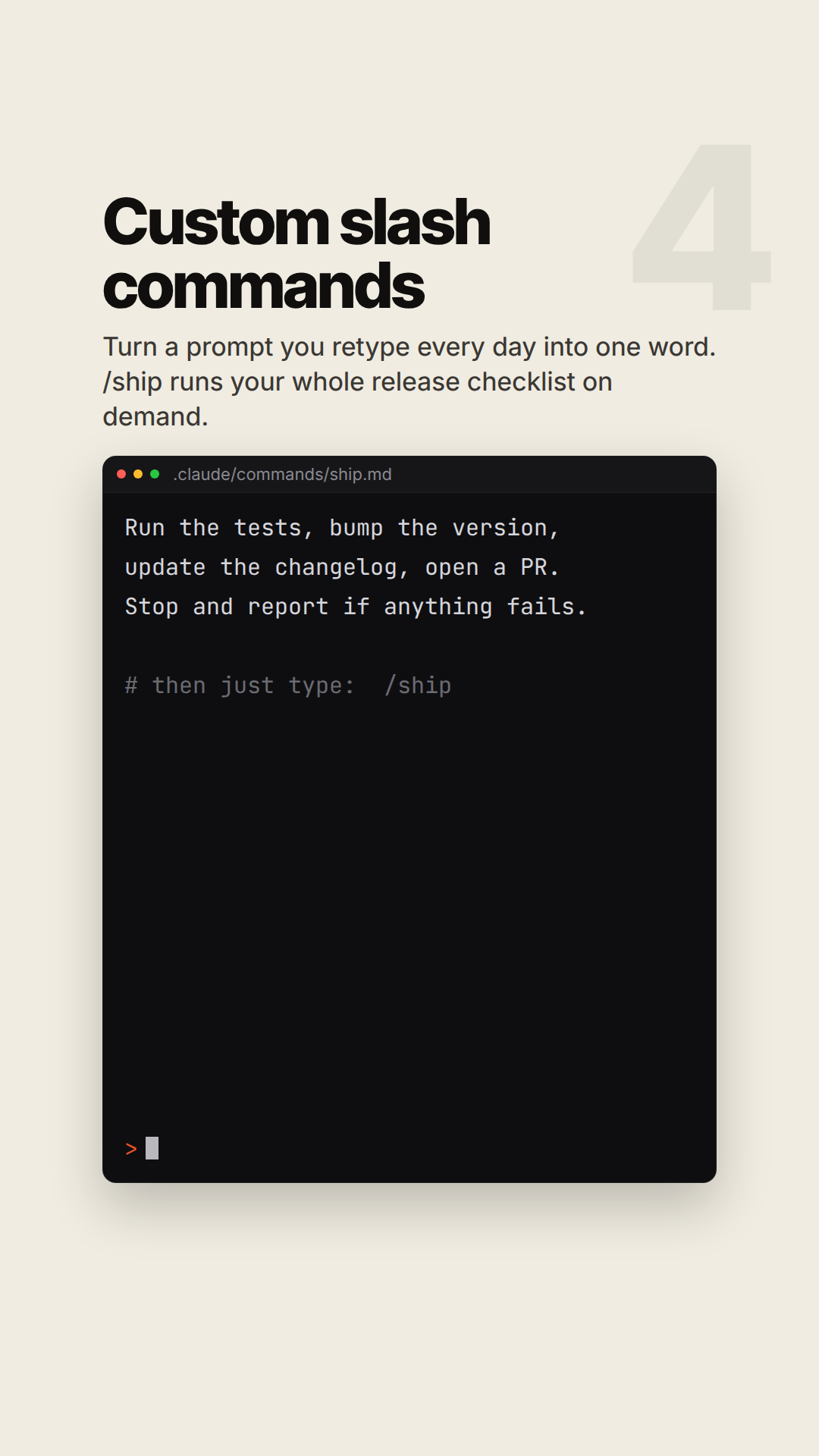
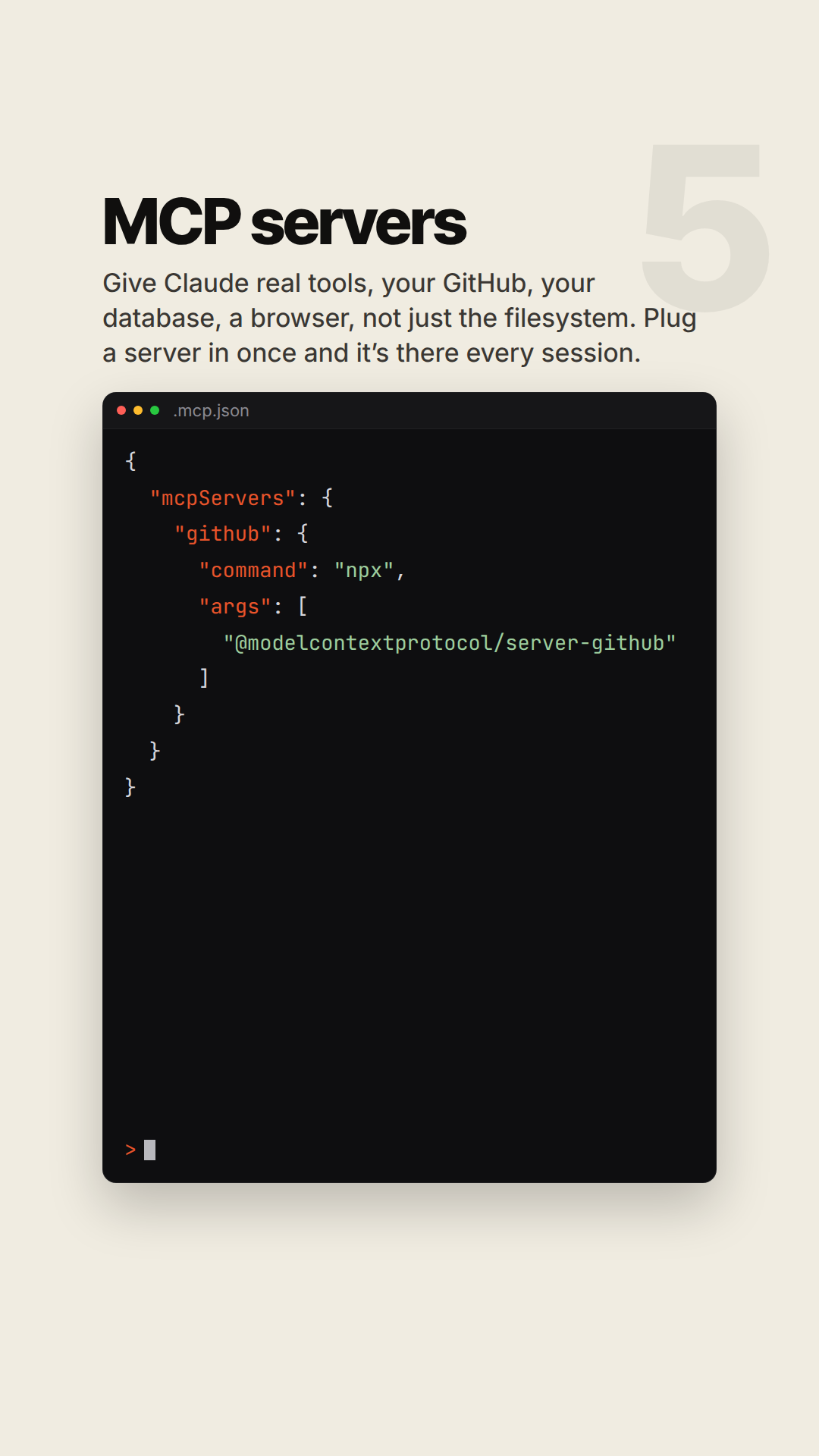
Skills, so Claude loads a recipe the moment a trigger shows up. Subagents, so a scoped job runs in parallel in its own context. Hooks, so a command fires automatically on an event, like format after every edit. Custom commands, so a prompt you retype daily becomes one word. MCP servers, so Claude gets your real tools, not just the filesystem.

Most people never leave the chat box. This is the rest of the product.

Comment MANUAL and I will send the config for all five.
Make money with AI

01
02

03
04
05
06
07
08
Caption
Most people are trying to use AI to save time. The real move is using it to build something that keeps paying after the work is done.

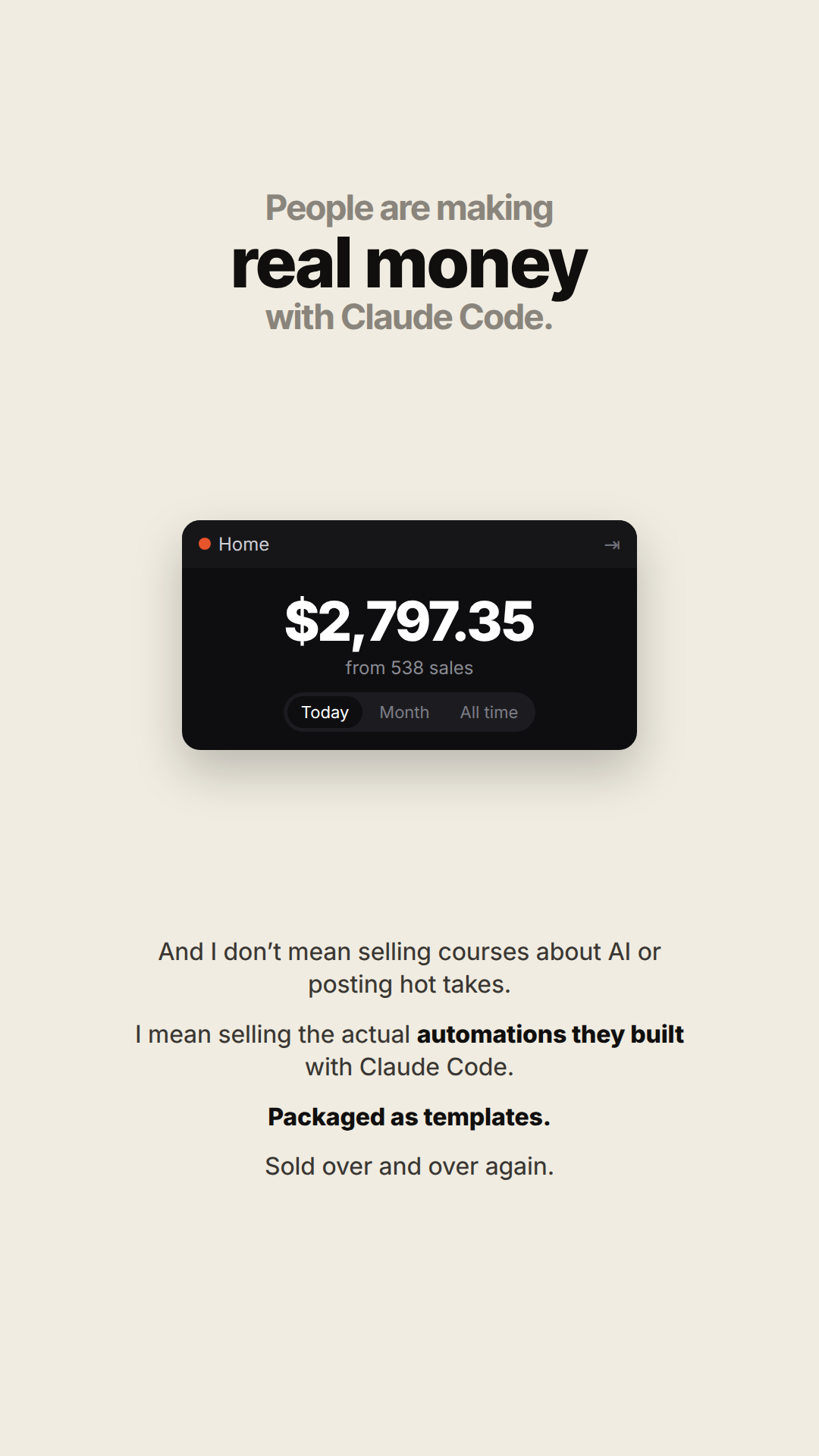
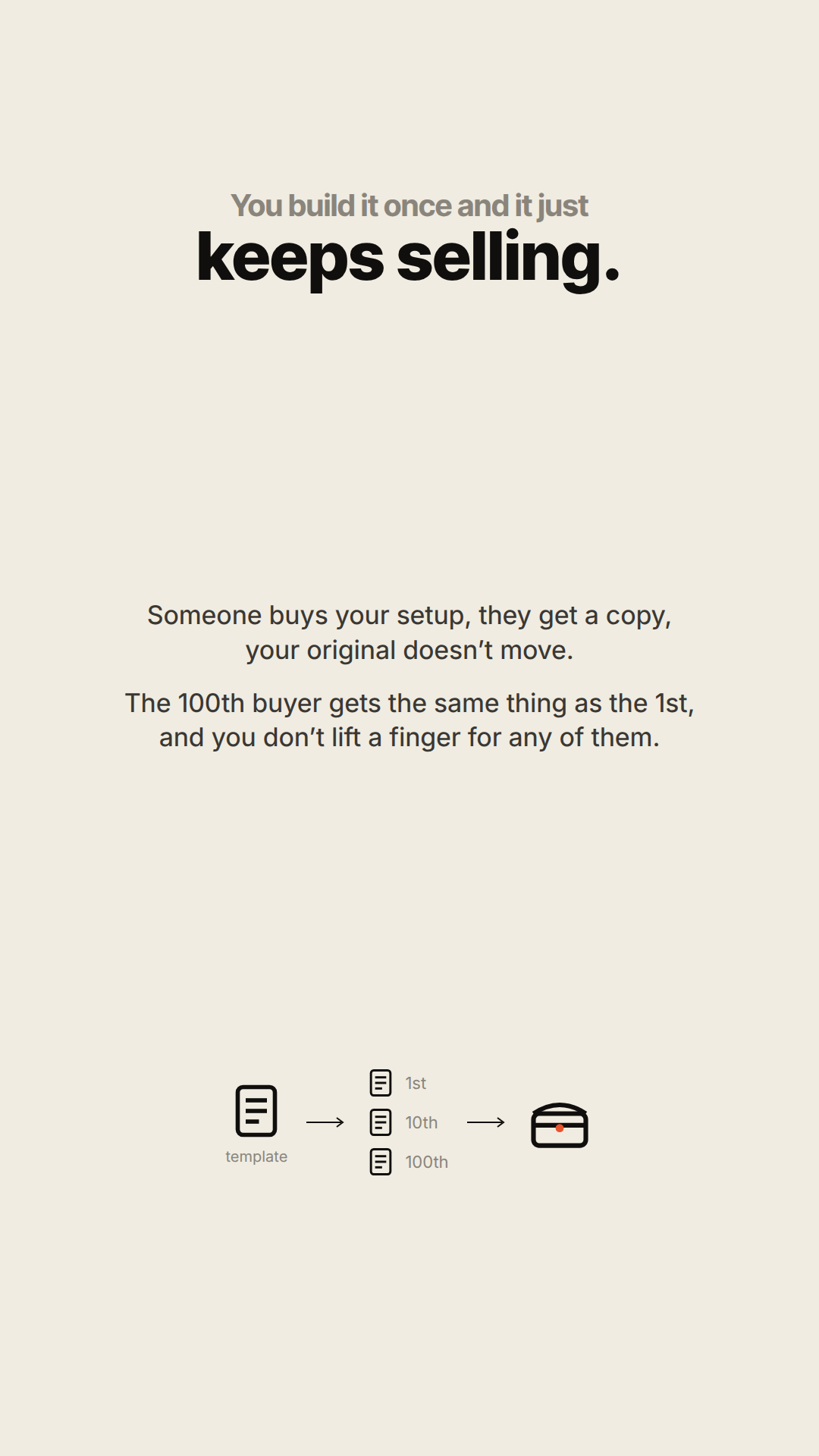
People are making real money selling the automations they build with Claude Code. Not courses about AI. Not hot takes. The actual workflow, packaged as a template, sold over and over.

You do not need a software company. You do not need a team. You need one painful, repeated problem and a workflow someone will pay to skip.

Build the asset once. Let distribution scale it.

Comment CASH and I will send the blueprint I used.
The AI tools stack
01
02
03
04
05
06
Caption
The tools that save me more than fifteen hours a week. Not a list of everything. The few I would not work without.

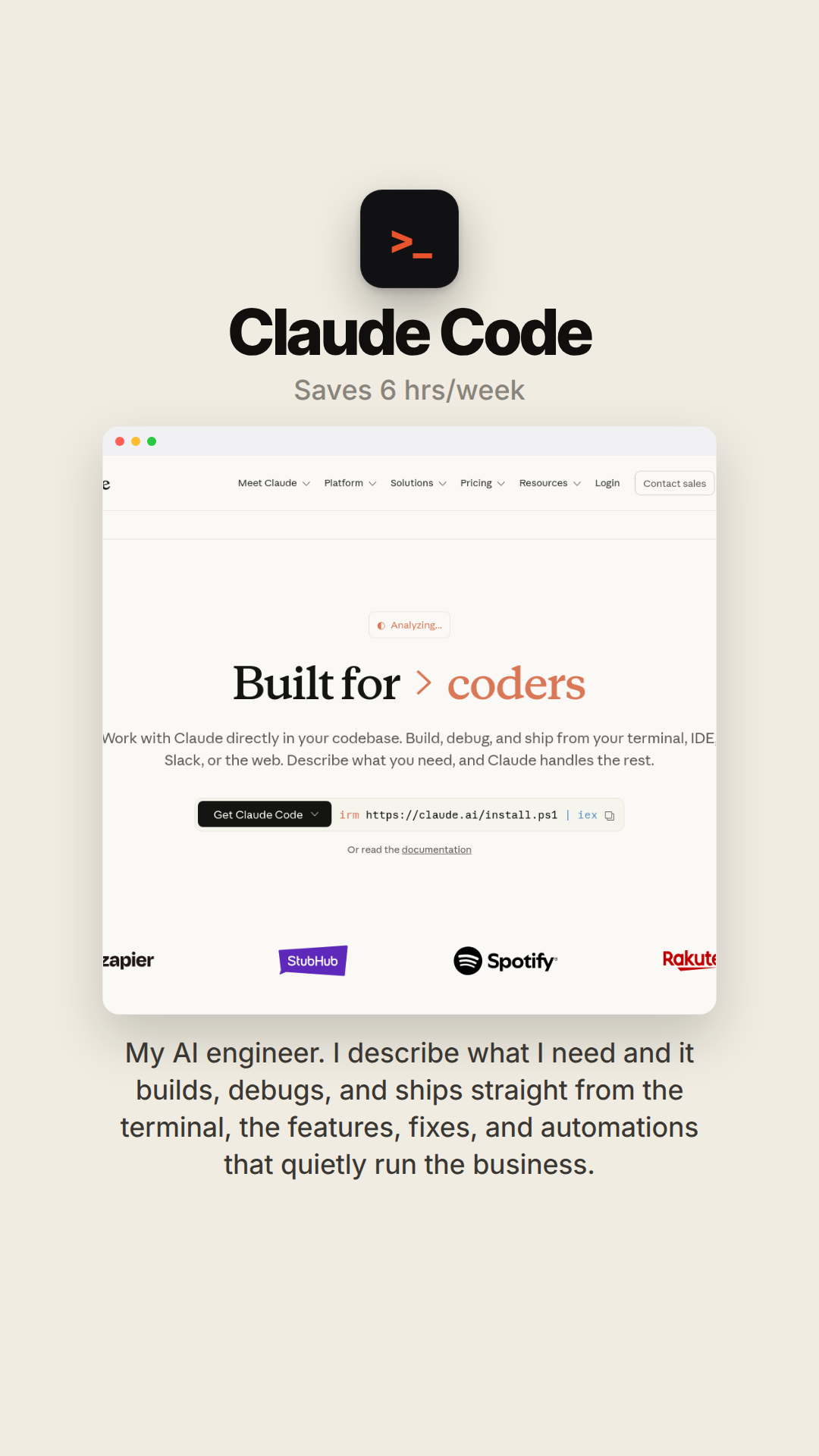
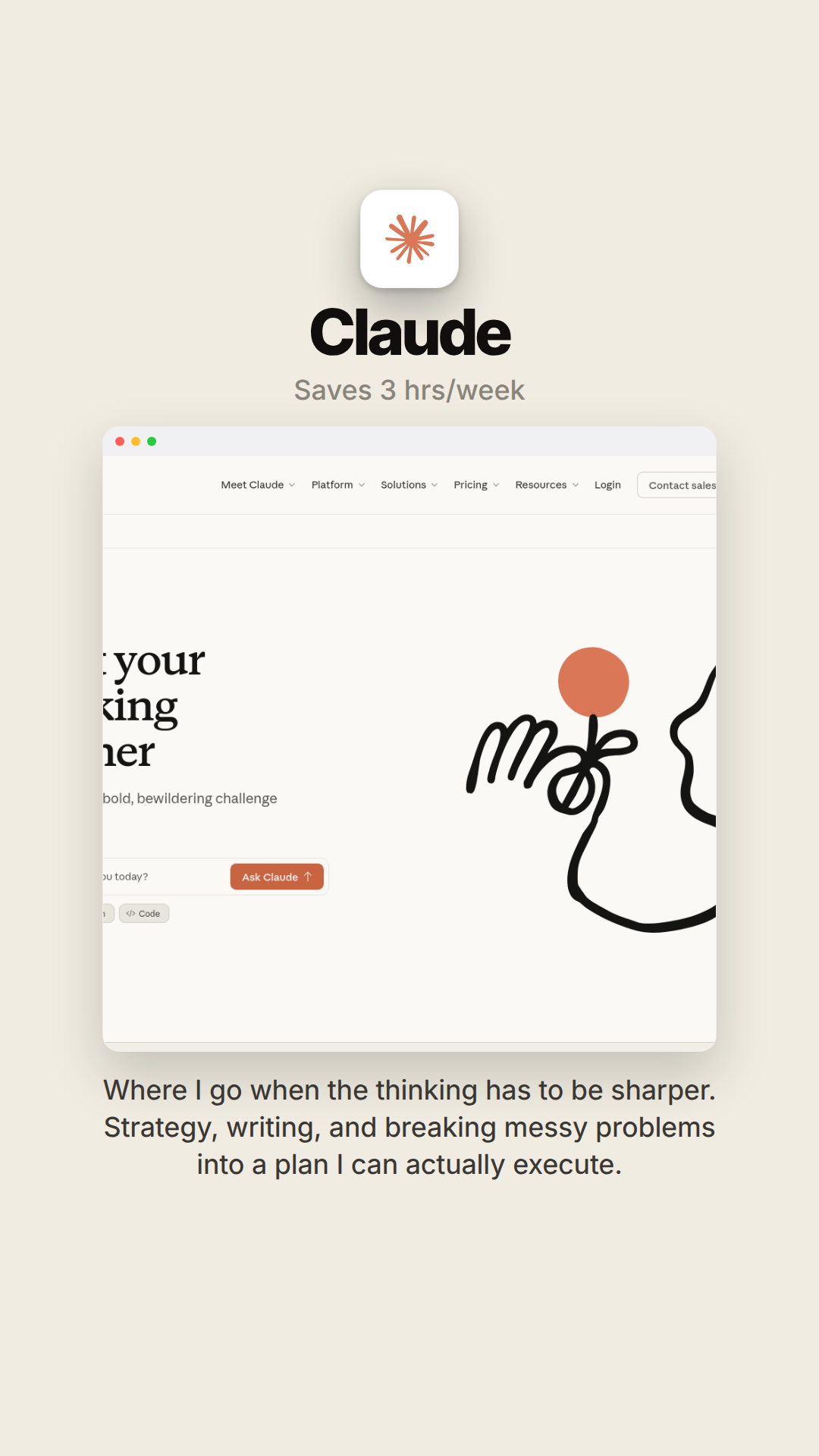
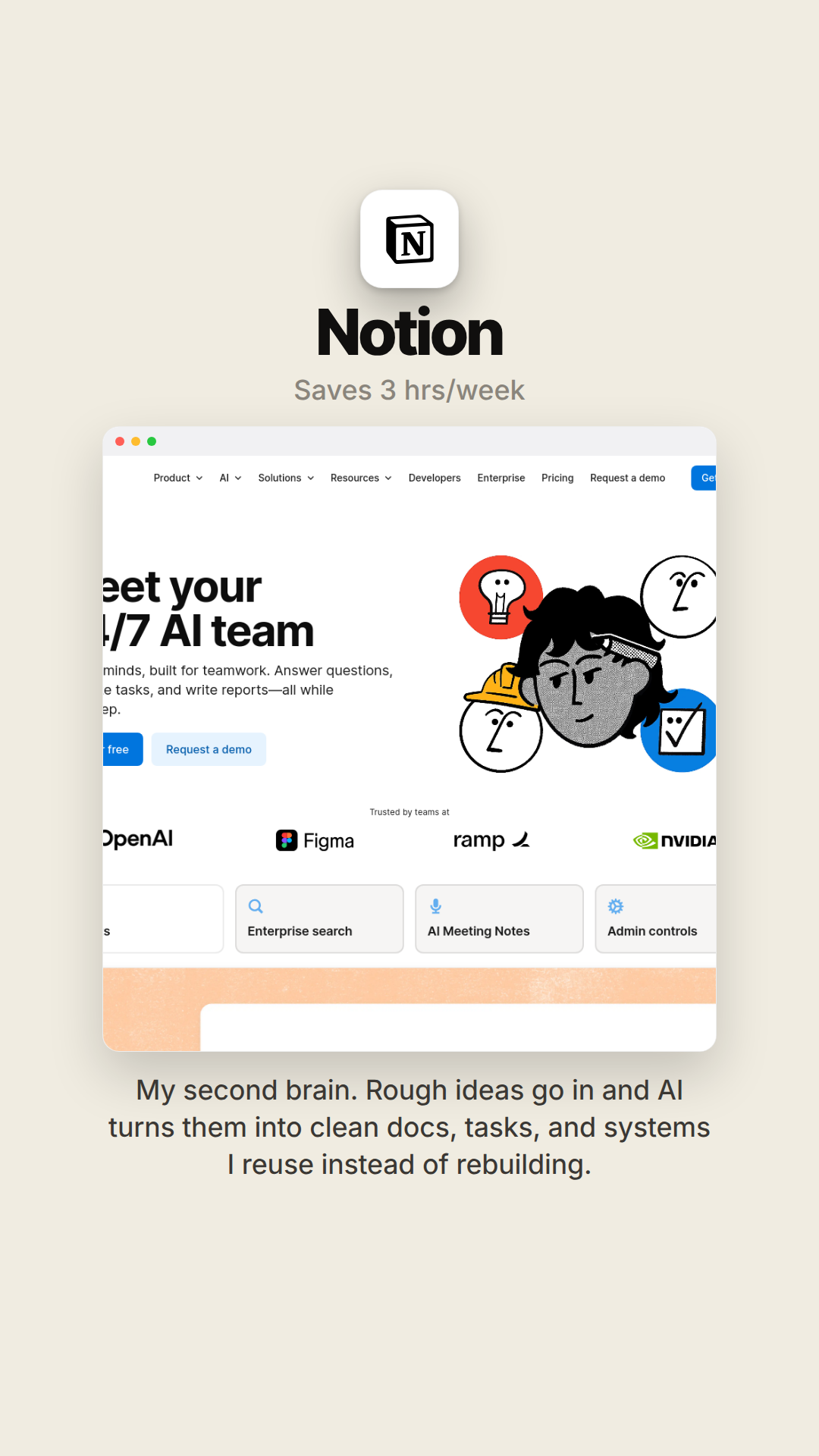
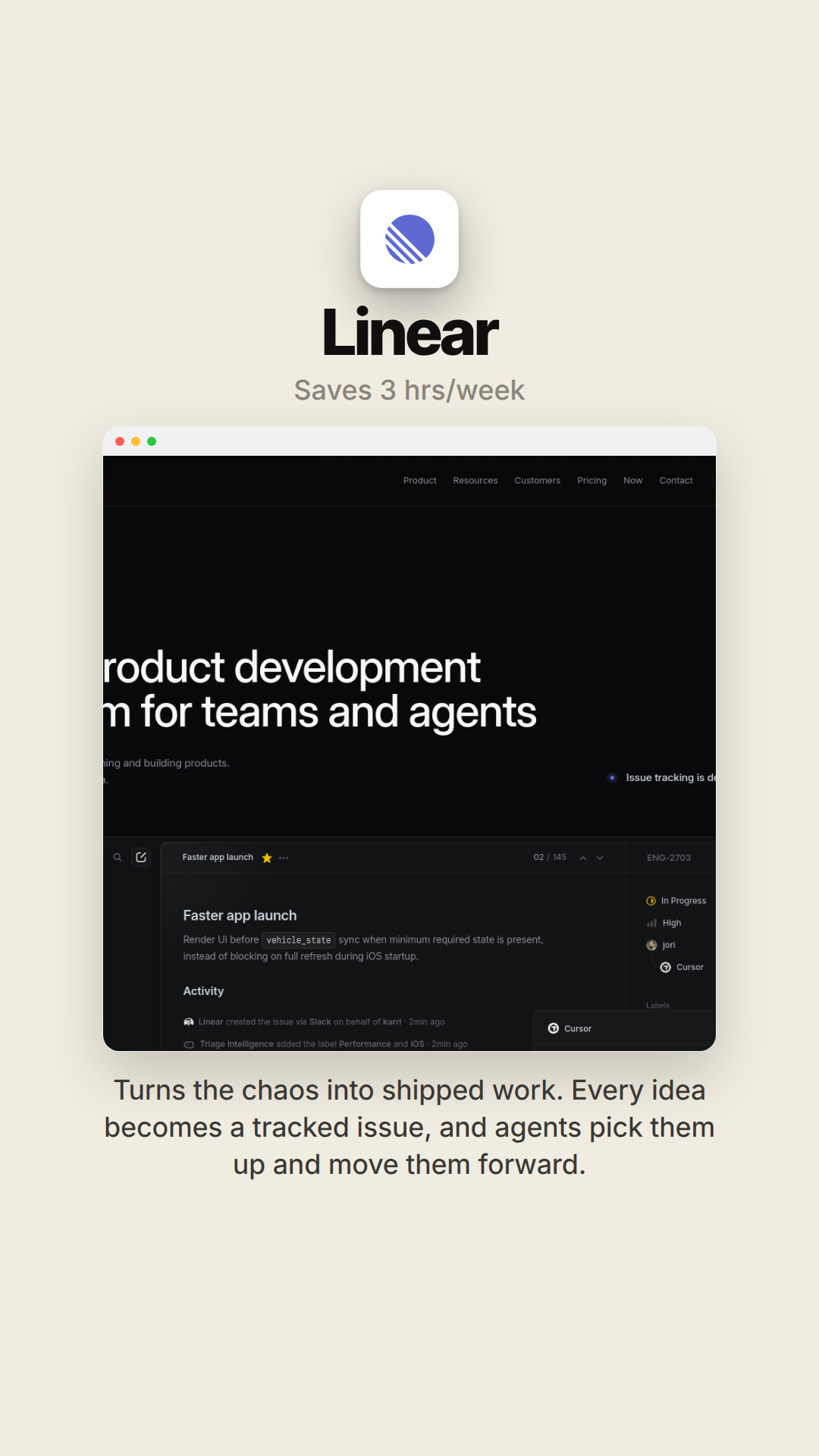
Claude Code is the engineer that builds and ships from the terminal. Claude is where the thinking gets sharper. Notion is the second brain that turns rough ideas into reusable systems. Linear turns the chaos into tracked work that agents pick up and move.

Four tools, each earning its place by the hours it gives back. The leverage is in how they connect.

Comment STACK and I will send the stack and how I wire it.
Run a business on Claude Code
01
02
03
04
05
06
07
08
09
Caption
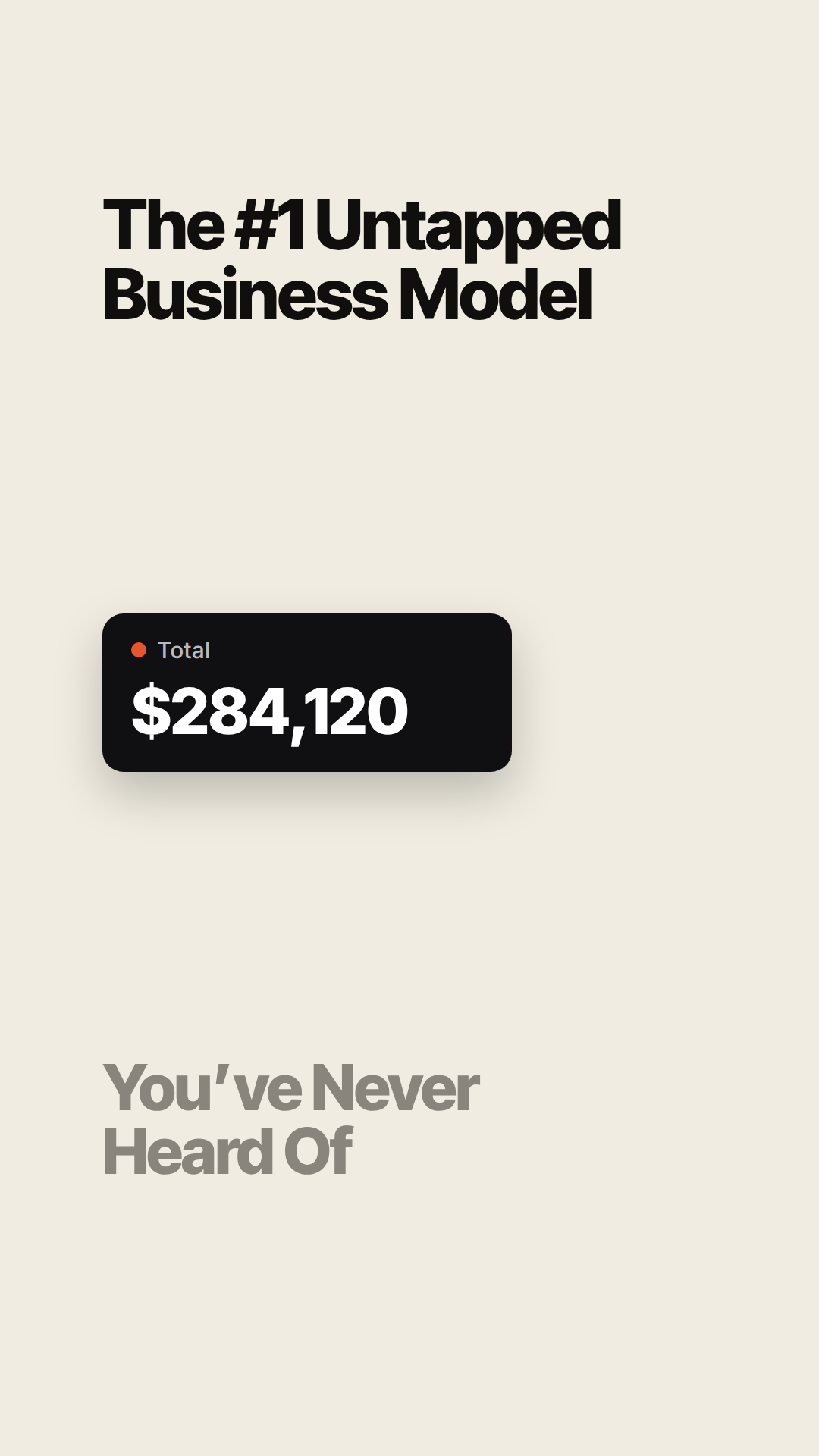
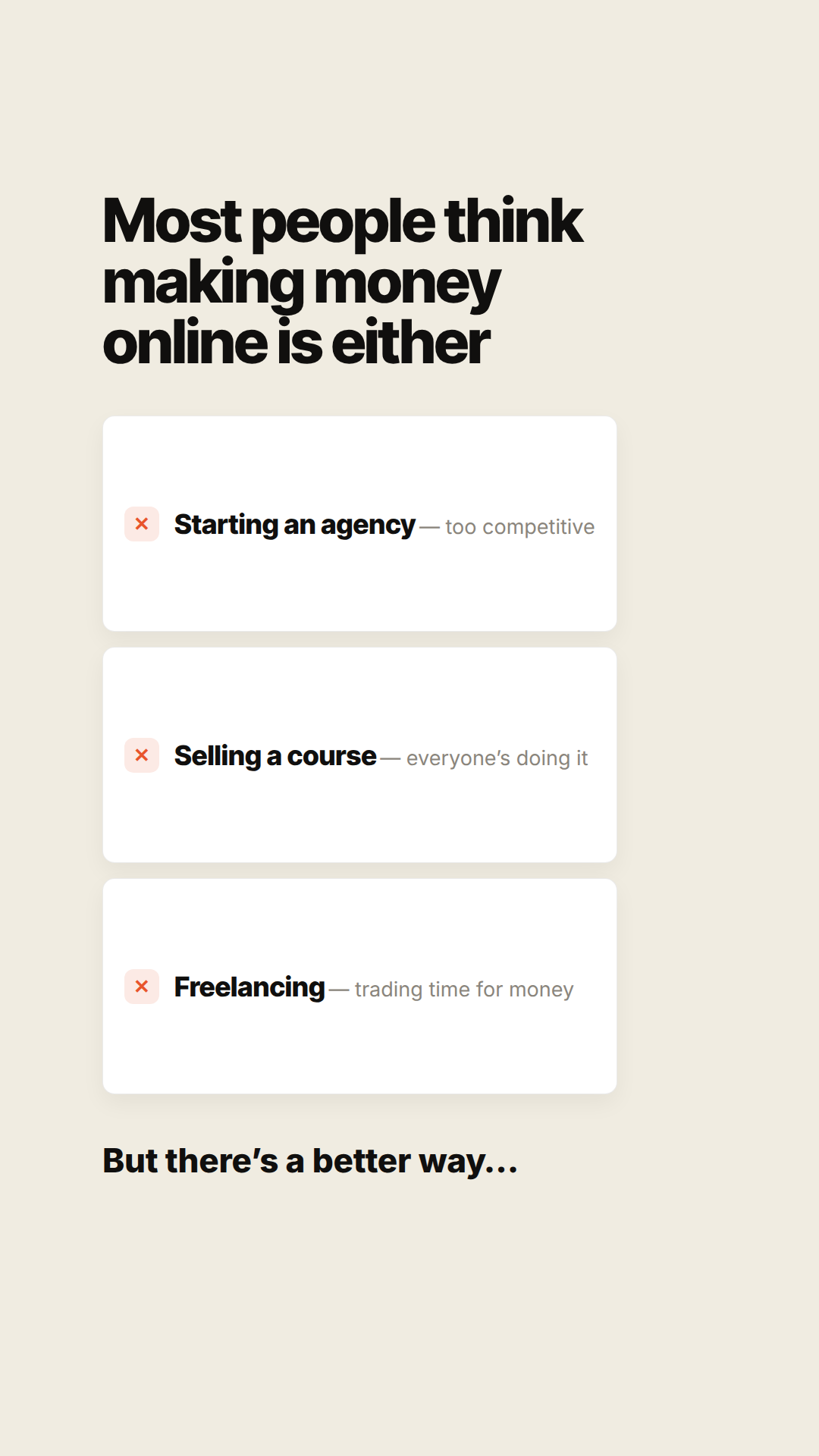
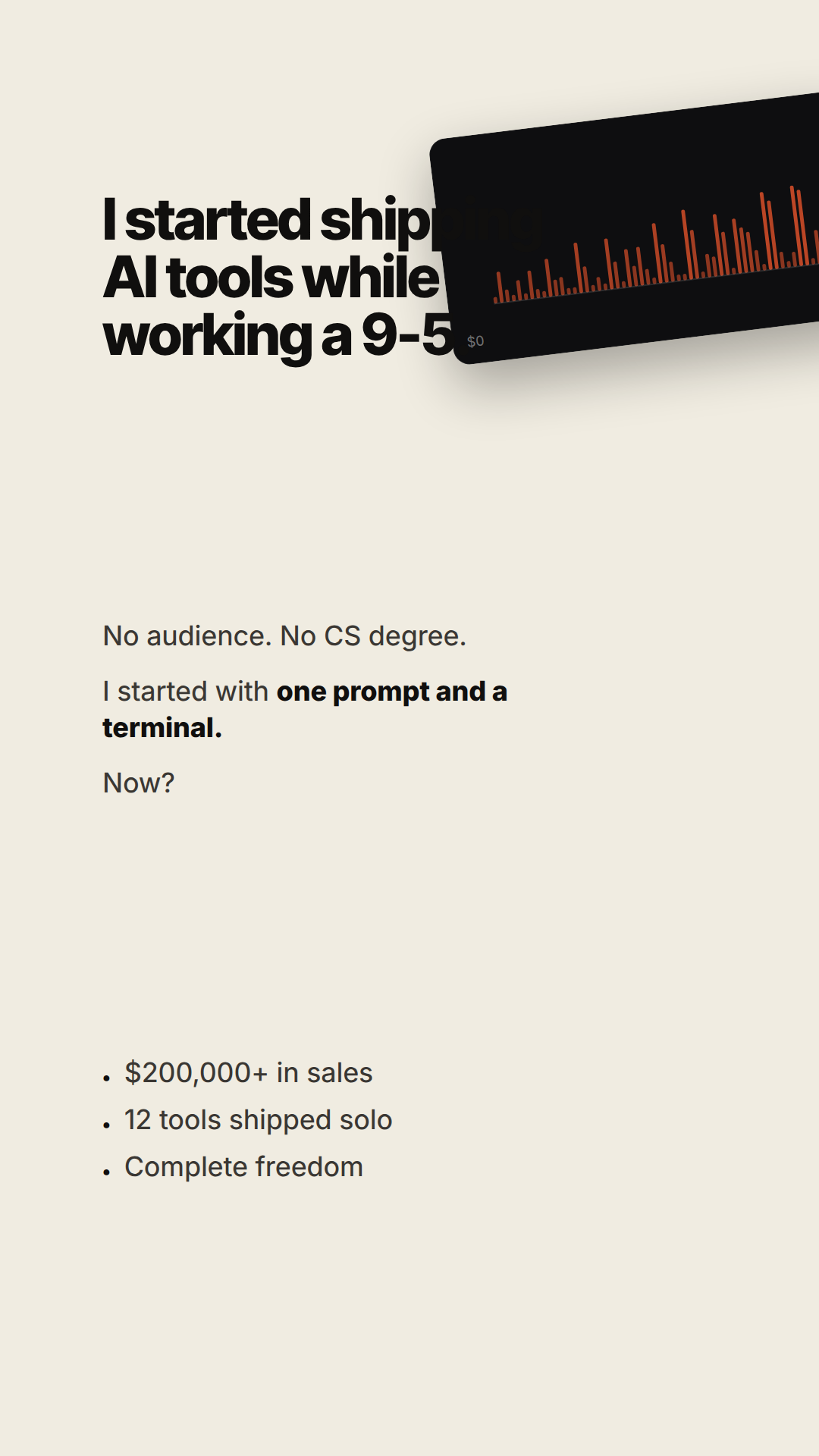
The number one untapped business model right now is hiding in plain sight. Build small AI products and sell them direct.

Software companies burn a fortune paying influencers because they never built their own distribution. The move nobody is making is to build the product, build the audience, and sell straight to them.

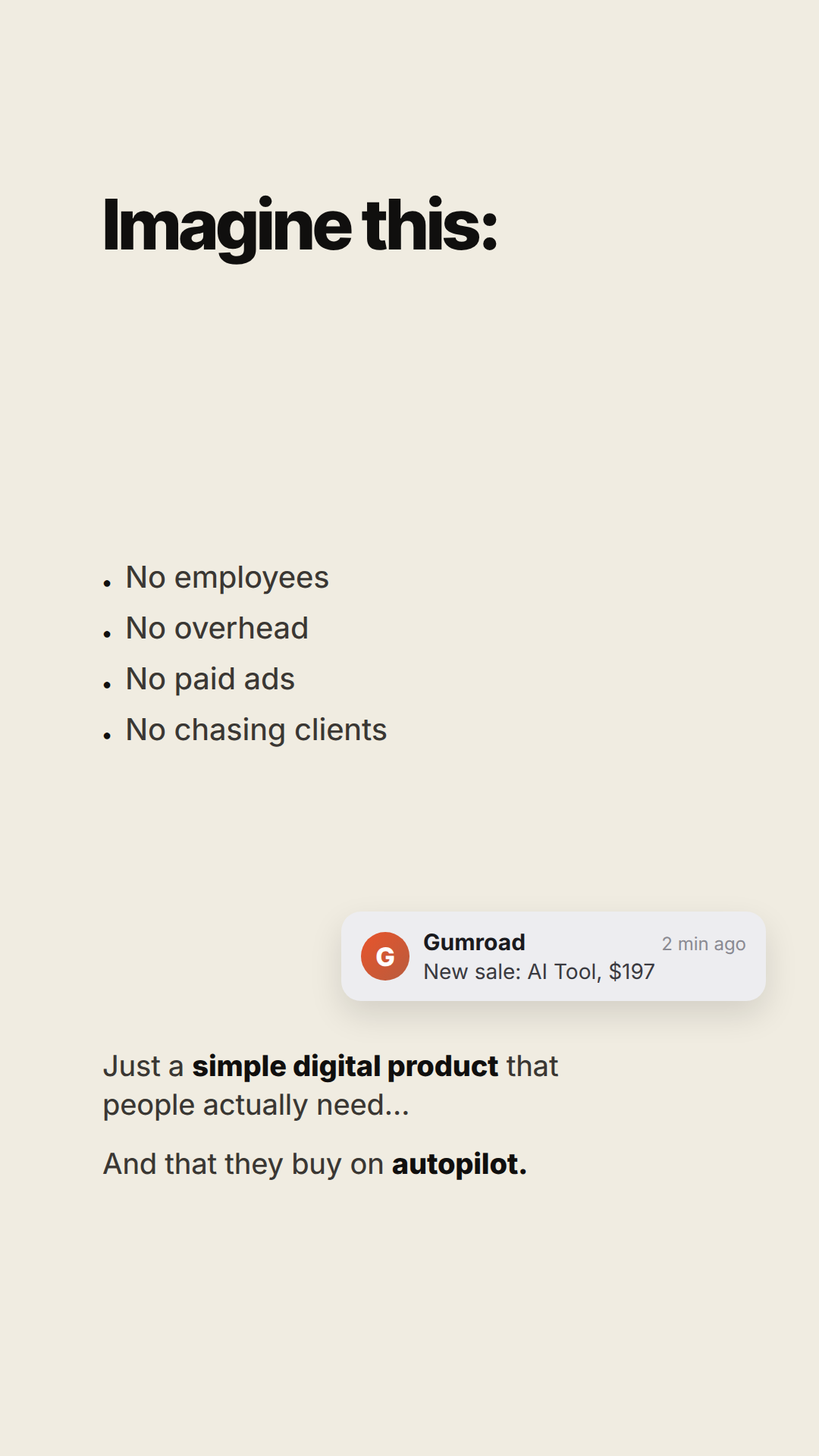
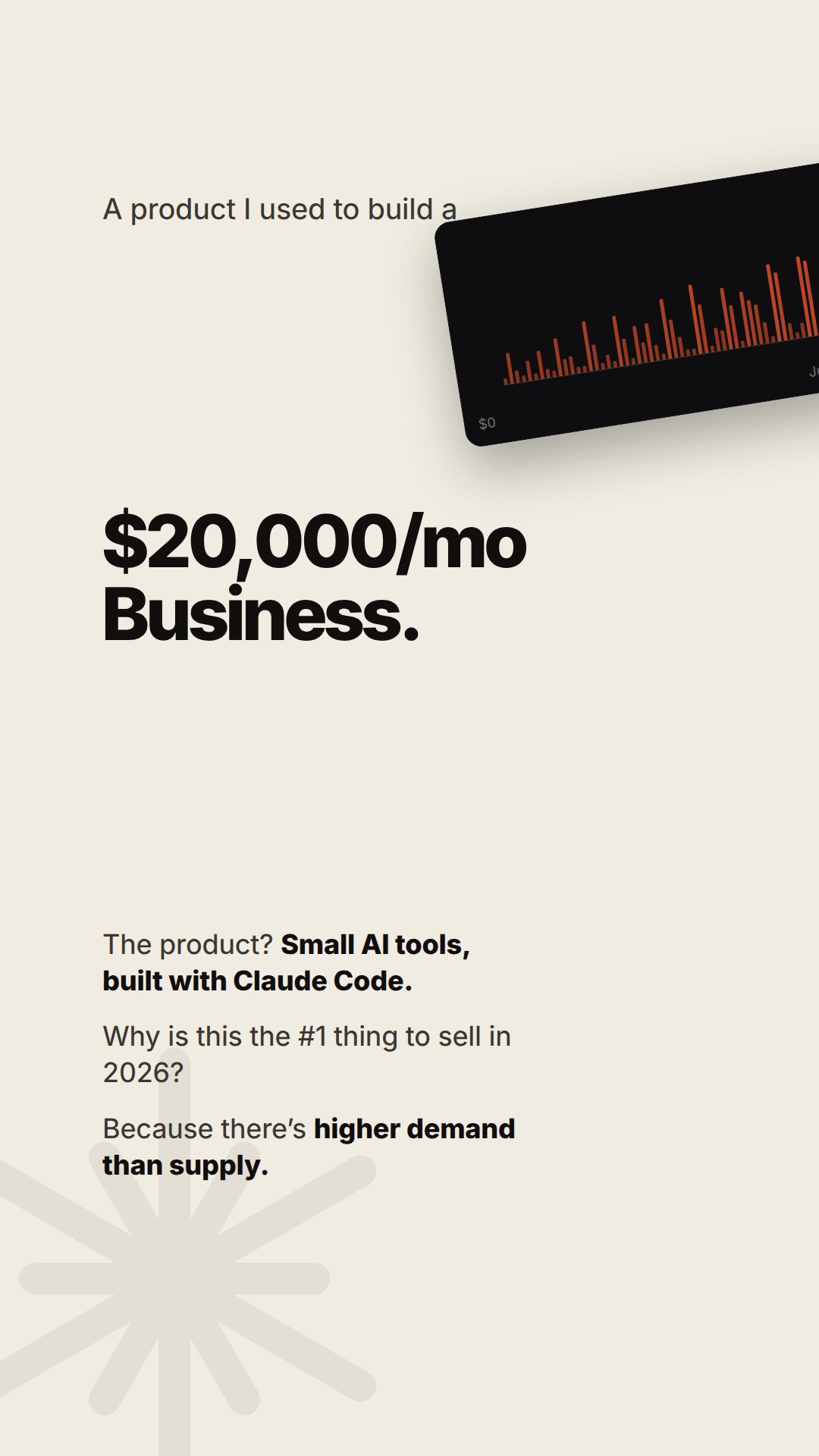
It runs faceless. No showing your face, no dancing for the algorithm. You build the tool with Claude, validate it with content, and let it sell while you sleep. Higher demand than supply, and the window is open right now.

Comment BUILD and I will send the step by step system.